Wednesday, November 14, 2018

Brain Aneurysms & How to Spot Them

Brain aneurysms kill people suddenly every year, yet few of us know what the warning signs of this deadly attack are. Recent estimates suggest that 90% of Americans are not sure what a brain aneurysm really is. And because anything from between 6% to 9% of people actually have an aneurysm, this lack of knowledge is tragic. This necessary guide will give you important information about brain aneurysms, telling you everything you need to know, and explaining what you can do to spot the signs before the worst happens.
Lisa Colagrossi's story
Some of you may know the story of Emmy Award-nominated US news anchor, Lisa Colagrossi, who died in 2015 from a brain aneurysm, aged only 49. Lisa was a hard-working woman who began to feel excruciating head pain. After discussing it with her husband, she decided to let it pass and get on with her work. Sadly, she was taken ill and died only two weeks after the initial headache passed. 

Following this awful turn of events, Lisa’s husband established the Lisa Colagrossi Foundation (LCF) to raise public awareness about the silent killer that had taken her away from him and their two poor children. Her husband understood that it was only a lack of knowledge that prevented Lisa from going to the doctor before it was too late.

This story dramatically illustrates the need for more widely-spread knowledge about brain aneurysms. 
What is a brain aneurysm?
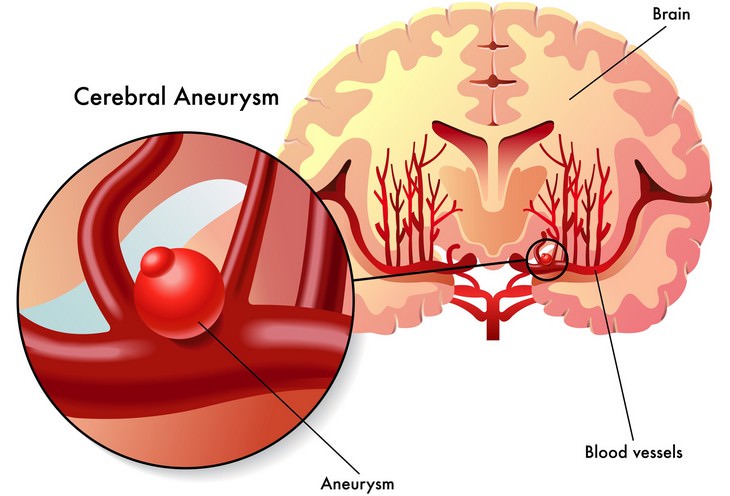
brain aneurysms
Neurosurgeon  describes a brain aneurysm as a weakness of the wall in one of the brain’s blood vessels. The weakness lets the wall form a bulge, due to the pressure of the blood running through the vessels. When this bulge becomes over-inflated it can rupture and seep blood into the brain tissue.

This bulge, or aneurysm, is something that anywhere from 6% to 9% of us are walking around with, unaware that it could rupture. They can even be seen on an MRI scan. Yet if the aneurysm is of a tolerably small size, doctors will not recommend invasive and dangerous surgery. 
When you suffer a rupture...
The frightening description above may give you the idea of blood squirting all over the place, but the truth is not quite so dramatic. There may be a little dribble for a few moments, but generally a platelet plug naturally forms, according to a Dr. However, even this little trickle can be fatal. Between 30% to 50% of sufferers die immediately after a rupture occurs.

The small blood leak irritates the brain tissues it comes into contact with, and this drastically increases pressure within the head. Furthermore, the loss of blood is catastrophic for the brain regions which have lost out. These areas need a constant supply of blood to function as they should.

Pressure and a lack of blood combine to induce either death or unconsciousness.
Signs and symptoms of a rupture:
Here are several symptoms that have been reported by those who have suffered a rupture:

•    An excruciating headache
•    Neck stiffness
•    Tingling face
•    Light sensitivity
•    Seizures
•    Weak limbs
•    Blurry or double vision
•    Extreme tiredness
Most of these symptoms are secondary, however, to the headache. Colagrossi’s husband describes this as “W-H-O-L” or ‘the worst headache of your life’. This could be felt anywhere and at any time, though it may be felt more strongly behind the eyes. It is hard to describe this pain, some compare it to being hit by a bolt of lightning, others have said it felt like hearing a gun shot.
What to do:
Dr.’s advice is that if you or someone close to you experiences any of these symptoms, make an emergency call for an ambulance or go to the hospital directly. Doctors have several things they can do to get rid of the pressure that results from the rupture, but that doesn’t mean that everything will be well.

Of those who receive treatment a third die, a third suffer permanent impairment, and a further third go back to normal. The goal of the Lisa Colagrossi Foundation is to help increase the number of people who can go back to normal. He says:

"If someone had been doing the work we're doing now to raise public awareness, Lisa and millions of others would still be alive"
.

THIS IS ONLY FOR INFORMATION, ALWAYS CONSULT YOU PHYSICIAN BEFORE HAVING ANY PARTICULAR FOOD/ MEDICATION/EXERCISE/OTHER REMEDIES.                                                                                                                                                                                                             PS- THOSE INTERESTED IN RECIPES ARE FREE TO  VIEW MY BLOG-                                                                                           https://gseasyrecipes.blogspot.com/   

FOR INFO ABOUT KNEE REPLACEMENT, YOU CAN VIEW MY BLOG-                                                                                                    https:// kneereplacement-stickclub.blogspot.com/                              

FOR CROCHET DESIGNS                                                                                                                                                                                                                                 https://gscrochetdesigns.blogspot.com


Labels: , , , , , , , , , , , ,

Wednesday, September 26, 2018

How a Cough Can Harm You And Preventive Actions You Can Take

We've all experienced a bad cough at some point or another in our lives, but what do you do when your cough simply won't go away? A chronic and persistent cough can cause a whole host of health issues, but there's no need to despair just yet, since we've included plenty of useful solutions, too.
Ways a Cough Can Damage You
1. Muscle Pain
Persistent coughing often leads to chronic muscular pain. This is because coughing fits generate a good deal of pressure, which can end up causing pain due to muscle strain.
2. Blood Vessel Damage
When you experience a severe coughing fit, certain fine blood vessels, such as the ones found in the nose or anus, can end up bursting, which may even lead to a hemorrhage.
3. Cracked Ribs
If you can't stop coughing, your rib cage may be in imminent danger, particularly if you are a woman or a pensioner. This is because a chronic cough may cause the middle ribs along the side to become cracked or fractured.
4. Throat Damage
An unyielding cough can cause your throat to get infected, which may then move on to infect other parts of your body. Such coughs can also make the tissues of the throat inflamed, further escalating any existing issues.
5. Diaphragm Rupture
While you're coughing, your diaphragm contracts and retracts. During forced respiratory movements, the ribs are pushed inward and downward while the diaphragm is pushed upward. When the force is too rapid or heavy, a diaphragm rupture may occur.
6. Abdominal Hernia
Although this is quite a rare occurrence, there is still a chance that a chronic cough can cause an abdominal hernia. You are at a higher risk of this happening if you already suffer from chronic bronchitis, and it will require surgical intervention to put right.
7. Coughing Up Blood
If a chronic cough goes on for long enough, there's a chance that you could experience heamoptysis, which is the medical term for coughing up blood. Such blood would usually appear as bright red droplets of blood or as frothy blood-streaked phlegm or saliva. It's very important to visit a doctor immediately if you ever start coughing up blood.
How to Reduce a Cough
If you are finding it hard to get your cough to go away, applying some of the following tips may help:
Start breathing from your nose only. This will keep both your lungs and the mucus in your throat from drying up and causing irritation.
Drink plenty of fluids to thin out and moisten any mucus present in your throat.
Use a humidifier to add some moisture to the air in your home, since dry air can worsen symptoms.
Stop drinking cow's milk and consuming other dairy products until your cough subsides, since these can make it worse.
Take regular steamy showers, since they are able to help a cough by loosening nasal secretions.
Enjoy more hot drinks, since they numb the back of your throat, easing the cough reflex.
If you've adopted the tips above and your cough is still showing no signs of going away, then make sure you speak to a medical professional to guide you further.

THIS IS ONLY FOR INFORMATION, ALWAYS CONSULT YOU PHYSICIAN BEFORE HAVING ANY PARTICULAR FOOD/ MEDICATION/EXERCISE/OTHER REMEDIES.                                                                                                                                                                                                       PS- THOSE INTERESTED IN RECIPES ARE FREE TO  VIEW MY BLOG-                                                                                           https://gseasyrecipes.blogspot.com/   

 
FOR INFO ABOUT KNEE REPLACEMENT, YOU CAN VIEW MY BLOG-                                                                                                                                https:// kneereplacement-stickclub.blogspot.com/                              

FOR CROCHET DESIGNS                                                                                                                                                                                                                                 https://gscrochetdesigns.blogspot.com


Labels: , , , , , , , , , , , , , , , , ,

Wednesday, January 24, 2018

How microbial bacteria could help detect signs of premature births

It came to light with a recent study that changes to the communities of microbes living in the reproductive tract of pregnant women could help to spot those at risk of giving birth prematurely.

The study found that the subtle changes to the bacteria present in the vagina were strongly associated with the woman's waters breaking early which led preterm birth of the baby, i.e. before 37 weeks. According to the researchers, it could have an impact on the health of mother and baby, including increasing the risk of sepsis for newborns.

In the published study, the team of researchers also highlighted that while the standard antibiotic treatment given to women whose waters break early, a precursor of labour, can help to reduce infection, for a small subset of women it may actually be detrimental.

They explained that for a small proportion of women the treatment, administered as a protective measure in hospital, can disrupt the balance of the mother's microbes by eradicating the 'good' bacteria and allowing more harmful bacteria to take their place in the vagina - with potentially devastating consequences for the baby.

The team suggested alternative treatments should be used for these women to mitigate their risk. They pointed out that in case of preterm birth, rupture of amniotic sac leaves baby more susceptible to infections as compared to normal birthing circumstances.

The team looked at the impact of premature rupturing of the membrane and antibiotic treatment on the vaginal microbia.

They took swabs from the vaginas of pregnant women at different points during their pregnancy and analysed them to reveal the types of bacteria present, their proportions, and any changes. Samples were collected from a prospective group of 250 pregnant women with and without risk factors for giving birth prematurely - such as having a history of preterm birth or miscarriage - of which 27 did, in fact, have a premature birth.

They also collected samples from a second, smaller group of 87 women who presented to the hospital with premature membrane rupture.
 
Previous research had shown that over the course of pregnancy the bacteria that colonize the vagina became less diverse and were dominated chiefly by Lactobacillus species - the same type of bacteria found elsewhere in the body including the gut and mouth.

Thorough analysis revealed that premature membrane rupture was associated with a shift in the microbia, with a drop in Lactobacillus and an increase in other types of bacteria, including potentially harmful bugs such as Staphylococcus and Streptococcus.

The team also analyzed samples from the small group of women with premature rupture before and after the preventative antibiotic treatment - oral erythromycin, four times a day for 10 days. Swabs were taken before treatment and then at 48 hours, one week and two weeks.

The study also revealed associations between specific vaginal bacteria and newborns who developed sepsis following delivery. While the mothers of healthy babies were dominated by Lactobacillus, samples from the mothers of newborns with sepsis revealed a greater diversity of bacteria, including the presence of Streptococcus and E. coli.

The group added that further studies are needed to assess current clinical guidelines for women with premature rupture and that developing alternative ways to treat women, such as using more selective antibiotics, could potentially improve outcomes for women and their babies.


THIS IS ONLY FOR INFORMATION, ALWAYS CONSULT YOU PHYSICIAN BEFORE HAVING ANY PARTICULAR FOOD/ MEDICATION/EXERCISE/OTHER REMEDIES.    
PS- THOSE INTERESTED IN RECIPES ARE FREE TO VIEW MY BLOG-                      
HTTP:GSEASYRECIPES.BLOGSPOT.COM/
FOR INFO ABOUT KNEE REPLACEMENT, YOU CAN VIEW MY BLOG-                                                        
HTTP://KNEE REPLACEMENT-STICK CLUB.BLOGSPOT.COM/
FOR CROCHET DESIGNS

HTTP://MY CROCHET CREATIONS.BLOGSPOT.COM

Labels: , , , , , , , , , , , , , ,

Wednesday, October 12, 2016

Brain Aneurysms

Brain aneurysms kill people suddenly every year, yet few of us know what the warning signs of this deadly attack are.And because anything from between 6% to 9% of people actually have an aneurysm, this lack of knowledge is tragic. This necessary guide will give you important information about brain aneurysms, telling you everything you need to know, and explaining what you can do to spot the signs before the worst happens.

 What is a brain aneurysm?
 Neurosurgeon at New York University’s Langone Medical Center, Howard Riina, MD, describes a brain aneurysm as a weakness of the wall in one of the brain’s blood vessels. The weakness lets the wall form a bulge, due to the pressure of the blood running through the vessels. When this bulge becomes over-inflated it can rupture and seep blood into the brain tissue.

This bulge, or aneurysm, is something that anywhere from 6% to 9% of us are walking around with, unaware that it could rupture. They can even be seen on an MRI scan. Yet if the aneurysm is of a tolerably small size, doctors will not recommend invasive and dangerous surgery. 


When you suffer a rupture


The frightening description above may give you the idea of blood squirting all over the place, but the truth is not quite so dramatic. There may be a little dribble for a few moments, but generally a platelet plug naturally forms, according to Riina. However, even this little trickle can be fatal. Between 30% to 50% of sufferers die immediately after a rupture occurs.

The small blood leak irritates the brain tissues it comes into contact with, and this drastically increases pressure within the head. Furthermore, the loss of blood is catastrophic for the brain regions which have lost out. These areas need a constant supply of blood to function as they should.

Pressure and a lack of blood together combine to induce either death or unconsciousness.
Signs and symptoms of rupture
 Here are several symptoms that have been reported by those who have suffered a rupture:
•    An excruciating headache
•    Neck stiffness
•    Tingling face
•    Light sensitivity
•    Seizures
•    Weak limbs
•    Blurry or double vision
•    Extreme tiredness

Most of these symptoms are secondary, however, to the headache.
This could be felt anywhere and at any time, though it may be felt more strongly behind the eyes. It is hard to describe this pain, some compare it to being hit by a bolt of lightning, others have said it felt like hearing a gun shot.
 Riina’s advice is that if you or someone close to you experiences any of these symptoms, make an emergency call for an ambulance or go to the hospital directly. Doctors have several things they can do to get rid of the pressure that results from the rupture, but that doesn’t mean that everything will be well.

Of those who receive treatment a third die, a third suffer permanent impairment, and a further third go back to normal.
 this is only for your information, kindly take the advice of your doctor for medicines, exercises and so on.

https://gscrochetdesigns.blogspot.com. one can see my crochet creations
https://gseasyrecipes.blogspot.com. feel free to view for easy, simple and healthy recipes

https://kneereplacement-stickclub.blogspot.com. for info on knee replacement

Labels: , , , , , , , , , , ,

Monday, November 04, 2013

Eye Exams A Must For Diabtetics

 Researchers have said that people who are suffering from diabetes should also get their eye check-ups done regularly.
Diabetic retinopathy is the most common form of this disease, and affects about 28.5 percent of Americans with diabetes age 40 and older. That’s more than 7 million people, and the number is expected to reach more than 11 million by the year 2030.
The condition can creep up quietly. It gradually weakens small blood vessels in and around the retina, the light-sensing layer of tissue at the back of the eye. If the disease progresses, these vessels may rupture and leak blood into the eye; they can also spread and grow on the surface of the retina and cause scarring.
Typically, diabetic retinopathy has no symptoms until it reaches an advanced stage. But the disease can be detected early through a comprehensive dilated eye exam. In this procedure, an eye professional will put drops in your eye to dilate (widen) the pupil, which allows a closer look at the retina.
The good news is that with early detection, timely treatment, and appropriate follow-up, the risk of severe vision loss from diabetic retinopathy can be reduced by 95 percent. There are several effective treatment options including laser surgery and injections of anti-VEGF drugs. These drugs block the actions of a protein that can cause abnormal blood vessels to grow and leak fluid. 

ps- this is only for information, always consult you physician before having any particular food/ medication/exercise/other remedies.
ps- those interested in recipes are free to view my blog-

http://gseasyrecipes.blogspot.com/


for info about knee replacement, you can view my blog-


http://Knee replacement-stick club.blogspot.com/


for crochet designs


http://My Crochet Creations.blogspot.com

Labels: , , , , , , , , , , , , ,

Saturday, June 15, 2013

Thrombotic stroke

The blockage of an artery in the brain by a clot (thrombosis) is the most common cause of a stroke. The part of the brain that is supplied by the clotted blood vessel is then deprived of blood and oxygen. As a result of the deprived blood and oxygen, the cells of that part of the brain die and the part of the body that it controls stops working. Typically, a cholesterol plaque in one of the brain's small blood vessels ruptures and starts the clotting process.
Risk factors for narrowed blood vessels in the brain are the same as those that cause narrowing blood vessels in the heart and heart  attack (myocardial infarction). These risk factors include:
  • high blood pressure (hypertension),
  • high cholesterol,
  • diabetes, and
  • smoking.

ps- this is only for information, always consult you physician before having any particular food/ medication/exercise/other remedies.


ps- those interested in recipes are free to view my blog-

http://gseasyrecipes.blogspot.com/


for info about knee replacement, you can view my blog-


http://Knee replacement-stick club.blogspot.com/


for crochet designs


http://My Crochet Creations.blogspot.com/


I've not given details about designs, but those interested are free to mail me for the same.


Labels: , , , , , , , , , , , ,