Wednesday, November 14, 2018

Brain Aneurysms & How to Spot Them

Brain aneurysms kill people suddenly every year, yet few of us know what the warning signs of this deadly attack are. Recent estimates suggest that 90% of Americans are not sure what a brain aneurysm really is. And because anything from between 6% to 9% of people actually have an aneurysm, this lack of knowledge is tragic. This necessary guide will give you important information about brain aneurysms, telling you everything you need to know, and explaining what you can do to spot the signs before the worst happens.
Lisa Colagrossi's story
Some of you may know the story of Emmy Award-nominated US news anchor, Lisa Colagrossi, who died in 2015 from a brain aneurysm, aged only 49. Lisa was a hard-working woman who began to feel excruciating head pain. After discussing it with her husband, she decided to let it pass and get on with her work. Sadly, she was taken ill and died only two weeks after the initial headache passed. 

Following this awful turn of events, Lisa’s husband established the Lisa Colagrossi Foundation (LCF) to raise public awareness about the silent killer that had taken her away from him and their two poor children. Her husband understood that it was only a lack of knowledge that prevented Lisa from going to the doctor before it was too late.

This story dramatically illustrates the need for more widely-spread knowledge about brain aneurysms. 
What is a brain aneurysm?
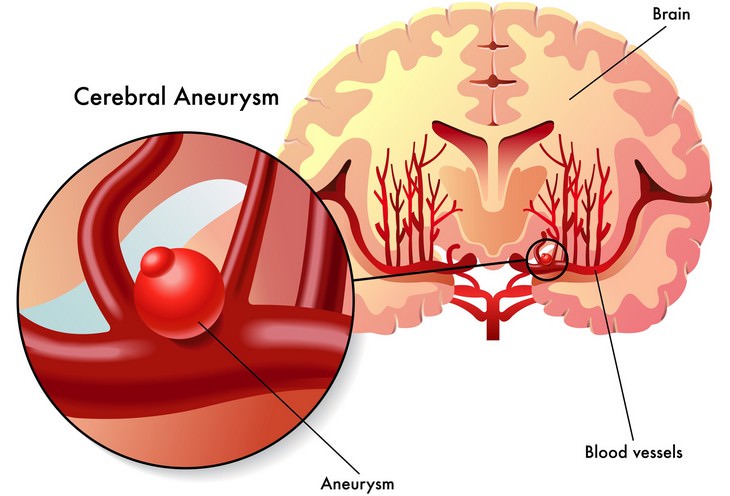
brain aneurysms
Neurosurgeon  describes a brain aneurysm as a weakness of the wall in one of the brain’s blood vessels. The weakness lets the wall form a bulge, due to the pressure of the blood running through the vessels. When this bulge becomes over-inflated it can rupture and seep blood into the brain tissue.

This bulge, or aneurysm, is something that anywhere from 6% to 9% of us are walking around with, unaware that it could rupture. They can even be seen on an MRI scan. Yet if the aneurysm is of a tolerably small size, doctors will not recommend invasive and dangerous surgery. 
When you suffer a rupture...
The frightening description above may give you the idea of blood squirting all over the place, but the truth is not quite so dramatic. There may be a little dribble for a few moments, but generally a platelet plug naturally forms, according to a Dr. However, even this little trickle can be fatal. Between 30% to 50% of sufferers die immediately after a rupture occurs.

The small blood leak irritates the brain tissues it comes into contact with, and this drastically increases pressure within the head. Furthermore, the loss of blood is catastrophic for the brain regions which have lost out. These areas need a constant supply of blood to function as they should.

Pressure and a lack of blood combine to induce either death or unconsciousness.
Signs and symptoms of a rupture:
Here are several symptoms that have been reported by those who have suffered a rupture:

•    An excruciating headache
•    Neck stiffness
•    Tingling face
•    Light sensitivity
•    Seizures
•    Weak limbs
•    Blurry or double vision
•    Extreme tiredness
Most of these symptoms are secondary, however, to the headache. Colagrossi’s husband describes this as “W-H-O-L” or ‘the worst headache of your life’. This could be felt anywhere and at any time, though it may be felt more strongly behind the eyes. It is hard to describe this pain, some compare it to being hit by a bolt of lightning, others have said it felt like hearing a gun shot.
What to do:
Dr.’s advice is that if you or someone close to you experiences any of these symptoms, make an emergency call for an ambulance or go to the hospital directly. Doctors have several things they can do to get rid of the pressure that results from the rupture, but that doesn’t mean that everything will be well.

Of those who receive treatment a third die, a third suffer permanent impairment, and a further third go back to normal. The goal of the Lisa Colagrossi Foundation is to help increase the number of people who can go back to normal. He says:

"If someone had been doing the work we're doing now to raise public awareness, Lisa and millions of others would still be alive"
.

THIS IS ONLY FOR INFORMATION, ALWAYS CONSULT YOU PHYSICIAN BEFORE HAVING ANY PARTICULAR FOOD/ MEDICATION/EXERCISE/OTHER REMEDIES.                                                                                                                                                                                                             PS- THOSE INTERESTED IN RECIPES ARE FREE TO  VIEW MY BLOG-                                                                                           https://gseasyrecipes.blogspot.com/   

FOR INFO ABOUT KNEE REPLACEMENT, YOU CAN VIEW MY BLOG-                                                                                                    https:// kneereplacement-stickclub.blogspot.com/                              

FOR CROCHET DESIGNS                                                                                                                                                                                                                                 https://gscrochetdesigns.blogspot.com


Labels: , , , , , , , , , , , ,

Thursday, July 27, 2017

HIGH BLOOD PRESSURE AND STROKE

High blood pressure is the leading risk factor for a stroke, which in turn leads to severe and long-term disability, including death. Managing your blood sugar levels is the most critical thing you can do to lessen your risk of a stroke, and you make sure that you keep your blood pressure at optimum levels.

What causes a stroke
A stroke, which is often referred to as a brain attack, takes place when the supply of blood to a particular region of the brain is cut off. The brain cells which are deprived of the oxygen and glucose die, and when the ailment is not caught early, a permanent damage to the brain can follow.

High blood pressure and stroke ?
Uncontrolled blood pressure levels can increase the risk of a stroke by about four to six times. With the passage of time, hypertension causes atherosclerosis as well as hardening of major arteries. This often results in blockages of small blood vessels present in the brain. With high blood pressure for a long period of time, the blood vessels of the brain become weak and burst. This way the risk of a stroke is directly related to the high levels of blood pressure.

Why your blood pressure should be under control
The first thing you should try doing is keeping your blood pressure level normal. Some simple lifestyle changes can help you to lead a risk-free life and therefore, you should first aim at shedding off those extra pounds along your waistline.
In general, a man with a waistline measuring over 40 inches and a woman with that over 35 inches is at a higher risk of suffering from high blood pressure as well as a stroke. You should exercise regularly for at least half an hour and eat a well-regulated diet loaded with fibre, proteins, potassium and Omega-3-fatty acids. Stay away from junk food and maintain a food diary where you can jot down your honest food habits.
It is very important to lower down your high blood pressure in order to avoid risks of stroke. But if you fail to do so even after following a healthy routine, then it is crucial to consult your physician / cardiologist who can help you by prescribing medications that are right for your medical condition.


this is only for your information, kindly take the advice of your doctor for medicines, exercises and so on.                                                                                                             https://gscrochetdesigns.blogspot.com. one can see my crochet creations                                   https://gseasyrecipes.blogspot.com. feel free to view for easy, simple and healthy recipes                 https://kneereplacement-stickclub.blogspot.com. for info on knee replacement          

Labels: , , , ,

Wednesday, October 28, 2015

Is that stress or stroke?

THIS IS ONLY FOR INFORMATION, ALWAYS CONSULT YOU PHYSICIAN BEFORE HAVING ANY PARTICULAR FOOD/ MEDICATION/EXERCISE/OTHER REMEDIES.

FOR INFO ABOUT KNEE REPLACEMENT, YOU CAN VIEW MY BLOG
HTTP://KNEE REPLACEMENT-STICK CLUB.BLOGSPOT.COM/

FOR CROCHET DESIGNS- http://My Crochet Creations.blogspot.com/


 Every stroke patient might have different symptoms; however, the symptoms of a stroke are very sudden.

What is a stroke?
Strokes occur due to problems with the blood supply to the brain; either the blood supply is blocked or a blood vessel within the brain ruptures. A stroke is a medical emergency, and treatment must be sought as quickly as possible.
There are three main kinds of stroke; ischemic strokes, hemorrhagic strokes and transient ischemic attacks (TIAs), also referred to as mini-strokes.

The Warning Signs of a Stroke:

· A terrible headache
· Weakness on one side of your body
· Trouble walking, talking, or understanding things
· Vision loss in one or both eyes

At times, other health issues can mimic stroke symptoms. A high blood pressure can cause headaches, feelings of weakness, and vision problems. Hypertension is the major cause of stroke.
Chronic stress in life, increases the risk of older people having a stroke or transient ischemic attack.
Understand your body & learn to differentiate between symptoms for stress/anxiety attacks, stroke or migraines.

Better understanding of important & potentially modifiable stroke risk factors, including stress and hypertension, is required given the aging population and increasing burden of stroke.

How is a stroke different from a heart attack/cardiac arrest?

A heart attack occurs when blood flow to a part of the heart is blocked, usually by a blood clot. Without oxygenated blood, the heart muscle begins to die. A stroke is a brain attack, cutting off vital blood flow and oxygen to the brain.

Heart attacks are almost always the result of progressive coronary artery disease (CAD). In CAD, the arteries that supply blood to the heart become choked with fatty deposits called plaque, which narrows and blocks arteries. The condition is called atherosclerosis. When pieces of plaque break free, blood clots can form, blocking the flow of blood to the heart. When that happens, the heart muscle does not get the oxygen and nutrients that it needs, and parts of the heart may become damaged or die. This is a heart attack.

When the blood supply to the brain is interrupted, causing a part of the brain to die, it is called a stroke, or "brain attack." A stroke requires immediate medical attention. Stroke is similar to a heart attack, but it affects the blood vessels in the brain instead of the heart.

Preventive Tips for Stroke:

If you've had a stroke, preventing a second stroke is a top priority. The risk of a stroke is tenfold higher in someone who has had a stroke in the past.

Keep your blood pressure low since high blood pressure exerts continuous pressure on the walls of the arteries. If it is left untreated, it damages and weakens your arteries, making them more likely to clog or burst and cause a stroke.

Don't smoke or expose yourself to second-hand smoke. Limit your calories and make exercise a daily habit. Know your risks - your age & your genes can put you at risk of stroke.


Inputs by Dr. PN Renjen, Senior Consultant - Neurology, Indraprastha Apollo Hospitals

Labels: , , , , , , , , ,

Thursday, October 16, 2014

All that one needs to know about stroke

You can have a stroke without knowing it.
“Silent strokes” are real. They’re caused when blood flow to a part of the brain is cut off.  But you may not notice anything out of the ordinary. Typically, you learn you’ve had one when permanent damage is found on a brain scan that you may have for some other reason.

Silent and warning stroke are not the same

A “warning stroke,” or transient ischemic attack (TIA), happens when a clot briefly keeps blood from getting to part of the brain. Unlike a true stroke, it doesn't cause permanent damage.
TIAs come and go fast, lasting about a minute on average. If you have a TIA, you’re more likely to have a full stroke in the months that follow.

When one has a sign of stroke, you'ld call 911, note the time of the stroke also
When your brain is starved for oxygen, every second counts. If your stroke is caused by a clot, you may be given a drug called tPA to break it up. This can save brain cells and prevent permanent damage.
For the best chance of a full recovery, you must take tPA within 3 hours of the first signs of a stroke. Many people don't get to the hospital in time. Stroke remains the top cause of long-term disability in adults. 

If you're angry, you're more likely to have a stroke
Having an angry personality can cause your blood vessels to narrow and your blood pressure to rise. People with short tempers have more thickening of the neck arteries, which boosts the odds of having a stroke.
If you have trouble controlling your anger, talk to your health care provider about how to handle it.

You can't reverse the damage caused by a stroke
Rehabilitation can help you learn to work around problems after a stroke, but you can’t repair the damage. 
Physical therapy helps build strength and coordination. Occupational therapy helps you take charge of life skills like eating and dressing. Speech-language therapy helps you improve communication.  

Bleeding in the brain need not necessarily cause stroke

Brain bleeds, which happen when a blood vessel bursts, make up only 13% of strokes. It's much more common for a clot to block a blood vessel that leads to the brain. This can happen when blood vessels narrow from fatty buildup along their walls.

Slurred speech and trouble moving are signs of stroke
Signs of a stroke can include weakness on one side of the body and slurred speech. Chest pain may be a sign of a heart attack, which is also dangerous and needs medical attention right away. 

Stroke damage to the right side of the brain, causes weakness to the left side of the body
The right side of the brain controls the left side of the body, and vice versa. Any sudden changes that affect a single side of the body are red flags for stroke, including:
    Numbness in an arm or leg
    Drooping on one side of the face
    Trouble seeing with one eye

Women who get certain types of migraine are more likely to have stroke

Strokes are more common in women who get migraines with visual signs called auras. But the risk is still low, and doctors say these women are less likely to have disabilities after a stroke than survivors with no history of migraines. They’re not sure why.
If you have frequent migraines with auras, your doctor may tell you to stop taking birth control pills, to reduce your chance of a stroke.

Signs of stroke depends on what part of the brain loses its blood supply
When part of the brain stops receiving blood and oxygen, that part can no longer do its job. If it's an area linked to language, you may have trouble speaking. If it's an area that controls muscles, you may not be able to move an arm or a leg. 

Older men are more likely to have stoke than older women
Men over 65 are more likely to have a stroke than women of the same age. Other things that boost your risk include heart disease, diabetes, high blood pressure, and a family history of stroke.
African-Americans, Hispanics and Native Americans have more strokes than whites or Asians.

To lower your chances of getting stroke, you'ld quit smoking

Along with making your blood thicker and more likely to clot, smoking raises your blood pressure. You can also reduce your risk by exercising and maintaining a healthy weight.


Labels: , , , , , , , , , ,

Tuesday, April 01, 2014

High temperature reduces length of pregnancy

 If you are pregnant and wish a full-term delivery, it is better to shift to a colder place before the mercury goes up as high temperature may reduce the length of your pregnancy, research indicates.

When temperatures reach 32 degrees celsius or higher over a period of four to seven days, the risk of early-term delivery is 27 percent higher than on typical summer days.
"Small-scale studies suggest that heat-induced stress increases uterine contractility, during a period of pregnancy when thermoregulation seems less effective," said Nathalie Auger.

The human body maintains its core internal temperature through thermoregulation.
“We also suspect that dehydration resulting from high ambient temperature reduces the blood supply to the uterus, increasing the release of pituitary hormones that induce labour,” Auger explained.

The study involved data from 300,000 births that took place at Montreal in Canada between 1981 to 2010 with summer temperatures recorded by Environment Canada during this period.

They found that extreme heat did not seem to increase the number of pre-term births, but in women who reached 37 or 38 weeks of pregnancy, the risk of early-term delivery increased by 17 percent following a three-day episode of 32 degrees celsius or more, compared to days without a heat wave.

When the extreme heat episode lasted from four to seven days, the risk reached 27 percent, found the researchers.

"Early-term newborns are also at greater risk of death," Auger said.

ps- this is only for information, always consult you physician before having any particular food/ medication/exercise/other remedies.
ps- those interested in recipes are free to view my blog-
http://gseasyrecipes.blogspot.com/
for info about knee replacement, you can view my blog-
http://Knee replacement-stick club.blogspot.com/

for crochet designs


http://My Crochet Creations.blogspot.com


Labels: , , , , , , ,

Sunday, October 21, 2012

HIP DISORDER CURED USING STEM CELLS

A multi-specialty hospital  has successfully used stem cells 

to cure a hip joint disorder, relieving affected patients from 

expensive surgery and conservative treatment.

They have so far treated seven patients, including two non-


resident Indians (NRIs) suffering from hip joint disorder using 

their stem cells and helped them to resume normal life within 

months," Live 100 Hospital( Bangalore, India) chairman has said.

Known medically as avascular necrosis, the uncommon 


disease leads to temporary or permanent loss of blood supply 

to hip joint bone and causes disorder. If not treated early, the 

dislocation of the hip bone with joint surface can result in 

disability. Any serious injury, medications such as steroids, 

blood coagulation or excessive alcohol can cause blood loss.

Stem cell therapy has been used for the first time in the world to 


treat the hip bone disorder by rejuvenating its tissues with the 

bone marrow of the patient. Stem cells in the marrow of the 

affected bone are separated from red blood cells and blood 

plasma through a clinical process and injected into the hip joint 

of the patient said.

The private hospital  has tied up with a  laboratory to harvest 

the stem cells and transplant them through four injections over 

four weeks to restore the hip joint function lost due to damage 

to its cartilage. The stem cells also repair bone cells as they 

can differentiate between bone and cartilage cells.

The novel treatment has no bleeding or scar formation as the 


process does not involve surgery. The patient has to visit our 

hospital for a day in a week for each of the four injections the 

doctor said.

Though the treatment costs a patient Rs.350,000 currently, the 


hospital hopes to bring it down over time when awareness of 

the stem cell therapy spreads and more patients opt for the 

treatment.


Labels: , , , , ,