Cancer Support India

Wednesday, October 20, 2021

How to Choose the Best Cooking Oils for Every Task

The mutual ingredient in any recipe, be it a salad, dessert, sauce, soup or a main dish are cooking oils. They’re just essential in any kitchen, there’s no way around it, and knowing which oil works best for which task can become the card up your sleeve that will elevate your cooking skills from average to profound. Not pairing cooking oils to a specific dish, on the other hand, can ruin its taste and texture, as anyone suffering a fiasco after trying to crisp up French toast using butter will know.
In order to know which oil to use in which case, you’ll have to know a little science, as the smoke point of a specific oil variety is what makes it suitable for a specific task. The general rule is the higher the smoke point of an oil, the crispier the result. 
 
That’s why oils with a high smoke point, such as avocado oil, ghee, refined olive, and peanut oil, are typically used when high temperatures are involved and are best for frying, grilling, and roasting. Oils with lower smoke points, e.g. butter, shortening or linseed, on the other hand, will never yield a crispy crust at high temperatures. 
 
Another thing to consider is the taste of the oil, with sweeter or neutral oils like butter and sunflower oil being more suitable for baking desserts, whereas more fragrant oils, e.g. pumpkin seed oil, sesame oil, and extra virgin olive oil shine the most as an ingredient in salad dressings, sauces, and dips.
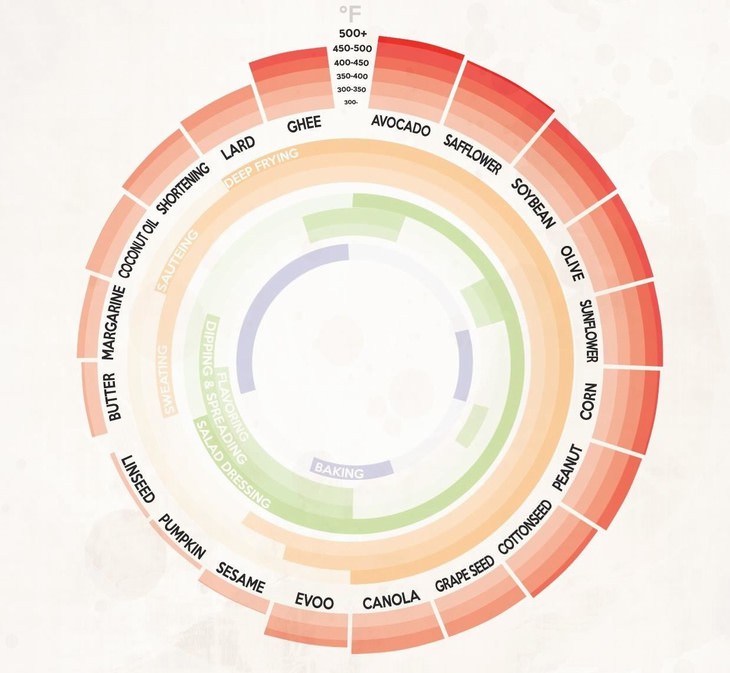
Cooking Oils For Every Task chart
The last thing to consider is the degree of refinement: refined oils typically have a higher smoke point than their virgin counterparts. So, extra virgin olive oil, for instance, will be best suited for salads and dressings, whereas refined olive oil will be perfect for baking, roasting and sauteing. 
 
Also, don’t forget that you can always mix several oils together to get a blend that will yield your desired results and taste. Returning to the example of French toast, I typically mix butter and grape seed oil to get perfectly crispy, and yet rich and buttery French toast. 
 
The chart above explains the best application for several popular oil varieties. Below we list the best cooking oils for each culinary task, be it flavoring, baking, roasting or frying.

The Best Oils For Cool Dishes
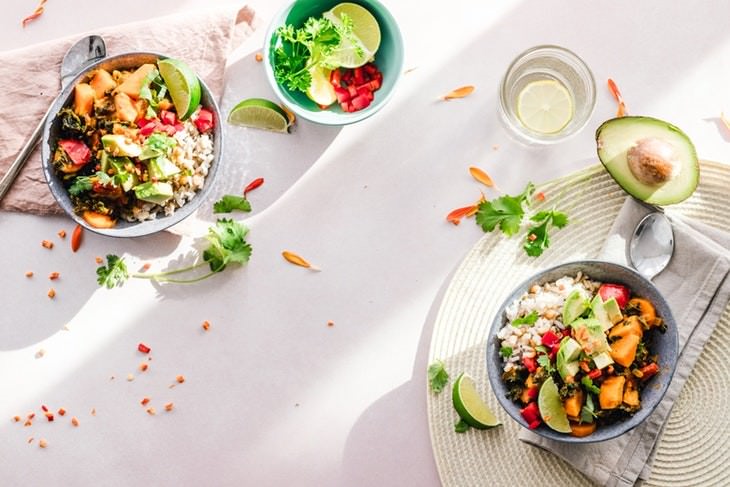
Cooking Oils For Every Task salad
Salads, dips, marinades, and dressings are the most receptive of interesting, fragrant oils that have a relatively low smoke point. These oils include unrefined peanut oil, extra virgin olive oil, sesame oil, linseed or pumpkin oil. 
 
When choosing a specific type of oil, consider its flavor, texture, and color. Unrefined coconut oil, for instance, will have a strong coconut taste and will impart that taste onto the dish, which may not benefit all salads or marinades.

The Ultimate Cooking Oils for Cooking at High Temperatures (Roasting, Searing and Frying)
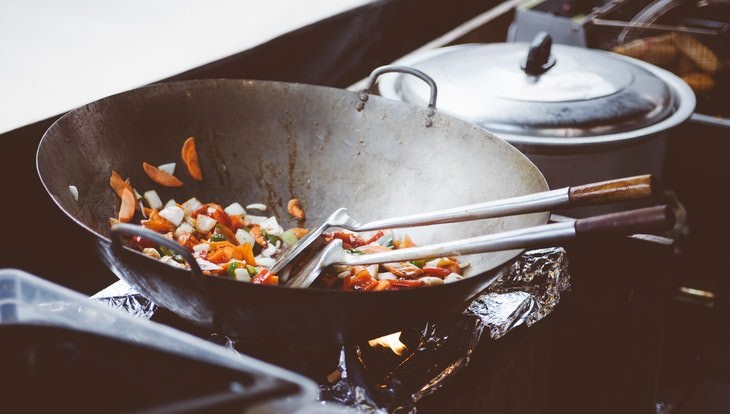
Cooking Oils For Every Task stir fry
As we mentioned previously, you’ll need an oil that has a high smoke point to yield that crispy, caramelized crust. These oils include refined avocado oil, which has the highest smoke point, but also other refined oils, like peanut, olive, sunflower, vegetable and coconut oil. 
 
Since these oils are all refined, they typically have a very neutral flavor profile and can be used interchangeably.  
 
These Oils Are the Best Cooking Oils for Stewing and Sauteing
Sauteing, preparing a sauce or stewing requires longer cooking times over medium to low temperatures and so oils with medium to high smoke points are perfect to achieve this task. These oils include olive oil, canola or vegetable oil, sesame oil, avocado oil, grape seed oil, sunflower, corn oil, and others. 
 
Choose the one you like the most, one that fits your taste and budget, and maybe consider how healthy a certain cooking oil is as well since some oils have associated health benefits, whereas others, such as vegetable oils, grease or margarine, have a bad rep. 
 
The Best Cooking Oils for Baking
Baking doesn’t typically require a high smoke point, but a neutral or slightly sweet flavor profile will be essential for baking, especially for desserts. That’s exactly why adding olive oil instead of shortening, even just to grease the pans when making desserts is a big mistake. Instead, choose a neutral oil such as canola, shortening, butter, margarine, virgin coconut or avocado oil for baking.


This is only for your information, kindly take the advice of your doctor for medicines, exercises and so on.   

https://gscrochetdesigns.blogspot.com. one can see my crochet creations  
https://gseasyrecipes.blogspot.com. feel free to view for easy, simple and healthy recipes    
https://kneereplacement-stickclub.blogspot.com. for info on knee replacement

Labels: avocado, cooking oils, corn oils, frying, grape seeds, high temperature, olive, refined oils- peanut, roasting, sauteing-medium- low temperatures, sesame, smoking point, stewing, sunflower, vegetable n coconut oils

posted by G S Iyer at 9:16 AM 0 comments

Wednesday, July 31, 2019

Be Aware of the 4 Symptoms of a Heat Stroke

Summer is a favorite season for many. Many spend most of their days lazing at the beach and tend to adopt more of a relaxed lifestyle. One thing people do miss though are the long runs and weekend hikes. But, at this time of year, when temperatures and humidity levels soar, our risk of heat exhaustion, or worse, heat stroke, increases. And while this is a likely concern for a woman my age, the heat can take its toll on the young too.

Heat stroke is a life-threatening issue if you suffer from conditions like high blood pressure, thyroid disease or diabetes. It also means that you're more susceptible to a heat stroke, as well as other issues like eating disorders or a high BMI. Taking medications with stimulants may also put you at risk of heat stroke.

As such, scorching summer temperatures do not guarantee that you will have a heat stroke, however, the closer the outside temperature gets to your body temperature, the higher your risk is. At this time of year, it is therefore better to exercise with the air-conditioner on, particularly when heat levels soar to the 90s or 100s. Nevertheless, it is always useful to know how to prevent an emergency such as this, as typically, someone doesn't just have a heat stroke out of the blue in a matter of minutes.

These warning signs will tell you to slow down:
 1. Your body temperature soars
You may be familiar with heat exhaustion, which is worrisome, but less extreme when compared to heat stroke. Whereas the latter body temperature usually maxes out at 102°F, someone suffering from a heat stroke will likely have their body temperature at 105°F or higher! As your temperature rises, your skin may flush red and your heart could start racing as it tries to cool your body down. 


2. Your organs start to fail
Once your body temperature soars to 105 and over, your organs can shut down. The kidneys, the liver, the heart and the brain can be affected. If your kidneys start to fail you may spot red urine. 


3. You feel nauseated

One of the most common symptoms of heat exhaustion is feeling queasy, accompanied by other signs such as fatigue and vomiting. If recognized early, head to a cool place and replenish lost fluids and electrolytes by having a sports drink.


 4. You are confused

Another marker of a heat stroke are changes in mental status, confusion and delirium. The changes also indicate that you have moved from heat exhaustion to a life-threatening heat stroke. 70% of people who get to this stage can die from it. By this point, you won't be able to converse or think clearly enough to step away from the heat and get the help you need. If you ever feel slightly woozy, move indoors as soon as possible. 


THIS IS ONLY FOR INFORMATION, ALWAYS CONSULT YOU PHYSICIAN BEFORE HAVING ANY PARTICULAR FOOD/ MEDICATION/EXERCISE/OTHER REMEDIES.                                    PS- THOSE INTERESTED IN RECIPES ARE FREE TO  VIEW MY BLOG-                                                                                           https://gseasyrecipes.blogspot.com/                                                                                                                                                FOR INFO ABOUT KNEE REPLACEMENT, YOU CAN VIEW MY BLOG-                                                  https:// kneereplacement-stickclub.blogspot.com/                                                                      FOR CROCHET DESIGNS                                                                                                    
                                https://gscrochetdesigns.blogspot.com

Labels: confused, delirium, exhaustion, fail, heat stroke, high temperature, life threatening, lost fluids, mental status, move indoors, nausea, organs, red urine, replenish, woozy

posted by G S Iyer at 10:15 AM 0 comments

Thursday, October 18, 2018

Be Aware of the Symptoms of a Heat Stroke

Summer is the favorite season for many. Most people spend most of their days lazing at the beach and tend to adopt more of a relaxed lifestyle. One thing most do miss though are their long runs and weekend hikes. But, at this time of year, when temperatures and humidity levels soar, our risk of heat exhaustion, or worse, heat stroke, increases. And while this is a likely concern for the elderly, the heat can take its toll on the young too. 

Heat stroke is a life-threatening issue if you suffer from conditions like high blood pressure, thyroid disease or diabetes. It also means that you're more susceptible to a heat stroke, as well as other issues like eating disorders or a high BMI. Taking medications with stimulants may also put you at risk of heat stroke.

As such, scorching summer temperatures do not guarantee that you will have a heat stroke, however, the closer the outside temperature gets to your body temperature, the higher your risk is. At this time of year, it is therefore better to exercise with the air-conditioner on, particularly when heat levels soar to the 90s or 100s. Nevertheless, it is always useful to know how to prevent an emergency such as this, as typically, someone doesn't just have a heat stroke out of the blue in a matter of minutes. 

These warning signs will tell you to slow down:
 
1. Your body temperature soars
You may be familiar with heat exhaustion, which is worrisome, but less extreme when compared to heat stroke. Whereas the latter body temperature usually maxes out at 102°F, someone suffering from a heat stroke will likely have their body temperature at 105°F or higher! As your temperature rises, your skin may flush red and your heart could start racing as it tries to cool your body down. 
2. Your organs start to fail
Once your body temperature soars to 105 and over, your organs can shut down. The kidneys, the liver, the heart and the brain can be affected. If your kidneys start to fail you may spot red urine. 
3. You feel nauseated
One of the most common symptoms of heat exhaustion is feeling queasy, accompanied by other signs such as fatigue and vomiting. If recognized early, head to a cool place and replenish lost fluids and electrolytes by having a sports drink. 
4. You are confused
Another marker of a heat stroke are changes in mental status, confusion and delirium. The changes also indicate that you have moved from heat exhaustion to a life-threatening heat stroke. 70% of people who get to this stage can die from it. By this point, you won't be able to converse or think clearly enough to step away from the heat and get the help you need. If you ever feel slightly woozy, move indoors as soon as possible.
Other symptoms may include:
Throbbing headache
dizziness and light-headedness
hardly sweating despite the heat
Red, hot, and dry skin
Muscle weakness or cramps
Rapid heartbeat, which may be either strong or weak
Rapid, shallow breathing
Behavioral changes such as confusion, disorientation, or staggering
Seizures
Unconsciousness

First Aid

If you suspect that someone has a heat stroke, immediately call 911 or transport the person to a hospital. Any delay seeking medical help can be fatal.
While waiting for the paramedics to arrive, initiate first aid. Move the person to an air-conditioned environment -- or at least a cool, shady area -- and remove any unnecessary clothing.
If possible, take the person's core body temperature and initiate first aid to cool it to 101 to 102 degrees Fahrenheit. (If no thermometers are available, don't hesitate to initiate first 
aid.)
Try these cooling strategies:
Fan air over the patient while wetting his or her skin with water from a sponge or garden hose.
Apply ice packs to the patient's armpits, groin, neck, and back. Because these areas are rich with blood vessels close to the skin, cooling them may reduce body temperature.
Immerse the patient in a shower or tub of cool water.
If the person is young and healthy and suffered heat stroke while exercising vigorously -- what’s known as exertional heat stroke -- you can use an ice bath to help cool the body.

Do not use ice for older patients, young children, patients with chronic illness, or anyone whose heat stroke occurred without vigorous exercise. Doing so can be dangerous.
If emergency response is delayed, call the hospital emergency room for additional instructions.

Risk Factors for Heat Stroke

Heat stroke is most likely to affect older people who live in apartments or homes lacking air conditioning or good airflow. Other high-risk groups include people of any age who don't drink enough water, have chronic diseases, or who drink excessive amounts of alcohol.

Heat stroke is strongly related to the heat index, which is a measurement of how hot you feel when the effects of relative humidity and air temperature are combined. A relative humidity of 60% or more hampers sweat evaporation, which hinders your body's ability to cool itself.

The risk of heat-related illness dramatically increases when the heat index climbs to 90 degrees or more. So it's important -- especially during heat waves -- to pay attention to the reported heat index, and also to remember that exposure to full sunshine can increase the reported heat index by 15 degrees.

Other risk factors associated with heat-related illness include:
Age. Infants and children up to age 4, and adults over age 65, are particularly vulnerable because they adjust to heat more slowly than other people.
Health conditions. These include heart, lung, or kidney disease, obesity or underweight, high blood pressure, diabetes, mental illness, sickle cell trait, sunburn, and any conditions that cause fever.

Medications-It includes antihistamines, diet pills, diuretics, sedatives, tranquilisers, stimulants, seizure medications (anticonvulsants), heart and blood pressure medications such as beta-blockers and vasoconstrictors, and medications for psychiatric illnesses such as antidepressants and anti-psychotics. Illegal drugs such as cocaine and methamphetamine also are associated with increased risk of heat stroke.

People with diabetes -- who are at increased risk of emergency room visits, hospitalization, and death from heat-related illness -- may be especially likely to underestimate their risk during heat waves, according to a recent study.

Check with your doctor to see if your health conditions and medications are likely to affect your ability to cope with extreme heat and humidity.

Prevention-
When the temperature is high, it's best to stay in an air-conditioned environment. If you must go outdoors, you can prevent heat stroke by taking these steps:
Wear lightweight, light-colored, loose-fitting clothing, and a wide-brimmed hat, or carry an umbrella.

Use a sunscreen with a sun protection factor (SPF) of 30 or more.

Drink more fluids. To prevent dehydration, it's generally recommended to drink at least eight glasses of water, fruit juice, or vegetable juice per day. As heat-related illness also can result from salt depletion, it may be advisable to substitute an electrolyte-rich sports drink for water during periods of extreme heat and humidity.

Take additional precautions when exercising or working outdoors.The general recommendation is to drink 24 ounces of fluid two hours before exercise, and consider adding another 8 ounces of water or sports drink right before exercise. During exercise, you should consume another 8 ounces of water every 20 minutes, even if you don't feel thirsty. Best is to exercise early morning, when the temperature will not be so high.

Symptoms and Treatment

Monitoring the color of your urine. Darker urine is a sign of dehydration. Be sure to drink enough fluids to maintain very light-colored urine. 

Measuring your weight before and after physical activity. Monitoring lost water weight can help you determine how much fluid you need to drink.

Avoid fluids containing caffeine or alcohol, because both substances can make you lose more fluids and worsen heat-related illness. Also, do not take salt tablets unless your doctor has told you to do so. The easiest and safest way to replace salt and other electrolytes during heat waves is to drink sports beverages or fruit juice.

Check with your doctor before increasing liquid intake if you have epilepsy or heart, kidney, or liver disease; are on fluid-restricted diets; or have a problem with fluid retention.

If you live in an apartment or house without fans or air conditioning, try to spend at least two hours each day -- preferably during the hottest part of the day -- in an air-conditioned environment. At home, draw your curtains, shades, or blinds during the hottest part of the day, and open windows at night on two sides of your building to create cross-ventilation.

After you've recovered from heat stroke, you'll probably be more sensitive to high temperatures during the following week. So it's best to avoid hot weather and heavy exercise until your doctor tells you that it's safe to resume your normal activities. 

HIS IS ONLY FOR INFORMATION, ALWAYS CONSULT YOU PHYSICIAN BEFORE HAVING ANY PARTICULAR FOOD/ MEDICATION/EXERCISE/OTHER REMEDIES.                                                                                                                                                                                                                                            PS- THOSE INTERESTED IN RECIPES ARE FREE TO  VIEW MY BLOG-                                                                                           https://gseasyrecipes.blogspot.com/   

  FOR INFO ABOUT KNEE REPLACEMENT, YOU CAN VIEW MY BLOG-                                                                                                                                https:// kneereplacement-stickclub.blogspot.com/                              

FOR CROCHET DESIGNS                                                                                                                                                                                                                                 https://gscrochetdesigns.blogspot.com


Labels: confused, cramps, darker urine, headache, heat stroke, high temperature, hydrated, muscle weakness, nausea, No alcohol, organ failure, seizures, SPF ( sun protection factor), wear loose clothes

posted by G S Iyer at 10:09 AM 0 comments

About Me

Name: G S Iyer

View my complete profile

Previous Posts

  • Treating The 7 Types of Cough Common in Children
  • Your bones lose collagen with age, but can a suppl...
  • Jaundice: Widely misunderstood due to liver’s rege...
  • Bloating After Celebrations? Nutritionist Recommen...
  • Warning Signs of Your Metabolism Slowing Down
  • Manipal Hospitals Promotes BE FAST Approach To Str...
  • Long COVID Risk Higher with Autoimmune Rheumatic D...
  • Anti-Inflammatory Therapy Reduces Vascular Risk in...
  • Overcoming Drug Resistance in Difficult-to-Treat R...
  • Fibromyalgia- comprehensive guide

Archives

  • August 2004
  • September 2004
  • October 2004
  • December 2004
  • January 2005
  • May 2005
  • June 2005
  • July 2005
  • May 2006
  • June 2006
  • July 2006
  • December 2006
  • February 2007
  • May 2007
  • September 2008
  • October 2008
  • May 2010
  • June 2010
  • July 2010
  • August 2010
  • September 2010
  • October 2010
  • November 2010
  • December 2010
  • January 2011
  • February 2011
  • March 2011
  • April 2011
  • May 2011
  • June 2011
  • July 2011
  • August 2011
  • September 2011
  • October 2011
  • November 2011
  • December 2011
  • January 2012
  • February 2012
  • March 2012
  • April 2012
  • May 2012
  • June 2012
  • July 2012
  • August 2012
  • September 2012
  • October 2012
  • November 2012
  • December 2012
  • January 2013
  • February 2013
  • March 2013
  • April 2013
  • May 2013
  • June 2013
  • July 2013
  • August 2013
  • September 2013
  • October 2013
  • November 2013
  • December 2013
  • January 2014
  • February 2014
  • March 2014
  • April 2014
  • May 2014
  • June 2014
  • July 2014
  • August 2014
  • September 2014
  • October 2014
  • November 2014
  • December 2014
  • January 2015
  • February 2015
  • March 2015
  • April 2015
  • May 2015
  • June 2015
  • July 2015
  • August 2015
  • September 2015
  • October 2015
  • November 2015
  • December 2015
  • January 2016
  • February 2016
  • March 2016
  • April 2016
  • May 2016
  • June 2016
  • July 2016
  • August 2016
  • September 2016
  • October 2016
  • November 2016
  • December 2016
  • January 2017
  • February 2017
  • March 2017
  • April 2017
  • May 2017
  • June 2017
  • July 2017
  • August 2017
  • September 2017
  • October 2017
  • November 2017
  • December 2017
  • January 2018
  • February 2018
  • March 2018
  • April 2018
  • May 2018
  • June 2018
  • July 2018
  • August 2018
  • September 2018
  • October 2018
  • November 2018
  • December 2018
  • January 2019
  • February 2019
  • March 2019
  • April 2019
  • May 2019
  • June 2019
  • July 2019
  • August 2019
  • September 2019
  • October 2019
  • November 2019
  • December 2019
  • January 2020
  • February 2020
  • March 2020
  • April 2020
  • May 2020
  • June 2020
  • July 2020
  • August 2020
  • September 2020
  • October 2020
  • November 2020
  • December 2020
  • January 2021
  • February 2021
  • March 2021
  • April 2021
  • May 2021
  • June 2021
  • July 2021
  • August 2021
  • September 2021
  • October 2021
  • November 2021
  • December 2021
  • January 2022
  • February 2022
  • March 2022
  • April 2022
  • May 2022
  • June 2022
  • July 2022
  • August 2022
  • September 2022
  • October 2022
  • November 2022
  • December 2022
  • January 2023
  • February 2023
  • March 2023
  • April 2023
  • May 2023
  • June 2023
  • July 2023
  • August 2023
  • September 2023
  • October 2023
  • November 2023
  • December 2023
  • January 2024
  • February 2024
  • March 2024
  • April 2024
  • May 2024
  • June 2024
  • July 2024
  • August 2024
  • September 2024
  • October 2024
  • November 2024
  • December 2024
  • January 2025
  • February 2025
  • March 2025
  • April 2025
  • May 2025
  • June 2025
  • July 2025
  • August 2025
  • September 2025
  • October 2025
  • November 2025
  • December 2025
  • January 2026
  • February 2026
  • March 2026
  • April 2026
  • May 2026
  • June 2026
  • July 2026
  • August 2026
  • September 2026
  • October 2026
  • November 2026

Powered by Blogger