A Few Simple Diet Changes That Can Prevent Inflammation
Inflammation is a condition in which parts of the body become red, swollen, and hot. These symptoms, which are often accompanied by pain, are caused as a reaction to injury or infection. It's easy to spot inflamed areas when they are on the outside of the body. But what about internal inflammation? This can be caused by a number of reasons. One way to prevent and reduce it is to eat lots of foods that fight inflammation from within the body.
For this reason, it is important to know which foods help you fight inflammation, and which are the ones that cause it.
10 foods that cause inflammation

1. Sugar - It's incredibly hard to avoid sugar - we find it everywhere. However, a lot of it may cause inflammation, so it's important to control your intake of processed sugar and opt for sweet fruit instead.
2. Common Cooking Oils - Safflower, soy, sunflower, corn, and cottonseed. These oils not only contribute to the onset of inflammation, but they are also made with cheap ingredients that are bad for your health.
3. Trans Fats - Trans fats increase bad cholesterol, and promote
inflammation, obesity and resistance to insulin. They are in fried
foods, fast foods, and commercially baked goods, including peanut butter
and items prepared with partially hydrogenated oil, margarine, and
vegetable oil.
4. Red and Processed Meat - Red meat contains a molecule that humans
don't naturally produce, called Neu5GC. Once you ingest this compound,
your body develops antibodies that may trigger constant inflammatory
responses. Reduce red meat consumption and replace it with poultry, fish
and lean cuts of red meat, once a week at most.
5. Feedlot-Raised Meat - Animals who are fed with grains like soy and corn are likely to experience inflammation. These animals also gain excess fat and are injected with hormones and antibiotics. Always opt for organic, free-range meats that have been fed natural diets.
6. Dairy - While some yogurts are okay, the body generally has a hard
time processing dairy products. Milk is a common allergen that may cause
inflammation, stomach problems, skin rashes, hives and even breathing
difficulties. Remember, milk is good for children but not as great for
adults.
7. Alcohol - Regular consumption of alcohol causes irritation and
inflammation to numerous organs, which can lead to cancer.
8. Refined Grains - "Refined" products have no fiber and have a high
glycemic index. They are everywhere: white rice, white flour, white
bread, pasta, pastries... Try and replace with minimally processed
grains.
9. Artificial Food Additives - Aspartame and MSG are two common food
additives that can trigger inflammation responses. Try and omit them
from your diet completely.
10. Undiagnosed Allergy - Do you constantly have headaches or feel tired? Sometimes, you may develop an allergy to a type of food and not even know it. Coffee, certain vegetables, cheese - they might be a trigger you aren't even aware of. Try and take a few foods out to see how you feel. Slowly incorporate them back in to see if there might be a hidden culprit lurking in your diet!
10 foods that naturally fight inflammation
1. Salmon - Salmon contains Omega-3 amino acids and has been known to
treat a multitude of health issues. If you don't like eating fish, you
can try a good, high-quality supplement. Try and integrate fish oil or
oily fish into your meals twice a week to reap its benefits.
2. Garlic - Although garlic is more well-known, research is actually a bit more inconsistent about its benefits. But it can help reduce inflammation, control blood sugar and fight infections.
3. Extra Virgin Olive Oil - This oil has been the key to longevity in
Mediterranean cultures for hundreds of years. The oil provides healthy
amounts of anti-inflammatory fats and can lower the risk of asthma and
arthritis, as well as protect the heart and blood vessels.
4. Sweet Potato - Complex carbs, beta-carotene, vitamins B6 and C, and
fiber - these potatoes will work to heal inflammation raging through the
body.
5. Blueberries - These berries not only fight inflammation, but are also
excellent anti-aging agents for the brain and, above all, they fight
diseases like cancer and dementia.
Tip: Best to go for organic berries, as regular berries' small size makes it hard to wash away the pesticides.
6. Kelp - This brow algae extract has important roles to play in the
prevention and treatment of liver and lung cancer. It's also a strong
anti-inflammatory agent, anti-tumor, and antioxidant. This one does it
all. Good sources for kelp are kombu, wakame, and arame.
7. Ginger - Regular ginger contains a multitude of potential health
benefits. It fights inflammation, it helps control your blood sugar
levels, and as a tea - it's really good for your diet.
8. Turmeric - Research is constantly mentioning the benefits of this
powerful spice from Asia, which is a strong contender in the
anti-inflammatory ring, thanks to its active ingredient - curcumin. This
strong ingredient is believed to also fight against the development of
Alzheimer's disease, counter heart problems, and act as a natural pain
reliever.
9. Green tea - There are few drinks proven to be healthier than green
tea. It contains so many anti-inflammatory flavonoids, that drinking it
is actually said to lower the risk of certain cancers.
10. Cruciferous Vegetables - Broccoli, Brussel sprouts, kale, and
cauliflower are all vegetables that are loaded with high amounts of
antioxidants. They are considered natural detoxifiers and can rid the
body of harmful materials.
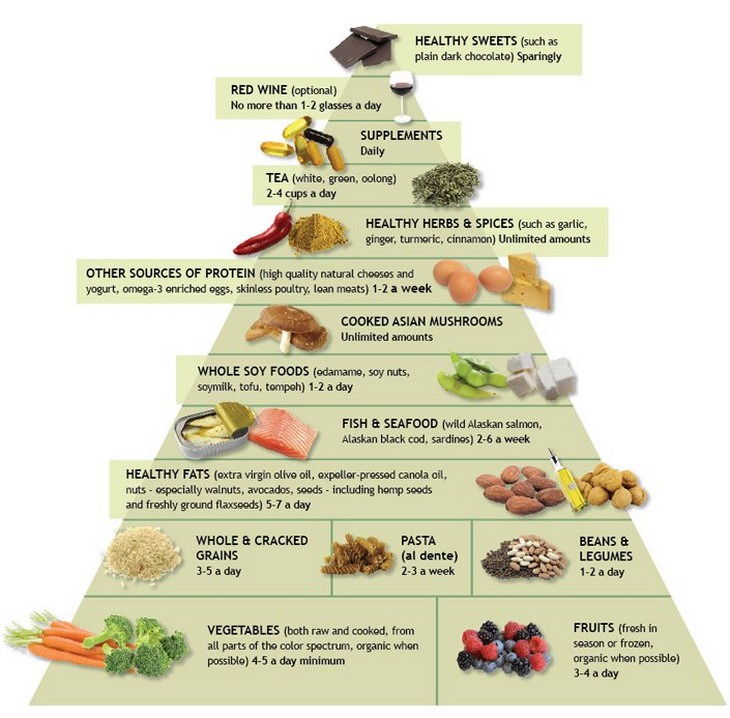
The Pyramid of Anti-Inflammatory Foods