Monday, July 06, 2026

A Few Simple Diet Changes That Can Prevent Inflammation

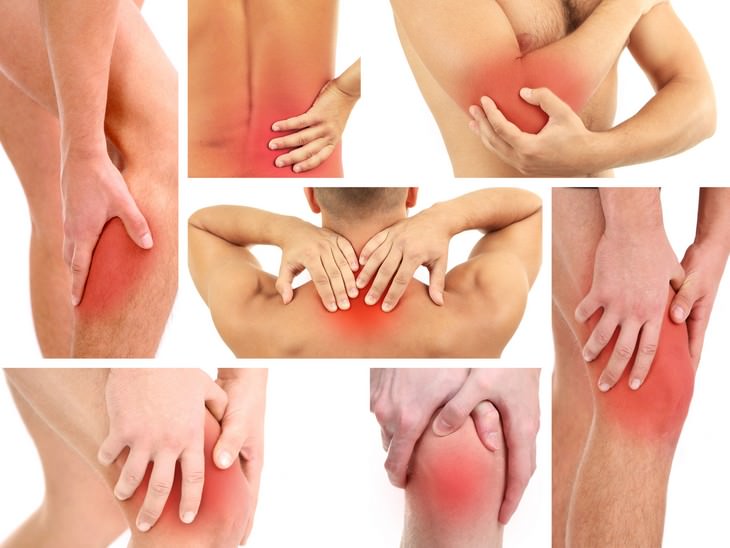
Inflammation is a condition in which parts of the body become red, swollen, and hot. These symptoms, which are often accompanied by pain, are caused as a reaction to injury or infection. It's easy to spot inflamed areas when they are on the outside of the body. But what about internal inflammation? This can be caused by a number of reasons. One way to prevent and reduce it is to eat lots of foods that fight inflammation from within the body. 

For this reason, it is important to know which foods help you fight inflammation, and which are the ones that cause it. 

10 foods that cause inflammation

inflammation, anti-inflammation,

1. Sugar - It's incredibly hard to avoid sugar - we find it everywhere. However, a lot of it may cause inflammation, so it's important to control your intake of processed sugar and opt for sweet fruit instead. 

2. Common Cooking Oils - Safflower, soy, sunflower, corn, and cottonseed. These oils not only contribute to the onset of inflammation, but they are also made with cheap ingredients that are bad for your health. 

3. Trans Fats - Trans fats increase bad cholesterol, and promote inflammation, obesity and resistance to insulin. They are in fried foods, fast foods, and commercially baked goods, including peanut butter and items prepared with partially hydrogenated oil, margarine, and vegetable oil.

4. Red and Processed Meat - Red meat contains a molecule that humans don't naturally produce, called Neu5GC. Once you ingest this compound, your body develops antibodies that may trigger constant inflammatory responses. Reduce red meat consumption and replace it with poultry, fish and lean cuts of red meat, once a week at most. 

5. Feedlot-Raised Meat - Animals who are fed with grains like soy and corn are likely to experience inflammation. These animals also gain excess fat and are injected with hormones and antibiotics. Always opt for organic, free-range meats that have been fed natural diets. 

6. Dairy - While some yogurts are okay, the body generally has a hard time processing dairy products. Milk is a common allergen that may cause inflammation, stomach problems, skin rashes, hives and even breathing difficulties. Remember, milk is good for children but not as great for adults.

7. Alcohol -
Regular consumption of alcohol causes irritation and inflammation to numerous organs, which can lead to cancer. 

8. Refined Grains - "Refined" products have no fiber and have a high glycemic index. They are everywhere: white rice, white flour, white bread, pasta, pastries... Try and replace with minimally processed grains.

9. Artificial Food Additives - Aspartame and MSG are two common food additives that can trigger inflammation responses. Try and omit them from your diet completely. 

10. Undiagnosed Allergy - Do you constantly have headaches or feel tired? Sometimes, you may develop an allergy to a type of food and not even know it. Coffee, certain vegetables, cheese - they might be a trigger you aren't even aware of. Try and take a few foods out to see how you feel. Slowly incorporate them back in to see if there might be a hidden culprit lurking in your diet! 

10 foods that naturally fight inflammation

 
1. Salmon -
Salmon contains Omega-3 amino acids and has been known to treat a multitude of health issues. If you don't like eating fish, you can try a good, high-quality supplement. Try and integrate fish oil or oily fish into your meals twice a week to reap its benefits. 

2. Garlic - Although garlic is more well-known, research is actually a bit more inconsistent about its benefits. But it can help reduce inflammation, control blood sugar and fight infections. 

3. Extra Virgin Olive Oil - This oil has been the key to longevity in Mediterranean cultures for hundreds of years. The oil provides healthy amounts of anti-inflammatory fats and can lower the risk of asthma and arthritis, as well as protect the heart and blood vessels.

4. Sweet Potato - Complex carbs, beta-carotene, vitamins B6 and C, and fiber - these potatoes will work to heal inflammation raging through the body.

5. Blueberries -
These berries not only fight inflammation, but are also excellent anti-aging agents for the brain and, above all, they fight diseases like cancer and dementia. 

Tip: Best to go for organic berries, as regular berries' small size makes it hard to wash away the pesticides. 

6. Kelp - This brow algae extract has important roles to play in the prevention and treatment of liver and lung cancer. It's also a strong anti-inflammatory agent, anti-tumor, and antioxidant. This one does it all. Good sources for kelp are kombu, wakame, and arame.

7. Ginger -
Regular ginger contains a multitude of potential health benefits. It fights inflammation, it helps control your blood sugar levels, and as a tea - it's really good for your diet. 

8. Turmeric - Research is constantly mentioning the benefits of this powerful spice from Asia, which is a strong contender in the anti-inflammatory ring, thanks to its active ingredient - curcumin. This strong ingredient is believed to also fight against the development of Alzheimer's disease, counter heart problems, and act as a natural pain reliever.

9. Green tea -
There are few drinks proven to be healthier than green tea. It contains so many anti-inflammatory flavonoids, that drinking it is actually said to lower the risk of certain cancers. 

10. Cruciferous Vegetables - Broccoli, Brussel sprouts, kale, and cauliflower are all vegetables that are loaded with high amounts of antioxidants. They are considered natural detoxifiers and can rid the body of harmful materials.

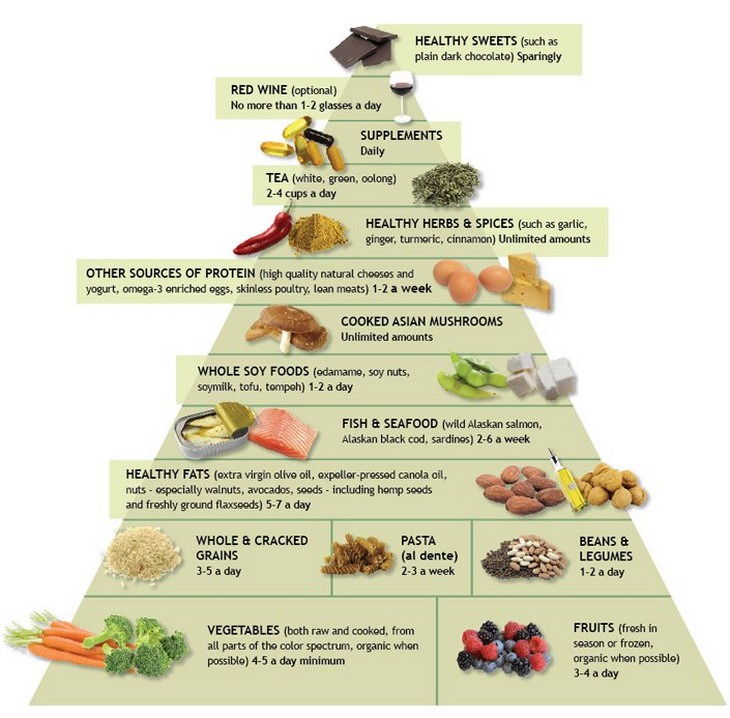
The Pyramid of Anti-Inflammatory Foods

inflammation, anti-inflammation,


This is only for your information, kindly take the advice of your doctor for food, medicines, exercises and so on.   


Labels: , , , , , , , , , , , ,

Friday, April 11, 2025

3 eating habits that could help you age well—and 4 that don’t

 There is increasing evidence that what you eat impacts how long you live, but also how long you live free from chronic diseases—and researchers have now found a clear link between certain dietary patterns and how healthy you age.

The new findings, published in Nature Medicine, used data from the Nurses’ Health Study and the Health Professionals Follow-Up Study to examine the midlife diets and health outcomes of more than 105,000 women and men ages 39 to 69 over a period of 30 years.

Researchers from Harvard T.H. Chan School of Public Health, University of Copenhagen, and University of Montreal found that 9.3% of the study cohort aged healthfully, meaning they reached age 70 free of 11 major chronic diseases—including cancer (except for non-melanoma skin cancers), diabetes, heart attack, stroke, Parkinson’s, and multiple sclerosis—with cognitive, physical, and mental health intact. They were the ones who maintained a diet of mostly plant-based foods with few animal products or ultra-processed foods, reflecting its link to overall healthy aging.

“Studies have previously investigated dietary patterns in the context of specific diseases or how long people live, said co-author Frank Hu, Fredrick J. Stare Professor of Nutrition and Epidemiology and chair of the Department of Nutrition at Harvard Chan School, in a press release. “Ours takes a multifaceted view, asking, how does diet impact people’s ability to live independently and enjoy a good quality of life as they age?”

The best dietary pattern for healthy aging

Participants regularly completed dietary questionnaires that researchers then scored on how well they adhered to eight dietary patterns:

  1. Alternative Healthy Eating Index (AHEI)
  2. Alternative Mediterranean Index (aMED)
  3. Dietary Approaches to Stop Hypertension (DASH)
  4. Mediterranean-DASH Intervention for Neurodegenerative Delay (MIND)
  5. Healthful Plant-Based Diet (hPDI)
  6. Planetary Health Diet Index (PHDI)
  7. Empirically Inflammatory Dietary Pattern (EDIP)
  8. Empirical Dietary Index for Hyperinsulinemia (EDIH)

These diets emphasize three main eating habits: high intake of plant-based foods like fruits, vegetables, whole grains, unsaturated fats, nuts, and legumes, low to moderate intake of healthy animal products such as fish and certain dairy products, and limited intake of ultra-processed foods, which the researchers define as industrially manufactured, often containing artificial ingredients, added sugars, high in sodium, and unhealthy fats.

While all eight dietary patterns were associated with healthy aging, there was one that stood apart: Alternative Healthy Eating Index (AHEI), which was created in 2002 to help lower the risk of chronic diseases. The eating plan emphasizes vegetables, fruit, whole grains, nuts and legumes, omega-3s, and polyunsaturated fatty acids, while limiting or avoiding sugar-sweetened beverages, red and processed meat, trans fatty acids, and sodium.

 Participants who had the most success adhering to the AHEI diet had an 86% greater likelihood of healthy aging at 70 and more than twice as high of a likelihood of healthy aging at 75 compared to those who had the lowest adherence to the diet. 

“Our findings also show that there is no one-size-fits-all diet. Healthy diets can be adapted to fit individual needs and preferences,” said lead author Anne-Julie Tessier, assistant professor in the Department of Nutrition at the University of Montreal, researcher at the Montreal Heart Institute, and visiting scientist at Harvard Chan School.

Generally, the study found that higher intake of ultra-processed foods—especially processed meat, sugary drinks, and diet beverages—was associated with lower chances of healthy aging. 

Researchers added the caveat that since the study was entirely based on medical professionals, it’s important to replicate the study among a group more reflective of the general population to see how the findings would apply.


This is only for your information, kindly take the advice of your doctor for medicines, exercises and so on.   


Labels: , , , , , , , , , ,

Friday, December 13, 2019

Poor diet increases risk of vision loss in later life

If you want to protect your vision in old age, make sure you eat healthy food. Researchers have found that people eating a diet high in red and processed meat, fried food, refined grains and high-fat dairy products may be three times more likely to develop an eye condition that damages the retina and affects a person's central vision.
The condition is called late stage age-related macular degeneration (AMD), an irreversible condition that affects a person's central vision, taking away their ability to drive, among other common daily activities.

"Treatment for late, neovascular AMD is invasive and expensive, and there is no treatment for geographic atrophy, the other form of late AMD that also causes vision loss. It is in our best interest to catch this condition early and prevent development of late AMD," said Shruti Dighe, who conducted the research at the University at Buffalo in the US.

The results suggest that that a Western dietary pattern may be a risk factor for developing late AMD.

However, a Western diet was not associated with development of early AMD in the study, published in the British Journal of Ophthalmology.

The authors studied the occurrence of early and late AMD over approximately 18 years of follow-up among participants of the Atherosclerosis Risk in Communities (ARIC) Study which was designed to investigate the etiology and clinical outcomes of atherosclerosis, a disease in which plaque builds up inside your arteries.

Dighe and her colleagues used data on 66 different foods that participants self-reported consuming between 1987 and 1995 and identified two diet patterns in this cohort -- Western and what researchers commonly refer to as "prudent" (healthy) -- that best explained the greatest variation between diets.

"What we observed in this study was that people who had no AMD or early AMD at the start of our study and reported frequently consuming unhealthy foods were more likely to develop vision-threatening, late stage disease approximately 18 years later," said study senior author Amy Millen, Associate Professor at the University at Buffalo.

Early AMD is asymptomatic, meaning that people often do not know that they have it. To catch it, a physician would have to review a photo of the person's retina, looking for pigmentary changes and development of drusen, or yellow deposits made up of lipids.

With early AMD, there could be either atrophy or a build-up of new blood vessels in the part of the eye known as the macula.

"When people start developing these changes they will begin to notice visual symptoms. Their vision will start diminishing," said Dighe, who is now pursuing her PhD in cancer sciences at Roswell Park Comprehensive Cancer Center in Buffalo, New York.

"This is advanced or late stage AMD," she said.  


this is only for your information, kindly take the advice of your doctor for medicines, exercises and so on.     
https://gscrochetdesigns.blogspot.com. one can see my crochet creations  
https://gseasyrecipes.blogspot.com. feel free to view for easy, simple and healthy recipes    
https://kneereplacement-stickclub.blogspot.com. for info on knee replacement


Labels: , , , , , , , , , , , , ,

Wednesday, May 29, 2019

Prevent Cancer By Avoiding These 5 Diet Mistakes

More and more large new studies confirm the relationship between a poor diet and the risk of developing certain cancers. In fact, a subpar diet increases your risks of developing certain types of cancer just as much as alcohol and more than not exercising. The latest research suggests that, in the United States, many cancer cases could have been prevented with just a few changes in diet.
But the U.S. isn’t the only country where these bad eating habits persist and everyone could benefit from a healthier diet. And even if we were to divide people into groups who are at the highest risk of diet-related cancers, the study suggests that this division should be different. The research reported that men, middle-aged people, and racial and ethnic minorities have a significantly higher incidence of diet-related cancers.
As for the types of cancers most affected by diet, the study found the strongest link between diet and cancers in the digestive and reproductive system, as well as kidney cancer and cancers of the mouth and throat.
Luckily, changing your food habits is not impossible, especially with some guidance. The study outlined 5 main bad food habits that can potentially cause cancer, and avoiding these mistakes protects you from the risks. Here are these mistakes:

1. We Still Eat Too Much Red and Processed Meat

Eating too much red and processed meat is one of the most dangerous dietary choices one can make. And while globally, people have reduced their red meat intake during the past decade, the amount of processed meats remains unchanged. On average, Americans eat about 1 ounce (28 g) of processed meat on a daily basis, and the statistics are similar in many other countries.
This is twice the daily allowance of this type of product, which has been officially named a carcinogen in many countries. In fact, the overall daily limit of all meats (with preference given to low-fat meats), eggs, dry beans, and nuts should not exceed 2 servings and a total of 6 ounces (170 g). High red meat and processed meat intake lay the greatest burden on stomach and colorectal cancer risk.

2. We Don’t Consume Enough Dairy

Somewhat surprisingly, a low intake of dairy products can hike up your risk of developing colorectal cancer almost as much as the lack of grains in the diet. On average, Americans consume only half of the recommended 3 daily servings of dairy, and researchers suggest that the lack of calcium and vitamin-rich dairy products may be responsible for the rising rates of colorectal cancer in the country.

3. We’re Still Not Eating Enough Fruit and Vegetables

We know this is old news, but it’s a persistent problem. 4 servings (around 2 cups, or 150 g) of vegetables and 3 servings of fruit is how much we should eat daily, and this doesn’t include starchy vegetables like potatoes and fruit juices.
Those who don’t meet these daily amounts were found to be more likely to suffer from mouth, throat and lung cancer. Low fruit intake was also linked to breast and uterine cancers. By eating enough fruit and vegetables, you’re lowering the likelihood of developing the above-mentioned types of cancer by 5-9%.

4. We Persist Drinking Excessive Amounts of Sugary Drinks

Sweetened beverages, be it soda, lattes or sweet tea, are dangerous to your reproductive system, as well as your kidneys and liver, increasing the risk of developing cancerous tumors in these organs. Opt for sugar and sweetener-free caffeinated drinks and try to exclude soda from your diet altogether.
Fizzy drinks, as well as any drinks with added sugar, can affect your body in a million other ways other than causing cancer.

5. We Have to Eat More Whole Grains

The second leading cause for diet-related cancers in the United States is the lack of whole grains, such as corn, oats, brown rice and many others, in the diet. Every adult should eat around 3 servings of grains every day, as the fiber and nutrients, such as vitamins and minerals, can protect us from cancer, particularly cancers of the digestive and reproductive systems, as well as kidney cancer.
It’s important to opt for whole grains, as they’re more nutritious and significantly richer in fiber, and yet, only 20% of the grains Americans consume are whole grains.
In summary, to lower your risk of diet-related cancers, you have to include plenty of whole grains, dairy, fruit, and vegetables in your diet, as well as try to avoid or significantly lower your intake of sugary drinks, processed meats, and red meat. As you can see, these changes are few and not impossible to accomplish, and the results are very well worth it.
THIS IS ONLY FOR INFORMATION, ALWAYS CONSULT YOU PHYSICIAN BEFORE HAVING ANY PARTICULAR FOOD/ MEDICATION/EXERCISE/OTHER REMEDIES.                                    PS- THOSE INTERESTED IN RECIPES ARE FREE TO  VIEW MY BLOG-                                                                                           https://gseasyrecipes.blogspot.com/    
                                                                                                                                                     FOR INFO ABOUT KNEE REPLACEMENT, YOU CAN VIEW MY BLOG-                                                  https:// kneereplacement-stickclub.blogspot.com/  

                            FOR CROCHET DESIGNS                                                                                                                                                                                                  https://gscrochetdesigns.blogspot.com


Labels: , , , , , , , ,