Saturday, March 13, 2021

New Surprising Research on Salt’s Effect on the Body

The legend of the king's daughter who declared to her father that she loved him like salt is a testimony to the important presence of this mineral in our lives. Food without salt is perceived by many as food without taste and therefore we add it to almost every meal we eat, and this fact raises a number of questions. On the one hand, table salt, despite it being associated with an increase in blood pressure, is a vital component that our body that could not function without, and new studies on sodium intake have even found that salt causes increased calorie burning.

On the other hand, the industrial and processed food we consume every day adds very large amounts of salt to our diet and endangers our health. So what should we do? Is salt really a dangerous substance that should be minimized as much as possible or is it an important component that we need provide our bodies with? The answer to this question is given in brand new research we’ll talk about below.
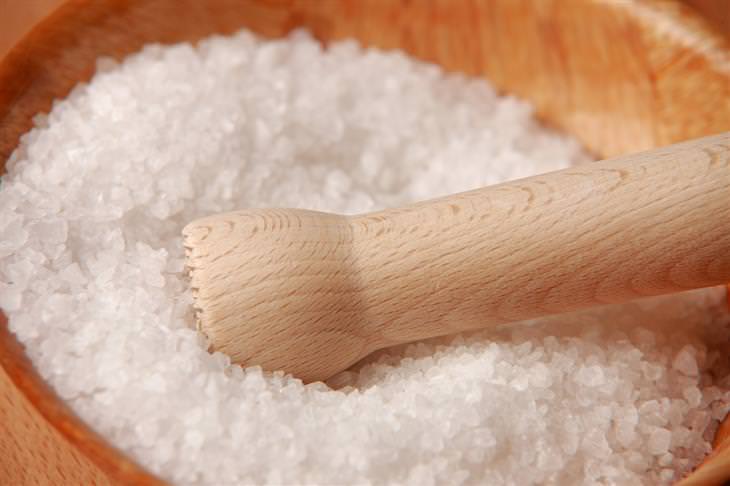
Salt
Some basic salt facts: 
Sodium chloride, known as a cooking salt, is a healthy and essential mineral for the body, which helps, among other things, various organs such as the heart and kidneys function, transmits nerve signals, and regulates fluid in the body and many other processes. The sodium we need to get from an external source, that is, the food we consume, and the state of lack of sodium is dangerous for us and may endanger life as in cases of dehydration or excessive consumption of liquids, which disturb the balance of salt in the body. An equally dangerous, but much more common, phenomenon is the surplus consumption of salt known as one of the "evils" that accompany industrial and processed food that the Western world consumes in large quantities. 
 
 The salt that is added to the food we buy is intended to enhance flavors and smells, acts as a preservative that prevents expiration and is used to create fermentation processes, as in the case of cheeses and pickles. Foods that seem to us to be "innocent" like bought bread, cheeses, salads, and even foods we think we need to add salt to, already come with a high sodium content. By the way, just as with sugar, our sensitivity to salt decreases as we consume more of it, so to feel its taste we often feel the need to add more and more of it to our food.

Things to Know about Smart Salt Consumption:  
According to the World Health Organization, 99.2% of the world's adult population consumes more than 6 grams of salt per day, which is the daily recommended amount (not to be confused with the amount of sodium - a chemical element in salt – with a recommended daily intake of 2.3 grams), therefore we can definitely coin this excess an epidemic. By the way, 6 grams of salt is about one teaspoon, and we all know how fast a teaspoon of salt is added to our plates, not considering the amount added in the factories. The question is why is excess salt dangerous to our bodies and what is its effect on our health? - and here the opinions are divided.

The main concern that arises from excessive salt consumption is the association found in various studies between salt consumption and increase in blood pressure. As you know, high blood pressure – the pressure blood places on the walls of the arteries in which it passes - is one of the main causes of cardiovascular disease, stroke, and kidney failure. Excess sodium has also been linked to the development of kidney stones, edema and bone loss (osteoporosis). The relationship between salt and blood pressure is probably due to the fact that sodium pulls water from the blood vessels in the body and increases the pressure on them, but new and multiple studies have begun to contradict this connection and present surprising findings.

In a study of salt intake on more than 2,600 participants, participants who consumed less than 2.5 grams of sodium a day had higher blood pressure than those who consumed higher amounts of the mineral. These findings may be explained by the conclusions of another study that found that even people who adhere to a low-salt diet and those who consume a diet with excess salt have a high risk of developing heart disease, so the relationship between salt and blood pressure and the recommended amount of sodium intake is not as straightforward as we once thought. Another important part of the study was that potassium, calcium and magnesium intake, combined with sodium, led to a decrease in blood pressure.

A new study from 2017 on salt intake and the effect of sodium on the body shatters other myths we had about this complex issue. After many years of being accustomed to thinking that eating salty foods makes us thirsty and being served pretzels or peanuts at a bar to make us drink more, we were mistaken. The findings from the study, conducted on a small number of Russian cosmonauts, indicate that what we feel is actually increased hunger. The researchers, who increased the amount of salt given to some of the subjects, found that although the latter received the same amount of calories as their peers, they reported a stronger sense of hunger. The researchers also tested the effect of sodium on mice and found similar findings that an increased-salt diet caused the rodents to consume much more food. 
 
Another interesting finding in both studies was that the higher the salt intake, the greater their amount of urine, although they drank less water and did not report increased thirst. The reasoning behind these findings is that humans, like camels, know how to extract water from their bodies by dissolving fat and muscle tissue. When we consume too much salt, the body strives to remove it, so the level of glucocorticoids that affect metabolism in the body increases and causes the breakdown of fat and tissues that become liquid and remove the excess sodium from the body. That is to say, salt causes increased metabolic activity and calorie burning - which explains the sense of hunger reported by cosmonauts.

How should we treat salt in the light of these studies?   salt
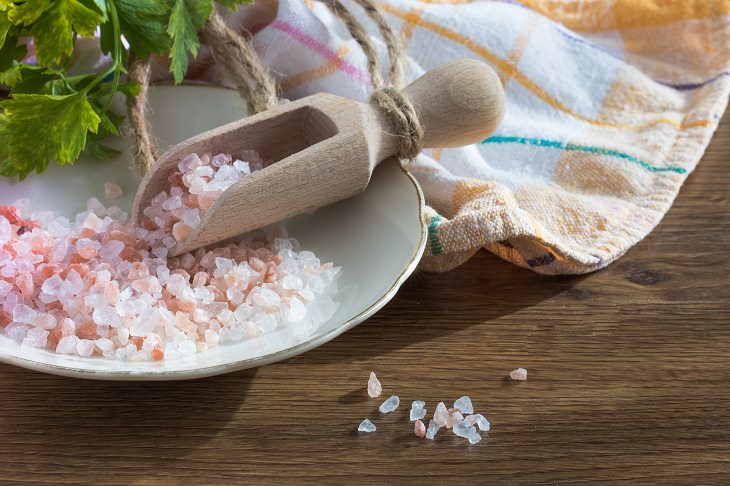
Based on the findings of these studies, should we switch to a high-salt diet to lose weight and disregard warnings about excessive consumption? The answer is of course no, but the research does shed new light on the recommendations that many of us have followed with our eyes closed to this day. 
 
First of all, as noted, when the body gets rid of the excess salt and releases energy, there is an increase in the sense of hunger that may lead to excessive consumption of calories. Another reason why salt should not be overdone and relied on as a "dietary" ingredient is that the same glucocorticoid hormones mentioned above, cause the body to break down fat and muscle, which is not the kind of weight we want to lose. Incidentally, high levels of these hormones are also associated with diseases such as bone depletion and diabetes.

In addition, very salty foods are usually very fattening - so there's no point in leaning on them as our diet friends. As for the conflicting findings about the relationship between blood pressure and a high-salt diet, since an increase in blood pressure is linked to other risk factors, the recommendation is to make changes in the amount of salt you consume in your diet with help from a doctor or nutritionist and monitor your blood pressure levels to find out the effects of salt on your health. 
 
Since the amount of salt your body needs may differ from the standard recommendation, and because it is influenced by age, climate, genetics, background diseases, and more, the best thing to do is to carefully examine the effect of salt on you and not to exaggerate in any direction. Remember, table salt is not the enemy, but the industrial foods that many of us eat every single day are. It is therefore recommended that all of us maintain a balanced diet that doesn’t prevent our body from benefiting from substances such as salt, sugar, fats or other essential substances, while not being harmfully excessive, something that may cause health damage.

This is only for your information, kindly take the advice of your doctor for medicines, exercises and so on.     

https://gscrochetdesigns.blogspot.com. one can see my crochet creations  
https://gseasyrecipes.blogspot.com. feel free to view for easy, simple and healthy recipes    
https://kneereplacement-stickclub.blogspot.com. for info on knee replacement

Labels: , , , , , , ,

Sunday, December 22, 2019

Excess antibiotic consumption harmful for children

Low and middle countries have children who are being prescribed an excess amount of antibiotic during their earlier first five years that resists their ability to fight pathogens, says study.

Gunther Fink, lead author of the study and head of the Household Economics and Health Systems Research Unit at Swiss TPH, said: "We knew children in LMICs are sick more often, and we knew antibiotic prescription rates are high in many countries. What we did not know was how these elements translate into actual antibiotic exposure--and the results are rather alarming."

Antimicrobial resistance is considered as one of the global health and development threat today, according to the World Health Organisation (WHO). Excessive use of antibiotics worldwide is one such factor contributing to the threat.

Mid-low countries often have children who fall sick frequently and they visit the hospital only to be overprescribed by antibiotics.

In Tanzania, for instance, several studies have shown that over 90 per cent of children who visit a health facility receive an antibiotic, although only in about 20 per cent of the treatment of the case was actually required.

Swiss TPH and Harvard Chan School research team analyzed data from 2007-2017 from health facilities and household surveys from eight countries: Haiti, Kenya, Malawi, Namibia, Nepal, Senegal, Tanzania, and Uganda.

The study has found that on an average child received 25 antibiotic prescriptions through age five a 'remarkable estimate', the authors wrote, given that two antibiotic prescriptions per year are considered excessive in many high-income settings.

Results showed that antibiotics were administered in 81 per cent of cases for children with a respiratory illness, in 50 per cent for children with diarrhoea, and in 28 per cent for children with malaria.

The excessive intake of antibiotics can also result in a concrete health impact on children. Valerie D'Acremont said: "Excess antibiotic use destroys the natural gut flora which is essential to fighting pathogens."

The research team is currently comparing policies at a country level to identify best practices that lead to lower antibiotic prescription rates.

this is only for your information, kindly take the advice of your doctor for medicines, exercises and so on.     
https://gscrochetdesigns.blogspot.com. one can see my crochet creations  
https://gseasyrecipes.blogspot.com. feel free to view for easy, simple and healthy recipes    
https://kneereplacement-stickclub.blogspot.com. for info on knee replacement


Labels: , , , , , , ,

Tuesday, December 03, 2019

25 Smart Ways to Cut Down On Sugar

Sugar is a wonderful thing for the tongue, but can be a horrible thing for our health . Excess sugar leads to obesity, diabetes, cancer and many other diseases and illnesses. Most of us realize at some point that we ought to curb our appetite for sugar. But sugar is addictive, so it's not easy to change your sugar habits. Here are 25 golden rules for leading a low-sugar lifestyle.
 
1. Reduce the amount of sugar SLOWLY
Some people try to cut sugar out of their lives immediately, going cold turkey. What they forget is that sugar is an addictive substance, a VERY addictive substance. Once your body gets used to it, quitting all at once can be a horrible experience, leading to bad emotional states, anxiety and even physical symptoms such as fatigue and sweats. Studies also show that quitting sugar all at once leads to a higher risk of returning to full time consumption. It's healthier and better to slowly decrease your intake over a couple of weeks time.

2. Consume whole foods
Whole foods don't contain added sugar. So why not stick to fruits, vegetables and meat products in their original condition, and reap the benefits?

3. Prepare your own meals
Get out that cookbook and start cooking for yourself. That way you know exactly how much sugar is in your meal, and you get no surprises from food places that add a little sugar "for taste".

4. Become suspicious of 'sugar free' labels
So it doesn't have sugar. But it DOES have artificial sweeteners that, besides increasing your risk of certain cancers, trick your body into thinking glucose is being delivered. When it fails to, you will feel hungrier, and look for something sweet again. So watch out for those "no sugar" labels.

5. "Fat-Free" is just as bad
Yes, it's fat-free, but it usually contains added sugar or sweeteners, to make up for the lesser flavor of foods with less fat.

6. It's time to know your labels
All foods carry labels. We know it's no fun trying to understand them, but once you read a few you'll see they repeat themselves, and you can easily start to identify those that have the most natural ingredients and less artificial ingredients, as well as the preparation techniques that use no added sugars or sweeteners. Compare the labels you read to labels of products you KNOW are bad for you, find what is similar and what is different to know you've made the right choice.
7. No sodas, no non-natural juices
Almost all of these drinks are pretty much sugar water. So if you're serious about getting your sugar intake way down, avoid these like the plague.

8. That includes diet sodas, too
As we've said before, artificial sweeteners will just make your body crave more sugar. Diet sodas are full of those, and will enlarge your sweet tooth. Sorry to say, diet sodas should be avoided just like regular sodas.

9. Start your days with a good amount of protein
Eggs, protein shake, yogurt - try to start your day with a breakfast that contains food products such as these. They will keep your blood sugar levels normal and limit your cravings for sweets. An added benefit is that they will also help control your metabolism for the rest of your day.

10. Don't forget your meals - no skipping
We all forgo a lunch or dinner here and there. Sometimes we're busy, sometimes just too tired to feel like eating. But it backfires, because we get more cravings for sweets this way, and we may easily turn to sugar to plug that hole.

11. Emergency snacks are an important resource
Nutrition experts such as Dr. Mark Hyman recommend having an emergency snack-pack close to you at all times. So when you get that craving, you have something immediate to reach out to, such as fresh fruit, nuts, jerky or whole foods. This way you're not tempted to go out to the vending machine closest to you and succumb to your sweet tooth.

12. Drink, and drink a lot
It may not seem connected, but when we're thirsty, our body increases our cravings for food and sweets. Keep yourself hydrated and those cravings will subside.
cutting down on sugar consumption
13. Choose fruits
Fresh fruits will hydrate you, supply you with much needed fiber and help you metabolize fructose, a much better way to answer the call of your sweet cravings than any processed food.

14. But even more than fruit - go for vegetables and nuts
Fruit is very healthy, but also sweet, and that sweetness will keep your addiction to sugar in existence. Limit yourself to a small amount of fruit a day (1-2). Veggies, nuts and seeds as the best types of healthy snacks.

15. There are healthy fats around, keep them close by
Healthy fats, like those found in extra virgin olive oil, avocados, nuts and seeds, will get you to a place where you feel full, have lots of energy, and enjoy a balanced blood-sugar level.

16. Everything has a natural substitute - find it White sugar can be replaced with honey or molasses (keep the amounts small). These provide great flavor with a lot more nutrients, and will keep your sugar intake lower.

17. Spice up your life
Another great way of satisfying your craving for something sweet is using spices such as nutmeg, cinnamon, paprika, cardamom and many others that have a sweetness to them without adding sugar.

18. Try a week of black coffee
I know not everyone enjoys black coffee, but it just takes a little getting used to. Take a 7 day trial and drink only black coffee. Studies have shown it can reduce the risk of diabetes as well as certain types of cancer, and is a real metabolism booster. Drink it slowly and absorb the rich taste and experience. You don't need sugar to enjoy that special aroma.

19. Like chocolate? Join the dark side
Dark chocolate contains A LOT less sugar than its milky counterpart, and can be very good for you.
cutting down on sugar consumption
20. Don't do it alone
Fighting your sugar craving is so much better when you're not doing it alone. Maybe you have a friend, a loved one or a significant other who can also use a sugar reduction? Most of us do. Pair up and give each other much needed support. Cook together and talk to each other when the cravings get really bad. It can be a huge comfort and can stop you before making that craving come true.

21. Know the other names of sugar
When looking for sugar content, sometimes you may miss its other names. Names like "Black strap molasses", "Agave Nectar", "Dried oat syrup" or even "Evaporated cane juice". These aren't EXACTLY sugars, but your body still treats them the same. So be on the lookout, and keep reading those labels!

22. Never assume a product or food is devoid of sugar
You wouldn't think there is sugar in a salad, right? Or in a sauce or meat glaze? But sometimes there are. If you're at a restaurant, ask your waiter about sugar content. If you're buying a product, once again - check the label. Never assume something is sugar free just because it doesn't make sense for it to have sugar. It gets added to a surprising amount of foods.

23. The glycemic index is not the final answer
The glycemic index scale measures glucose, but not fructose. Sugars are metabolized differently and have different effects on our body, so the GI scale is not enough to judge.
24. Sleep, and sleep well
When we don't get enough sleep (or enough quality sleep), we fall behind on our energy needs, and will often look for something to fill that energy hole - such as sugar, sugary coffee or tea etc. Get 7-8 hours of good sleep a night to avoid empowering your cravings.

25. Track your emotions
A lot of the time we reach out to that sugary goodness to compensate for a bad emotional state, and not because we're truly hungry. Notice how you are feeling when cravings strike. Knowing is half the battle, and when you're aware of your emotional state, you can counter that craving with something that makes you happy or brings you joy that isn't sugary food.

this is only for your information, kindly take the advice of your doctor for medicines, exercises and so on.     
https://gscrochetdesigns.blogspot.com. one can see my crochet creations  
https://gseasyrecipes.blogspot.com. feel free to view for easy, simple and healthy recipes    
https://kneereplacement-stickclub.blogspot.com. for info on knee replacement


Labels: , , , , , , , , , , , , , , , , ,

Friday, November 29, 2019

Unexpected reasons why your immunity is at an all-time low

Unexpected reasons why your immunity is at an all-time low

You wash your hands often, stay away from sick people, never forget to take your vitamins and still catch the flu. Wondering why? Sometimes some not so obvious reasons are responsible for your weakened immunity. Here is a list of five weird reasons behind you often falling sick.

You live in a polluted place

The air around you is not only harming your lungs but your immunity too. Studies have found that polluted air suppresses the T cells, which are important for your immune system to be healthy.

What you can do?
As you cannot control the air quality outside, you can invest in an air purifier and face mask. This will help you breathe easily indoors as well as outdoors. 

You are consuming too much protein

Consuming excess animal protein can make your body produce more of 1GF1 hormone. The hormone is known to speed up ageing and hamper your immune system.

What you can do?
Make sure that no more than 10 per cent of your daily calorie intake should come from animal sources like meat and dairy. If this doesn’t help, you can cut down the animal protein intake to 5 per cent. 

You spend most of your day alone

People who are lonely are usually less resilient in the time of stress and thus their immune system suffers.

What you can do?
Spend some quality time with your friends, loved ones and neighbours. People with happy relationships have a greater resistance to infections as compared to lonely people, says study. 

You are sitting all day

If you have a nine to five job, your butt is planted on the chair most of the time. This slows down your metabolism, which can cause your body to absorb immunity-boosting nutrients much slower than normal.

What you can do?
Make sure to take a five-minute break in every half an hour. These little moves will boost your metabolism and activate your muscles.

Tip
Keeping a mug instead of a bottle will increase your number of rounds to the pantry and thus your overall movement.

this is only for your information, kindly take the advice of your doctor for medicines, exercises and so on.     
https://gscrochetdesigns.blogspot.com. one can see my crochet creations  
https://gseasyrecipes.blogspot.com. feel free to view for easy, simple and healthy recipes    
https://kneereplacement-stickclub.blogspot.com. for info on knee replacement


Labels: , , , , , , , , , , , , , , , ,

Saturday, November 16, 2019

Scientists crack secret to longevity

Scientists seem to have cracked the secret of longevity of supercentenarians -those over the age of 110 years. New studies have found that these really old people possess an excess of cytotoxic CD4 T, a type of immune cells.

Scientists used single-cell RNA (Ribonucleic acid) analysis to make the discovery.

Supercentenarians are somewhat of a unique group of people. First, they are extremely rare. For example, in Japan in 2015 there were more than 61,000 people over the age of 100, but just 146 over the age of 110.

And studies have found that these individuals were relatively immune to illnesses such as infections and cancer during their whole lifetimes. This led to the idea that it might be that they have a particularly strong immune system, and the researchers are set out to find out what might explain this.
The results of the study were published in the journal 'Proceedings of the National Academy of Sciences (PNAS).'

To answer the question, they looked at circulating immune cells from a group of supercentenarians and younger controls. They acquired a total of 41,208 cells from seven supercentenarians (an average of 5,887 per subject) and 19,994 cells for controls (an average of 3,999 per subject) from five controls aged in their fifties to eighties.

They found that while the number of B-cells was lower in the supercentenarians, the number of T-cells was approximately the same, and in particular, the number of one subset of T-cells was increased in the supercentenarians.

Analysing these cells, the authors found that the supercentenarians had a very high level of cells that are cytotoxic, meaning that they can kill other cells, sometimes amounting to 80 per cent of all T-cells, compared to just 10 or 20 per cent in the controls.

Normally, T-cells with markers known as CD8 are cytotoxic, and those with the CD4 marker are not, so the authors first thought that perhaps CD8-positive cells were increased. But that turned out to not be the case. Rather, it seems that the CD4-positive cells of the supercentenarians had acquired cytotoxic status.

Intriguingly, when the researchers looked at the blood of young donors, there were relatively few CD4-positive cytotoxic cells, indicating that this was not a marker of youth but rather a special characteristic of the supercentenarians.

To look at how these special cells were produced, the team examined the blood cells of two supercentenarians in detail and found that they had arisen from a process of clonal expansion, meaning that many of the cells were the progeny of a single ancestor cell.

According to Kosuke Hashimoto of IMS, the first author of the paper, "We were especially interested in studying this group of people, because we consider them to be a good model of healthy ageing, and this is important in societies like Japan where ageing is proceeding rapidly."

IMS Deputy Director Piero Carninci, one of the leaders of the groups, says, "This research shows how single-cell transcription analysis can help us to understand how individuals are more or less susceptible to diseases.

this is only for your information, kindly take the advice of your doctor for medicines, exercises and so on.     
https://gscrochetdesigns.blogspot.com. one can see my crochet creations  
https://gseasyrecipes.blogspot.com. feel free to view for easy, simple and healthy recipes    
https://kneereplacement-stickclub.blogspot.com. for info on knee replacement


Labels: , , , , , , ,