Sunday, March 30, 2025

Do Women React To Stress Differently Than Men?

It certainly feels terrible to be stressed, but the effects of this terrible malady on the body are so much more than just unpleasant. The physiological effects of stress on the human body range from hair loss to serious health conditions like hypertension and depression, no wonder psychologists and doctors alike take it so seriously. 
 
But you probably knew all that already. What you might have not known, however, is that stress manifests itself differently in men and women. In this article, we will focus on the symptoms of stress in women, and then we will discuss how to treat it without going to therapy or taking antidepressants. 
 
How Is Stress Different In Women? 
We know that stress is our body’s reaction to danger, both immediate and chronic. A 2000 study revealed that women and men may have a different reaction and sensitivity to stress. 
 
While men usually react to stress by the “fight or flight” response, women tend to do the opposite: instead of fleeing from the dangerous situation, they try to react to the dangerous situation by forming bonds with other people, which got the nickname “tend or befriend” response. 
 
This difference in sexes is suggested to be an evolutionary development, as in the distant past, women were the primary caregivers and had to provide for their children first, whereas men were the hunters who usually had to react fast in a dangerous situation. 
 
Whether or not this theory is true, we know that, on average, women are more stressed than men, which suggests that they are more susceptible to the adverse effects of stress.
These adverse effects are both physiological and mental, and can be categorized into the following 7 categories: 
 
1. Stomach Issues
stress in women stomach issues
Many women report that they either lose appetite or start eating more (usually junk and comfort foods) when they’re stressed. This may change, too: one situation can upset your stomach, whereas another can make you eat more.

Irrespective of the changes in diet, the most common stomach issues caused by stress are:

Bloating
cramps 
Heartburn
Changes in weight
 
A 2017 study in the journal Frontiers in System Neuroscience even suggested that stress can cause irritable bowel syndrome (IBS).

2. Heart problems
Chronic stress raises the amount of adrenaline and cortisol in blood, both of which are hormones associated with hypertension. This can have a negative effect on the cardiovascular system and may contribute to stroke and heart attack.

Also, some studies associate stress with changes in blood clotting, which also increases the risk of a heart attack.

3. Skin reactions
Your skin, hair and nails are especially sensitive to stress. This is likely because of the hormonal changes due to stress, and every woman who ever had a hormonal breakout knows very well what hormones can do to the skin. The most-common skin reactions include: 
 stress in women skin problems
Acne 
Rosacea and psoriasis flare-ups 
Hives or rash
Hair loss 
Brittle nails 
 
Luckily, the symptoms of these conditions tend to subside when the stressful period is over, but do take into account that you will have to take better care of your skin and use gentle and non-irritating skin care products when you know you're stressed.
4. Disrupted Sleep
Consistently high levels of cortisol in the blood, a signature feature of chronic stress, affect the so-called HPA loop, which is a relationship between the hypothalamus, the pituitary gland, and the adrenal gland. 
 
Unfortunately, the same loop controls our sleep cycles, so when you're stressed and the HPA loop is too active, you often feel tired, yet unable to fall asleep. Furthermore, even the quality of sleep decreases as the transition between the various sleep cycles is disrupted. 
 
5. Emotional Disturbances 
Chronic stress can cause a variety of emotional disturbances and even mental illness: 
 
Anxiety 
Depression 
Irritability 
Mood swings 
Compulsive behavior (such as addiction). 
 
As alarming as it may sound, there is even a study that showed that higher levels of anger are commonly linked to both mental stress and even the likelihood of a stress-related heart attack. stress in women depression

6. Difficulty Concentrating and Memory Issues  
Researchers found that certain hormones secreted after a stressful event can potentially impair memory and concentration. Also, an animal study found that stressed rats had more memory issues than the non-stressed control group. 
 
The same is suggested to occur in humans, as many patients report that they have difficulties focusing or remembering important information when they're stressed. 
 
7. Lowered Immunity  
The American Psychological Association suggests that stressful events and negative emotional experiences can take a toll on your immune system, which can make you more susceptible to a cold, but also to any other infectious disease. 
 
They conclude that managing stress is crucial for you to regain your ability to fight off germs. The next section is exactly about that, the most basic lifestyle change you can make to be less stressed. B


How To Deal With Stress 
 
Therapy and medications can certainly get you through a stressful period in your life, but the following changes in lifestyle can also significantly improve your stress symptoms: 
 
1. Improve your diet 
When you’re stressed out and you have no time to do anything, you’re more likely to settle for a snack or junk food instead of a healthy and nutritious meal. 
 
You have to resist this urge and try to improve your diet, include more leafy greens and colorful vegetables in your diet, as in the past years there is more and more scientific evidence suggesting that a healthy diet can help you fight anxiety and depression, and, certainly, stress.
2. Make time for exercise  
When you exercise and spend more time outdoors, your brain releases chemicals associated with happiness and wellbeing, such as the neurochemical oxytocin, the levels of which drop dramatically during stressful periods in your life. 
 
So, lift your mood while you’re getting in shape by normalizing your oxytocin levels. 
 
3. Find fun ways to relax 
Women often seek connection and meaning in life when they feel stressed, and what your gut tells you is exactly what you should do, in this case. 
 
Distracting yourself by doing activities that require a lot of concentration is another effective method of fighting off stress, as reported in the journal Frontiers in Psychiatry in 2017. 
 
So, find or rediscover your old hobby, participate in engaging conversations with family and friends and just do something meaningful.

4. Hugs

 Let’s end our list of recommendations on a happy note and with a non-trivial tip. It turns out that hugs, especially long hugs lasting up to 20 seconds, may have the same effect on your brain as a morning jog, as reported in a 2018 study. Like exercise, hugs raise the levels of oxytocin in blood, which may just be enough to compensate for that stressful day at work.


This is only for your information, kindly take the advice of your doctor for medicines, exercises and so on.   


Labels: , , , , , , , , ,

Monday, March 08, 2021

5 Acupressure Points to Improve Your Well Being

If you're not feeling well, there are a lot of things you can do. Try get up and take a walk, drink some water, take a deep breath. Alternatively, you could try acupressure, a technique from traditional Chinese medicine which helps prevent and treat discomfort. Acupressure can be done on your own, anywhere, anytime, and all you have to do is apply pressure to certain parts of the body. Acupressure encourages energy flow through natural pathways in the body, sending it to our internal organs and limbs. It also helps restore a natural energetic flow, returning the body to a state of well-being.

1. For upper body pain
acupressure
If you have pain or stiffness in the head, neck, throat or face - this includes a headache, neck and jaw tension, toothache, sinus pain or a sore throat - gently massage the fleshy web between the thumb and the index finger. This acupressure point is known as Large Intestine 4 (He Gu).

2. For stomach discomfort
acupressure
Whether it be nausea, dizziness, anxiety or motion sickness, put pressure on the inside of the wrist to alleviate the symptoms. Apply pressure about three finger widths down from where your wrist meets your hand. Pregnant women who suffer from morning sickness can also apply pressure to this point. This acupressure spot is called Pericardium 6 (Nei Guan). 
 
3. When you're exhausted
acupressure
If you are feeling tired, have low immunity or poor digestion, or simply want to promote overall vitality, apply pressure to this spot located four finger widths below the kneecap and one finger width to the outside of the shinbone. You should feel tenderness when applying pressure here. It is said that if you are tired and can no longer walk, stimulating this point will allow you to walk another three miles. This point is known as the Stomach 36 (Zu San Li). 
 
4. For indigestion acupressure 
acupressure
If you are feeling bloated, have indigestion, intestinal gas or a lack of appetite, gently massage the space between the sternum and the belly button. Either massage this point gently or simply rest your hand over the area. This point is known as the Ren 12 (Zhong Wan). 
 
5. For period cramps 
acupressure
If you suffer from menstrual cramps or back pain during menstruation, apply pressure or gently massage the tender point four finger widths below the groove where the inner leg curves. This acupressure spot is known as Spleen 8 (Diji).

This is only for your information, kindly take the advice of your doctor for medicines, exercises and so on.     

https://gscrochetdesigns.blogspot.com. one can see my crochet creations  
https://gseasyrecipes.blogspot.com. feel free to view for easy, simple and healthy recipes    
https://kneereplacement-stickclub.blogspot.com. for info on knee replacement

Labels: , , , , , , , , , , , , ,

Saturday, January 30, 2021

Herbs and Spices That Fight Stress

It’s time to add a new term to your wellness dictionary - adaptogens. These powerful herbs and roots will help you cope with outside stressors, be it rainy weather or a stressful day. Practitioners say they really work, and they might be especially helpful for you in the gloomy transitional fall weather. Continue reading for more in-depth information about adaptogens and to find out which ones can help you fight the fall or winter blues.
 Adaptogens various herbs
Coping with stress is one of the key functions of the human body, and usually, the body is very apt at reducing stress levels with the help of hormones. However, transitional weather can take a toll on the body’s immunity and its ability to adapt to stressors. Enter adaptogens, i.e. herbs, roots, mushrooms, and spices that resisted the challenge of time and were selected for their ability to boost immunity, fight fatigue, and reduce stress. 
 
Adaptogens have been used for generations in Chinese medicine and Ayurveda, and only recently they were introduced to the Western world, but with great success. For example, our old friends ginger and turmeric both started off as adaptogens, but are widely used all over the world today, both for their pleasant taste and healing properties. 
 
The image below lists several popular adaptogens.
Adaptogens list of adaptogens
Some adaptogens were already proven to be effective in an experimental setting, such as chaga, shiitake mushrooms, holy basil, turmeric, ginger, and lion’s mane, while others are yet to be approved by scientific research. Both holistic practitioners and scientists agree, however, that adaptogens are unable to cure chronic medical conditions, but rather, they are a support team for your body’s immune system. 
 
That is why it is important to consult your doctor before you decide to take adaptogens, especially if you are on some kind of medication. 
 
Though each adaptogen has its specific effect, they are often combined into mixtures. Some of these substances can be added to foods as herbs and spices, while others can be brewed into herbal teas or added into smoothies. 
 
Here is a useful list of some common adaptogens that target a specific concern.
 
Stress and Anxiety: ashwagandha, licorice root, holy basil
Adaptogens Stress and Anxiety

Ashwagandha, holy basil, and licorice root are all Ayurvedic herbs. The first is used to regain the balance of the immune system after being sick, but also to normalize stress levels. Holy basil (tulsi) was shown to reduce stress levels in a study. In Ayurveda, it is also known for promoting digestive health. Licorice root has a calming effect on the body. 
 
All three herbs can be consumed in teas or other drinks, while holy basil can be eaten raw as part of a meal.

Fatigue: ginseng or maca root
Adaptogens fatigue Ginseng will increase your energy levels and cognitive abilities, but it will also boost your immune system. Maca root is a sweet powder that can be added to smoothies, hot drinks, and desserts. Its alternative name is Peruvian ginseng, so just like ginseng, it will make you feel less tired and more energetic, with a bonus of promoting your immunity.
 
Low immunity: maca root, ginseng, Chaga, and ashwagandha
The information about maca, ginseng, and ashwagandha can be found in the previous sections. Chaga is a mushroom native to Siberia that has shown studies to have antiviral and immunity-boosting properties, plus it’s good for your skin as well. It is usually manufactured in a powder form and can be added to foods and drinks as a supplement.
 
How to Take Adaptogens
Adaptogens How to Take Adaptogens

As we mentioned above, adaptogens come in a variety of forms and can be added to foods or brewed into teas. However, if you’re not a fan of teas or spicy foods, you can take them in capsule form, much like you would a dietary supplement.
 
Needless to say, it’s key to follow the recommended dose you’ll find on the product’s packaging, as overdosing may be dangerous, even though adaptogens are generally safe. Also, make sure to take a specific adaptogen at the correct time of the day. For example, it’s best to take energizing herbs, such as maca root, in the morning, as taking them in the evening may make you sleepless. 
 
Soothing and calming adaptogens, on the other hand, such as tulsi, work best in the evenings or even right before bed to help you fall asleep faster. It’s recommended to take adaptogens for a period ranging from a few days to a few weeks, and then discontinue the treatment, as adaptogens are not intended to treat chronic stress or fatigue and should be a temporary solution to stress.

This is only for your information, kindly take the advice of your doctor for medicines, exercises and so on.     

https://gscrochetdesigns.blogspot.com. one can see my crochet creations  
https://gseasyrecipes.blogspot.com. feel free to view for easy, simple and healthy recipes    
https://kneereplacement-stickclub.blogspot.com. for info on knee replacement

Labels: , , , , , , , , , , , , , ,

Thursday, February 06, 2020

The Common Symptoms & Management Of Stress In Women

It certainly feels terrible to be stressed, but the effects of this terrible malady on the body are so much more than just unpleasant. The physiological effects of stress on the human body range from hair loss to serious health conditions like hypertension and depression, no wonder psychologists and doctors alike take it so seriously.

But you probably knew all that already. What you might have not known, however, is that stress manifests itself differently in men and women. In this article, we will focus on the symptoms of stress in women, and then we will discuss how to treat it without going to therapy or taking antidepressants.


 How Is Stress Different In Women?
We know that stress is our body’s reaction to danger, both immediate and chronic. A 2000 study revealed that women and men may have a different reaction and sensitivity to stress.


While men usually react to stress by the “fight or flight” response, women tend to do the opposite: instead of fleeing from the dangerous situation, they try to react to the dangerous situation by forming bonds with other people, which got the nickname “tend or befriend” response.


This difference in sexes is suggested to be an evolutionary development, as in the distant past, women were the primary caregivers and had to provide for their children first, whereas men were the hunters who usually had to react fast in a dangerous situation.

Whether or not this theory is true, we know that, on average, women are more stressed than men, which suggests that they are more susceptible to the adverse effects of stress.

These adverse effects are both physiological and mental, and can be categorized into the following 7 categories:
1. Stomach Issues
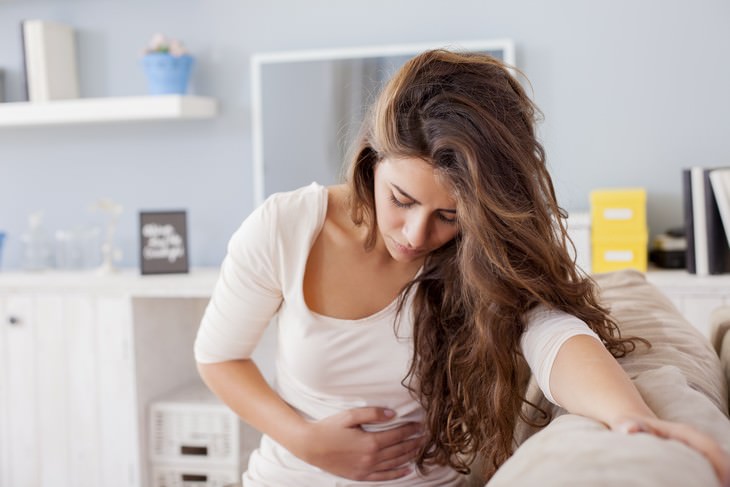
Many women report that they either lose appetite or start eating more (usually junk and comfort foods) when they’re stressed. This may change, too: one situation can upset your stomach, whereas another can make you eat more.


Irrespective of the changes in diet, the most common stomach issues caused by stress are:

    Cramps
    Bloating
    Heartburn
    Changes in weight

A 2017 study in the journal Frontiers in System Neuroscience even suggested that stress can cause irritable bowel syndrome (IBS).


2. Heart Problems
Chronic stress raises the amount of adrenaline and cortisol in blood, both of which are hormones associated with hypertension. This can have a negative effect on the cardiovascular system and may contribute to stroke and heart attack.
Also, some studies associate stress with changes in blood clotting, which also increases the risk of a heart attack.


3. Skin Reactions
Your skin, hair and nails are especially sensitive to stress. This is likely because of the hormonal changes due to stress, and every woman who ever had a hormonal breakout knows very well what hormones can do to the skin. The most-common skin reactions include:
    Acne
    Rosacea and psoriasis flare-ups
    Hives or rash
    Hair loss
    Brittle nails


Luckily, the symptoms of these conditions tend to subside when the stressful period is over, but do take into account that you will have to take better care of your skin and use gentle and non-irritating skin care products when you know you're stressed.


4. Disrupted Sleep
Consistently high levels of cortisol in the blood, a signature feature of chronic stress, affect the so-called HPA loop, which is a relationship between the hypothalamus, the pituitary gland, and the adrenal gland.
Unfortunately, the same loop controls our sleep cycles, so when you're stressed and the HPA loop is too active, you often feel tired, yet unable to fall asleep. Furthermore, even the quality of sleep decreases as the transition between the various sleep cycles is disrupted.


5. Emotional Disturbances
Chronic stress can cause a variety of emotional disturbances and even mental illness:

    Anxiety
    Depression
    Irritability
    Mood swings
    Compulsive behavior (such as addiction).

As alarming as it may sound, there is even a study that showed that higher levels of anger are commonly linked to both mental stress and even the likelihood of a stress-related heart attack.


6. Difficulty Concentrating and Memory Issues
Researchers found that certain hormones secreted after a stressful event can potentially impair memory and concentration. Also, an animal study found that stressed rats had more memory issues than the non-stressed control group.
The same is suggested to occur in humans, as many patients report that they have difficulties focusing or remembering important information when they're stressed.


7. Lowered Immunity
The American Psychological Association suggests that stressful events and negative emotional experiences can take a toll on your immune system, which can make you more susceptible to a cold, but also to any other infectious disease.


They conclude that managing stress is crucial for you to regain your ability to fight off germs. The next section is exactly about that, the most basic lifestyle change you can make to be less stressed.


How To Deal With Stress

Therapy and medications can certainly get you through a stressful period in your life, but the following changes in lifestyle can also significantly improve your stress symptoms:


1. Improve your diet
When you’re stressed out and you have no time to do anything, you’re more likely to settle for a snack or junk food instead of a healthy and nutritious meal.


You have to resist this urge and try to improve your diet, include more leafy greens and colorful vegetables in your diet, as in the past years there is more and more scientific evidence suggesting that a healthy diet can help you fight anxiety and depression, and, certainly, stress. 


2. Make time for exercise
When you exercise and spend more time outdoors, your brain releases chemicals associated with happiness and well-being, such as the neurochemical oxytocin, the levels of which drop dramatically during stressful periods in your life.


So, lift your mood while you’re getting in shape by normalizing your oxytocin levels.


3. Find fun ways to relax
Women often seek connection and meaning in life when they feel stressed, and what your gut tells you is exactly what you should do, in this case.


Distracting yourself by doing activities that require a lot of concentration is another effective method of fighting off stress, as reported in the journal Frontiers in Psychiatry in 2017.

So, find or rediscover your old hobby, participate in engaging conversations with family and friends and just do something meaningful.


4. Hugs
Let’s end our list of recommendations on a happy note and with a non-trivial tip. It turns out that hugs, especially long hugs lasting up to 20 seconds, may have the same effect on your brain as a morning jog, as reported in a 2018 study. Like exercise, hugs raise the levels of oxytocin in blood, which may just be enough to compensate for that stressful day at work.

In this specific article, we mentioned just some selected treatments of stress. We have a separate dedicated article on stress and anxiety management, which highly recommend to read as well.


This is only for your information, kindly take the advice of your doctor for medicines, exercises and so on.     
https://gscrochetdesigns.blogspot.com. one can see my crochet creations  
https://gseasyrecipes.blogspot.com. feel free to view for easy, simple and healthy recipes    
https://kneereplacement-stickclub.blogspot.com. for info on knee replacement
 

Labels: , , , , , , , , , , , , ,