Thursday, February 03, 2022

How to Sync Your Body Clock to Your Daily Routine

Apparently, there is a way to get more out of the same 24 hours everyone has to avail themselves of in a given day. New research suggests that this can be accomplished by syncing your biological clock to your daily schedule. By doing certain things at peak periods of energy and activity, there’s a chance you’ll be able to improve your productivity. Let’s take a closer look: 
 
Your Biological Clock
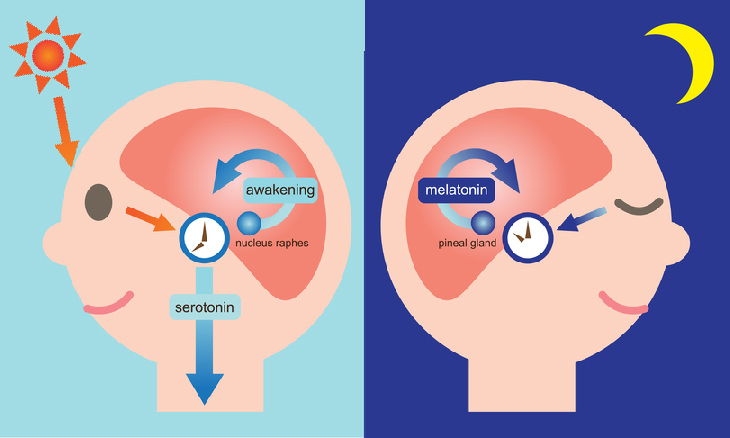
Every person has a built-in biological clock, which is responsible for regulating the timing of many biological functions, such as when you sleep to when you reproduce. The Circadian rhythms within your biological clock manage daily cycles such as sleeping and waking, contributing to how much energy you have at given points throughout the day. 
 
Shift workers, for example, constantly have to adjust their daily routine to meet the demands of their work schedule. Similarly, travelers may experience disturbances to their sleep-wake cycles that lead to a feeling of jet lag.

Do you notice how you’re seemingly more energized at certain times of the day? That’s because your body clock is responsible for far more than just the sleep-wake cycle. Mental alertness, hunger, stress, mood, heart function, and even immunity are also influenced by the body's daily rhythms.
Syncing Activities  
The demands of daily life, such as school, commuting, work, and social events, are all responsible for disrupting your body’s natural cycles. Although making changes to your schedule might not always be easy, there are clear health benefits to doing so. Not only will doing so allow you to make better use of your time, but there are potential health implications too. Avoiding disruptions to your circadian rhythm make you less likely to suffer negative health outcomes such as depression and diabetes. 
 
Sleeping
Your biological clock plays a major role in controlling your sleep-wake cycle. Your schedule, bedtime routines, and even your age can also play a role in affecting the cycle. The body’s natural sleep-wake cycle changes as we age. As people approach later adulthood, their cycle tends to shift toward rising early in the morning. In fact, it’s quite common to see older adults that prefer to go to bed earlier and get up earlier. 
 
Seeing as most people’s energy levels take a dip in the early afternoon, it’s a great time to take a nap. Even if you’re not able to take one due to work commitments or otherwise, taking a quick break from what you’re doing might be beneficial. 
 
Eating 
A study conducted on mice determined that when the mice had their meals restricted to particular times, they were protected from excessive weight gain and metabolic diseases. Further research also suggests that eating times can also play a role in resetting your biological clock. Altering your eating schedule can also help you to reset your body clock to match a new daily routine.

Thinking 
This differs for many people, however as a general rule, we tend to be sharpest in the morning. Studies suggest that we tend to be at the height of our cognitive power during the late morning, so you might want to tackle any mentally-taxing activities you need to do before lunchtime. 
 
There’s also a suggestion that alertness and attention levels wane after eating a meal. That’s why you’re likely to find it harder to concentrate at work after you’ve had your lunch. Concentration levels dip the most between noon and 4 pm. In fact, many people find themselves in need of an energy-boosting pick-me-up during those hours. 
 
Tips for Adjusting  
In spite of the fact that everyone’s biological clock functions differently, here are some tips for establishing a more productive daily schedule: 
 
• Establish a sleep schedule: Set an alarm and go to bed at the same time each night. Wake up when your alarm goes off—no hitting that snooze button over and over again. 
 
• Give it some time: Getting used to a new schedule may take a while, but stick with it until it starts to feel more natural. 
 
• Pay attention to your energy levels: Try to arrange certain activities around your peak energy levels. Not everyone is the same, so your own energy levels may follow a slightly different schedule.


This is only for your information, kindly take the advice of your doctor for medicines, exercises and so on.   

https://gscrochetdesigns.blogspot.com. one can see my crochet creations  
https://gseasyrecipes.blogspot.com. feel free to view for easy, simple and healthy recipes    
https://kneereplacement-stickclub.blogspot.com. for info on knee replacement


Labels: , , , , , , , , , , , , , ,

Sunday, March 28, 2021

The Differences Between Glucose, Sucrose & Fructose

Glucose, fructose, and sucrose are three types of sugar that contain an identical number of calories gram for gram. However, their chemical structures greatly differ, as does the way in which your body digests and metabolizes them. Keep reading to find out exactly what makes these three sugars so different, and why these differences actually matter.

What Is Glucose?  
Glucose is a simple sugar, also known as a monosaccharide, and is your body’s favorite carbohydrate-based source of energy. Monosaccharides are composed of a single unit of sugar and that's why they absolutely cannot be broken down into smaller compounds. 
 
When it comes to food, glucose is most commonly bound to another monosaccharide to form either disaccharides or polysaccharide starches. Glucose is frequently added to processed foods in the form of dextrose, which is actually extracted from cornstarch. When compared to fructose and sucrose, glucose tastes the least sweet.

What Is Fructose? 
Like glucose, fructose is a monosaccharide, too. It’s naturally present in fruit, honey, agave and many kinds of root vegetables. What's more, it’s also frequently added to processed foods in the form of high-fructose corn syrup. 
 
Fructose can be obtained from sugar cane, sugar beets or corn. High-fructose corn syrup is made from cornstarch and contains a great deal more fructose than glucose, in comparison with regular corn syrup. Of the three sugars, fructose has the sweetest taste but the least impact on your blood sugar. 
 
What Is Sucrose?
Sucrose is the scientific name for common table sugar and is a disaccharide that is made up of 50% glucose and 50% fructose. It naturally occurs in many grains, fruits, and vegetables, and is often added to certain processed foods too, such as ice cream, candy, canned food, and breakfast cereals. 
 
Table sugar and the sucrose found inside processed foods are often extracted from sugar beets or sugar cane. Sucrose tastes sweeter than glucose but is not as sweet as fructose.

Glucose Absorption and Use
Glucose is directly absorbed through your small intestine's lining and into your bloodstream. It raises blood sugar far more rapidly than other sugars, which stimulates the release of insulin, a substance that is required for glucose to enter your cells. 
 
Once inside your cells, glucose is either changed into glycogen to be stored or is used up immediately to create energy. Your body tightly regulates your blood sugar levels. When they are too low, glycogen is turned back into glucose and is released into your bloodstream. If glucose is unavailable, your liver can make this type of sugar from other sources. 
 
Fructose Absorption and Use  
sugar
 Like glucose, fructose is absorbed directly into your blood via the small intestine. It increases blood sugar levels more gradually than glucose and does not seem to have an immediate impact on insulin levels, however, it could have more long-term negative effects. 
 
 Your liver needs to convert fructose into glucose before your body uses it as a source of energy. If you consume more fructose than your liver is able to safely handle, any excess is turned into cholesterol and triglycerides, which could end up causing certain negative health effects such as obesity, fatty liver disease, and high cholesterol levels. 
 
Sucrose Absorption and Use  
Since sucrose is a disaccharide, your body needs to break it down before it can be used. Enzymes in your mouth start breaking down sucrose into glucose and fructose before your stomach acid carries on this task. However, the majority of sugar digestion happens in your small intestine. 
 
The enzyme sucrase divides sucrose into glucose and fructose before they get absorbed by your bloodstream. When glucose is present, your body ends up releasing more insulin and absorbs a higher degree of fructose, causing more fat to be created. This is why both fructose and glucose should ideally be eaten separately. 
 
Which Is the Worst for Your Health?  
Of the 3 sugars discussed above, fructose appears to be the most harmful by a long shot for a number of reasons. For starters, the effects of consuming too much fructose include type 2 diabetes, obesity, fatty liver disease, metabolic syndrome, and insulin resistance. 
 
One study found that from all known sugars, fructose is the one that can put you at the highest risk for developing type 2 diabetes or obesity. Another study found that people who drink fructose-sweetened beverages put on belly fat almost twice as fast as those who drink glucose-sweetened drinks instead. 
 
What’s more, fructose also increases the hunger hormone ghrelin, which could make you feel less full after eating. Since fructose is metabolized in your liver like alcohol, research suggests that it could be similarly addictive. A certain study found that it also activates your brain's reward pathway, which could lead to increased sugar cravings, and all of the negative effects that tend to follow them.


This is only for your information, kindly take the advice of your doctor for medicines, exercises and so on.     

https://gscrochetdesigns.blogspot.com. one can see my crochet creations  
https://gseasyrecipes.blogspot.com. feel free to view for easy, simple and healthy recipes    
https://kneereplacement-stickclub.blogspot.com. for info on knee replacement


Labels: , , , , , , , , ,