Thursday, February 03, 2022

How to Sync Your Body Clock to Your Daily Routine

Apparently, there is a way to get more out of the same 24 hours everyone has to avail themselves of in a given day. New research suggests that this can be accomplished by syncing your biological clock to your daily schedule. By doing certain things at peak periods of energy and activity, there’s a chance you’ll be able to improve your productivity. Let’s take a closer look: 
 
Your Biological Clock
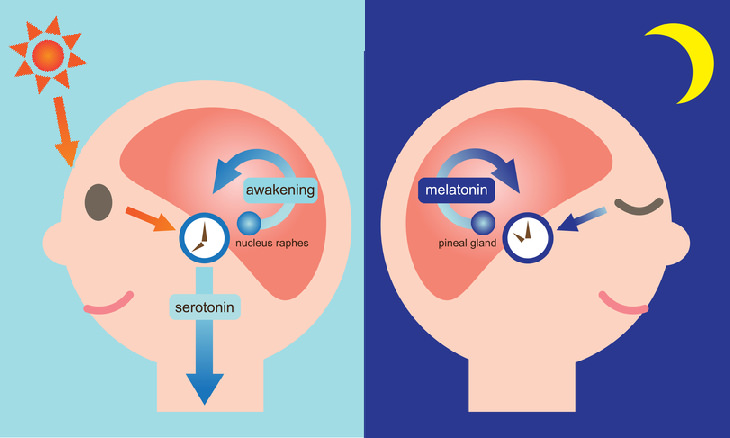
Every person has a built-in biological clock, which is responsible for regulating the timing of many biological functions, such as when you sleep to when you reproduce. The Circadian rhythms within your biological clock manage daily cycles such as sleeping and waking, contributing to how much energy you have at given points throughout the day. 
 
Shift workers, for example, constantly have to adjust their daily routine to meet the demands of their work schedule. Similarly, travelers may experience disturbances to their sleep-wake cycles that lead to a feeling of jet lag.

Do you notice how you’re seemingly more energized at certain times of the day? That’s because your body clock is responsible for far more than just the sleep-wake cycle. Mental alertness, hunger, stress, mood, heart function, and even immunity are also influenced by the body's daily rhythms.
Syncing Activities  
The demands of daily life, such as school, commuting, work, and social events, are all responsible for disrupting your body’s natural cycles. Although making changes to your schedule might not always be easy, there are clear health benefits to doing so. Not only will doing so allow you to make better use of your time, but there are potential health implications too. Avoiding disruptions to your circadian rhythm make you less likely to suffer negative health outcomes such as depression and diabetes. 
 
Sleeping
Your biological clock plays a major role in controlling your sleep-wake cycle. Your schedule, bedtime routines, and even your age can also play a role in affecting the cycle. The body’s natural sleep-wake cycle changes as we age. As people approach later adulthood, their cycle tends to shift toward rising early in the morning. In fact, it’s quite common to see older adults that prefer to go to bed earlier and get up earlier. 
 
Seeing as most people’s energy levels take a dip in the early afternoon, it’s a great time to take a nap. Even if you’re not able to take one due to work commitments or otherwise, taking a quick break from what you’re doing might be beneficial. 
 
Eating 
A study conducted on mice determined that when the mice had their meals restricted to particular times, they were protected from excessive weight gain and metabolic diseases. Further research also suggests that eating times can also play a role in resetting your biological clock. Altering your eating schedule can also help you to reset your body clock to match a new daily routine.

Thinking 
This differs for many people, however as a general rule, we tend to be sharpest in the morning. Studies suggest that we tend to be at the height of our cognitive power during the late morning, so you might want to tackle any mentally-taxing activities you need to do before lunchtime. 
 
There’s also a suggestion that alertness and attention levels wane after eating a meal. That’s why you’re likely to find it harder to concentrate at work after you’ve had your lunch. Concentration levels dip the most between noon and 4 pm. In fact, many people find themselves in need of an energy-boosting pick-me-up during those hours. 
 
Tips for Adjusting  
In spite of the fact that everyone’s biological clock functions differently, here are some tips for establishing a more productive daily schedule: 
 
• Establish a sleep schedule: Set an alarm and go to bed at the same time each night. Wake up when your alarm goes off—no hitting that snooze button over and over again. 
 
• Give it some time: Getting used to a new schedule may take a while, but stick with it until it starts to feel more natural. 
 
• Pay attention to your energy levels: Try to arrange certain activities around your peak energy levels. Not everyone is the same, so your own energy levels may follow a slightly different schedule.


This is only for your information, kindly take the advice of your doctor for medicines, exercises and so on.   

https://gscrochetdesigns.blogspot.com. one can see my crochet creations  
https://gseasyrecipes.blogspot.com. feel free to view for easy, simple and healthy recipes    
https://kneereplacement-stickclub.blogspot.com. for info on knee replacement


Labels: , , , , , , , , , , , , , ,

Wednesday, September 11, 2019

Poor motor skills might predict if autistic child is at language disability risk

The fine motor skills autistic children exhibit while eating, writing or even buttoning their shirt, might seem trivial but can act as a strong predictor to identify if they're at risk of developing lasting language disabilities, suggests a new study.

The association between fine motor skills and autistic child's language development was found in a study published  recently.


In an American sample of language-delayed children with autism, researchers found that nearly half had extremely delayed fine motor skills.


Of this group, 77.5% who had extremely delayed motor skills continued to have language disabilities in later childhood or young adulthood. By contrast, 69.6 % of children who demonstrated less impaired fine motor skills overcame their language delays by late childhood or young adulthood.


In a 2nd study of Canadian children with autism, researchers found that those with extremely delayed fine motor skills made fewer gains in expressive language.


Language development is complex. Many interventions for young children with autism focus on language intervention or social skills, said the lead researcher.


The researchers analysed data from existing studies that used different standardised developmental tests to assess fine motor skills through tasks that require children to manipulate small objects, such as picking up Cheerios or stacking small blocks.


The 1st analyses focused on 86 children with autism recruited to an American study from before their 2nd birthday to age 19. The replication study was conducted using data from a Canadian study that followed 181 children with autism from 2-4 years of age, until age 10.


this is only for your information, kindly take the advice of your doctor for medicines, exercises and so on.   
https://gscrochetdesigns.blogspot.com. one can see my crochet creations 
https://gseasyrecipes.blogspot.com. feel free to view for easy, simple and healthy recipes    
https://kneereplacement-stickclub.blogspot.com. for info on knee replacement
    

Labels: , , , , , , , ,

Wednesday, August 21, 2019

How your food can influence your mood

Everyone emphasises on the need to eat healthy to stay healthy. Sure, a well-balanced diet can keep a lot of diseases at bay. But, have you wondered that our food choices can also trigger happiness? A new study suggests that what we choose to eat influences our emotional being too. A Prof. of Nutritional and Lifestyle Psychiatry said, “Research shows that what you eat does impact your mood.”

A study that has been published  that when people suffering from depression scored high on the Alternate Healthy Eating Index (eating a diet based on nuts, whole grains, produce, and omega-3 fatty acids), the chances of their depression symptoms recurring for an 11-year period went down.

About 16 other studies were analysed. Covering about 446,000 people, they echoed that people consuming a healthy diet (veggie-based or one rich in fibres) had lower chances of experiencing depression symptoms. While it’s difficult to trace till what extent our food choices influence our moods, patterns are emerging from various studies.

Have you got the guts?
It’s a common phrase that roughly translates roughly into “are you brave enough (to do something)”. Why so? Because our gastrointestinal system is connected to your brain and influences emotions.
When the microbiomes of 2,000 adults were studied, those showing symptoms of depression were found to have lower levels of ‘good’ gut bacteria.  Thus, our microbiomes (the good and bad bacteria in your gastrointestinal tract) are specifically important.

“We know that the good bacteria in your gut produces a lot of neurotransmitters implicated in mood, like norepinephrine and gamma-aminobutyric acid (GABA),” said Drew Ramsey, MD, and author of “Eat Complete” based in New York.

The problem with processed foods
Studies have already shown that binging on packet foods and colas leads to higher risks associated with cholesterol, obesity and other health issues. According to a study, people consuming ultra-processed foods had a 33 per cent higher risk of being depressed compared to those who ate minimal amounts.

“These foods tend to be lower in essential nutrients such as omega-3 fatty acids and B vitamins that play a crucial role in brain health,” said  a nutritionist. According to Consumer Reports, these highly processed foods are also low on fibre, which means that your microbiome and mood tend to be at stake.

Tips to eat healthy:
While there’s no concrete connection between healthy food and good mood, practising healthy eating is always a good idea-
  • Go vegetarian: Natural produce rich in greens has proven to be effective for improving health time and again.
  • Avoid sugary and oily foods: Check the ingredients of food items you buy. Try substituting milk chocolate with dark chocolate.
  • Eat more whole foods: Consume a diet rich in grains and avoid going for packaged foods.
  • Adopt the Mediterranean diet: It’s an excellent combination of nuts, fruits, vegetables among others and helps in preventing heart disease, diabetes etc.
  • Practice mindful eating: Focus on your food. Feel connected to it. If required, calm down before your meal time and take a few deep breaths.
  • Pick colourful ingredients: Pick colourful produce and arrange it in a pretty way. It helps in stimulating appetite.
THIS IS ONLY FOR INFORMATION, ALWAYS CONSULT YOU PHYSICIAN BEFORE HAVING ANY PARTICULAR FOOD/ MEDICATION/EXERCISE/OTHER REMEDIES.                                    PS- THOSE INTERESTED IN RECIPES ARE FREE TO  VIEW MY BLOG-                                                                                           https://gseasyrecipes.blogspot.com/                                                                                                                                                FOR INFO ABOUT KNEE REPLACEMENT, YOU CAN VIEW MY BLOG-                                                                       https:// kneereplacement-stickclub.blogspot.com/                                                                                                                     FOR CROCHET DESIGNS                                                                                                   
                                https://gscrochetdesigns.blogspot.com

Labels: , , , , , , , , , , , , , , , ,

Tuesday, August 20, 2019

5 easy remedies for bloating

Bloating is an extremely common symptom today. And admit it, it tends to slow down your day-to-day activities and negatively affects the way you look at your body. However, with a few changes in your diet, you can prevent or reduce bloating. Bloating can be primarily prevented by taking care of your gut health. Here are 5 ways to reduce and prevent bloating:

Maintain your gut health
A lot of us already know about this one. Improper digestion, constipation, bloating and fatigue are all the symptoms of a poor gut health. You can go for probiotics (yogurt is the best source for probiotics), and whole foods to keep your gut healthy. A clinical nutritionist suggests reducing your alcohol intake, and not drinking more than one cup of coffee a day. Also, avoid processed, packaged, sugary, fatty foods.

Mindful eating helps
We know how we gulp down or just devour our meals without properly chewing. It’s essential to slow down, and chew well, because proper digestion starts in your mouth. Relax, sit down, and enjoy your food. Try focusing on its aromas and flavours. The more connected you are to your food, the more satisfied you feel with every bite.

Try not stressing
High levels of adrenalin and cortisol, the stress hormones, can result in a shutdown of your digestive system. Go for exercises that lower your stress levels to relax and prepare your body for a meal. You can try different things, from yoga and deep breathing to walking amidst nature. Make sure you take at least 20 minutes to do so.

Supplements
Supplements that give you the essential vitamins and nutrients can be taken. In particular, look for components like fennel seeds and turmeric, both of which are known for reducing bloating. Turmeric has anti-inflammatory properties and is also an antioxidant that supports liver health. Consult your doctor if you’re pregnant, or breastfeeding.

Try eating a gluten or dairy-free diet
Gluten and dairy have often been pin-pointed as major reasons for bloating. Try eating a gluten or dairy-free diet for two to four weeks, and see if it suits your body. A lot of people reportedly feel good, and have noticed that their gut health gets better. Eliminating gluten sometimes leads to high energy levels.

THIS IS ONLY FOR INFORMATION, ALWAYS CONSULT YOU PHYSICIAN BEFORE HAVING ANY PARTICULAR FOOD/ MEDICATION/EXERCISE/OTHER REMEDIES.                                    PS- THOSE INTERESTED IN RECIPES ARE FREE TO  VIEW MY BLOG-                                                                                           https://gseasyrecipes.blogspot.com/                                                                                                                                                FOR INFO ABOUT KNEE REPLACEMENT, YOU CAN VIEW MY BLOG-                                                                       https:// kneereplacement-stickclub.blogspot.com/                                                                                                                     FOR CROCHET DESIGNS                                                                                                   
                                https://gscrochetdesigns.blogspot.com


Labels: , , , , , , , , , , , , , , , ,