Thursday, February 03, 2022

How to Sync Your Body Clock to Your Daily Routine

Apparently, there is a way to get more out of the same 24 hours everyone has to avail themselves of in a given day. New research suggests that this can be accomplished by syncing your biological clock to your daily schedule. By doing certain things at peak periods of energy and activity, there’s a chance you’ll be able to improve your productivity. Let’s take a closer look: 
 
Your Biological Clock
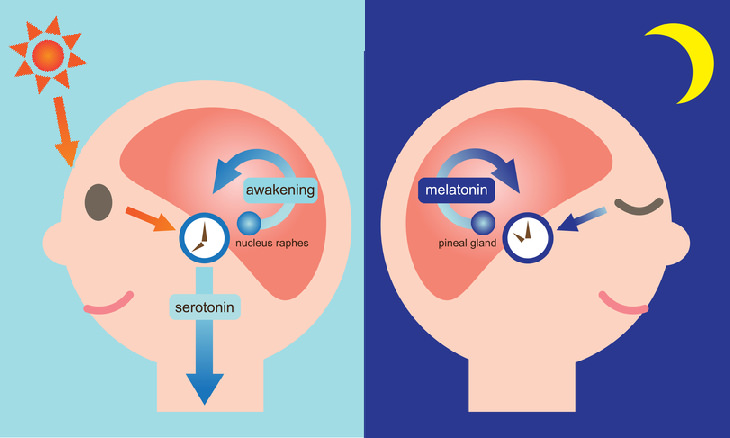
Every person has a built-in biological clock, which is responsible for regulating the timing of many biological functions, such as when you sleep to when you reproduce. The Circadian rhythms within your biological clock manage daily cycles such as sleeping and waking, contributing to how much energy you have at given points throughout the day. 
 
Shift workers, for example, constantly have to adjust their daily routine to meet the demands of their work schedule. Similarly, travelers may experience disturbances to their sleep-wake cycles that lead to a feeling of jet lag.

Do you notice how you’re seemingly more energized at certain times of the day? That’s because your body clock is responsible for far more than just the sleep-wake cycle. Mental alertness, hunger, stress, mood, heart function, and even immunity are also influenced by the body's daily rhythms.
Syncing Activities  
The demands of daily life, such as school, commuting, work, and social events, are all responsible for disrupting your body’s natural cycles. Although making changes to your schedule might not always be easy, there are clear health benefits to doing so. Not only will doing so allow you to make better use of your time, but there are potential health implications too. Avoiding disruptions to your circadian rhythm make you less likely to suffer negative health outcomes such as depression and diabetes. 
 
Sleeping
Your biological clock plays a major role in controlling your sleep-wake cycle. Your schedule, bedtime routines, and even your age can also play a role in affecting the cycle. The body’s natural sleep-wake cycle changes as we age. As people approach later adulthood, their cycle tends to shift toward rising early in the morning. In fact, it’s quite common to see older adults that prefer to go to bed earlier and get up earlier. 
 
Seeing as most people’s energy levels take a dip in the early afternoon, it’s a great time to take a nap. Even if you’re not able to take one due to work commitments or otherwise, taking a quick break from what you’re doing might be beneficial. 
 
Eating 
A study conducted on mice determined that when the mice had their meals restricted to particular times, they were protected from excessive weight gain and metabolic diseases. Further research also suggests that eating times can also play a role in resetting your biological clock. Altering your eating schedule can also help you to reset your body clock to match a new daily routine.

Thinking 
This differs for many people, however as a general rule, we tend to be sharpest in the morning. Studies suggest that we tend to be at the height of our cognitive power during the late morning, so you might want to tackle any mentally-taxing activities you need to do before lunchtime. 
 
There’s also a suggestion that alertness and attention levels wane after eating a meal. That’s why you’re likely to find it harder to concentrate at work after you’ve had your lunch. Concentration levels dip the most between noon and 4 pm. In fact, many people find themselves in need of an energy-boosting pick-me-up during those hours. 
 
Tips for Adjusting  
In spite of the fact that everyone’s biological clock functions differently, here are some tips for establishing a more productive daily schedule: 
 
• Establish a sleep schedule: Set an alarm and go to bed at the same time each night. Wake up when your alarm goes off—no hitting that snooze button over and over again. 
 
• Give it some time: Getting used to a new schedule may take a while, but stick with it until it starts to feel more natural. 
 
• Pay attention to your energy levels: Try to arrange certain activities around your peak energy levels. Not everyone is the same, so your own energy levels may follow a slightly different schedule.


This is only for your information, kindly take the advice of your doctor for medicines, exercises and so on.   

https://gscrochetdesigns.blogspot.com. one can see my crochet creations  
https://gseasyrecipes.blogspot.com. feel free to view for easy, simple and healthy recipes    
https://kneereplacement-stickclub.blogspot.com. for info on knee replacement


Labels: , , , , , , , , , , , , , ,

Thursday, April 02, 2020

Do You Have SAD or Just the Winter Blues?

If you find that when temperatures start dropping, your mood does too, then you're not alone. This is because experts believe that as many as 20% of Americans experience the so-called winter blues every year. Typically, winter blues amount to some minor social withdrawal and mood swings, which reverse themselves as our planet rotates back towards the sun.


However, for millions of people around the world, these depressive symptoms are severe and long-lasting, which end up affecting how they sleep, eat, think, and live their lives. One such person was Diana Lillo, 55. Despite her symptoms changing from one year to the next, every winter she found that she had “depression for no apparent reason—a generalized feeling of ‘doom and gloom’ even when nothing, in particular, was wrong.”

When it started to affect her marriage, Lillo sought help and was diagnosed with SAD. “Seasonal affective disorder, or SAD, is clinical depression that follows a seasonal pattern,” says Kelly Rohan, Ph.D., Professor of Psychological Science and Director of Clinical Training at the University of Vermont.

Health professionals are not entirely sure why it occurs, but they agree that a lack of sunlight plays a key role. One theory is it messes with your biological clock, which can lead to symptoms of depression. Another theory is that the lack of light interferes with brain chemicals, such as serotonin and melatonin, which affect sleep and mood.


If you have the usual winter blues, your symptoms will most probably be rather mild. “Perhaps you feel a little less energetic than you do in the summertime and have some food cravings that are unusual, like wanting to eat more carbohydrate-rich foods, or you sleep a little more, but not substantially more,” says Rohan. Such feelings will typically leave of their own accord, possibly just after a few days.

On the other hand, SAD typically causes more serious oversleeping, weight gain, appetite changes, lethargy, and social isolation. You could also end up experiencing intense sadness, irritability, problems concentrating, feelings of hopelessness or worthlessness, or even suicidal thoughts.

What's more, if you are diagnosed with SAD, these symptoms will stick around “for at least two weeks, if not longer, most of the day, nearly every day,” according to Rohan. They will interfere with your daily functioning and ability to do things, causing a lot of distress.

That’s precisely what happened to Lillo, who found that she was “going deeper and deeper into depression until suicidal thoughts appeared every winter.” This “every winter” part is key: If the symptoms of depression have appeared for at least two years in a row, and haven’t turned up during other seasons, there’s a high chance that SAD is the cause.

If you think you might suffer from SAD, it’s important that you talk to your doctor about it. They might recommend antidepressants or therapy, in addition to some strategies you can try at home. One of the best things you could do is to maximize the amount of daylight that you're exposed to. Rohan suggests taking morning walks which "gets the light that is available to your retina, which can help reset a biological clock. And it gets you moving in terms of physical activity.”

Light therapy is also very useful when it comes to treating SAD. Your doctor can prescribe this form of therapy, which entails spending some time every morning sitting next to a box that emits very bright light. This will simulate the effect of sunlight and has been proven to work for approximately 70% of SAD patients.

When suffering from SAD, you would also do very well to avoid being alone. “Go meet up with that group you belong to or go to the gym or go see that movie, see friends for coffee,” says Rohan. “Withdrawing from those routines sets you up for what I call going into hibernation mode, which really breeds depression.”

All in all, people with SAD need to be prepared for the future. This may involve anticipating “down” times, watching out for worsening symptoms, and planning activities ahead. It may also mean beginning treatments before allowing any symptoms to kick in since the best defense is a good offense.


This is only for your information, kindly take the advice of your doctor for medicines, exercises and so on.     

https://gscrochetdesigns.blogspot.com. one can see my crochet creations  
https://gseasyrecipes.blogspot.com. feel free to view for easy, simple and healthy recipes    
https://kneereplacement-stickclub.blogspot.com. for info on knee replacement

Labels: , , , , , , , , ,

Wednesday, January 08, 2020

Dopamine leads to over-eating and eventually weight gain

Pleasure and timing are interlinked, not only in life but in our body as well, finds a recent study. The brain’s pleasure sector has an integrated connection with the human biological clock.

Thus, high-calorie food, which makes one happy and content, can disturb one’s regular schedule without even being noticed before it’s too late. As a result, overweight and obesity are a compulsion.

But that is not all that comes with happiness through overeating. One can be prone to diabetes, heart diseases, hypertension and even cancer due to ill-eating habits.

According to the study, the eating pattern in the United States has worsened in the past 50 years.

“With highly processed foods readily and cheaply available at any time of the day or night,” Ali Guler, a professor of biology at the University of Virginia, said.

“Many of these foods are high in sugars, carbohydrates, and calories, which makes for an unhealthy diet when consumed regularly over many years.”

Guler and his co-workers, in the study published in Current Biology on Thursday, described that the portion of our brain that excretes dopamine and the other part determining the human clock are synced.

Guel and his team had used mice to conduct the study and reach such result.

“We’ve shown that dopamine signalling in the brain governs circadian biology and leads to consumption of energy-dense foods between meals and during odd hours,” said Guler.  this is only for your information, kindly take the advice of your doctor for medicines, exercises and so on.     

https://gscrochetdesigns.blogspot.com. one can see my crochet creations  
https://gseasyrecipes.blogspot.com. feel free to view for easy, simple and healthy recipes    
https://kneereplacement-stickclub.blogspot.com. for info on knee replacement
 

Labels: , , , , , , , , ,