Thursday, February 03, 2022

How to Sync Your Body Clock to Your Daily Routine

Apparently, there is a way to get more out of the same 24 hours everyone has to avail themselves of in a given day. New research suggests that this can be accomplished by syncing your biological clock to your daily schedule. By doing certain things at peak periods of energy and activity, there’s a chance you’ll be able to improve your productivity. Let’s take a closer look: 
 
Your Biological Clock
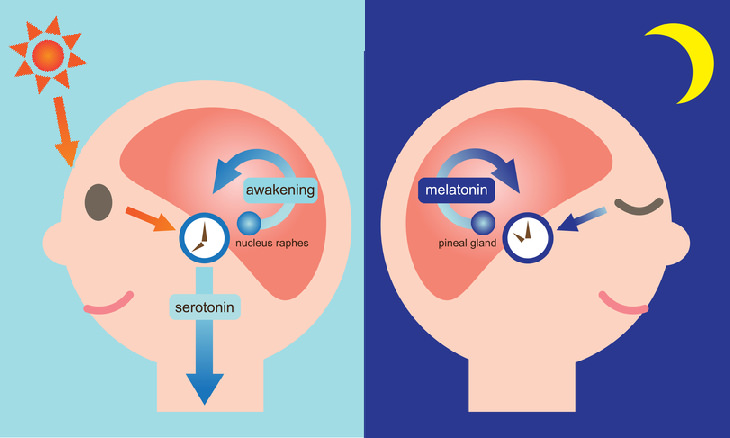
Every person has a built-in biological clock, which is responsible for regulating the timing of many biological functions, such as when you sleep to when you reproduce. The Circadian rhythms within your biological clock manage daily cycles such as sleeping and waking, contributing to how much energy you have at given points throughout the day. 
 
Shift workers, for example, constantly have to adjust their daily routine to meet the demands of their work schedule. Similarly, travelers may experience disturbances to their sleep-wake cycles that lead to a feeling of jet lag.

Do you notice how you’re seemingly more energized at certain times of the day? That’s because your body clock is responsible for far more than just the sleep-wake cycle. Mental alertness, hunger, stress, mood, heart function, and even immunity are also influenced by the body's daily rhythms.
Syncing Activities  
The demands of daily life, such as school, commuting, work, and social events, are all responsible for disrupting your body’s natural cycles. Although making changes to your schedule might not always be easy, there are clear health benefits to doing so. Not only will doing so allow you to make better use of your time, but there are potential health implications too. Avoiding disruptions to your circadian rhythm make you less likely to suffer negative health outcomes such as depression and diabetes. 
 
Sleeping
Your biological clock plays a major role in controlling your sleep-wake cycle. Your schedule, bedtime routines, and even your age can also play a role in affecting the cycle. The body’s natural sleep-wake cycle changes as we age. As people approach later adulthood, their cycle tends to shift toward rising early in the morning. In fact, it’s quite common to see older adults that prefer to go to bed earlier and get up earlier. 
 
Seeing as most people’s energy levels take a dip in the early afternoon, it’s a great time to take a nap. Even if you’re not able to take one due to work commitments or otherwise, taking a quick break from what you’re doing might be beneficial. 
 
Eating 
A study conducted on mice determined that when the mice had their meals restricted to particular times, they were protected from excessive weight gain and metabolic diseases. Further research also suggests that eating times can also play a role in resetting your biological clock. Altering your eating schedule can also help you to reset your body clock to match a new daily routine.

Thinking 
This differs for many people, however as a general rule, we tend to be sharpest in the morning. Studies suggest that we tend to be at the height of our cognitive power during the late morning, so you might want to tackle any mentally-taxing activities you need to do before lunchtime. 
 
There’s also a suggestion that alertness and attention levels wane after eating a meal. That’s why you’re likely to find it harder to concentrate at work after you’ve had your lunch. Concentration levels dip the most between noon and 4 pm. In fact, many people find themselves in need of an energy-boosting pick-me-up during those hours. 
 
Tips for Adjusting  
In spite of the fact that everyone’s biological clock functions differently, here are some tips for establishing a more productive daily schedule: 
 
• Establish a sleep schedule: Set an alarm and go to bed at the same time each night. Wake up when your alarm goes off—no hitting that snooze button over and over again. 
 
• Give it some time: Getting used to a new schedule may take a while, but stick with it until it starts to feel more natural. 
 
• Pay attention to your energy levels: Try to arrange certain activities around your peak energy levels. Not everyone is the same, so your own energy levels may follow a slightly different schedule.


This is only for your information, kindly take the advice of your doctor for medicines, exercises and so on.   

https://gscrochetdesigns.blogspot.com. one can see my crochet creations  
https://gseasyrecipes.blogspot.com. feel free to view for easy, simple and healthy recipes    
https://kneereplacement-stickclub.blogspot.com. for info on knee replacement


Labels: , , , , , , , , , , , , , ,

Thursday, January 16, 2020

6 Good Sources of Vitamin D

Vitamin D, also known as the sunshine vitamin, is a fat-soluble vitamin essential for optimal health.
It helps your body absorb calcium and maintain adequate serum magnesium and phosphate concentrations — three nutrients important for your teeth, muscles, and bones. It also plays crucial roles in brain development, heart function, your immune system, and mental health.

Low vitamin D levels are widespread worldwide. Symptoms of deficiency include fatigue, muscle pain, weak bones, and — in children — stunted growth . 

To maintain adequate levels, children under 12 months should get 400 IU (10 mcg) of vitamin D daily, while children 1–13 years old should get 600 IU (15 mcg) daily. Adults and pregnant or nursing women should aim for 600 and 800 IU (15 and 20 mcg) per day, respectively .

Yet, very few foods contain this vitamin, and those that do are mostly animal products. Thus, it can be difficult to get enough of this nutrient from your diet, particularly if you’re vegetarian or vegan.
At the same time, a handful of foods and techniques can give you a boost.

Here are 6 good sources of vitamin D for vegetarians — some of which are suitable for vegans, too.

Your skin can produce vitamin D when exposed to the sun’s ultraviolet B (UVB) rays. Most people get at least some of their vitamin D this way. 

According to the National Institute of Health (NIH), exposing your face, arms, legs, or back to sunlight for 5–30 minutes twice a week — without sunscreen — is usually sufficient to generate optimal vitamin D levels . 

However, depending on your geographical location or climate, it may not be practical to achieve this degree of direct sun exposure. 

Additional factors, such as the season, time of day, and degree of pollution or smog, as well as your age, skin color, and sunscreen use, also affect your skin’s ability to produce enough vitamin D. 

For instance, smog or an overcast day may reduce the strength of UV rays by up to 60%. Moreover, older adults and those with darker skin tones may require significantly longer than 30 minutes of sun exposure to produce sufficient vitamin D . 

That said, excess sun exposure can increase your risk of skin cancer. Hence, the American Academy of Dermatology urges people not to rely on the sun as their main source of vitamin D.

Mushrooms have the unique ability to make vitamin D when exposed to UV light. This makes them the only edible plant source of vitamin D .

For instance, wild mushrooms and those artificially exposed to UV light may boast anywhere between 154 and 1,136 IU (3.8 and 28 mcg) of vitamin D per 3.5-ounce (100-gram) serving . 

What’s more, their vitamin D content remains high for the duration of their shelf life and appears to be as effective at raising levels of this vitamin in your body as vitamin D supplements . 

That said, most commercial mushrooms are grown in the dark and aren’t exposed to UV light, which means that they likely contain very little vitamin D . 

When shopping, look for a note on the label mentioning vitamin D content. If you’re having trouble finding mushrooms exposed to UV light, you may have better luck at your local health food store or farmers market — which often carry wild mushrooms.

Keep in mind that not all wild mushrooms are edible. Eating poisonous ones can cause symptoms ranging from mild indigestion to organ failure and even death. As such, you shouldn’t forage for your own wild mushrooms unless you’re expertly trained.

Egg yolks provide vitamin D, though their specific amounts rely greatly on the chicken’s diet and access to the outdoors.

For instance, eggs sourced from chickens fed vitamin-D-enriched feed can pack up to 6,000 IU (150 mcg) per yolk, whereas eggs from chickens given conventional feed contain only 18–39 IU (0.4–1 mcg).

Similarly, chickens allowed to roam outdoors are exposed to sunlight and typically lay eggs that boast 3–4 times more vitamin D than those of chickens raised indoors . 

Free-range or organic eggs tend to have more vitamin D. The label may also indicate that the eggs are enriched with this nutrient.

Cheese is a natural source of vitamin D, albeit in very small amounts.

Most varieties contain 8–24 IU (0.2–0.6 mcg) of vitamin D per 2-ounce (50-gram) serving. Levels vary based on the way the cheese is manufactured. 

Fontina, Monterey, and Cheddar cheeses boast more, while mozzarella has less. Soft types like cottage, ricotta, or cream cheeses offer almost no vitamin D . 

Some kinds can also be fortified with vitamin D, and this will be indicated on the label or ingredient list.

This is only for your information, kindly take the advice of your doctor for medicines, exercises and so on.     
https://gscrochetdesigns.blogspot.com. one can see my crochet creations  
https://gseasyrecipes.blogspot.com. feel free to view for easy, simple and healthy recipes    
https://kneereplacement-stickclub.blogspot.com. for info on knee replacement


Labels: , , , , , , , , , , , , ,

Researchers find key to preventing muscular dystrophy-related heart disease

A Rutgers-led team may have found the key to preventing Duchenne muscular dystrophy (DMD)-related heart disease, the leading cause of death in patients living with the disease.

The study, published in the Journal of Clinical Investigation (JCI), examined the role of Connexin-43 (Cx43), a protein that regulates heart function. The researchers found that Cx43 was dysfunctional in both human and mouse DMD hearts, so they modified the Cx43 protein in the hopes of alleviating heart disease. The researchers discovered that altering the Cx43 protein through a process called phosphorylation protected DMD mice against irregular heart beat and late-stage failure.

 For many DMD patients, the heart muscles gradually break down, leading to death. Our findings may help give hope to millions of patients."     Diego Fraidenraich, study co-author, assistant professor of Cell Biology and Molecular Medicine at Rutgers New Jersey Medical School.


"Medical advances have managed to slow down the disease progression in most muscles in the body, but there are yet to be any discoveries that target or prevent deterioration of the DMD heart, which remains the number one killer among these patients," said co-author Eric Himelman, a PhD candidate at Rutgers New Jersey Medical School. "Therapies based on our finding may help prolong the lives of muscular dystrophy and other heart disease patients."

DMD, a genetic disorder characterized by progressive muscle degeneration, is the most common type of muscular dystrophy, affecting about one in 5,000 males and typically beginning at about age 4. The average life expectancy is 26.

These findings were simultaneously published together in JCI insight with another Rutgers-led study that examined Cx43 activity in the heart

Next steps include developing drugs that directly target Cx43 in DMD hearts, with a goal of potentially introducing clinical trials using Cx43 modification as a therapy for DMD patients.

This is only for your information, kindly take the advice of your doctor for medicines, exercises and so on.     
https://gscrochetdesigns.blogspot.com. one can see my crochet creations  
https://gseasyrecipes.blogspot.com. feel free to view for easy, simple and healthy recipes    
https://kneereplacement-stickclub.blogspot.com. for info on knee replacement


Labels: , , , , , ,

Thursday, January 09, 2020

Protein therapy could improve outcomes following heart attack

Heart disease remains the largest killer in Australia and around the world. A new study has shown that a protein therapy- recombinant human platelet-derived growth factor-AB (rhPDGF-AB) - could improve outcomes following heart attack.

After a heart attack, scar tissue forms and this negatively affects heart function. Now, researchers from The Westmead Institute for Medical Research (WIMR) and the University of Sydney found that, infusing rhPDGF into subjects that have had heart attacks improves the quality of the scar, leads to the formation of new blood vessels in the heart, and reduced rates of dangerous heart arrhythmia (irregularities of heart rhythm that can cause sudden death).

This study was in a pre-clinical large animal model.

The discovery publishes today in the leading journal Science Translational Medicine.

Corresponding author who led the research team, Associate Professor James Chong, said:

    This is an entirely new approach with no current treatments able to change scar in this way.

    By improving cardiac function and scar formation following heart attack, treatment with rhPDGF-AB led to an overall increase in survival rate in our study.

    While the treatment did not affect overall scar size, importantly we found that rhPDGF-AB led to increased scar collagen fibre alignment and strength. This improved heart function after the heart attack.

Our collaborator Professor Richard Harvey,from the Victor Chang Cardiac Research Institute, had previously shown that the protein can improve heart function in mouse models following heart attack.

This project has been developed over more than 10 years and we now have compelling data in two species for the effectiveness of this treatment."


Following heart attack, the heart muscle is damaged, causing thick scar tissue to form. This can limit the heart's ability to function efficiently, and can increase the risk of heart failure, and sudden cardiac death.

Current treatments aim to restore blood and the oxygen supply to the heart as quickly as possible to reduce scarring. While this improves clinical outcomes, up to a quarter of patients experiencing their first heart attack will develop heart failure within one year.

Associate Professor Chong said: "While we have treatment protocols in place, it's clear that there is an urgent, unmet need for additional treatments to improve patient outcomes particularly after large heart attacks.

"Heart disease is the leading cause of death in Australia. It is thought that more than 400,000 Australians have had a heart attack at some stage in their lives and that there is roughly one heart attack every 10 minutes. Through our research, we have the opportunity to change the negative impact of these statistics.

"Some further animal studies are required to clarify safety and dosing. Then we can start looking towards clinical trials in humans very soon. rhPDGF-AB is clearly a promising therapeutic option, and could potentially be used alongside existing treatments to improve heart attack patient outcomes and survival rates.

"We now hope to further investigate the treatment, including whether it could be used in other organ systems impacted by scar tissue, such as the kidneys."


this is only for your information, kindly take the advice of your doctor for medicines, exercises and so on.     
https://gscrochetdesigns.blogspot.com. one can see my crochet creations  
https://gseasyrecipes.blogspot.com. feel free to view for easy, simple and healthy recipes    
https://kneereplacement-stickclub.blogspot.com. for info on knee replacement
 

Labels: , , , , , , ,