Wednesday, June 03, 2026

Box Breathing: A Healthy Technique

 Over the years, we have encountered many breathing techniques that help calm the mind and body, and are even capable of helping us improve our ability to fall asleep, concentrate, and restore the balance our body needs. If you have tried such breathing techniques in the past and found them beneficial, you will probably be happy to discover a new technique – box breathing – which helps improve concentration, reduce stress, and is recommended for daily practice when you feel your mind is starting to wander or your work is taking a toll on your mental health. How do you do it, what are its benefits, and are there people who should avoid it? We will answer all these questions and more right now.

How to Perform Box Breathing? 

Box breathing is done in 4 simple steps, each lasting exactly 4 seconds: 

1. Inhale – Sit with your back straight, ensure your feet are flat on the floor, close your eyes, and take an inhale for 4 seconds through your nose. Feel how the air fills your lungs.

2. Hold the breath – Count to 4 at the same pace as your inhalation. 

3. Exhale – Fully exhale the air from your lungs through your nose for 4 seconds. 

4. Hold the breath – Wait for another 4 seconds.

You should repeat this at least 3 more times (4 in total), and it is recommended to continue for 4 minutes or until you feel calm. If this is difficult for you, you can try counting for 3 seconds instead of 4, and if you find this technique helpful and easy to perform, you can even count for 5-6 seconds. 

Since this breathing technique is very easy to perform in any situation, people in high-pressure jobs find many benefits in it, including soldiers, police officers, and even office workers under significant stress. This technique is actually relevant for everyone, and anyone who wants to balance their mind and regain control and focus can use it. 

Why is Box Breathing so Essential for Mental and Physical Health?
Box breathing helps reset your breathing, and in moments of severe stress, this is important for both your physical and mental health. Our body undergoes processes that we do not consciously control, like the autonomic nervous system, which determines, among other things, heart rate and breathing and even affects digestion. 

When the body feels threatened, it enters "fight, flight, or freeze" mode, releasing hormones like adrenaline and noradrenaline, leading to a chain reaction that causes the heart rate and breathing to become faster and also increases blood sugar levels. Prolonged stay in such a stress state can negatively affect health and wear out the body very quickly. Among the long-term effects, you can include: 

High blood pressure 

Headaches 

Heart attack 

Stroke 

We cannot directly control blood sugar levels or heart rate, but we can control our breathing, and calming it will affect all other body systems accordingly. Thus, box breathing helps us achieve control and balance, beneficial both in the short and long term.
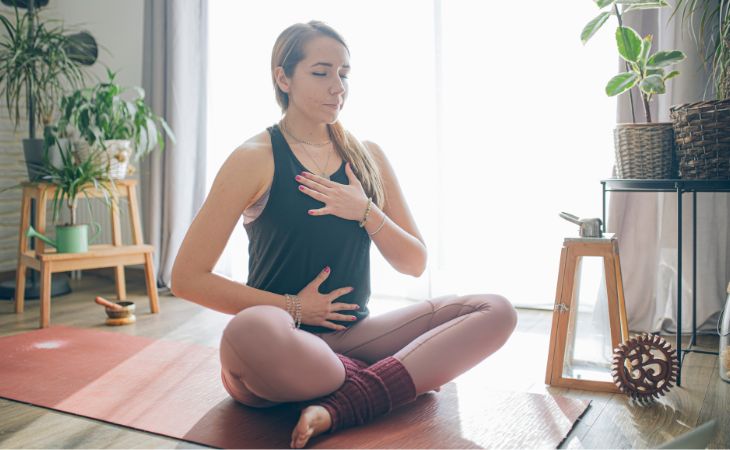

Box Breathing: A woman practicing breathing exercises
The Benefits of Box Breathing 

Mark Divine, an author and lecturer who was formerly a commander in the U.S. Navy SEALs, shares that this technique helped him in very stressful and challenging moments during his career. "I used it daily during training, and it helped me finish with excellence and in first place. Today, I use it in any challenging situation I encounter in daily life." Here are some of the benefits of this breathing method:


This is only for your information, kindly take the advice of your doctor for food, medicines, exercises and so on.   


Labels: , , , , , , , , ,

Monday, January 05, 2026

Heart Blockage Warning Signs: Doctor Reveals Simple At-Home Test to Spot Early Risk

Heart blockages often go undetected until symptoms worsen. A US cardiovascular surgeon says early warning signs can be spotted at home by noticing symptoms like chest pain, jaw pain, or breathlessness that appear during exertion and ease with rest. These patterns may signal reduced blood flow to the heart and require urgent medical attention to prevent a heart attack and complications.  

A serious heart issue is not only debilitating but also dangerous and life-threatening. According to doctors, most people end up in hospitals after missing out on early signs or regular check-ups—only when their body gives multiple signs that something is wrong with it. However, what is needed is to be extra careful and track your heart health. A renowned US-based cardiovascular surgeon has shared simple tests you can do from the comfort of your home to figure out if your heart has a problem.

According to Dr. Jeremy London, you do not always need a blood test, X-ray, or electrocardiogram (ECG) to check how healthy your heart is. You can instead just “listen to your body” and see if you spot any red flags that can help identify any heart troubles. A few signs you need to be vigilant about are- 

  • Chest tightness
  • Pain in the chest
  • Pain in the jaw
  • Breathlessness
According to Dr. London, if you can relieve these signs with adequate rest, it means there is something wrong with your heart, and it needs urgent attention. “When you exert yourself, that area below the blockage is blood-starved, and you start to have these symptoms. When you rest, the demand on this area of the heart goes down, and the pain goes away,” he explained in a video on Instagram. 

What happens in a heart attack?

A heart attack is an extremely dangerous condition that happens because you do not have enough blood flow to some of your heart muscle. This lack of blood flow occurs because of many different factors, but it is usually related to a blockage in one or more of your heart’s arteries. Doctors say that without blood flow, the affected heart muscle begins to die. 

And if you do not get blood flow back quickly, a heart attack can cause permanent heart damage and/or death.

When a heart attack happens, blood flow to a part of your heart stops or is far below normal, which causes injury or death to that part of your heart muscle. When a part of your heart can’t pump because it is dying from a lack of blood flow, it can disrupt the pumping function of your heart. This can reduce or stop blood flow to the rest of your body, which can be deadly if someone doesn’t correct it quickly.

Other symptoms of a heart attack

Apart from the one recommended by Dr. London, a few other heart attack symptoms that people describe most often include

  • Chest pain
  • Breathlessness or trouble breathing
  • Trouble sleeping
  • Nausea or stomach discomfort
  • Heart palpitations
  • Anxiety or a feeling of “impending doom.”
  • Feeling lightheaded, dizzy, or passing out
According to experts, men are more likely to have different heart attack symptoms. Women are less likely to have chest pain or discomfort that feels like indigestion. They are more likely to have shortness of breath, fatigue, and insomnia that started before the heart attack.


This is only for your information, kindly take the advice of your doctor for medicines, exercises and so on.   


Labels: , , , , , , , ,