These 10 symptoms are indicative of Kidney failure
Every single day our brain processes loads of information and our body performs thousands of actions. Living in such a hectic world makes it extremely easy to miss the messages that your body is sending you. The consequences of missing these signals can be severe.
Therefore, below you'll find a list of signs which indicate that your kidneys are not working properly. Has your body been sending you any of these signals?
10. Trouble sleeping
When your kidneys aren't working properly it means that toxins cannot leave the body in the urine and remain in the blood. The increased levels of toxins make it difficult to fall asleep.
Warning: People with Chronic Kidney Disease more commonly suffer from sleep apnea. This is a disorder that causes your breathing to stop when you sleep. These pauses can last from a couple of seconds to a minute. After each pause, normal breathing returns with a loud snort. Continuous heavy snoring is a clear sign that you need to go see a doctor.
9. Headaches, Fatigue, and General Weakness
Healthy and properly working kidneys convert vitamin D in our bodies to help us maintain strong bones and to produce a hormone called Erythropoietin. This hormone plays an important role in the production of red blood cells. When the kidneys aren't functioning properly, they start to produce less EPO. The resulting decline of red blood cells results in rapid fatigue of your brain and muscles.
Warning: It's common for people with Chronic Kidney Disease to have
anemia. If you are getting plenty of rest and sleep, but are still
feeling tired and weak, you should visit your doctor without delay.
8. Having Dry and Itchy Skin
Healthy kidneys do a lot of work by removing waste and extra fluid from the blood, helping to maintain the proper amount of minerals in your blood. Itchy and dry skin indicate the failure of the kidneys to maintain the right balance of mineral and nutrients which can result in bone and kidney disease.
Warning: If you have itchy and dry skin, try to stay more hydrated.
Before taking any medication for itching, consult your doctor. Certain
medications contain ingredients that could damage your kidneys further.
7. Experiencing bad breath and metallic taste
When waste builds up in your blood it changes the taste of food and
leaves a metallic taste in your mouth. Having bad breath is also another
sign of having too many toxins in the bloodstream. Furthermore, you
might stop wanting meat and lose your appetite, which can lead to
unhealthy weight loss.
Warning: There are a number of reasons why food can have a metallic taste. Normally, the metallic taste will go away once the assumed cause has been treated. However, if the taste continues to appear, you should contact your doctor.
6. Shortness of Breath
Shortness of breath due to kidney disease is caused by two things. First, extra fluid in the body moves into the lungs when kidneys are not functioning properly. Secondly, anemia deprives your body of oxygen and this results in shortness of breath.
Warning: There are a number of reasons for shortness of breath such as kidney failure, heart failure, asthma, and lung cancer. If you notice that you are constantly out of breath after little effort, you should contact your doctor immediately.
5. Swelling of Ankles, Feet, and Hands
Kidneys that are failing to perform properly won't remove extra fluid from the body. This will lead to sodium retention which causes swelling in your ankles, feet, and hands. Swelling of the lower parts of your body could also signal heart and liver disease or leg vein problems. Warning: Sometimes taking medication, reducing salt and removing excess fluid in your body can stop swelling. If this doesn't help, then you need different treatment.
4. Having Back Pain
Kidney failure can lead to back pain that's usually deep and located right below the rib cage. It can be felt in the front of the groin or the hip area too. Back and leg pain can be caused by kidney cysts, which are large fluid-filled sacs that form on the kidneys and are the result of polycystic kidney disease.
Tip: Back pain that is caused by kidney failure is accompanied by feeling sick, vomiting, frequent urination, and high body temperature. Normal back pain that has no correlation with the kidney behaves differently: the pain is more localized and happens suddenly, there is also no fever. Therefore, if you keep experiencing back pain and pain relief pills are ineffective make sure to visit your doctor.
3. Puffy Eyes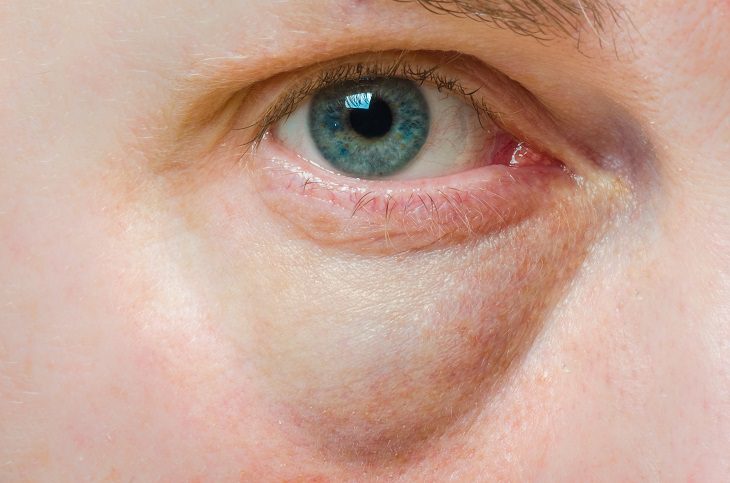
An early sign that your kidneys' filter system is damaged is the onset
of protein in the urine, which can result in puffiness around your eyes.
The puffiness around your eyes can be explained by the fact that your
kidneys are leaking a large amount of protein into the urine rather than
keeping it and distributing it around the body.
Tip: If you're certain that your body is receiving enough rest and protein, but you continue to notice puffiness around your eyes, make sure to schedule an appointment with your doctor.
2. High Blood Pressure
Your kidneys and circulatory system depend on each other. The kidneys have small nephrons that filter waste and extra fluids out the blood. If the blood vessels get damaged, the nephrons that filter your blood don't receive enough oxygen and nutrients. This is why high blood pressure is the second leading cause of kidney failure.
Tips: Learn to manage your high blood pressure to avoid kidney failure. Add foods rich in folic acid as it is engaged in the production of red blood cells and can help to prevent anemia.
1. Changes in Urination
Your kidneys are responsible for producing urine and eliminating waste.
Changes in the frequency, color, odor, and appearance should not be
ignored. Common types of changes include an increased need to urinate,
seeing blood in the urine, and having foamy urine.