Wednesday, June 03, 2026

Box Breathing: A Healthy Technique

 Over the years, we have encountered many breathing techniques that help calm the mind and body, and are even capable of helping us improve our ability to fall asleep, concentrate, and restore the balance our body needs. If you have tried such breathing techniques in the past and found them beneficial, you will probably be happy to discover a new technique – box breathing – which helps improve concentration, reduce stress, and is recommended for daily practice when you feel your mind is starting to wander or your work is taking a toll on your mental health. How do you do it, what are its benefits, and are there people who should avoid it? We will answer all these questions and more right now.

How to Perform Box Breathing? 

Box breathing is done in 4 simple steps, each lasting exactly 4 seconds: 

1. Inhale – Sit with your back straight, ensure your feet are flat on the floor, close your eyes, and take an inhale for 4 seconds through your nose. Feel how the air fills your lungs.

2. Hold the breath – Count to 4 at the same pace as your inhalation. 

3. Exhale – Fully exhale the air from your lungs through your nose for 4 seconds. 

4. Hold the breath – Wait for another 4 seconds.

You should repeat this at least 3 more times (4 in total), and it is recommended to continue for 4 minutes or until you feel calm. If this is difficult for you, you can try counting for 3 seconds instead of 4, and if you find this technique helpful and easy to perform, you can even count for 5-6 seconds. 

Since this breathing technique is very easy to perform in any situation, people in high-pressure jobs find many benefits in it, including soldiers, police officers, and even office workers under significant stress. This technique is actually relevant for everyone, and anyone who wants to balance their mind and regain control and focus can use it. 

Why is Box Breathing so Essential for Mental and Physical Health?
Box breathing helps reset your breathing, and in moments of severe stress, this is important for both your physical and mental health. Our body undergoes processes that we do not consciously control, like the autonomic nervous system, which determines, among other things, heart rate and breathing and even affects digestion. 

When the body feels threatened, it enters "fight, flight, or freeze" mode, releasing hormones like adrenaline and noradrenaline, leading to a chain reaction that causes the heart rate and breathing to become faster and also increases blood sugar levels. Prolonged stay in such a stress state can negatively affect health and wear out the body very quickly. Among the long-term effects, you can include: 

High blood pressure 

Headaches 

Heart attack 

Stroke 

We cannot directly control blood sugar levels or heart rate, but we can control our breathing, and calming it will affect all other body systems accordingly. Thus, box breathing helps us achieve control and balance, beneficial both in the short and long term.
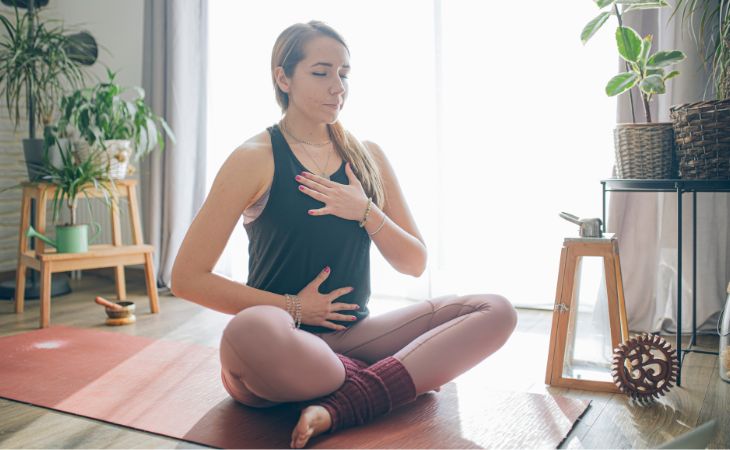

Box Breathing: A woman practicing breathing exercises
The Benefits of Box Breathing 

Mark Divine, an author and lecturer who was formerly a commander in the U.S. Navy SEALs, shares that this technique helped him in very stressful and challenging moments during his career. "I used it daily during training, and it helped me finish with excellence and in first place. Today, I use it in any challenging situation I encounter in daily life." Here are some of the benefits of this breathing method:


This is only for your information, kindly take the advice of your doctor for food, medicines, exercises and so on.   


Labels: , , , , , , , , ,

Monday, April 07, 2025

The Buteyko Method: A Healthier Way to Breathe

Do you sometimes feel like you’re short of breath? It could be due to health issues like asthma, or perhaps anxiety, but sometimes we simply don’t know how to breathe properly. Yes, it’s possible to get something as simple as breathing wrong, but you’ll be pleased to discover that you can learn how to control your breathing rhythm and make it more efficient. One way to do this is through the Buteyko Method—a breathing technique developed in the 1950s by a Ukrainian doctor named Konstantin Buteyko, designed to change our breathing patterns.
Professionals who practice this method claim it can help treat about 150 different health issues, including diabetes, attention difficulties, and chronic fatigue. While these claims lack comprehensive, evidence-based proof, there are some recent studies that have demonstrated the benefits of the Buteyko Method for specific conditions. Today, we’ll present those to you, along with a guide to performing the method and warnings for people who should avoid it.

2 Proven Benefits of the Buteyko Method 
Before we dive into the details of performing the method, let’s understand what it has been proven to do for the body and why it might be worth adopting for some people. Once you master this breathing technique, you’ll be able to breathe more efficiently, which can prevent feelings of shortness of breath and coughing, and even clear your airways. This has two benefits proven by studies: 
 
1. Regulating Breathing 
During Asthma and Anxiety Attacks There are moments in life that cause us to over-breathe—a condition medically known as "hyperventilation." This often happens during an asthma or anxiety attack, where the body expels a lot of carbon dioxide but takes in little oxygen, leading to a drop in blood oxygen levels. The Buteyko Method was actually developed specifically to address this issue. Indeed, it was proven in a 2018 study to help regulate breathing during an asthma attack.

Another study conducted with 200 participants and published in 2000 even showed that it could reduce the need for an inhaler when participants watched a video demonstrating the method and practiced along with it—compared to participants who watched a placebo method video. Additionally, a 2008 study demonstrated that people who learned the Buteyko Method (without a video) were better able to control their asthma symptoms and also reduced their inhaler use.

Buteyko Method: A woman performing a breathing exercise
2. Reducing the Risk of Sleep Apnea  
A 2019 study showed that the Buteyko Method helps treat people with eustachian tube obstruction, which is often linked to sleep apnea, and a study published in 2020 proved that relieving pressure and obstruction in the eustachian tube indeed helps prevent sleep apnea. However, it’s worth noting that in the first study, the best results were seen in participants who also used steroid nasal drops, more so than those who relied solely on nasal drops without the breathing technique. To achieve such results, you need to practice the Buteyko Method regularly until it becomes a natural habit and part of your life.


In addition to these proven benefits, we’ll mention again that advocates of the method claim it may also contribute to widening the bronchial tubes and easing shortness of breath symptoms associated with asthma and other chronic lung diseases. It’s said to help prevent snoring, allergies, high blood pressure, and concentration difficulties, but as noted, these are not proven or substantiated benefits at this time. 
 
How to Perform the Buteyko Method?  
This method can help in the moment you need it, such as when you’re experiencing shortness of breath, but it’s even more effective if practiced daily. In fact, some doctors treat breathing difficulties with a series of personal training sessions. To make this habit an integral part of your life, it’s recommended to practice for 15-20 minutes, 3 times a day, over 6 weeks. 
 
Here’s how to do it: 
 
1. Preparation  
Sit on the floor or a chair. 
Keep your back straight and upright. 
Relax your breathing muscles—the diaphragm and intercostal muscles. 
Breathe normally for a few minutes. 
 
2. Controlled Pause 
Exhale air calmly, then hold your breath (without inhaling). Use your finger and thumb to pinch your nose closed. 
Continue holding your breath until you feel the urge to inhale (this may cause involuntary diaphragm movements), then inhale. 
Breathe normally for at least 10 seconds. 
Repeat this several more times.
 
Buteyko Method: A woman pinching her nose with her fingers

3. Maximum Pause 
Exhale air calmly, then hold your breath (without inhaling).
Use your finger and thumb again to pinch your nose closed. 
Hold your breath for as long as you can—roughly twice as long as in the previous step. 
When you reach a point of moderate discomfort, inhale air.
Breathe normally for at least 10 seconds. 
Repeat this several more times.


Tips for Beginners 
When performing the Buteyko Method, always inhale and exhale through your nose only. If you start to feel shortness of breath, high levels of discomfort, or anxiety, stop the exercise immediately and return to normal breathing. The more you persist and practice the exercise, the longer you’ll be able to hold your breath. If you reach a point where the controlled pause lasts a minute and the maximum pause lasts 2 minutes, that’s excellent. 
 
Who Should Avoid Trying the Buteyko Method? 
Despite the benefits of this breathing technique, it’s not suitable for everyone, and it’s recommended to avoid it if you suffer from: 
 High blood pressure 
Heart disease
 Epilepsy 
Severe health conditions 
 
If you’re concerned, it’s best to consult a doctor knowledgeable in this area—typically an ENT specialist or a physician trained in the Buteyko Method—before starting self-treatment like this. You can also try other breathing techniques that can help you address breathing-related issues in additional ways. 
 
In Summary 
The Buteyko Method has been proven to help primarily those who suffer from shortness of breath due to asthma or anxiety, or from sleep apnea. It can be performed during an episode of shortness of breath or practiced regularly to naturally improve breathing, even during sleep. If you want to see good results and enhance your breathing, you should practice it 3 times a day for 6 weeks, and it might also be advisable to meet a few times with a specialist doctor who can personally teach and guide you.


This is only for your information, kindly take the advice of your doctor for medicines, exercises and so on.   


Labels: , , , , ,

Saturday, November 03, 2018

8 Ways You're Breathing Incorrectly

Whether you believe it or not, there are actually right and wrong ways to breathe, and the odds are that you're not always breathing in the right way. Skeptical? If so, then we don't blame you, since most people don't like being told they don't even know how to breathe properly. But after reading the 8 points below, we're sure you'll have a better understanding of the different types of breathing that exist and which of them are to most beneficial for your overall wellbeing.
 

1. You breathe through your mouth
Not only can mouth breathing be annoying to those around you, but it may also be harmful, as breathing through the mouth deprives your body of the immunity-boosting and blood flow-regulating nitric oxide that your nasal passages provide. According to dentist Steven Lin, “In adults, mouth breathing… can progress to obstructive sleep apnea, a condition linked to heart failure, high blood pressure, and Alzheimer’s disease. In humans, [mouth breathing] is really just a survival mechanism, to be used when the nasal breathing is impossible.”
2. You hold your breath when you run
“Runners tend to focus on form first and breathing second, if at all,” says a running expert and performance coach. However, this is a very bad habit since the reduced amount of oxygen can impede your physical progress. “Improving your physiology and learning how to breathe while running is especially important for athletes who want to boost their performance, but it’s also critical for entry-level runners who just want to make it around the block without feeling gassed,” says the expert.
3. You’re sucking in your gut
“In an effort to look skinny we often, even unconsciously, suck in our guts regularly,” says  a health and wellness expert and personal trainer. “When we do this, we are not allowing our body to breathe to its full capacity as we limit our diaphragm’s range of motion. This means that weak exhalation actually doesn’t release all the carbon dioxide from our lungs.”
4. You're trying to breathe while hunched over a keyboard all day long
“Poor posture affects good breathing techniques,” says a health and fitness expert. “Good posture is necessary for breath management, volume, and resonance. Poor posture, especially when seated, compresses the thoracic region and does not allow the diaphragm to open fully when breathing.”
5. Your breathing is not deep enough
“Many people do not breathe deeply enough,” says a  medical reviewer and board-certified emergency medicine physician. “Proper breathing involves pulling air all the way into the depths of your lungs and pushing your diaphragm down in the process. This improves the amount of blood that returns to your chest and helps detoxify the body.”
6. You rely on mouth breathing while you exercise
No matter how hard you push yourself during a workout session, your progress will be severely limited if you aren't breathing appropriately. According to breathing expert, while mouth breathing "we are taking in too much oxygen, which throws off the ratio of oxygen and carbon dioxide in our blood and sets us up for a host of problems, including nasal congestion.” She recommends that you “push yourself only so hard as to be able to continue to breathe through your nose” to avoid any damaging mouth breathing.
7. You’re breathing too much
It might sound weird, but it is actually possible to breathe too much, and it is not always easy to detect. “It doesn’t always look like hyperventilation, but you’re in this state where you’re blowing off too much carbon dioxide and sucking in too much oxygen, and you’re not even realizing it,” says a certified behavioral breathing expert and physiotherapist. To fix this issue, experts recommend practicing taking quiet breaths through your nose for a few minutes, before working on taking calmer and deeper breaths throughout the day.
8. You’re belly breathing
“Over half of the new students who come to my yoga class are shallow breathers when they first arrive, sucking their gut in when they inhale,” says a yoga instructor. “This only allows air to flow into the upper part of the chest and mimics the type of breathing we do when we feel stressed and anxious.” To work out if you're a belly breather, place your hand on your stomach while you are breathing. If your stomach expands when you breathe, then you’re using your stomach, and have nothing to worry about. If, on the other hand, your chest rises, then you are a chest breather and will need to focus on changing this.

THIS IS ONLY FOR INFORMATION, ALWAYS CONSULT YOU PHYSICIAN BEFORE HAVING ANY PARTICULAR FOOD/ MEDICATION/EXERCISE/OTHER REMEDIES.                                                                                                                                                                                                       PS- THOSE INTERESTED IN RECIPES ARE FREE TO  VIEW MY BLOG-                                                                                           https://gseasyrecipes.blogspot.com/   

FOR INFO ABOUT KNEE REPLACEMENT, YOU CAN VIEW MY BLOG-                                                                                          https:// kneereplacement-stickclub.blogspot.com/                              

FOR CROCHET DESIGNS                                                                                                                                                                                                                                 https://gscrochetdesigns.blogspot.com

Labels: , , , , , ,

Sunday, March 25, 2018

Hiccups - How Can They Be Managed?

You are sitting with a colleague and all of a sudden you hear that 'hic' sound and you try to pass it off in good humor, but it just doesn't end and there is that 'hic' sound again and not only it is increasing with each passing second it also becomes louder. Hiccups have a tendency to arise at some of the most inappropriate moments and although it is a health condition, is embarrassing for all of us. Clinically hiccups are defined as involuntary contractions of the diaphragm muscle, located at the base of the lungs. Such spasms lead to sudden contraction of the vocal cords, while you are inhaling air and makes you gasp with the characteristic ‘hic’ sound. It is an uncontrolled reflex action, often triggered for no apparent reason. 

Hiccups occur frequently and are more common in newborns and infants.  A bout of hiccups generally continues for a few minutes and normally subsides on its own. Hiccups often occur in a constant rhythmic pattern and are set off by anything that creates a pressure on or around the diaphragm, such as 
  1. Swallowing or eating your food too quickly
  2. Eating extremely hot and spicy food
  3. Indigestion
  4. Consumption of aerated fizzy beverages
  5. Lack of sleep, stress and exhaustion
  6. Pregnancy
  7. Smoking
  8. Excessive alcohol
  9. Intake of certain medications
How problematic it can be
In most cases, hiccups stop within a short period of time. Persistent hiccups, however, reoccur over a span of 48 hours and some continue for over a month and are medically termed as intractable hiccups. In most cases, hiccups subside on their own and do not require any medical attention. However, in some cases, medical attention is required, specifically, when hiccups can cause breathing difficulties, vomiting and affects your overall sleeping and eating cycle.  Additionally, relentless hiccupping can be extremely painful and tiring and can also hamper your daily routine along with discomfort in the upper abdominal region. 

Suggested home remedies 
Hiccups are generally not serious and most often can be managed with simple home remedies. Some of these home remedies include:

  1. Drinking a glass of water in one go
  2. Holding your breath for a while
  3. Breathing evenly
Persistent hiccups, that occur at frequent intervals and continue for weeks and months can indicate an underlying health condition. Thus, you must visit a doctor if your hiccups do not subside easily. Incessant hiccups on the other side are a sign of liver, abdominal, and lung diseases and problems such as stroke, brain tumors and other nervous disorders, which can cause a disturbance in the functioning of the diaphragm. 
Medications
In case of painful, frequent hiccups, the physician may prescribe certain medications, which include muscle relaxants, sedatives, analgesics or any other kind of stimulants that can help in providing a remedy.

How can you ‘prevent’ it?
The onset of hiccups are involuntary spasms, thus cannot often be predicted or prevented. However, certain precautions can be taken to avoid recurrence. Abstinence from smoking, controlled drinking, and avoid swallowing your food too quickly, etc. are only a few ways that can help control the frequency of hiccups. However, it is always advisable to get yourself examined by a medical practitioner in case of a prolonged spell of hiccups. 


THIS IS ONLY FOR INFORMATION, ALWAYS CONSULT YOU PHYSICIAN BEFORE HAVING ANY PARTICULAR FOOD/ MEDICATION/EXERCISE/OTHER REMEDIES.                                                                                                                                                                                                      PS- THOSE INTERESTED IN RECIPES ARE FREE TO VIEW MY BLOG-                                                                                           https://gseasyrecipes.blogspot.com/   

FOR INFO ABOUT KNEE REPLACEMENT, YOU CAN VIEW MY BLOG-                                                           https:// kneereplacement-stickclub.blogspot.com/                              
FOR CROCHET DESIGNS                                                                                                                                                                                                                                         https://my crochet creations.blogspot.com/

Labels: , , , , , , , , , , , , ,