Wednesday, March 17, 2021

The Embodiment Method

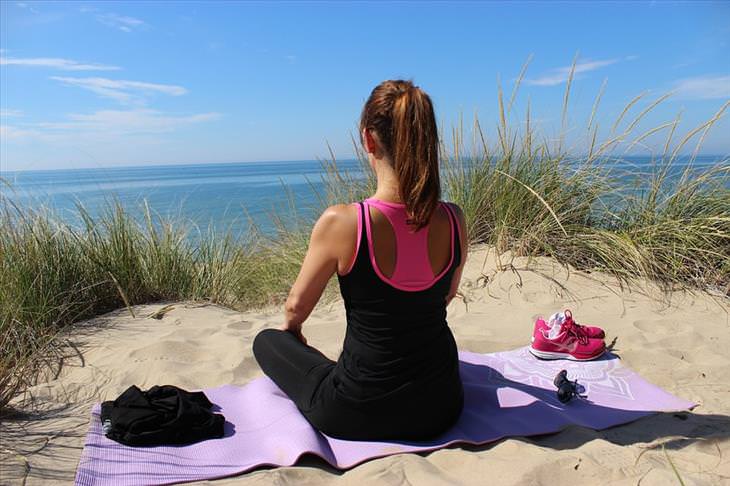
When we feel threatened or shaken, we can see it through our posture, breathing and movement, our bodies can go into shock or sometimes even crash. Many people think that the solution to overcoming a crisis or challenge comes primarily from a change in mind, but the truth is that 98% of our thoughts come from the subconscious and no thought will be fully realized if it isn’t connected to the body. In order to easily cope with the pitfalls of our lives, we must understand that our bodies have a great influence on our behavior, and it is important that we learn how to know our bodies and not separate them from the way we act and think. Precisely this principle focuses on the Embodiment approach, which teaches us how to build awareness of our bodies and properly cope with stress and obstacles. With this approach, we will present you with exercises to work with the body that will reconnect you to your mental abilities and help you stand up any challenge.

embodiment approach
What is the Embodiment Approach? 
We all have automatic trigger responses to different situations, for example, if we were to be called to our boss’s office, we would get nervous or start feeling stress. However, what people aren’t aware of is that our bodies also react instinctually. The way we walk, breathe and stand, consciously or unconsciously, affects our mentality and our experiences. The key to changing these responses is to think of our body as a sequence of sensations and to examine more positive and calming response patterns based on listening, movement, breathing, and other physical activities. Therefore, the solution must begin with control of the body and the feelings leading to the reaction, and by changing your automatic reaction patterns you will achieve significant results that, over time, will turn into a habit. By knowing your physical experience, you will learn how to control your thoughts, how to overcome stressful situations and confront your body's responses to panic and stress.

Exercises for working with the body according to the Embodiment approach: 
Working with the body is very easy and effective because the body responds to every form of distress and this allows us to "read it" easily. When you change your negative response pattern in a different format that involves setting boundaries, listening or controlling pain, you change consciousness through your body. Once you identify these familiar patterns of action, you can change the response you feel to a more responsible, and calculated response. With the 7 Embodiment method-based exercises, you can increase the space of your body's responses and move closer to realizing your personal potential.

1. Relaxation between the eyes, tongue, diaphragm, and body – it’s not for nothing that Mystics believe in the third eye and that its closely related to the knowledge and vision of humans, which is why it’s important to keep this area relaxed. Start with the area between the eyes, try to relax, and make sure your tongue is not constricted your abdomen and diaphragm are relaxed and the body is loose and not tense. 
 
2. Posture - the body and mind work together, so it's important to be aware of how we stand. Posture is expressed in awareness of the environment, smells and the body itself. 
 
3. Breathing - A short breath is a breath that brings in a small amount of air and is designed to wake us up. In contrast, a long, deep breath from the diaphragm brings more air into the body, allowing it to relax and choose the desired response more considerately. 
 
4. Control of pain - If you notice, when you feel physical pain your body tenses up, the pain is sharp and breathing stops for a moment. Now try to relax, practice the previous 3 sections, breathe deeply with your stomach, release your tongue and loosen up your body. When the same pain is applied this time (with the same intensity), you’ll hardly feel it. The reason for this is your rela xed body that made it easier to ignore pain, try it and you will certainly be surprised by the results!

embodiment approach
5. A new approach to aggression - repeat the previous section while another person recites annoying sentences to you ("You're weak", "You're not good enough ...") and see how you react. Try it again only this time you have to calm your body and concentrate on breathing, note that the body is not tense. Not only will you feel less pain, but you will also be less aggressive towards the person in front of you. When we are in situations of stress or confrontation, the body tends to contract and tense up. Our typical reaction is to defend ourselves (even violently). But once we bring the body's awareness into play, we change our response and can replace it with more balanced behavior. 
 
6. Lie - The body signals to you and the people around you when you are lying. Ask another person to push you and try to resist them with your body, at this time you will say one truth and one lie. while lying, you’ll feel your eyebrows rising and your body will have a hard time resisting. The reason for this is that our bodies are "transparent" and cannot conceal lies, the inevitable raising of eyebrows, distracts your attention from the resistance. Now consider what this means about you... 
 
7. Decision Making - When you are required to make a decision under pressure, the choice you make will arise from stress. When your body is relaxed, your decision may be different and much smarter. It is therefore important to train the body how to deal with stress, with limits, lies or any other challenge that may arise in the future. 

Training Workshop: The three-dimensional body We will now present 3 simple exercises from the Embodiment Training Workshop, which focuses on the three dimensions of our bodies. Each physical object has three dimensions: width, length, and depth, as does the human body. The difference between our body and a chair or table lies in the fact that we have an experience of life and energy. To begin the first exercise, stand on your feet and observe the way you stand. 
 
Length – as you stand on your legs picture them as roots of a tree. If you sink a little more into the ground, you’ll feel heavier – usually, those who are depressed, powerless or stubborn will seem as though they can’t be moved. If you imagine your body as a tree, your trunk should grow upwards and your treetop should reach your neck. If you lift your head up, you’ll feel slightly arrogant or condescending, but, if you straighten your back and neck, you’ll feel more relaxed and confident. 
 
Width - width is actually a perception of place, think of thin people who stand with their hands together, people who are cold and hold themselves, or people who swing from side to side (just as they do in life). Part of embodiment is presence and visibility, but you don’t have to stretch out your hands and take over a space all the time. However, if you’re having difficulty feeling your presence, try to raise your arms along your shoulders, as if touching an invisible wall, feel your width and then bring your hands back towards your body while you stay with that feeling. 
 
Depth - in this dimension we are not talking about muscles or weight, rather about movements. For example, if you run and rush to a certain place, your body will tilt forward, however, if you look at someone your body will move backward as if hesitant. In addition, depth is very connected to your culture, for example, people who maintain personal space as opposed to people who are more open to the environment. If you try to stand still and swing back and forth without moving your legs, you’ll feel the depth of your body and the trust you feel towards the person standing in front of yo u.
embodiment approach
In the second exercise, after you’ve found and explored the three dimensions of your body, take a short walk, concentrate on the dimensions of your body and examine how you respond to objects and people (e.g., do you shrink back when smiled at or do smile back).
 
In the last exercise, try to think of something or someone that warms your heart. Start walking again, keeping in mind the 3 dimensions of your body, and think about the person you chose. Pay attention to your walking, your rhythm, and the dimensionality your body creates. Soon you will notice the difference in your walking and posture and after that success, you will be one step closer to embodiment!

This is only for your information, kindly take the advice of your doctor for medicines, exercises and so on.     

https://gscrochetdesigns.blogspot.com. one can see my crochet creations  
https://gseasyrecipes.blogspot.com. feel free to view for easy, simple and healthy recipes    
https://kneereplacement-stickclub.blogspot.com. for info on knee replacement

Labels: , , , , , , , , , , ,

Saturday, February 01, 2020

This Simple Exercise Can Ease Your Heartburn

Some nagging problems have very simple solutions. One such common problem is acid reflux. Millions in the US and around the world are facing every day, and it turns out the tool that might help you manage it is your breath. As simple as that. The symptoms of acid reflux  include a burning feeling in your chest or throat, acidic taste in your mouth difficulty swallowing, and others. Practicing abdominal breathing, also referred to as belly breathing (a version of which also exists in some yoga and meditation disciplines) is likely to ease those symptoms.
So how exactly does it work? This article explains what belly breathing is and how to do it to ease the symptoms of acid reflux.

How and Why Does Acid Reflux Occur?
It is important to understand the mechanism of acid reflux to comprehend its connection with breathing. The sensation of heartburn occurs when some of the acid content of the stomach goes up the esophagus - which, unlike the stomach, does not have a protective lining against stomach acids. A ring of muscle called the lower esophageal sphincter (LES) acts as a valve by not letting food go back up once it reaches the stomach.  
Sometimes, the LES relaxes when it shouldn’t, and as a result, it allows stomach contents to travel back up the esophagus. When the valve does not do its job properly, you feel the symptoms of heartburn.

Why is Breathing Important?

What some people are not aware of is that the esophagus traverses the diaphragm – a powerful muscle that draws air into your lungs. Recent studies suggest that the way you use your diaphragm while breathing affects the LES. For example, research published in the Gastroenterology journal concluded that a diaphragm that was too tight caused the LES to relax too much, thus making it less effective. 
What belly breathing does is it helps the abdomen expand and allows your diaphragm to move more and tighten around your lungs, so you let more air out when you exhale. The effect is the same in the opposite direction – belly breathing also allows the diaphragm to expand deeper into the belly area, which helps you inhale more.
This means that by practicing belly breathing, you can help maintain the proper functioning of the LES, preventing heartburn in the long term and dealing with the symptoms of the condition in the short term.
How to Practice Belly Breathing
1. Lie down in a comfortable spot, preferably a hard surface, and breathe naturally. Pay attention to the way your chest rises and falls. Your aim is to move that breath further down to your abdomen.
2.  Place one hand just under your ribs and the other hand on your chest.
3. Take a long slow breath in through your nose and let it travel all the way to your belly – the hand placed under your ribcage should rise while the hand on your chest shouldn’t move at all.
4. When exhaling, focus on tightening your abdominal muscles and pulling them towards your spine. Now the hand under your ribs should drop, while the hand on your chest shouldn’t move. Continue breathing like so for 5-10 minutes and repeat the cycle daily.
Once you’ve gotten the hang of it lying down, you can try practice belly breathing while sitting or standing.
Finally, remember that you should NOT engage in this practice on a full stomach! Make sure enough time has passed since your last meal before attempting belly breathing.
When done correctly and regularly, this practice is meant to gradually train your body to engage the diaphragm while breathing unconsciously as well, which means that it will strengthen the diaphragm and help decrease the recurrence of acid reflux.

This is only for your information, kindly take the advice of your doctor for medicines, exercises and so on.     
https://gscrochetdesigns.blogspot.com. one can see my crochet creations  
https://gseasyrecipes.blogspot.com. feel free to view for easy, simple and healthy recipes    
https://kneereplacement-stickclub.blogspot.com. for info on knee replacement


Labels: , , , , , , , , , , , ,

Sunday, December 29, 2019

8 Natural Treatments for COPD

COPD is a term used to describe progressive lung diseases that include chronic bronchitis, non-reversible asthma, and emphysema that is characterized by increasing breathlessness. Symptoms of COPD include an increase in shortness of breath, wheezing, frequent coughing, and tightness in the chest. Although COPD is currently not curable, people can still enjoy many years of life with this disease.

Still, there are many natural remedies available to help decrease the devastation of COPD:

1. Consume ginger

Ginger helps to break down mucus, which, in turn, improves circulation to the lungs and reduces inflammation. Boil fresh ginger in water and strain out ginger, then drink it as a tea.

2. Ginseng

Ginseng has been shown to give some people relief from COPD symptoms and improve breathing.

3. Turmeric
Turmeric contains curcumin, which has many antiviral and anti-inflammatory effects.

4. Red sage

Red sage is an effective antioxidant and helps protect blood vessels from injury when oxygen is cut off and then resumed. People who have low blood oxygen levels can really benefit from using red sage.

5. Exercise
Exercising is difficult for those with COPD, however, studies have shown that exercise helps people with COPD improve their exercise tolerance. Not exercising can cause your muscles to lose their strength and make your overall health decline.

6. Mouth breathing

This technique for breathing helps you to slow down your breathing down and be calm. Mouth breathing should be performed before and after exercising, or alongside any activity that causes shortness of breath. To do this exercise, breathe in through your nose for roughly two seconds, pucker your lips, then breathe out two or three times as slow as you initially breathed in.

7. Diaphragm breathing

Another useful breathing technique is called diaphragm breathing, also known as abdominal breathing. The abdomen rises as you breathe in and lowers as you slowly breathe out. The diaphragm is the main muscle used for breathing. With COPD, the diaphragm doesn’t work nearly as well and needs to be trained. Taking on more breathing work can help take the pressure of breathing off of the shoulders, back, and neck.

Diaphragmatic breathing is not a simple technique to master, therefore, it is recommended that you get assistance from a health care professional or physical therapist trained in using it. This technique should be used when you’re relaxed and should be done when sitting or lying down. As you become used to this type of breathing, the feeling of shortness of breath will naturally decline, especially if you practice two or three times a day. You can gradually build up your ability to use this technique by trying it while sitting, then trying it while standing, and lastly, trying this technique while performing an activity. Diaphragmatic breathing helps with certain activities, such as climbing stairs, going on long walks, carrying, lifting, showering, daily activities, and when exercising.

8. COPD diet
Those with COPD should eat a minimum of 20 to 30 grams of fiber every day.

COPD is chronic and worsens over time, however, natural treatments for COPD offer an alternative to traditional medications such as inhalers, pulmonary rehabilitation, and oxygen therapy.


this is only for your information, kindly take the advice of your doctor for medicines, exercises and so on.     
https://gscrochetdesigns.blogspot.com. one can see my crochet creations  
https://gseasyrecipes.blogspot.com. feel free to view for easy, simple and healthy recipes    
https://kneereplacement-stickclub.blogspot.com. for info on knee replacement
 

Labels: , , , , , , , , , , , , , , , ,

Friday, December 13, 2019

8 Natural Treatments for COPD

COPD is a term used to describe progressive lung diseases that include chronic bronchitis, non-reversible asthma, and emphysema that is characterized by increasing breathlessness. Symptoms of COPD include an increase in shortness of breath, wheezing, frequent coughing, and tightness in the chest. Although COPD is currently not curable, people can still enjoy many years of life with this disease.
Still, there are many natural remedies available to help decrease the devastation of COPD:

1. Consume ginger
Ginger helps to break down mucus, which, in turn, improves circulation to the lungs and reduces inflammation. Boil fresh ginger in water and strain out ginger, then drink it as a tea.

2. Ginseng
Ginseng has been shown to give some people relief from COPD symptoms and improve breathing.

3. Turmeric
Turmeric contains curcumin, which has many antiviral and anti-inflammatory effects.

4. Red sage
Red sage is an effective antioxidant and helps protect blood vessels from injury when oxygen is cut off and then resumed. People who have low blood oxygen levels can really benefit from using red sage.

5. Exercise
Exercising is difficult for those with COPD, however, studies have shown that exercise helps people with COPD improve their exercise tolerance. Not exercising can cause your muscles to lose their strength and make your overall health decline.

6. Mouth breathing
This technique for breathing helps you to slow down your breathing down and be calm. Mouth breathing should be performed before and after exercising, or alongside any activity that causes shortness of breath. To do this exercise, breathe in through your nose for roughly two seconds, pucker your lips, then breathe out two or three times as slow as you initially breathed in.

7. Diaphragm breathing
Another useful breathing technique is called diaphragm breathing, also known as abdominal breathing. The abdomen rises as you breathe in and lowers as you slowly breathe out. The diaphragm is the main muscle used for breathing. With COPD, the diaphragm doesn’t work nearly as well and needs to be trained. Taking on more breathing work can help take the pressure of breathing off of the shoulders, back, and neck.
Diaphragmatic breathing is not a simple technique to master, therefore, it is recommended that you get assistance from a health care professional or physical therapist trained in using it. This technique should be used when you’re relaxed and should be done when sitting or lying down. As you become used to this type of breathing, the feeling of shortness of breath will naturally decline, especially if you practice two or three times a day. You can gradually build up your ability to use this technique by trying it while sitting, then trying it while standing, and lastly, trying this technique while performing an activity. Diaphragmatic breathing helps with certain activities, such as climbing stairs, going on long walks, carrying, lifting, showering, daily activities, and when exercising.

8. COPD diet
Those with COPD should eat a minimum of 20 to 30 grams of fiber every day.
COPD is chronic and worsens over time, however, natural treatments for COPD offer an alternative to traditional medications such as inhalers, pulmonary rehabilitation, and oxygen therapy.

this is only for your information, kindly take the advice of your doctor for medicines, exercises and so on.     
https://gscrochetdesigns.blogspot.com. one can see my crochet creations  
https://gseasyrecipes.blogspot.com. feel free to view for easy, simple and healthy recipes    
https://kneereplacement-stickclub.blogspot.com. for info on knee replacement


Labels: , , , , , , , , , , , , , , , , ,

Thursday, October 31, 2019

Tried And Tested Home Remedies To Get Rid Of Your Hiccup Episodes

Hiccups are usually caused by sudden spasms of the diaphragm, which makes the vocal cord to close suddenly. Short episodes of hiccups are nothing to worry about since they often go away on their own. However, if your hiccups become chronic and last more than three hours, you must see a doctor.
There are different home remedies to get rid of hiccups. Here are some easy means to do away with hiccups.

How to Stop Hiccups at Home?

Measured breathing

This is one of the common techniques to get rid of hiccups. A conscience break in the regulated breathing process can put an end to your episode of hiccups once and for all.

Pressure points
Applying pressure on certain important pressure points of the body, one can control your hiccup episode. This activity involves pulling the tongue or applying pressure on the diaphragm.

Carotid artery

The carotid artery is placed just below the ears — the point which is touched while checking for a pulse. Massaging this area is also an effective way of stopping hiccups.

Drinking water

Drinking water does get rid of hiccups, but the process becomes quicker when the water is drunk in combination with some other tactic. For example, hiccups go away instantly when one drinks water while holding the nose to stop breathing. Additionally, drinking a glass of warm water without stopping for breath can also get rid of hiccups.

Distraction

Hiccups can also go away if they are not paid attention. So, if one is having an episode of hiccups, busying themselves in some other activity might help get rid of hiccups faster.

Ice cubes

Ice cubes are readily available in most homes. Sucking on an ice cube can get rid of hiccups easily.

Honey, peanut butter and sugar

Eating either of these things can help you do away with hiccups. In the case of honey and peanut butter, one should allow it to dissolve on the tongue for a while before swallowing. Sucking a slice of lemon can also provide one with the same results. However, it is essential to rinse the mouth with water soon after to prevent corrosion of the teeth because of citric acid.

The next time you get hiccups, make sure to try out any of these tips.

this is only for your information, kindly take the advice of your doctor for medicines, exercises and so on.     
https://gscrochetdesigns.blogspot.com. one can see my crochet creations  
https://gseasyrecipes.blogspot.com. feel free to view for easy, simple and healthy recipes    
https://kneereplacement-stickclub.blogspot.com. for info on knee replacement


Labels: , , , , , , , , , , , , , ,