Sunday, July 27, 2025

10 Important Mantras for Aging Gracefully

Many people feel unhappy, health-wise and security-wise, after 60 years of age, believing diminishing importance is given to them and their opinions. However, it need not be so, if only we understand the basic principles of life and follow them.

Here are ten mantras to help you age gracefully, to make life after retirement more pleasant, to enjoy and treasure the elder years of wisdom and intelligence. 
 
1. Never say 'I am too old'
There are three ages, chronological, biological, and psychological. The first is calculated based on our date of birth; the second is determined by health conditions, and the third is how old you feel you are. While we don't have control over the first, we can take care of our health with a good diet, exercise, and a cheerful attitude. A positive attitude and optimistic way of thinking can reverse the third age. 
 
2. Health is wealth
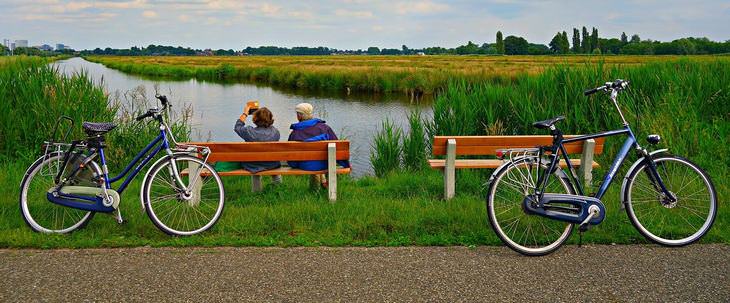
If you really love your kids and kin, taking care of yourself and your health should be your priority. Thus, you will not be a burden to them. Have an annual health check-up and take the prescribed medicines regularly. Take out health care insurance coverage.

3. Money is important
Money is essential for meeting the basic necessities of life, keeping good health and earning family respect and security. Don't spend beyond your means, even for your children. You have lived for them throughout, and it is time you enjoyed a harmonious life with your spouse. If your children are grateful, they should take care of you. But never take that for granted. 
 
4. Relaxation and recreation 
 
Mantras, aging

The most relaxing and refreshing forces are a healthy and religious attitude, good sleep, music, and laughter. Have faith in your religion, learn to sleep well, love good music, and see the fun side of life. 
 
5. Time is precious
It's almost like holding a horse's reins. When they are in your hands, you can control them. Imagine that every day you are born again. Yesterday is a paid check. Tomorrow is a promissory note. "Today is ready cash; use it profitably. Live this moment". 
 
6. Change is the only permanent thing
We should accept change; it is inevitable. The only way to make sense out of change is to join the dance. Change has brought about many pleasant things. We should be happy that our children are blessed. 
 
7. Enlightened selfishness 

We are all basically self-interested. Whatever we do, we naturally expect something in return. We should definitely be grateful to those who stood by us. But our focus should be on the internal satisfaction and happiness we derive by doing good for others, without expecting anything in return but the warm glow we get, which in the end, is what we really want. 
 
8. Forgive, then Forget
 Mantras, aging
Don't be bothered too much by others' mistakes. It is certainly hard in the heat of the moment to turn the other cheek, but, for the sake of our own health and happiness, let us forgive and forget as soon as we can. Otherwise, we will only be increasing our blood pressure.

9. Everything has a reason, a purpose
Take life as it comes. Accept yourself as you are, and also accept others for what they are. Everybody is unique and right in their own way. 
 
10. Overcome the fear of death
We all know that one day we have to leave this world. Still, we are afraid of death. We think that our spouse and children will be unable to withstand our loss. But the truth is that no one is able to die for you; though they may painfully mourn for some time. Time heals everything and they will carry on. Remember, no one leaves this world alive. 


This is only for your information, kindly take the advice of your doctor for medicines, exercises and so on.   


Labels: , , , , , , , , , ,

Thursday, May 16, 2024

Skin-to-skin contact: Why it's good for babies and parents

 There are five different love languages, according to psychologists, but only physical touch truly registers with newborns. Skin-to-skin right after birth is the practice of immediately placing the naked newborn against the mother’s body. The newborn baby is then stimulated to go through what may be referred to as nine innate stages by this practice: the birth cry, relaxation, awakening, activity, rest, crawling, familiarisation, nursing, and sleeping. 

While the birth cry is the first intense cry that helps the newborn to transition to breathe air post birth, the next eight stages can be closely observed between mother and baby – if left uninterrupted in skin to skin.

The eight stages and corresponding behaviours
1. Birth cry: Intense wail shortly after delivery, transition to inhaling air. 
2. Relaxation stage: Infant rests. No movement of the head, mouth, arms, legs, or body.
3. Awakening stage: Infant begins to show signs of activity. There are little head movements: up, down, and side to side. Small movements of limbs and shoulders. 
4. Active stage: Infant moves limbs and head, more determined movements. Rooting activity, ‘pushing’ with limbs without shifting the body. 
5. Resting stage*: Infant rests, with some activity, such as mouth activity, and sucks on the hand.
7. Familiarisation: Infant has reached the areola/nipple with the mouth positioned to brush and lick areola/nipple. 
8. Suckling stage:Infant has taken a nipple in mouth and commences suckling.
9. Sleeping stage: Infant closes eyes and falls asleep.

These stages, when left without any external interference, would also include the breast crawl (stage 6) where the newborn naturally crawls to the mother’s breast, to familiarize with the nipple to initiate the first breastfeed. At times, the baby's transition from crawling to suckling can be so gradual that it catches parents and labour room personnel off guard when they discover the infant has moved to nursing. At other instances, the infant might make loud, obvious movements to draw attention from others nearby. 

The skin-to-skin contact also causes a further release in oxytocin—the ‘love hormone’—in the mother. This warms up the mother’s body, which comforts the baby and results in less crying, while also lowering the chances of hypoglycaemia or low sugar levels in the baby.

Further, this love hormone helps mothers and babies to recognize each other’s unique scent. This clarifies the relationship between the development of mother-infant attachment and the rise in the mother's oxytocin during the first hour following birth. Additionally, oxytocin helps the uterus contract, which reduces bleeding, and the risk of postpartum haemorrhage in the mother. 

Research indicates that when babies who exhibit unpleasant behaviour when trying to latch are given the freedom to calmly progress through the phases of skin-to-skin contact at a later age, they may be able to successfully reach the nipple, connect to it on their own, and begin nursing. If it isn't feasible before, this could occur even weeks after delivery. This is a promising way to calmly solve breastfeeding problems and enhance mother-baby bonding.

After birth, skin-to-skin contact also had a positive impact on the infant's self-regulation at one year old. Another research which examined children at 10 years of age found that those who had received skin-to-skin contact as babies now displayed a range of benefits including better maternal attachment behaviour, reduced maternal anxiety, enhanced child cognitive development and good mother-child communication. 

While ample research backs the importance of skin-to-skin between mother and child, skin-to-skin can also be practiced between father and child. Fathers, too, experience the release of oxytocin in their bodies during skin to skin, with a simultaneous decrease in testosterone levels. This induces a much more calming and relaxed feeling in both father and child. It further helps the fathers understand and nurture the infants needs better, creating a long term stronger and emotional bond with the child after skin-to-skin is an established practice.

by- Dr. Vanshika Gupta Adukia is a pregnancy/childbirth and lactation specialist, a pelvic floor physiotherapist and founder of Therhappy, Mumbai.


This is only for your information, kindly take the advice of your doctor for medicines, exercises and so on.   

https://gscrochetdesigns.blogspot.com. one can see my crochet creations  
https://gseasyrecipes.blogspot.com. feel free to view for easy, simple and healthy recipes    
https://kneereplacement-stickclub.blogspot.com. for info on knee replacement
https://cancersupportindia.blogspot.com  for infor on cancer and health related topics
https://GSiyers home remedies.blogspot.com   is the latest addition to my blogs. I'm going to add posts there, do give me your valuable feed back on my blogs. Thanks a lot, take care, be healthy and be happy.

Labels: , , , , , , , , ,

Saturday, October 22, 2022

7 Science-Backed Tips to Get You Back to Sleep at Night

Sleep is one of those things that you don’t really cherish until it’s gone. And having a good night’s sleep is integral to our wellbeing, focus, and life satisfaction. Unfortunately, nearly everyone has had an insomnia episode at least once in their lifetime, and a third of the population is showing symptoms of insomnia. 
 
What’s more, one’s risk of waking up in the middle of the night rises as we age. According to the Sleep Foundation, up to 48% of older adults suffer from chronic insomnia, and 69% of men and 76% of women past the age of 40 wake up to go to the bathroom at least once every night. But what should you do once you wake up in the middle of the night? 
 
Don’t panic and follow these simple science-backed tips that will lull you back to sleep.  
 
1. Turn down the temperature on the thermostat
It turns out that the temperature of our bedroom affects our sleep quality. Temperature regulation plays an incredibly important role in our sleep cycles - the body temperature naturally drops around bedtime. This is a necessary biological process that’s part of circadian rhythms that regulate our sleep, eating schedule, and energy levels.

And while this natural drop in body temperature works well in most people, a cool, but not freezing room temperature can facilitate this process and help you fall asleep faster. The recommended range of temperatures is between 60 and 67°F (15-19°C). A cool room temperature is especially beneficial for those whose circadian rhythms are disrupted (which is true of some insomniacs), as it nudges your body in the right direction even when you don’t feel particularly sleepy. 
 
You can also take advantage of this natural propensity to feel sleepy when you wake up at night. Simply turn down the thermostat by a few degrees, and cozy up under the covers. Interestingly, scientists have also proven that sleeping in a cold room benefits our overall health. To learn more, read our article The Health Benefits of Sleeping in a Cold Environment.  
 
2. No devices in bed
When it comes to healthy sleep, electronic devices like smartphones, tablets, and laptops are your worst enemy. You may think that scrolling through the phone and reading a few articles or going on social media will help you fall back asleep faster, but the truth is that this can turn a minute sleep interruption into a sleepless night. 
 
Screens from electronic devices emit blue light that suppresses the brain’s production of melatonin, the sleep hormone. Blue-light that comes from devices that you keep close to your eyes, such as a smartphone, is especially hazardous. As W. Christopher Winter, the director of the Martha Jefferson Sleep Medicine Center revealed in a statement, "Electronic devices emit light that can keep you up—especially the ones you hold closer to your face, like a mobile device."
 
And then there’s also the potential of excessive mental stimulation as you get carried away reading and watching stuff online, which can also end up keeping you up. Therefore, one of the best ways to ensure that you get back to sleep is to keep your phone away from your bed. You can still keep your phone in your bedroom so that you hear your morning alarm and whatnot, but place it on the dresser or anywhere out of immediate reach.
 
3. Keep the lights dim and the noises down
While blue-light is definitely the worst offender for your sleep health, other lights can also interrupt your sleep. Both LED lights and lights coming through the windows could make it difficult for you to fall asleep. Having a weak night light that emits warm light is fine if you prefer not to sleep in total darkness, but beware of any strong lights. 
 
Likewise, any other excessive stimulation of the sense, like loud noises, can mess up your sleep, so it’s a good idea to invest in earplugs, to listen to white noise, or simply turn on a ceiling fan to cancel out any potentially-disturbing sounds. 
 
4. Try relaxation and deep breathing
Irrespective of the cause that woke you up in the middle of the night, insomnia can be quite scary and stressful, especially if you have things to do and places to go in the morning. Therefore, you should focus on relaxing your muscles and your mind in whichever way you prefer in order to fall back asleep. 
 
You can accomplish this, for example, through guided imagery - by imagining a relaxing activity, like sitting on the beach or watching your favorite movie with your family. A few other methods you can try are meditation or deep breathing. Here’s one breathing exercise you can use. It’s called the 4-7-8 breathing technique: take a deep breath through the nose for 4 seconds, then hold your breath for 7 seconds, and finally, breathe out through your mouth for 8 seconds. You can repeat this method 3-4 times.

5. Don’t be afraid to walk around
Some people feel that getting up and walking around can disrupt their sleep completely, but this is not true, in most cases. In fact, many sleep experts advise getting up and doing some distracting or relaxing activity if you can’t fall back asleep for 20 minutes or more. Any light housework, some stretching, drinking a warm beverage, reading a book, or solving a puzzle will help you get your mind off the fact that you can’t fall asleep. And in many cases, that’s exactly what we need in order to feel sleepy again.  
 
6. Take a warm shower
If meditation or breathing exercises aren’t your thing, but you feel that your muscles are tense or your thoughts are racing, try taking a warm shower. The warm water will help you relax, and when you step out of the shower, your body temperature will drop by a few degrees, which, as we already discussed, helps your body get into “sleep mode.” So try and take a quick warm shower and hop back into bed.
 
7. Don’t look at the clock
So, we talked a lot about the importance of relaxation and stress reduction in this article. And you know what doesn’t help you relax? Staring at the clock on the bedside table and realizing that it’s 3 AM and you’re wide awake. This is especially true if you have work or plans in the morning. 
 
As neurologist Brian Murray pointed out to CBC Canada, "The problems occur when people's minds start to race and they start to worry about things… Looking at the clock will make people feel anxious about not falling back to sleep. That causes the body to release fight-or-flight hormones, which interfere with the sleep onset process." 
 
Therefore, try to put away the clock without looking at the time, and, once again, avoid reaching for the smartphone. Instead of worrying about how much time you have left to sleep, focus on the tips we mentioned earlier.
 

This is only for your information, kindly take the advice of your doctor for medicines, exercises and so on.   

https://gscrochetdesigns.blogspot.com. one can see my crochet creations  
https://gseasyrecipes.blogspot.com. feel free to view for easy, simple and healthy recipes    
https://kneereplacement-stickclub.blogspot.com. for info on knee replacement

https://GSiyers home remedies.blogspot.com     will be latest addition to my blogs. I'm going to add posts there, do give me your valuable feed back on my blogs. Thanks a lot, take care, be healthy and be happy.

Labels: , , , , , , , ,