Friday, July 17, 2026

The Dangers of Aluminum Exposure and 9 Ways To Prevent It

 Aluminum is all around us, but it’s when it builds up in excess in the human body, it can become a health threat. Unfortunately, scientific evidence shows that most people are still exposed to too much aluminum, despite the efforts of international regulations to lower global human aluminum exposure. But how does aluminum get into our bodies anyway? Scientists say that the culprit lies in our foods and self-care items, and in this article, we explain how to avoid it.

How can aluminum affect the health? 

Complete avoidance of aluminum is impossible, as this metal is one of the most widespread ones on the planet and it can be found in the soil, water, the food we eat, and even in the air we breathe. Usually, our body is good at washing out excess aluminum through urine, but when exposure to the metal rises, some of the excess aluminum ends up accumulating in the body, which is when it can become dangerous to human health.

This is why many international regulatory bodies, such as the World Health Organization and European Food Safety Authority determined a tolerable weekly aluminum intake of 1 milligram per kilogram (2.2 lbs) of body weight per week. So, for example, if you weight 65 kg (143 lbs), your intake of aluminum should not exceed 65 mg a week.

Although there is too little evidence regarding the effects of excessive aluminum intake on human health, studies have linked it to the following conditions:

Neurotoxicity, adverse effects on the nervous system.

Alzheimer's disease, with unusually high levels of aluminum found in Alzheimer's patients' brain.

IBD, but only in animal models and in vitro studies.

Breast cancer. 

In a recent large scale study conducted in Germany, researchers found that people typically consume twice the amount of aluminum they should be from food and cosmetics alone, so we thought it might be useful to learn about the ways you can lower your aluminum intake and prevent the development of any potential adverse reactions.

Here are 9 ways that will help you significantly lower your weekly aluminum intake:

1. Cosmetic and self-care products

Look at the ingredients in your cosmetic products, especially toothpaste and antiperspirants, as these two categories of products often contain aluminum. In antiperspirants, aluminum is used as an agent that can prevent you from sweating by blocking your pores, but it may be absorbed into your body as well.

The same German study we mentioned earlier even suggested that antiperspirants containing aluminum alone may exceed the recommended weekly exposure to the metal.

On a slightly different note, certain medications, such as antacids, for example, can contain high levels of aluminum, but usually, the benefits of these medications outweigh their risks, so we wouldn't recommend avoiding them, especially if they were prescribed to you by a doctor.

2. Cooking utensils

Avoid cooking and storing food in uncoated aluminum pots or aluminum foil, as aluminum particles can seep into your food, and then travel into your body. This is particularly true when it comes to highly acidic foods, such as tomato sauces, soups, etc., as well as salty foods, as both salt and plant-derived acids will eat through the foil and utensils faster and aluminum particles will travel into the food.

3. Drinking water

 As previously mentioned, water can be another source of aluminum exposure, with some areas containing higher levels of aluminum in the soil and water than others. If you know that the water in your area contains high quantities of aluminum, you'll be better off investing in some type of water purification system, i.e. water filters, to protect yourself from the dangers of excessive exposure.

4. Takeaway boxes 
tips on how to lower aluminum exposure aluminum takeaway boxes stacked

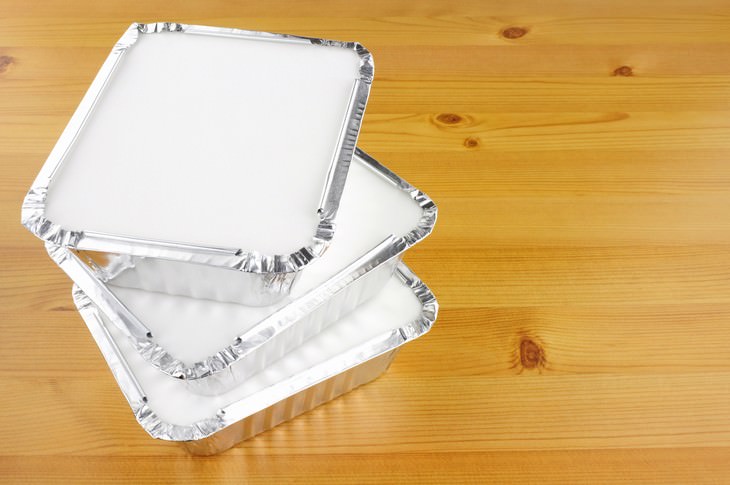
 Metal takeaway boxes are so popular, but the thing is that all of them are made of aluminum, so they're not the best way to store food, being pretty much equal to using aluminum foil to wrap up your foods. Try to avoid these boxes and opt for paper takeaway boxes. These are not only biodegradable and kinder to the planet, but they're also better for your health than aluminum or plastic ones.

5. Store-bought foods

  tips on how to lower aluminum exposure woman in a supermarket shopping

Buying food in supermarkets is tricky, as you will never know how the food was prepared, what kind of water was used to make the product, and how it was stored. To minimize your aluminum exposure from store-bought products, your best bet is NOT to stick to one brand. Even if some of the foods you buy will contain aluminum, by switching them up with those that potentially don't contain it will help you lower your overall exposure to the metal.

6. Fruits and vegetables

Most fruit and vegetables will have some aluminum in them naturally, but farmers also add pesticides containing aluminum when they grow plant produce, so make sure to wash all the fruit and veggies you buy thoroughly before adding them to dishes or eating. Apart from that, certain foods, such as spinach, tea leaves, mushrooms, and radishes tend to absorb more aluminum than others, so it's best to either purchase these organic or consume them in moderation.

7. Aluminum foil and single-use Aluminum Baking Pans

 Heat is another factor that will cause aluminum particles to seep into your foods, so using aluminum foil or those single-use aluminum tins that are so often used in baking is not the greatest idea if you're planning on minimizing your aluminum intake. 

This doesn't mean that you have to forget about grilling meat or vegetables in aluminum foil forever, but do be mindful of the tools you use when you're cooking and don't abuse aluminum cooking equipment.

8. Processed foods

Another reason why you should stay away from store-bought snacks and processed, packaged foods is because of the chemicals they use to make food last longer and look better. Aluminum is routinely used in food coloring, thickeners and anti-caking ingredients in commercially produced foods. For this reason, get in the habit of preparing homemade snacks and desserts, such as cookies, as commercial products have been suggested in studies to contain more aluminum than homemade foods due to these additives.

9. No need to be afraid of Canned foods and Drinks

 There are plenty of reasons to avoid canned soft drinks, but aluminum exposure is not one of them. There was a study conducted on the quantity of aluminum in canned drinks, and it found that even after 12 months of storage, the concentration of aluminum in the drink was negligible compared to the exposure we get from foods. 

Needless to say, we're not urging you to start consuming canned sugary drinks. Instead, we'd just like to say that consuming foods and drinks that come in aluminum cans is safe for your health in terms of their risks of aluminum exposure.


This is only for your information, kindly take the advice of your doctor for food, medicines, exercises and so on.   


Labels: , , , , , , , , ,

Friday, November 14, 2025

This Everyday Ingredient Could Be Aging Your Skin Faster

By the time you hit adulthood, you may be well aware of how your lifestyle can affect your skin, so you run offense to protect it: smearing on sunscreen before you leave for work in the morning, keeping a water bottle on hand to make sure you stay hydrated, shooting for eight hours of sleep per night (even if an evening out with friends or a too-long doomscrolling sesh occasionally foils your plans). Maybe you’ve even considered (or gotten!) Botox. But you may be disregarding one factor that can play a major role: your sugar intake.

There’s a long list of health issues a high sugar intake can cause—obesity, type 2 diabetes, heart disease, tooth decay, even cancer—but it can also have another side effect that you might not know about: premature aging. Yep, that sweet-treat habit could be showing up where you least expect it: your complexion. Consistently eating a lot of sugar can actively harm your skin and make you look older than you actually are, sabotaging all that hard work you put into your nighttime skincare regimen.

“Sugar doesn’t just affect your body, it transforms your skin from the inside out,” a dermatologist based in tells SELF—and, in case it wasn’t clear already, not for the better. Below, we’ll dig into why this happens, what skin changes you can expect to see, and how you can tweak your diet to reverse some of the effects, because, thankfully, they’re not set in stone.

How does sugar contribute to skin aging?

While the biology is a little complex, the root cause is a process known as glycation. When you eat a diet high in sugar, the excess sugar molecules bind to proteins, lipids, and nucleic acids in your body, forming compounds known as “advanced glycation end products”—AGEs for short. Over time, these AGEs accumulate, directly contributing “to the visible and structural signs of skin aging,” Dr. Houshmand says.

Take two skin-specific proteins as an example: collagen and elastin, or the main “dermal building blocks,” Anthony Rossi, MD, FAAD, a dermatologist at Memorial Sloan Kettering Cancer Center, tells SELF. Both are important for “maintaining firmness, elasticity, and resilience,” Dr. Houshmand says, but the formation of AGEs disrupts that mission by making them “stiff, brittle, and less able to repair or regenerate.” “Basically, they’re not as pliable,” Dr. Rossi says.

But the harmful impact of a high-sugar diet doesn’t stop there. In addition to hurting your skin directly thanks to their impact on collagen and elastin, AGEs also hurt your skin indirectly by triggering oxidative stress and chronic low-grade inflammation—biological conditions that put strain on your whole body.

In the case of your skin, oxidative stress and inflammation not only further accelerate the breakdown of collagen, they also mess with your ability to resist environmental stressors like UV radiation and air pollution, according to Dr. Houshmand. This, in turn, results in impaired wound healing and a weaker skin barrier. In fact, AGEs have even been implicated in skin-related metabolic disease complications, including diabetic ulcers, skin infections, and non-healing wounds, according to a 2022 review published in the scientific journal Frontiers in Medicine.

While there is a substantial body of evidence backing up the causal role of AGEs in aging, the precise degree to which a high sugar intake contributes “is still very much up for debate,” Desiree Nielsen, RD, a recipe developer with a focus on plant-based nutrition, tells SELF. Personally, however, Dr. Rossi believes it plays a major part: “I think it probably contributes more than people want to believe or think,” he says. In fact, the Frontiers in Medicine review went so far as to characterize AGEs as potentially “the most important factor in the link between modern diet and health.”

How much sugar is too much?

When we talk about excess sugar causing glycation, we’re really talking about one specific type of sugar: added sugars, or the sugars and syrups added to food and drink items when they are processed or prepared. Think: the stuff you’d find in candy, chocolate, and ice cream. These are “not like the natural sugars that you find in fruits and vegetables,” Dr. Rossi says, which, by comparison, are far less damaging.

Recommendations from scientific bodies like the US Centers for Disease Control and Prevention (CDC) and the World Health Organization (WHO) offer some insight into the maximum amount of added sugar you should consume. Per the CDC, added sugars should make up less than 10% of total daily calorie intake for people two years old and up. (Meanwhile, children under two shouldn’t consume added sugars, period).

Like the CDC, the WHO also cites the 10% figure, but the organization notes that closer to 5% is ideal for “optimal health and skin benefits,” Dr. Houshmand says. In contrast to both the CDC and the WHO, the American Heart Association offers a more clear-cut ceiling: no more than nine teaspoons (36 grams or 150 calories) of added sugar per day for men, and no more than six teaspoons (25 grams or 100 calories) per day for women—a suggestion Nielsen, for one, favors.

But adhering to these guidelines can be easier said than done: Three in five Americans ages two and up consume more than the CDC’s recommended amount of added sugars—19 teaspoons per day for men, and 15 teaspoons per day for women, to be specific. Likewise, consistently eating sweetened beverages, pastries, or ultra-processed snacks can “easily exceed that threshold,” Dr. Houshmand says of the WHO recommendation. Even a single soda can cause a temporary spike in blood glucose high enough to trigger glycation if it’s sufficiently sugary, she adds.

That said, dietary patterns matter much more than one-off dietary choices in this context, both for reducing added sugar intake and staving off inflammation overall, according to Nielsen. Ultimately, “this is more about the chronicity of a high-sugar unbalanced diet, not occasional days of high sugar consumption,” Dr. Houshmand says. In other words, it’s not like eating a single bowl of ice cream or drinking a single milkshake will irreparably ruin your skin; rather, it’s more about regularly piling on the sweet treats over a long period of time.

And in case you were wondering, added sugars aren’t the only dietary player that can cause glycation. Other refined carbs, including pasta, potato chips, and white bread, can bring about the same harmful changes in your skin. Alcohol can add insult to injury by dehydrating you as well, according to Dr. Rossi, especially when consumed in large amounts. Finally, fried and processed foods can introduce “inflammatory fats and oxidized oils that stress the skin’s repair systems,” Dr. Houshmand says.

So how will these internal changes show up on the outside?

Like any gradual shift, you won’t notice a visible difference from one day to the next. “It’s not like you eat one thing and overnight, boom, your skin becomes brittle,” Dr. Rossi says. Instead, the effects will creep up on you slowly over the years (though if you’re looking really closely, you might start to notice a decline within months, Dr. Rossi adds).

Per Dr. Houshmand, your skin might appear:

  • Less firm and supple
  • Duller or more sallow in tone
  • More prone to fine lines, wrinkles, and sagging
  • Slower to heal after breakouts or irritation

In fact, that characteristic dullness and sallowness is sometimes nicknamed “sugar face” thanks to its links to a high-sugar diet. Research—like this 2009 study and this January 2025 study—suggests that people who have a higher AGEs index are measurably more likely to have a yellowish discoloration to their skin. What’s more, the 2025 study found that a higher AGEs index is correlated with reduced brightness and firmness as well.

Thankfully, there are ways to reverse the effects.

Despite the doom and gloom thus far, the news isn’t all bad: Just as your diet can contribute to negative changes in your skin, so too can it counter them. “You can absolutely slow, and in some cases, partially reverse sugar-related skin aging,” Dr. Houshmand says. Unsurprisingly, adjusting your diet for your skin health begins with cutting back on added sugars and refined carbs. Within the American diet, the primary sources of added sugars include candy, breakfast cereals and bars, sweetened coffee and tea, desserts and sweet snacks, and sugary drinks like soft drinks and energy drinks, so consider starting there if you’re serious about downsizing.

In addition to that, try these tips:

  • Choose whole foods, including carbs that have a low glycemic index (meaning they break down slowly in the body, causing a more gradual and less pronounced rise in blood sugar).
  • Optimize antioxidant intake. “Vitamins C and E, carotenoids, and polyphenols (found in berries, green tea, and leafy greens) help neutralize oxidative stress and support collagen,” Dr. Houshmand says. “You can tell when people have diets rich in antioxidant-rich foods, like fruits and vegetables,” Dr. Rossi adds. “Their skin almost glows.”
  • Incorporate collagen-supporting nutrients, including vitamin C, zinc, and copper. Topical vitamin C products may also help.
  • Stay hydrated (and if you’re not sure how to tell you’re dehydrated, SELF has a handy guide available here). “Water supports elasticity and barrier function,” Dr. Houshmand says.

Overall, eating “a balanced, low-glycemic, antioxidant-rich diet is one of the most powerful scientifically supported ways to keep your complexion luminous, healthy, and resilient,” Dr. Houshmand says. And of course, don’t forget to take other critical skin-health measures, like wearing sunscreen daily (yes, even when it’s rainy or overcast out!), getting enough sleep, and managing stress effectively. “Chronic stress and lack of sleep elevate cortisol, which can exacerbate inflammation and glycation,” Dr. Hushmand says.


This is only for your information, kindly take the advice of your doctor for medicines, exercises and so on.   


Labels: , , , , , , , , , ,