Sunday, March 28, 2021

The Differences Between Glucose, Sucrose & Fructose

Glucose, fructose, and sucrose are three types of sugar that contain an identical number of calories gram for gram. However, their chemical structures greatly differ, as does the way in which your body digests and metabolizes them. Keep reading to find out exactly what makes these three sugars so different, and why these differences actually matter.

What Is Glucose?  
Glucose is a simple sugar, also known as a monosaccharide, and is your body’s favorite carbohydrate-based source of energy. Monosaccharides are composed of a single unit of sugar and that's why they absolutely cannot be broken down into smaller compounds. 
 
When it comes to food, glucose is most commonly bound to another monosaccharide to form either disaccharides or polysaccharide starches. Glucose is frequently added to processed foods in the form of dextrose, which is actually extracted from cornstarch. When compared to fructose and sucrose, glucose tastes the least sweet.

What Is Fructose? 
Like glucose, fructose is a monosaccharide, too. It’s naturally present in fruit, honey, agave and many kinds of root vegetables. What's more, it’s also frequently added to processed foods in the form of high-fructose corn syrup. 
 
Fructose can be obtained from sugar cane, sugar beets or corn. High-fructose corn syrup is made from cornstarch and contains a great deal more fructose than glucose, in comparison with regular corn syrup. Of the three sugars, fructose has the sweetest taste but the least impact on your blood sugar. 
 
What Is Sucrose?
Sucrose is the scientific name for common table sugar and is a disaccharide that is made up of 50% glucose and 50% fructose. It naturally occurs in many grains, fruits, and vegetables, and is often added to certain processed foods too, such as ice cream, candy, canned food, and breakfast cereals. 
 
Table sugar and the sucrose found inside processed foods are often extracted from sugar beets or sugar cane. Sucrose tastes sweeter than glucose but is not as sweet as fructose.

Glucose Absorption and Use
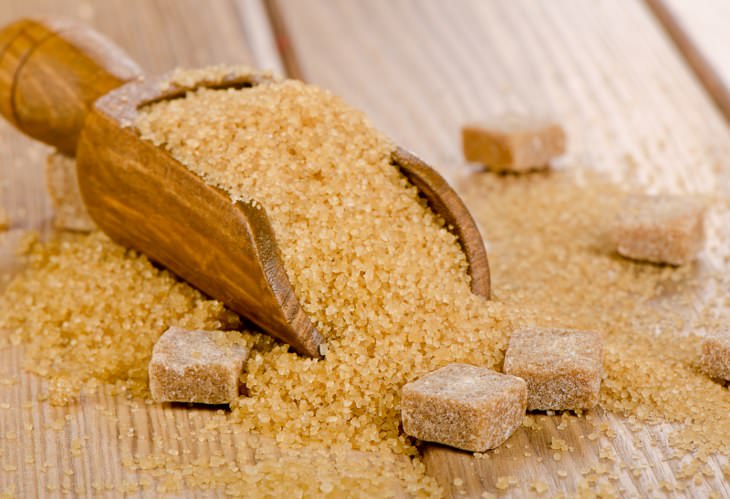
Glucose is directly absorbed through your small intestine's lining and into your bloodstream. It raises blood sugar far more rapidly than other sugars, which stimulates the release of insulin, a substance that is required for glucose to enter your cells. 
 
Once inside your cells, glucose is either changed into glycogen to be stored or is used up immediately to create energy. Your body tightly regulates your blood sugar levels. When they are too low, glycogen is turned back into glucose and is released into your bloodstream. If glucose is unavailable, your liver can make this type of sugar from other sources. 
 
Fructose Absorption and Use  
sugar
 Like glucose, fructose is absorbed directly into your blood via the small intestine. It increases blood sugar levels more gradually than glucose and does not seem to have an immediate impact on insulin levels, however, it could have more long-term negative effects. 
 
 Your liver needs to convert fructose into glucose before your body uses it as a source of energy. If you consume more fructose than your liver is able to safely handle, any excess is turned into cholesterol and triglycerides, which could end up causing certain negative health effects such as obesity, fatty liver disease, and high cholesterol levels. 
 
Sucrose Absorption and Use  
Since sucrose is a disaccharide, your body needs to break it down before it can be used. Enzymes in your mouth start breaking down sucrose into glucose and fructose before your stomach acid carries on this task. However, the majority of sugar digestion happens in your small intestine. 
 
The enzyme sucrase divides sucrose into glucose and fructose before they get absorbed by your bloodstream. When glucose is present, your body ends up releasing more insulin and absorbs a higher degree of fructose, causing more fat to be created. This is why both fructose and glucose should ideally be eaten separately. 
 
Which Is the Worst for Your Health?  
Of the 3 sugars discussed above, fructose appears to be the most harmful by a long shot for a number of reasons. For starters, the effects of consuming too much fructose include type 2 diabetes, obesity, fatty liver disease, metabolic syndrome, and insulin resistance. 
 
One study found that from all known sugars, fructose is the one that can put you at the highest risk for developing type 2 diabetes or obesity. Another study found that people who drink fructose-sweetened beverages put on belly fat almost twice as fast as those who drink glucose-sweetened drinks instead. 
 
What’s more, fructose also increases the hunger hormone ghrelin, which could make you feel less full after eating. Since fructose is metabolized in your liver like alcohol, research suggests that it could be similarly addictive. A certain study found that it also activates your brain's reward pathway, which could lead to increased sugar cravings, and all of the negative effects that tend to follow them.


This is only for your information, kindly take the advice of your doctor for medicines, exercises and so on.     

https://gscrochetdesigns.blogspot.com. one can see my crochet creations  
https://gseasyrecipes.blogspot.com. feel free to view for easy, simple and healthy recipes    
https://kneereplacement-stickclub.blogspot.com. for info on knee replacement


Labels: , , , , , , , , ,

Thursday, July 25, 2019

Timing Your Meals May Help You Burn Fat Faster


Losing weight seems to be difficult but if you carefully plan your diet, you might reach your goal faster than you thought. Consuming healthy and non-fattening foods is important, and so is strategising the timing of eating them. There are many diet plans in existence now that chart out the ideal timing of eating meals. For instance, some diets like intermittent fasting stress on eating early in the day to digest food easily and lose weight. A new study claims that timing your meals can help people shed extra kilos by focusing more on reducing the appetite than burning calories. The study established a link between meal intake frequency and boosting of energy metabolism.

The study  states that Early Time-Restricted Feeding (eTRF) - a kind of intermittent fasting wherein dinner is eaten in the afternoon - led to people burning fat, instead of carbohydrates, for energy.


 The co-author of the study said, "Coordinating meals with circadian rhythms, or your body's internal clock, maybe a powerful strategy for reducing appetite and improving metabolic health." 

Losing weight seems to be difficult but if you carefully plan your diet, you might reach your goal faster than you thought. Consuming healthy and non-fattening foods is important, and so is strategising the timing of eating them. There are many diet plans in existence now that chart out the ideal timing of eating meals. For instance, some diets like intermittent fasting stress on eating early in the day to digest food easily and lose weight. A new study claims that timing your meals can help people shed extra kilos by focusing more on reducing the appetite than burning calories. The study established a link between meal intake frequency and boosting of energy metabolism.

The study  states that Early Time-Restricted Feeding (eTRF) - a kind of intermittent fasting wherein dinner is eaten in the afternoon - led to people burning fat, instead of carbohydrates, for energy. 


The lead author of the study added, "We suspect that a majority of people may find meal  timing strategies helpful for losing weight or to maintain their weight since these strategies seem to naturally decrease appetite, which may help people eat less."

The researchers studied 11 adult men and women who had excess weight, between November 2014 and August 2016. The participants were asked to follow two different meal timing strategies: a control schedule that involved eating three meals during a 12-hour period with breakfast at 8:00 a.m. and dinner at 8:00 p.m. and an eTRF schedule that had participants eating three meals over a six-hour period with breakfast at 8:00 a.m. and dinner at 2:00 p.m. 

The team discovered that eTRF schedule propelled the process of fat burning over a 24-hour period. It also showed improvement in appetite by lowering the levels of the hunger hormone ghrelin. 


THIS IS ONLY FOR INFORMATION, ALWAYS CONSULT YOU PHYSICIAN BEFORE HAVING ANY PARTICULAR FOOD/ MEDICATION/EXERCISE/OTHER REMEDIES.                                    PS- THOSE INTERESTED IN RECIPES ARE FREE TO  VIEW MY BLOG-                                                                                           https://gseasyrecipes.blogspot.com/                                                                                                                                                FOR INFO ABOUT KNEE REPLACEMENT, YOU CAN VIEW MY BLOG-                                                  https:// kneereplacement-stickclub.blogspot.com/                                                                      FOR CROCHET DESIGNS                                                                                                    
                                https://gscrochetdesigns.blogspot.com


Labels: , , , , , , , , ,

Wednesday, December 19, 2018

Excess Body Weight Responsible For 3.9 Percent Cancer Worldwide: 5 Tips To Manage Obesity

Obesity is emerging to be one of the top health concerns around the world. If the findings of a latest study are to be believed, excess body weight is said to be responsible for 3.9 percent of cancer globally. The study, spoke about association between obesity and the risk of 13 types of cancers, including postmenopausal breast cancer and liver cancer, and a probable relationship with three other cancers, including prostate cancer. "In particular, not many people are aware of the link of overweight/obesity to cancer risk," said  a participant researcher of the study.

The finding also revealed that by the year 2030, 21.7 million new cancer cases and 13 million cancer deaths are expected to occur around the world. Women cases were nearly double that of men. The researchers also said that breast cancer was the most prominent of the cases. As far as men were concerned, liver cancer was one of the highest contributors.

For the study, the researchers used publicly available or already published parameters and estimates to show regional and global trends of obesity and overweight for the past four decades. In that period, the prevalence of excess body weight rose from 21 percent in men and 24 percent in women to approximately 40 percent in both sexes in all regions of the world.

"The simultaneous rise in excess body weight in almost all countries is thought to be driven largely by changes in the global food system, which promotes energy-dense, nutrient-poor foods, alongside reduced opportunities for physical activity," he said.

Diet Tips To Manage Obesity


Obese people are asked to be extra mindful of their diet. In extreme cases, people are also prescribed an obesity diet, which is a mix of proteins, healthy carbs and fibre.

Here are some of the common diet tips that may help manage obesity better:
1. Do away with refined carb sources and include whole grains. Whole grain retains all the nutrients that are often processed during refining process. Whole grains like bajra, ragi, maize and jowar are replete with many nutrient-rich properties. You can use them to make rotis and other healthy dishes.
2. Rajma and chana dals are some of the healthiest foods you can add to your diet. They are rich in fibre, which takes long to digest and keeps you full for long.
3. Opt for lean protein such as chicken or fish over their fatty red meat. Protein is essential for sustainable fat-loss. Protein also helps induce satiety and regulates hunger hormone ghrelin.
4. Include more seasonal fruits and veggies in your diet. They are a good source of fibre and antioxidants that are known to facilitate weight loss.
5. Rule out trans-fat sources like fried junk food, cookies, pasta, burger and noodles. They generate empty calories which lead to weight gain.
Follow these tips and manage obesity naturally.

THIS IS ONLY FOR INFORMATION, ALWAYS CONSULT YOU PHYSICIAN BEFORE HAVING ANY PARTICULAR FOOD/ MEDICATION/EXERCISE/OTHER REMEDIES.                                                                                 PS- THOSE INTERESTED IN RECIPES ARE FREE TO  VIEW MY BLOG-                                                                                           https://gseasyrecipes.blogspot.com/                                                                                                                                                                             FOR INFO ABOUT KNEE REPLACEMENT, YOU CAN VIEW MY BLOG-                                               
     https:// kneereplacement-stickclub.blogspot.com/                                                                                     
  FOR CROCHET DESIGNS                                                                                                                                                                                                                                 https://gscrochetdesigns.blogspot.com 

Labels: , , , , , , , , , , , , , ,

Friday, November 30, 2018

The 12:12 intermittent fasting diet

As more and more people are trying to lose weight, intermittent fasting (IF) continues to be one of the most popular fitness trends across the world. Studies have shown that IF can be a powerful weight loss tool that can effectively help you fight belly fat while also improving health in many ways. It is claimed that it can benefit your brain health, reduce your risk of certain conditions - such as diabetes, heart disease, cancer, - and may even help you live a longer life.

For the uninitiated, intermittent fasting is an eating pattern or a diet regimen that cycles between brief periods of fasting (with either no food or significant calorie reduction) and non-fasting over a defined period. There are different types of intermittent fasting such as the 16/8 method, the 5:2 diet, eat-stop-eat -- all of which involve vary in the number of fast days and calorie portions. But if you’re a newbie faster and trying to lose weight or do away with that unhealthy visceral fat using the intermittent fasting, most of them can seem too extreme for you. But fret not, here’s one that’s considered best for beginners - the 12:12 method. Let’s try to figure out what exactly is the 12:12 fasting and how does it help with weight loss.

What is 12:12 fasting? Is this the best diet plan to lose weight for beginners?

Basically, the 12:12 plan is a type of intermittent fasting where you eat for 12 hours of the day and fast for the other 12 hours. This method requires you to limit your daily calorie intake within a 12-hour window (meaning 12 hours eating, 12 hours fasting), rather than eating whenever you want throughout the day. For instance, if you eat your evening meal or dinner at 8 p.m., you should have your breakfast around 8 a.m. the following morning while on this plan. The 12:12 is claimed to be the simplest type of intermittent fasting, especially for beginners who are trying to lose weight or simply want to improve health. 


According to a research, fasting for 12+ hours most days may promote weight loss, prevent disease and promote longevity. The researchers, who divided the mice into four diet groups and categorised them into different feeding schedules, found that mice fasted for at least 12 hours and kept their eating within a set 12-hour time frame experienced significant weight loss compared to mice eating the same diet but with liberty to eat all day long. 

The researchers also discovered that mice in the time-restricted feeding groups also saw improvements in blood sugar, insulin, insulin sensitivity, and hunger hormones apart from weight loss when compared to the groups of mice who ate whenever they wanted all day. 

The bottom line

Additionally, various studies ( in both animals and humans) have shown that intermittent fasting could be an effective way for losing weight, especially belly fat, as it may slightly boost your metabolism while helping you consume fewer calories. The diet plan may also boost digestion and reduce bloating, as well as improve mental clarity. One of the best things about IF is that it may help those who tend to overeat with late-night snacking as fasting can reduce hunger, helping you stick to your diet plan.

However, it may be noted that intermittent fasting is certainly not for everyone. You should talk to your doctor or a health professional before trying IF, especially if you’re pregnant or breastfeeding, underweight or living with certain medical conditions, including diabetes, low blood pressure, etc.

THIS IS ONLY FOR INFORMATION, ALWAYS CONSULT YOU PHYSICIAN BEFORE HAVING ANY PARTICULAR FOOD/ MEDICATION/EXERCISE/OTHER REMEDIES.                                                                                                                                                                                                                                                                                        PS- THOSE INTERESTED IN RECIPES ARE FREE TO  VIEW MY BLOG-                                                                                           https://gseasyrecipes.blogspot.com/                                                                                                                                                                             FOR INFO ABOUT KNEE REPLACEMENT, YOU CAN VIEW MY BLOG-                                                                                                                             https:// kneereplacement-stickclub.blogspot.com/                                                                                       FOR CROCHET DESIGNS                                                                                                                                                                                                                                 https://gscrochetdesigns.blogspot.com

Labels: , , , , , , , , , , ,

Wednesday, March 28, 2018

Can timing of meals help with weight loss?

This is a story about the importance of good timing.

Two-thirds of Americans are overweight or obese. This excess weight contributes to a variety of health problems. Despite enormous effort over decades, the problem has proved extremely difficult to solve. Biologist  thinks we're missing a key variable: Instead of focusing so much on what we eat, he says, we should pay more attention to when we eat.

A researcher argues that eating within a certain time window each day can help people lose weight and may help prevent illnesses including diabetes, heart diseases and cancer. In animal studies, he and others have shown that limiting food intake to a period of eight to 12 hours can boost cognitive and physical performance, and may even lengthen life span. Known as time-restricted feeding, or TRF, the approach is simple: Eat more or less what you want, but don't consume anything before or after the allotted time.

The researcher argues that humans' circadian rhythm is not designed for a world with 24-7 access to food. "If you're eating all the time, it messes up that pattern," he says. For many if not most Americans, that pattern is deeply out of whack, and many of us eat from early morning until late at night.

It is not clear whether TRF works in humans the way it seems to work in lab mice. For one, mice and humans have very different circadian rhythms. Mice are nocturnal and sleep more than once a day. They also live for only two or three years. "It may be that for a mouse, a 16-hour fast is the equivalent of a two- or three-day fast for a human," says a nutrition scientist who is doing research on TRF in humans.

In addition, the researchers say, some of the benefits of TRF may stem from decreased consumption due to the shortened eating window: It's not really surprising that cutting out the after-dinner drink and the late-night sundae is good for weight loss and overall health. And, in fact, studies in humans and animals have found that TRF helps both mice and people eat fewer calories.

The biologist first got interested in TRF 15 years ago, while studying the genetics of circadian rhythm. His research on mice revealed that over the course of a day, hundreds of liver genes turn on and off cyclically. The liver plays a central role in metabolizing calories, and it turned out that most of these cyclic genes were involved in eating and digestion. This led him to ask whether mice - and humans, too - were programmed to eat according to a certain circadian schedule. In 2008, he began examining how mice responded to different feeding schedules; to his surprise, TRF had powerful health benefits.

The researchers compared two groups of mice, both of which consumed the same number of calories. One group was limited to an eight-hour window, while the other could eat at any time. After four months, the eight-hour mice weighed 28 percent less than the anytime eaters. "When we saw the results, they were so unexpected," he says. "Even I didn't believe it."

He had his students independently repeated the experiment three times; all of the results were similar. Using the same model - two groups eating an equal number of calories, but on different feeding schedules - he found that TRF mice had normal blood sugar levels, while the unlimited-schedule animals developed Type 2 diabetes. Since then, he has shown that TRF can reduce the risk of heart disease and cancer. In addition, mice restricted to an eight- or nine-hour eating window could run for twice as long as those that ate on a normal schedule.

"TRF is an interesting and valuable idea, but it's not proven that it works in humans," says nutrition researcher. "There is some evidence to suggest that it might be useful for some things. But it's extraordinarily complex to actually nail this down."

Overall, he says, the evidence indicates that eating most of your food earlier in the day is probably healthier than eating most of your food later in the day. He also notes that there are many complexities to the issue, including the fact that most people eat healthier food at breakfast (oatmeal or cereal, for instance) than they do at dinner (hamburger, fries and dessert).

Some evidence from research involving humans indicates that TRF has benefits even when people don't eat any less. In a study that is soon to be published, the team examined eight men with pre-diabetes, a condition in which people are close to being diabetic but not quite there. Researchers prepared all food in the study, and the participants ate it under supervision. The men tried two schedules: eating all their meals between 8 a.m. and 2 p.m., and between 8 a.m. and 8 p.m. Compared with the 12-hour schedule, the six-hour window significantly lowered blood pressure and improved insulin sensitivity, the ability to process glucose.

"We were really excited about the results," Peterson says. "It was a small study, but it was done extremely carefully." In a similar study, also not yet published, she looked at 11 overweight people who followed the same two regimens. Although those in the six-hour window did not increase the overall number of calories they burned, they did increase the amount of fat they burned and reduced levels of a key hunger hormone called ghrelin; these metabolic changes might make it easier to lose weight and body fat.

"I think that within 10 years we will have some really clear guidelines for meal timing," the biologist says. "But we are in the early stages of this research. There is a lot more work we need to do."

In 2015, he looked at the eating patterns of 156 adults; more than half spread food consumption over 15 hours or longer, while only 10 percent consistently ate within a 12-hour window. He followed up with eight of these people, who were overweight and typically ate for 14 hours or more a day. When the subjects were limited to a 10-hour window for four months, with no other restrictions - they could eat whatever they wanted - they lost weight, slept better and had more energy.

Panda is now starting a study that will eventually include thousands of adults worldwide. Using a custom smartphone app that allows people to take photos of what they eat and immediately send them to researchers, he will be able to more accurately track which foods people eat. Using this data, he will examine whether TRF can improve weight, blood sugar, blood pressure, joint pain, sleep, anxiety and inflammation.
He says that mice and humans - and probably most organisms - are not built to simultaneously ingest food and metabolize it. "Everything cannot happen at once," he says. "The body can't take in calories and break down calories at the same time." He and other circadian scientists say that many if not most animals have evolved to consume food according to the 24-hour solar cycle. For humans, this rhythm involves eating during the day and sleeping after sunset. With the advent of electric lights, refrigerators, microwaves and 7-Elevens, millions if not billions of us have jettisoned this pattern. But the circadian rhythm of our metabolism still expects us to stop eating at sundown. This mismatch between modern society and programmed biology can lead to myriad health problems, the researchers say.

It is not clear exactly how TRF works, but it seems to trigger several molecular changes. It increases the activity of mitochondria, which provide energy to cells throughout the body; it boosts levels of ketone bodies, molecules produced by the liver during fasting, which are a powerful source of energy and are especially useful to muscle and brain cells; it also raises production of brown fat, the "good" fat that helps the body burn more energy. Together, these mechanisms allow the body to generate more energy and metabolize calories more efficiently than unscheduled eating.

TRF is just one of several approaches that involve fasting. Scientists are also looking at intermittent fasting, which typically involves eating every other day, or eating for five days and then fasting for two.

A gerontologist, has focused on an approach in which people eat very little for five days at a time, several times a year. Other researchers are examining calorie restriction, which requires reducing calorie intake below normal levels, for months, years or longer, in hopes of triggering a variety of beneficial physiological responses. Studies of animals and humans have found that these regimens can have benefits, including weight loss, lower rates of cancer, diabetes and heart disease, and, in some animal studies, significantly longer life span.

All of these strategies have some similarities to TRF, he says, with one major difference: They are much more difficult to follow. Whereas TRF involves relatively minor adjustments in how most people already eat, intermittent fasting and calorie restriction often require hunger and discipline for long periods.

This, he says, is why TRF has potential as a public health strategy. In a society where Big Gulps and Big Macs are ubiquitous, unhealthy eating and obesity are very hard to avoid. TRF, he contends, offers a simple, relatively manageable alternative. "Just by changing when we eat, we can have an effect on obesity and these related problems," Panda says. "This can really move the needle."

He himself has adopted TRF and says he's seen benefits: lower blood sugar, weight loss, better sleep and more energy. He now uses a modified version, in which he eats breakfast at 7 a.m., skips lunch and has dinner with his family at around 7 p.m. In essence, he has two long fasts a day, between meals and overnight. Others around him have adopted the classic TRF regimen, including his 15-year-old daughter, his mother and several graduate students in his lab. He says his mother had pre-diabetes before starting the diet; since then, her blood sugar has dropped significantly, to a healthy level.

So far, TRF has not caught on widely. the scientist, is one of the early adopters. Five to seven days a week, she limits her consumption to a six- or seven-hour window, usually eating between 8 a.m. and 2 or 3 p.m. She says she has more energy, feels a bit calmer and doesn't feel particularly hungry in the afternoon or evening.

"You have to adapt to it," she says. "When I first started trying this, I found 10 hours was hard. Now, six hours seems easy."

THIS IS ONLY FOR INFORMATION, ALWAYS CONSULT YOU PHYSICIAN BEFORE HAVING ANY PARTICULAR FOOD/ MEDICATION/EXERCISE/OTHER REMEDIES.                                                                                                                                                                                                      PS- THOSE INTERESTED IN RECIPES ARE FREE TO VIEW MY BLOG-                                                                                           https://gseasyrecipes.blogspot.com/   

FOR INFO ABOUT KNEE REPLACEMENT, YOU CAN VIEW MY BLOG-                                                           https:// kneereplacement-stickclub.blogspot.com/                              
FOR CROCHET DESIGNS                                                                                                                                                                                                                                         https://my crochet creations.blogspot.com/

Labels: , , , , , , , , , , , , ,