Wednesday, June 25, 2025

Researchers Find a New Hazardous Cancer Subtype

Pediatric cancers are heartbreaking, but they do occur, which means that doctors must search for better ways to treat them and save kids’ lives. In a recently published research article, scientists from Texas found a new type of liver cancer that affects children and may require a change in diagnosing and treating childhood liver cancer. The research appears in the May 2022 issue of the Journal of Hepatology.

What many people don’t realize is that the kinds of cancers that develop in kids and adults are often not the same. According to Cancer.org, pediatric cancers are rarely caused by lifestyle, inherited genetic mutations, and environmental risk factors compared to adult cancers. Childhood cancers also respond better to treatments - generally speaking. 
 
Liver cancer is rather rare in children and teens, and when it does occur, the two main forms are: 
 
Hepatoblastoma (HB) - is more common in kids 3-years-old or younger and rarely spreads outside the liver. 
 
Hepatocellular carcinoma (HCC) - affects teens aged 14 and older and can spread to other parts of the body. 
 
The symptoms of liver cancer can be easily confused with other conditions, so see medical diagnosis if a child experiences any of the following symptoms: 
 
A painless lump in the belly 
Pain or swelling in the abdomen 
Reduced appetite and weight loss 
Nausea or vomiting 
Early puberty (in boys). ​
 
Both hepatoblastoma and hepatocellular carcinoma typically require surgery. And in many cases, surgery is combined with chemotherapy before the surgery to shrink the tumor prior to removal. However, doctors have noticed that some liver tumors respond much less to chemotherapy and come with worse outcomes in general. 
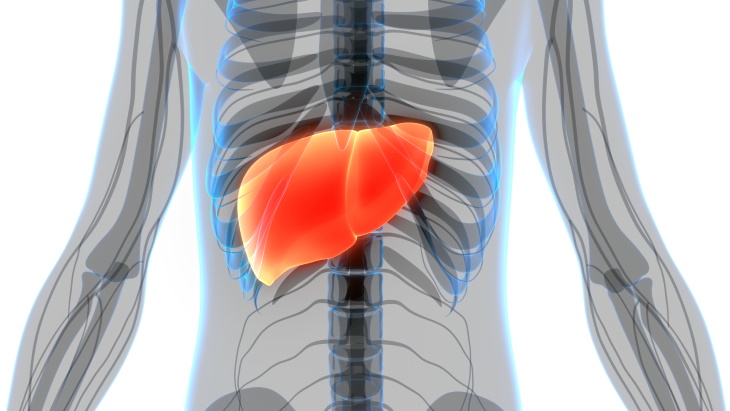
Pediatric Liver Cancer liver
This spurred researchers from the Texas Children’s Cancer and Hematology Center and Baylor College of Medicine to suggest that there might be a third common type of childhood liver tumor. Indeed, they found that some of the liver tumors found in kids do not look like either hepatoblastoma or hepatocellular carcinoma. Closely examining the tissue structure and genetic makeup of this other type of liver tumor revealed that they were looking at a new hybrid type of pediatric liver cancer. 
 
Having analyzed the genetic characteristics of this new type of tumor, the researchers found molecular components found in both HB and HCC. This made them classify this new type of tumor as a hepatoblastoma with hepatocellular carcinoma features (HBC).

Telling apart HBC tumors from other pediatric liver tumors is crucial, as they tend to respond less to standard chemotherapy and require more aggressive surgery, including liver transplantation. As Prof. Dolores López-Terrada, one of the study's authors, suggested to Scitech Daily, “Our findings highlight the importance of molecular testing to accurately classify these tumors to optimize treatment recommendations at the time of initial diagnosis.” 
 
In the article, the researchers explain how to diagnose HBCs and adjust the cancer treatment. Without a doubt, this discovery will help save countless children’s lives. The discovery also opens the door for analyzing many other difficult-to-treat cancers on a molecular level.


This is only for your information, kindly take the advice of your doctor for medicines, exercises and so on.   


Labels: , , , , , , ,

Wednesday, February 21, 2024

Scientists Discover a New Benefit of Drinking Coffee

Coffee is one of the most controversial drinks in existence. In the past, many believed that it causes cardiovascular disease, but more recent research suggests that the antioxidant-rich drink actually has numerous health benefits, provided that you don’t drink more than a few cups of coffee every day. Among the notable health benefits of coffee are improved heart and brain health, as well as a reduced risk of certain types of cancer. But there’s one more health benefit we can now confidently add to that list - liver health.

This is the biggest study yet to find that coffee benefits liver health

Liver disease is a widespread health issue all around the world, and it’s on the rise too. More recent estimates suggest that one in ten Americans suffers from some kind of liver disease. Fatty liver disease and liver cirrhosis are among the most common kinds of liver disease. According to a recent study from the United Kingdom, drinking coffee lowers one’s risk of liver disease.

The study followed 495,585 people for 10 years. 78 percent of the participants consumed ground coffee, instant coffee, or decaf, whereas the remaining 22 percent didn’t drink coffee. Over the ten-year period, 3,600 cases of fatty liver disease and 184 cases of liver cancer were recorded.

The study found that liver disease was more common among the participants who didn’t drink coffee. Among the coffee drinkers, the risk of liver disease fell by 21 percent and the risk of death from chronic liver disease was reduced by 49 percent compared to those who didn’t drink coffee. Researchers believe that the anti-inflammatory or anti-fibrotic properties of coffee may be why it’s beneficial for liver health.

“There are previous studies suggesting lower risk of cirrhosis (severe liver scarring), improvements in fatty liver disease, lower rates of hospitalization and mortality in cirrhosis, associated with coffee use,” stated Dr. Albert Do, a Yale Medicine hepatologist and fatty liver disease expert to Healthline. So this study is a big contribution to an already existing belief among experts that coffee is beneficial for the liver. The researchers conclude that coffee is an accessible and affordable drink capable of reducing one’s risk of liver disease.


Do instant, decaf, and ground coffee have the same effect?
Drinking Coffee and Liver Health coffee
Although both decaf and instant coffee were associated with some health benefits, the beneficial effect was the strongest in the group who drank ground coffee. The researchers believe that this is due to the fact that ground coffee has the most cafestol and kahweol — two compounds naturally present in coffee believed to protect the liver. This doesn’t mean that you should switch to ground coffee, as you’ll still experience some benefits from decaffeinated coffee, especially if you opt for decaf for health reasons.

How much coffee one should drink to feel the effects?

The study found that the health benefits plateaued at 4-5 cups of coffee daily. This doesn’t mean that you should drink that much, but rather that there’s no point in drinking more than 4 cups of coffee a day. Even if you drink 1-2 cups of coffee a day, you should experience the same benefits. 
 
 Experts usually don’t recommend drinking more than 400mg of coffee a day (which is about 3-4 cups of coffee) because all the benefits of coffee are only relevant when consuming caffeine in moderation. The moment you increase your caffeine intake to more than 400 mg a day, the negative effects, such as a racing heart and cardiovascular issues start to kick in. 
 
Those who suffer from heart disease, high blood pressure, and heartburn should be especially careful when drinking any amount of coffee. With that said, those who enjoy their morning coffee daily will probably be glad to find out that their coffee drinking habit is healthier than they think.
 
 
This is only for your information, kindly take the advice of your doctor for medicines, exercises and so on.   

https://gscrochetdesigns.blogspot.com. one can see my crochet creations  
https://gseasyrecipes.blogspot.com. feel free to view for easy, simple and healthy recipes    
https://kneereplacement-stickclub.blogspot.com. for info on knee replacement
https://cancersupportindia.blogspot.com  for infor on cancer and health related topics
https://GSiyers home remedies.blogspot.com   is the latest addition to my blogs. I'm going to add posts there, do give me your valuable feed back on my blogs. Thanks a lot, take care, be healthy and be happy.

Labels: , , , , , , , , ,

Tuesday, July 27, 2021

What Is Viral Hepatitis? Know Its Symptoms, Types And Treatment Options

World Hepatitis Day 2021: What Is Viral Hepatitis? Know Its Symptoms, Types And Treatment Options 

The liver is one of the most vital organs of our body and plays a major role in the digestion process. Any damage caused to the liver, ultimately affects the entire functioning of the body. Hepatitis refers to a highly contagious liver infection that causes an inflammation of the liver in which tissues react to irritation or injury which generally results in swelling and pain. This happens due to a variety of infectious viruses and non-infectious agents leading to a range of health problems, some of which can even be fatal. There are many causes of hepatitis in which viral hepatitis is a major one. Viral hepatitis is caused by a virus and can either be acute or chronic.

World Hepatitis Day 2021: Know all about hepatitis

Types of viral hepatitis

There are 5 viruses that can cause viral hepatitis. These include:

Hepatitis A and Hepatitis E- This type of hepatitis is common and spreads by ingesting contaminated food or water. It does not lead to any form of chronic infection and usually has no complications. Therefore, a person can generally recover from this virus within a few months. However, in rare cases, this virus can become fatal leading to liver failure and may even require liver transplantation surgery.

Hepatitis B- This type of hepatitis usually leads to chronic infection. However, one can carry the virus without feeling sick and can spread it. Hence, it is recommended to get vaccinated to prevent it. It spreads by contaminated needles, contaminated blood transfusion, tattoo, unsafe sex, and sharing toothbrush or razors.

Hepatitis C- It is one of the most common causes of liver disease and does not show any symptoms. It can further lead to chronic infections and no vaccine has been developed yet to prevent this virus. Mode of spread is similar to hepatitis B.

Hepatitis D- This type of hepatitis only affects people who are already infected by the hepatitis B virus. Therefore, vaccination against hepatitis B can also help prevent this type.

Warning signs

  • Urine dark in color
  • Stomach pain
  • Jaundice
  • Low-grade fever
  • Loss of appetite
  • Fatigue
  • Feeling sick
  • Aching joints
  • Pale or clay-colored stool

Treatment

While there is no treatment to cure hepatitis A or hepatitis E, they are usually self-remitting. Hepatis B and hepatitis C can be cured through medication. Apart from maintaining hygiene and sanitization, one must visit a doctor if they have any symptoms of viral hepatitis for better management. Ignorance of symptoms can make the condition worse.

Implications of viral hepatitis

  • Liver cancer
  • Destruction of the liver tissues
  • Weakening the immune system
  • Liver failure
  • Death in certain acute cases

Prevention

  • Get vaccinated for hepatitis A and hepatitis B
  • Use protection during sexual intercourse
  • Avoid sharing needles
  • Maintain good hygiene
  • Wash hands with soap regularly
  • Avoid using items of an infected person
  • Take precautions while getting inked or pierced
  • Avoid sharing water or any fluids

Correlation with COVID-19

Although the recovery rate from the virus is increasing gradually, Covid-19 is creating new variants that are spreading rapidly. It has been shown basis a recent CDC study that Covid may also cause viral hepatitis while inducing a dysregulated innate immune response. Therefore, it is very important to take preventive measures to avoid the risk of viral hepatitis. Even while working at hospitals, nursing homes, dormitories, daycare centers or clinics, certain preventive measures can lower the risk of this contagious disease.

This is only for your information, kindly take the advice of your doctor for medicines, exercises and so on.   

https://gscrochetdesigns.blogspot.com. one can see my crochet creations  
https://gseasyrecipes.blogspot.com. feel free to view for easy, simple and healthy recipes    
https://kneereplacement-stickclub.blogspot.com. for info on knee replacement


Labels: , , , , , , , ,

Thursday, June 18, 2020

Scientists develop new test to help identify people at risk for developing liver cancer

Scientists have developed a new test that can help identify people who are likely to develop hepatocellular carcinoma (HCC), the most common form of liver cancer. The approach uses a simple blood test to check for the patient's previous exposure to certain viruses.

A study of the new approach was led by researchers at the National Cancer Institute (NCI), part of theNational Institutes of Health. The study also involved researchers from the National Institute of Diabetes and Digestive and Kidney Diseases and several academic centers. The findings were published June 10 in Cell.

Together with existing screening tests, the new test could play an important role in screening people who are at risk for developing HCC. It could help doctors find and treat HCC early. The method is relatively simple and inexpensive, and it only requires a small blood sample.
Xin Wei Wang, Ph.D., study's leader, co-leader of the NCI Center for Cancer Research (CCR) Liver Cancer Program
Certain factors increase a person's chances of developing HCC, such as infection with hepatitis B or hepatitis C virus or cirrhosis of the liver. People who have risk factors are recommended to get screened for HCC every six months with an ultrasound with or without a blood test for alpha-fetoprotein.

But not everyone with risk factors for HCC will develop the disease. Although screening can lead to earlier detection, most patients are diagnosed when the cancer is advanced and often incurable. However, HCC that is caught early has a much better chance of being cured.

"We need a better way to identify people who have the highest risk for HCC and who should get screened more frequently," said Dr. Wang, who is also part of NCI's Translational Liver Cancer Consortium. Better early detection and surveillance approaches are particularly important because rates of HCC are rising in the United States.

"A main focus of the NCI CCR Liver Cancer Program is to develop new methods for early detection, diagnosis, and treatment, with the goal of improving outcomes for patients with HCC," said Tim Greten, M.D., co-leader of the Liver Cancer Program and a collaborator of the study.

Many screening tests detect features of cancer cells. But those features can change over time, and not all cancer cells in a tumor have the same characteristics. The NCI team took a different approach: detecting features of the cancer's environment rather than cancer cells themselves.

More research is providing evidence that cancer development is influenced by interactions between viruses and the immune system. The team reasoned that certain interactions between viruses and the immune system may raise the risk of developing HCC.

To explore that possibility, the scientists scanned people's blood for "footprints" left behind by past viral infections. Because these footprints are left in antibodies, proteins made by the immune system, they also reflect how the immune system reacted to the infection. The mixture of footprints each person has creates a unique pattern, which the researchers called a viral exposure signature.

The team checked for the footprints of more than 1,000 different viruses in blood samples from around 900 people, including 150 who had HCC. They identified a specific viral exposure signature that could accurately distinguish people with HCC from people with chronic liver disease and healthy volunteers. This signature contained footprints from 61 different viruses.

The researchers then tested the signature on blood samples from 173 people with chronic liver disease who were part of a 20-year study. During that time, 44 of the participants developed HCC. Using blood samples taken when the cancer was diagnosed, the signature correctly identified those who developed HCC (area under the curve, AUC=0.98). Importantly, the signature also worked when the researchers used blood samples taken at the beginning of the study, up to 10 years before diagnosis (AUC=0.91).

The signature appeared to be far more accurate than an alpha-fetoprotein test (AUC=0.91 vs. 0.62). An AUC of 0.5 indicates that a test is no better than chance in identifying disease, whereas an AUC of 1.0 represents a test with perfect accuracy.

The scientists are continuing to study their approach and plan to test it in clinical trials. They are collaborating with Katherine McGlynn, Ph.D., of NCI's Division of Cancer Epidemiology and Genetics to test the approach in a prospective surveillance study of people with risk factors for HCC.

It's possible that viral infections--even ones that don't cause cancer--may change the immune system in ways that influence the development of other cancers. For example, certain infections may lessen the immune system's ability to keep cancer cells in check. NCI scientists are testing the viral exposure signature in a study of prostate cancer, and others are considering applying the approach to a screening study for ovarian, esophageal, liver, and breast cancer in Africa.

This is only for your information, kindly take the advice of your doctor for medicines, exercises and so on.     

https://gscrochetdesigns.blogspot.com. one can see my crochet creations  
https://gseasyrecipes.blogspot.com. feel free to view for easy, simple and healthy recipes    
https://kneereplacement-stickclub.blogspot.com. for info on knee replacement


Labels: , , , , , , , ,