Friday, October 02, 2026

Your Cholesterol May Be Rising While You're Sleeping

If you or someone you know suffers from obstructive sleep apnea (OSA), then you probably know just how dangerously tired it can leave you feeling, since it tends to prevent sufferers from experiencing deep and restful sleep. However, that's not the only piece of bad news, since new research now shows that OSA actually lowers your levels of good HDL cholesterol, while raising your levels of bad LDL cholesterol, all while you are asleep.
 

Lead author Dr. Canan Gündüz, alongside Dr. Ludger Grote from the University of Gothenburg and their colleagues, worked on a study to discover the true association between lipid levels and OSA. The researchers analyzed medical data from the European Sleep Apnea Database (ESADA), focusing on 8,592 OSA patients who had no existing diagnosis of high cholesterol. What the team managed to find out was that a large portion of these patients actually had high levels of bad cholesterol and triglycerides without even being aware of it.
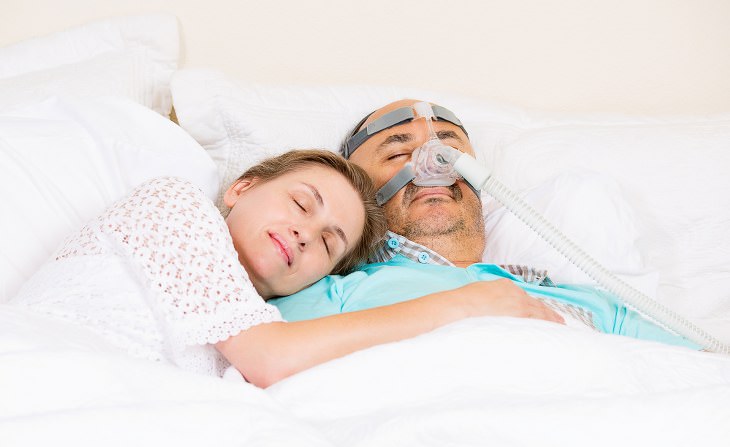
Cholesterol and Sleep Apnea
The researchers were very careful to make allowances for certain other factors, such as the patients' body mass index (BMI) and levels of abdominal obesity. The team revealed that the more severe a person's OSA was, the higher their bad cholesterol levels tended to be. 

According to Dr. Grote, "our data clearly suggest that sleep apnea may have a negative impact on lipid levels, which may in part explain the association between sleep apnea and increased risk for cardiovascular disease.”

While researchers are still mapping the exact molecular pathways, it is widely believed that the repetitive drops in blood oxygen and disrupted sleep trigger inflammation and stress responses that impair how the body processes fats. Because of this, Dr. Grote stresses that doctors should be highly aware of this cardiovascular link when treating sufferers of OSA. 

If you think that you may be an OSA sufferer, make sure to visit a doctor as soon as possible, and ensure that they check your cholesterol levels too while you're there. Don't just ignore the problem, as OSA is highly treatable through therapies like CPAP machines, lifestyle changes, or dental appliances. Fortunately, follow-up data shows that treating sleep apnea long-term with CPAP therapy actually reduces total cholesterol levels, meaning a better night of sleep can actively protect your heart.

Foods to avoid for a good night's sleep

1. Sleep deprivation affects the young more than the old.

According to the research, the energy of youth requires a lot more of sleep too, and people of ages 18-24 are more strongly affected by lack of sleep than older people are.

2. Victorians were lazier 

During the Victorian era, there was no artificial lighting like today. And so people used to sleep about 10 hours a night, every night.

3. Women need an hour more sleep than men

 Research suggest that women need on average at least an hour more sleep than men do, so next time she complains about her sleep guys, remember than she needs more than you.

4. Teens need even more sleep than adults 

Teen actually need 10 hours of sleep a night, compared to only 6-7 hours of sleep for adults.

5. Sleep apnea is very common

About 10 % of people suffer from sleep apnea, which means they stop breathing for a very short time ( for a few seconds) . Be sure to visit a doctor if you have it- it can damage your heart.

6. Heat and insomnia are closely linked. 

If you've noticed that it is hard to fall asleep when you're hot. That's because the body temperature is closely linked to the sleep-wake cycle, and may interfere with if it is too high.

7. Sleep  deprivation is a lot like being drunk

 Research shows that going 17 hours without sleeping leads to your performance as a driver being equivalent to that of one with a 0.05 % blood alcohol level.

8. Insomnia can have same scary results.

The world record for a period without sleep is 18 days, 21 hours and forty minutes. The record holder reported hallucinations, paranoia and blurred vision among  other symptoms.


This is only for your information, kindly take the advice of your doctor for food, medicines, exercises and so on.   

Labels: , , , , , , , , , ,

Sunday, August 02, 2026

10 Collagen-Boosting Foods That'll Keep Your Skin Young

 Collagen is the primary structural protein which can be found in many different connective tissues within your body, and is responsible for keeping your skin elastic and making it look young. That's why if your collagen levels get too low you could begin to develop wrinkles and age more rapidly. If you want to maximize the amount of collagen in your body, then you should definitely eat more of these foods:

1. Salmon

 Salmon is packed to the brim with plenty of minerals responsible for the production of collagen, such as zinc. It also contains a lot of omega-3 fats, which help to keep your skin properly hydrated. We'd recommend eating 4 to 5 ounces of salmon twice a week.

2. Bone broth

 One of the best options for people in need of collagen, bone broth does not in fact stimulate collagen production, but it actually contains a bioactive form of collagen that your body can instantly utilize. Chicken and turkey broth contain type II collagen which supports healthy joints, while beef broth contains type I collagen, which supports skin health. For best results, consume 6 to 12 ounces of bone broth every day.

3. Eggs

 Much like bone broth, eggs also contain collagen itself, directly within the yolk. There is also a lot of sulfur in eggs, which is vital for liver detoxification and collagen production. This ensures that any collagen-destroying toxins are eliminated from the body. Two eggs a day is perfect for best results. 

4. Chia Seeds
Collagen-Boosting Foods

Chia seeds are full of omega-3 fatty acids which are required for the hydration and rejuvenation of your skin cells, leading to smoother and younger-looking skin. We'd recommend eating around 7 ounces of chia seeds a day.

5. Pumpkin seeds
 Collagen-Boosting Foods

Since pumpkin seeds are full of zinc, they are perfect for people lacking in collagen for much the same reasons that salmon is. Fried pumpkin seeds are your best bet, since they are actually more nutritious than uncooked seeds. Adding two tablespoons of pumpkin seeds to salads every day would be ideal. 

6. Citrus Fruit
Collagen-Boosting Foods

The large amount of vitamin C that citrus fruits contain helps amino acids to produce proline, an essential chemical for the production of collagen. You should try to eat a minimum of two servings of fruit a day if you want to get the most out of them. 

7 . Green Vegetables
Collagen-Boosting Foods
Green vegetables contain chlorophyll, a pigment which boosts your skin's procollagen levels. Chlorophyll also protects your skin from aging, since it is used by your body to fight against free radicals and UV rays. If you are very physically active, then you should eat around 3 bowls of vegetables a day. More sedentary people should find that two and a half bowls are sufficient.

8. Berries

Collagen-Boosting Foods
Plenty of berries, such as cranberries, blackberries, strawberries and raspberries contain ellagic acid, which helps protect your skin from being damaged by UV radiation, as well as a healthy dose of vitamin C. Most adults should aim to consume around 2.5 ounces of berries a day for best results. 

9. Avocados
Collagen-Boosting Foods

The vitamin E that avocados contain helps to prevent the breakdown of collagen in your body. What's more, they also contain beneficial fats which boost skin health and increase collagen production. Eating around half an avocado a day should be sufficient. 

10. Tomatoes

Tomatoes are full of lycopene, which keeps your skin safe from UV light, while also stimulating collagen synthesis. Baked tomatoes contain quite a large amount of lycopene, while tomato juice contains the most. Drinking one glass of tomato juice each day will really make a difference.


This is only for your information, kindly take the advice of your doctor for food, medicines, exercises and so on.   


Labels: , , , , , , , , , , , ,