Your Cholesterol May Be Rising While You're Sleeping
If you or someone you know suffers from obstructive sleep apnea (OSA), then you probably know just how dangerously tired it can leave you feeling, since it tends to prevent sufferers from experiencing deep and restful sleep. However, that's not the only piece of bad news, since new research now shows that OSA actually lowers your levels of good HDL cholesterol, while raising your levels of bad LDL cholesterol, all while you are asleep.
Lead author Dr. Canan Gündüz, alongside Dr. Ludger Grote from the University of Gothenburg and their colleagues, worked on a study to discover the true association between lipid levels and OSA. The researchers analyzed medical data from the European Sleep Apnea Database (ESADA), focusing on 8,592 OSA patients who had no existing diagnosis of high cholesterol. What the team managed to find out was that a large portion of these patients actually had high levels of bad cholesterol and triglycerides without even being aware of it.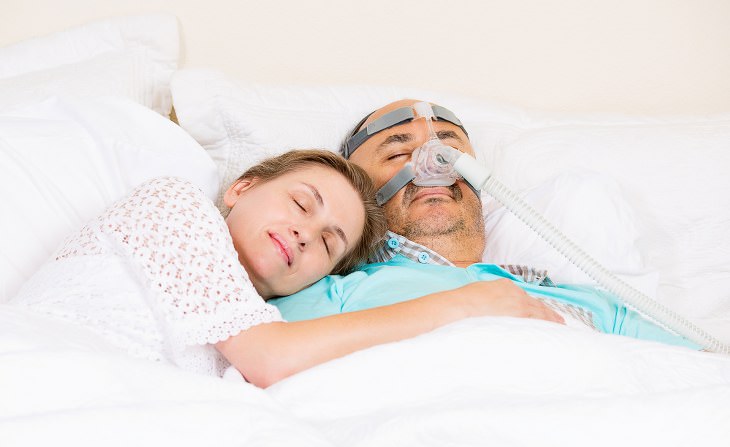
The researchers were very careful to make allowances for certain other factors, such as the patients' body mass index (BMI) and levels of abdominal obesity. The team revealed that the more severe a person's OSA was, the higher their bad cholesterol levels tended to be.
According to Dr. Grote, "our data clearly suggest that sleep apnea may have a negative impact on lipid levels, which may in part explain the association between sleep apnea and increased risk for cardiovascular disease.”
While researchers are still mapping the exact molecular pathways, it is widely believed that the repetitive drops in blood oxygen and disrupted sleep trigger inflammation and stress responses that impair how the body processes fats. Because of this, Dr. Grote stresses that doctors should be highly aware of this cardiovascular link when treating sufferers of OSA.
If you think that you may be an OSA sufferer, make sure to visit a doctor as soon as possible, and ensure that they check your cholesterol levels too while you're there. Don't just ignore the problem, as OSA is highly treatable through therapies like CPAP machines, lifestyle changes, or dental appliances. Fortunately, follow-up data shows that treating sleep apnea long-term with CPAP therapy actually reduces total cholesterol levels, meaning a better night of sleep can actively protect your heart.
Foods to avoid for a good night's sleep
1. Sleep deprivation affects the young more than the old.
According to the research, the energy of youth requires a lot more of sleep too, and people of ages 18-24 are more strongly affected by lack of sleep than older people are.
2. Victorians were lazier
During the Victorian era, there was no artificial lighting like today. And so people used to sleep about 10 hours a night, every night.
3. Women need an hour more sleep than men
Research suggest that women need on average at least an hour more sleep than men do, so next time she complains about her sleep guys, remember than she needs more than you.
4. Teens need even more sleep than adults
Teen actually need 10 hours of sleep a night, compared to only 6-7 hours of sleep for adults.
5. Sleep apnea is very common
About 10 % of people suffer from sleep apnea, which means they stop breathing for a very short time ( for a few seconds) . Be sure to visit a doctor if you have it- it can damage your heart.
6. Heat and insomnia are closely linked.
If you've noticed that it is hard to fall asleep when you're hot. That's because the body temperature is closely linked to the sleep-wake cycle, and may interfere with if it is too high.
7. Sleep deprivation is a lot like being drunk
Research shows that going 17 hours without sleeping leads to your performance as a driver being equivalent to that of one with a 0.05 % blood alcohol level.
8. Insomnia can have same scary results.
The world record for a period without sleep is 18 days, 21 hours and forty minutes. The record holder reported hallucinations, paranoia and blurred vision among other symptoms.