Tuesday, May 20, 2025

Pain May Be Due to Inflexibility! Try These Stretches

 Do you suffer from chronic pain? Very often, the root cause of everyday aches is a simple case of inflexibility. The below stretches from David Reavy, the founder of React Physical Therapy in Chicago can be done pre- or post- your workout, or whenever you need loosening up. If the pain is persistent, start with a daily dose then switch to one or three times per week to maintain your flexibility. 


For pain in your knees 

The problem: Tight feet or ankles  

How often do you think about the muscles in your feet? Probably, not much at all. But they are constantly working hard for you. Tightness in the feet and ankles can be felt everywhere, though especially in the knees.
stretches for pain
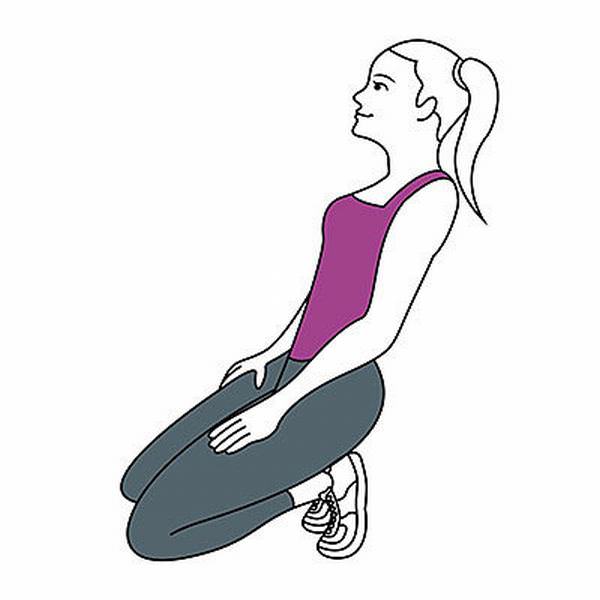
Do this: Plantar fascia stretch 
Kneel with your toes tucked, placing your weight on the balls of both feet. Gently lower your upper body until you are sitting on your heels. Place your hands on the tops of your thighs and lean back. Hold the pose for 20 to 60 seconds. 
 
Tip: Get your knees in top form by working on your glutes and quads. Basic body weights should help fix any lower imbalances you may have.


For pain in your lower back 
 
The problem: Tight hips 
The hip flexors spread across 8 different joints. When the muscles in this area are tight the abdominals and glutes shut down. If these areas of your body aren't working at their full strength, you will likely feel it in your lower back.
stretches for pain

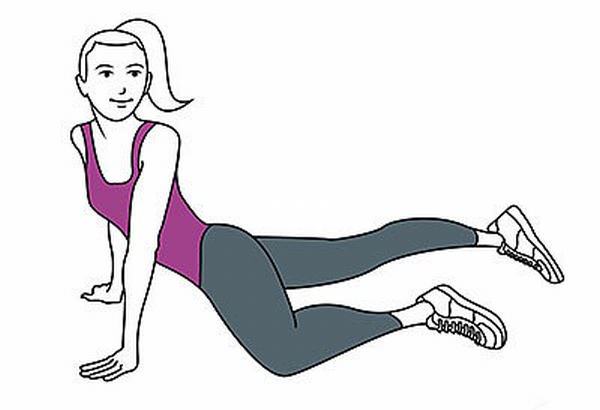
Do this: King cobra stretch 
Lie facedown with your palms under your shoulders slightly turned out. Then, slide the left leg up toward the hip and bend the knee - keep the right leg extended with the toes turned inwards. Push up until the arms are straight. Keep the hips on the floor with the elbows close to the sides. Turn the head and the upper body slightly to the left then hold for 20 to 45 seconds, before you switch sides. 
 
Tip: To reduce back pain, do exercises that strengthen your abdominals and hip flexors. 
 
For pain in your shoulders 
The problem: Tight back 
While you may hear a clicking sound in your shoulders, it's not just the shoulders that are to blame. The shoulder is a ball-and-socket joint, with the ball of the humerus (upper arm) sitting inside a cavity in the scapula, or shoulder blade. But when your lower trapezius muscles, or mid-back muscles are weak it can alter the mechanics of the ball and socket, causing pain. 
stretches for pain

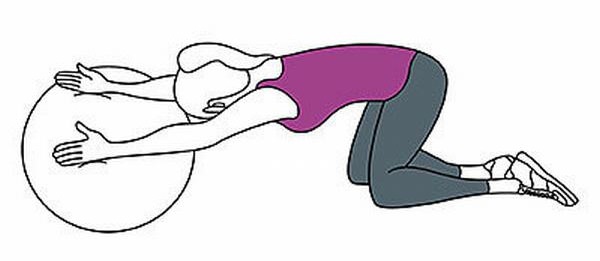
Do this: Lat strech 
Kneel with your arms forward on top of a stability ball, keep your palms in and your thumbs facing the ceiling. Sit back toward your heels, then push your chest toward the floor while keeping your back flat. Hold the pose for 30 seconds. Then, move the ball to the left while stretching your right lat muscle, hold for 30 seconds. Repeat on the other side, stretching your left lat muscle. 
 
Tip: Use weights to strengthen your arms and the lower trapezius. This will help keep your back and shoulders in balance and shoulder joint in position. 
 
For pain in your neck 
 
The problem: Tight chest  
If you spend a lot of time sitting down, traveling in a car or looking at your phone, constantly leaning forward causes a tightness in your pec muscles which run along the front of your chest. Tight pec muscles will pull you forward creating a strain or tightness in the neck.
stretches for pain
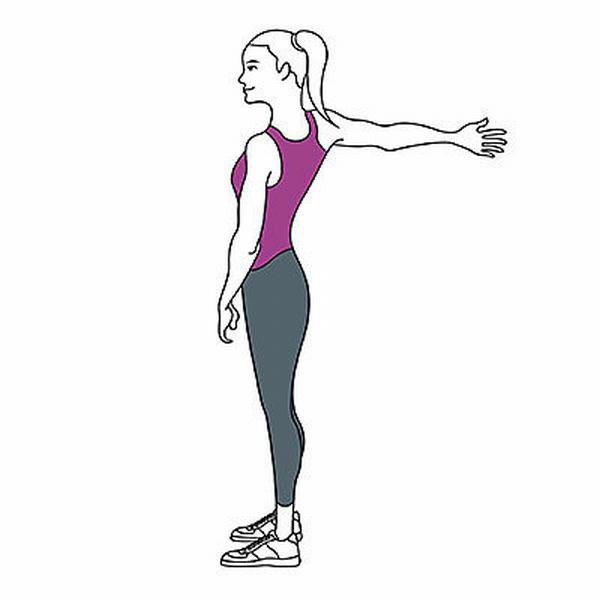
Do this: 
Pec stretch Stand facing a wall with your right arm raised to shoulder height, then bring your forearm flush against the wall. Rotate your torso away from your right arm and stretch the front of your chest and right shoulder. Bend sideways at the hip, pushing your body away from the wall. Hold the pose for 30 seconds, then switch sides. 
 
Tip: Try chin tucks (pushing your chin back into your neck) to help reduce the pain. 


This is only for your information, kindly take the advice of your doctor for medicines, exercises and so on.   

Labels: , , , , ,

Friday, April 18, 2025

3 Exercises to Reduce Anxiety and PTSD

Coping with anxiety and PTSD is not easy, and while professional treatment is welcome, it does not always provide the relief sufferers expect, at least not in daily coping. The truth is that there is no one solution that fits everyone, and each person needs to find their way to deal with the symptoms they experience. That is why we present to you today 3 somatic exercises you can try, which many report help reduce the intensity of the feelings they experience in moments of anxiety and PTSD. These exercises involve the whole body, and before starting any of them, it is recommended to ask yourself: "On a scale of 1 to 10, how anxious am I?" Try the chosen exercise, ask yourself again, and check if that number has decreased—this way, you'll know you found the exercise that suits you

1. Joint activation 
 When your mind is preoccupied with something, it’s hard to stop the automatic thoughts that come. Any attempt to do so will fail, but what can help is occupying the mind with something else, and it’s easiest to focus on the physical sensation in your body. For this, you will activate your body slowly and calmly, starting from the bottom and gradually moving upwards until you significantly reduce the symptoms you’re experiencing.

Start with one leg—slowly move your foot in circular motions 10 times in one direction and focus on the sensation created in the joint. Then do the same in the other direction, and after that, repeat with the other leg. If you are lying on your back, you can do the same with your knees while your thighs are in the air. If you’re standing, you can place your hands on your knees and rotate them together in circular motions. Also, rotate your pelvis to both sides, and then pause and try to notice the sensation in your lower body compared to the upper body—do you feel a difference? 
 Exercises for coping with anxiety and PTSD: Woman stretching her wrist joint
 
Now do the same with your wrists—one at a time or both together—then with your elbows and shoulders. Finally, rotate your head to one side and then to the other. Throughout the exercise, remember to focus on the sensation created in the joint during the rotations—this will help your mind focus on something else and move the energy around your body instead of trapping it inside.


2. Deep breathing and "voo" exhalations 
 The respiratory and cardiovascular systems are interconnected and influence each other—when one operates faster, so does the other. While we cannot directly control our heartbeat, we can definitely control our breathing. Some people find that deep breaths help restore calm to their body and bring their heart rate to a relaxed pace. If you have tried breathing exercises in the past and found them helpful, you might want to try the "voo" exhalation exercise.
 Exercises for coping with anxiety and PTSD: Woman performing a breathing exercise
 
To begin the exercise, place one hand on your chest and the other on your abdomen, and take a deep, slow breath. Then exhale the air while making a "voo" sound—try to make the sound come as much as possible from your abdomen and not your throat. This is an ancient breathing exercise that calms the vagus nerve, which runs from the brain to the diaphragm, and supports the parasympathetic nervous system responsible for relaxation when the body is at rest. Do this 10 times and see how you feel. 
 
3. Focusing on observing something calming 
There are many things that can be calming, like the support of another person, a warm bath, or even a thick, heavy blanket resting on your body. However, such things can also be found through sight alone, and that is the goal of this exercise. Look around for something that can calm you—some people find it helpful to gaze at something sparkling and beautiful, while others prefer a natural element like a leaf swaying on a branch in the wind. 
 Exercises for coping with anxiety and PTSD: Woman meditating
 
For some people, focusing on something distant works even better—the farther away it is, the more calming its effect can be. However, you might find it helpful to concentrate on something close to you, to which you can direct your entire gaze and examine closely. Try the exercise both ways to discover what works better for you, and focus your gaze until you feel its calming effect—this might take a few minutes. If you like, you can even combine this exercise with one of the previous ones and perform them simultaneously.


To sum up 
When we suffer from PTSD or anxiety, the symptoms can be severe and exhausting. The recovery process is long and not easy, but don’t let the symptoms make you think it’s impossible. Try the exercises we suggested when you feel overwhelmed, and give yourself a chance to relax and regain functionality in moments when you feel like you’re falling apart. They will help balance your body and mind, providing quick relief when you need it most.


This is only for your information, kindly take the advice of your doctor for medicines, exercises and so on.   


Labels: , , , , , , , , , ,

Thursday, March 20, 2025

Yoga Exercises to Relieve Muscle Tension

The more our muscles exert themselves during the day, the more our body craves rest - but beyond a night's sleep, there’s another way, full of benefits, to allow our body to receive its dose of calm, and that’s through performing yoga exercises. The following 8 yoga poses you’re about to discover might seem familiar at first, but in fact, each one is presented here in a unique version designed to relieve tired, tense, and sore muscles. So, if you regularly engage in sports, perform strenuous physical activity, or simply feel your muscles are exhausted, we recommend disconnecting from your surroundings for the next few minutes and recharging with renewed energy through the following poses.

Exercise 1: Squat for Ankle Strengthening (Ankle Strength Squat)
Unique Yoga Exercises: Squat for Ankle Strengthening (Ankle Strength Squat)
What’s the Benefit for the Muscles? The movements in this pose help to slightly "lubricate" the ankle joints, which tend to wear out due to intense physical activity or sports like running. Additionally, they engage the gluteal muscles and the back of the thigh, whose fitness is important and essential for our daily functioning.

How to Perform? Start by standing with a wide stance, with your feet pointing outward. Slightly bend your knees into a squat position as shown above. Press your palms together and bring them to the center of your chest - maintain as stable a stance as possible. Lift your right ankle and then lower it back down, then lift your left ankle and return it, and finally lift both ankles simultaneously and return them to the ground. Ensure full contact of each foot with the ground to avoid arch strain. Repeat the action 8 times. 
 
Exercise 2: Calf, Hamstring, and Achilles Stretch with a Yoga Block (Calf-Hamstring-Achilles Opener With Block)
 
Unique Yoga Exercises: Calf, Hamstring, and Achilles Stretch with a Yoga Block (Calf-Hamstring-Achilles Opener With Block)

What’s the Benefit for the Muscles? People who spend most of their time standing need their muscles, especially those in the lower body, to be strong enough to efficiently bear their full body weight. This pose allows you to simultaneously release the calf, hamstring, and Achilles tendon muscles while keeping them fit, ensuring stable standing. 
 
How to Perform? Start in a standing position and touch the yoga block (or any stable object) with the ball of your right foot at a 45-degree angle, with your heel securely on the ground. Step your left leg slightly back and carefully bend your upper body forward along your extended right leg, touching the ground. Hold this position for 60 seconds. Return to the starting point and perform the same action with your left leg. 
 
Exercise 3: Cat-Cow Pose with Crossed Knees (Cat-Cow With Knees Crossed)
 
Unique Yoga Exercises: Cat-Cow Pose with Crossed Knees (Cat-Cow With Knees Crossed)

What’s the Benefit for the Muscles? This pose helps relieve significant pressure from the pelvic and lower back areas, improving the spine’s daily functioning. It also slightly releases the joints and provides rest to a worn-out body.

How to Perform? Start in a position where your knees, toes, and palms are simultaneously touching the ground - ensure your shoulders align with your hands, your hips align with your knees, and your palms face the center of your body. Now cross your knees by passing your left knee behind your right knee. Both knees should be touching, and your feet should be apart - forming an X shape. Take a deep breath, carefully arch your back, and lift your head upward (Cow Pose). Then exhale while lowering your head toward the floor and gently rounding your back (Cat Pose). Perform this action 20-30 times, then repeat with the other leg. 
 
 
Exercise 4: Child’s Pose on Toes (Child’s Pose on Toes)
 
Unique Yoga Exercises: Child’s Pose on Toes (Child’s Pose on Toes)


What’s the Benefit for the Muscles? Every time we stand, walk, or run, it’s ideal for our foot’s contact with the ground to be correct and involve all possible parts. Pulling the toes will allow you to widen the foot joint, release the pressure applied to the arch during daily life, and ensure every step on the ground is stable and healthy. 
 
How to Perform? Start by sitting on both knees with an upright torso, hands resting on your knees. Pull your toes toward the center of your body and rest on them, lean your upper body forward while holding the edges of the mat with your hands, and lightly touch your forehead to the ground. Stretch your body by pulling your hips back and your hands forward. Stay in this position for a few deep breaths and release. Repeat the action 10 times. 
 
 
Exercise 5: Quad-Psoas Wall Stretch (Quad-Psoas Wall Stretch)
 
Unique Yoga Exercises: Quad-Psoas Wall Stretch (Quad-Psoas Wall Stretch)

What’s the Benefit for the Muscles? The psoas muscle is one of the most important muscles in the body, often called the "king of movement" - located deep in the upper body, it connects the pelvis to the back and thighs, significantly affecting our posture, range of motion, joint function, and core muscle activity. Strengthening this muscle will improve anyone’s stance and is especially crucial for athletes and those engaging in strenuous physical activity. 
 
How to Perform? Start in a lunge position, with your right leg extended forward and bent at a 90-degree angle, and your left knee placed at the junction of the wall and floor, with the entire section from foot to knee touching the wall (it’s recommended to use a mat or blanket between the leg and the ground to avoid knee injury). Place your hands on your right knee and push your hips forward. Then return your hips to their original position. Repeat this action 4-5 times in a slow motion for each leg.


Exercise 6: Shoulder Opener (Shoulder Opener)
 
Unique Yoga Exercises: Shoulder Opener (Shoulder Opener)
What’s the Benefit for the Muscles? During intense physical activity or sports, we need an especially large amount of oxygen, and releasing pressure from the lung area can help improve our breathing. This pose is an excellent way to "open" the chest muscles. 
 
How to Perform? Lie on a yoga mat face down, with your right elbow resting beside you on the ground at a 90-degree angle. Turn your gaze to the left and carefully roll your lower body to the right, lifting your left leg and touching the ground to your right with your left foot. Stay in this position for 5-10 breaths, then repeat the same action on the other side. 
 
 
Exercise 7: Tabletop Shin Self Massage Saw (Tabletop Shin Self Massage Saw)
 
Unique Yoga Exercises: Tabletop Shin Self Massage Saw (Tabletop Shin Self Massage Saw)
What’s the Benefit for the Muscles? Spending too much time standing, especially during intense physical activity, puts a heavy burden on the lower legs, and this pose will allow you to improve blood flow and bring calm to that area. 
 
How to Perform? Start in a position where your knees, toes, and palms are simultaneously touching the ground - ensure your shoulders align with your hands and your hips align with your knees. Place your right shin bone on your left calf muscle and begin a "massage" by moving it forward and backward while pressing. Repeat this action 3-5 times with your right leg, then switch legs and perform it with your left leg. 
 
 
Exercise 8: Yoga Toe Stretch (Yoga Toe Stretch)
 
Unique Yoga Exercises: Yoga Toe Stretch (Yoga Toe Stretch)
What’s the Benefit for the Muscles? As mentioned, the toes play an important role in maintaining our stable stance, and their contribution increases when they can utilize most of the surface they’re placed on. The action in this yoga exercise will allow you to stretch your toes, helping them spread efficiently during activity and slightly lubricating the ankle joints. 
 
How to Perform? Sit on the floor in an "Eastern" seated position, lift your right leg and cradle it at the calf with your right hand. Insert the fingers of your left hand between the toes of your right foot and begin a gentle circular motion of the ankle clockwise. Do this for a few seconds, then perform the same action on your left leg.


This is only for your information, kindly take the advice of your doctor for medicines, exercises and so on.   


Labels: , , , , , , , , , , ,

Sunday, May 21, 2023

Heart Attack Signs You Definitely Should Pay Attention To!

People often expect a heart attack to be a dramatic and sudden event, like what is portrayed in movies. However, the reality is typically more nuanced and can sometimes go unnoticed. It's crucial to understand that heart attacks often start slowly, with mild pain or discomfort. The symptoms can be subtle and confusing, so they can be easily overlooked or dismissed as less serious issues. Let's look at them together now.  
 
What happens during a heart attack?

During a heart attack, the blood flow to the heart muscle is either reduced or completely stops. This typically happens because of a blood clot that is blocking an artery. When the heart muscle does not get oxygen-rich blood, it ceases to work. 
 
Some common heart attack symptoms  
 
• A heart attack often causes chest pain. 
 
• There is a feeling of fullness or a clasping pain in the center of the chest. Most victims describe the pain as akin to an elephant standing on the chest (extreme pain). It usually lasts for about 15 minutes. 
 
• One also experiences shooting pain in the shoulders, neck, arm, back and sometimes even the teeth and jaw. 
 
• One undergoes increasing episodes of chest pain. 
 
• Prolonged pain in the upper abdomen. 
 
• Shortness of breath. 
 
• The victim might experience heavy sweating. 
 
• Since the heart’s pumping action is severely impaired during a severe heart attack, the victim might lose his/her consciousness. 
 
* In rare cases, as in patients who are diabetic, the heart attack may not be very painful, and sometimes can even be entirely painless.


Some symptoms that may also appear include: 
 
• Pain in the abdomen 
 
• Heart burn 
 
• Unusual tiredness 
 
• Nausea 
 
• Tightness or pain in the neck, shoulders or upper back 
 
Heart attack symptoms are not the same for everyone 
 
Not all heart attacks are the same, and they don't all have the same symptoms. Some heart attacks strike suddenly, but many start slowly, with mild pain or discomfort. Paying attention to your body and recognizing the signs can save your life. Many think heart attacks are sudden attacks of intense, unmistakable pain, but in truth, many miss heart attacks thinking it might be mere abdominal discomfort due to gas pains or indigestion. It's better to seek medical attention and be told it's not a heart attack than to ignore the symptoms and find out too late that it was. Don't let embarrassment, or fear you're wrong, hold you back from seeking medical attention. 
 
Also, women may experience symptoms differently from men. They're more likely to have:

Shortness of breath 
 
Nausea/vomiting 
 
 Back or jaw pain. ​
 
Sometimes heart disease may be silent and not diagnosed until a woman experiences signs or symptoms of a heart attack, heart failure, an arrhythmia, or stroke.

Not everyone who has a heart attack has the same symptoms. Many a time, we also tend to ignore a heart attack thinking it might be mere abdominal discomfort due to gas pains or indigestion. If you have more than a few of the symptoms listed above, then you are likely to be having one. Get emergency help immediately. 
 
What to do in case of a heart attack? 
• Rush to a hospital, immediately. If you recognize that you or someone around you is having a heart attack, get immediate medical help.
 
 • Take Aspirin: As soon as you recognize it is an attack, crush an aspirin, dissolve it in water and make the person drink it. 
 
• Emergency numbers: Every office and home must keep a list of emergency numbers like that of an ambulance service and hospital. 
 
A heart attack is different from cardiac arrest 
 
Do not confuse a heart attack with cardiac arrest. In the case of cardiac arrest, the heart suddenly stops. It occurs due to an electrical disturbance that obstructs the heart’s pumping function, which results in stopping blood flow to the rest of the body. Below are two fact files detailing the differences between a heart attack and cardiac arrest:

Sudden Cardiac Arrest Fact File  
 
SCA is a chaotic electrical condition of the heart resulting in the loss of blood flow to the brain and body. The most common form of SCA is ventricular fibrillation. 
 
Causes  
Electrical impulses of the heart become chaotic due to a blow to the chest or other (sometimes-unknown) health-related issues. As a result, the heart stops beating regularly and begins to flutter rapidly. 
 
Symptoms  
Typically, there are no symptoms of SCA. Usually, the first indication of SCA is when the victim faints. The second sign is breathing cessation.

Victim's Response 
A sudden cardiac arrest victim always loses consciousness from lack of oxygen.
 
 Risk of Death

A victim of SCA will die unless treated. If left untreated, the chances of survival decrease by 10% per minute. Typically, permanent brain damage occurs within 5-7 minutes.

Treatment 
The only treatment for SCA is defibrillation from an automated external defibrillator (AED). A shock from the AED stops the chaotic electrical activity and allows the heart's sinus node to resume a normal electrical impulse. 
 
Heart Attack Fact File 
The medical term for a heart attack is myocardial infarction: a blockage of the coronary arteries leading to a decrease in blood flow. When this happens, the heart muscles die or become permanently damaged. 
 
Causes 
Plaque made of cholesterol and other cells builds up in the walls of the heart’s arteries. When the build-up is great enough, the plaque creates a blockage, known as an occlusion, which restricts the blood supply to the heart muscle. 
 
Symptoms 
Warning signs of a heart attack include a tightening feeling in the chest, a sore or numb left arm, lower back, neck, and/or jaw. Other signs include bad indigestion, a feeling that something heavy is sitting on your chest, and shortness of breath. 
 
Victim's Response 
The victim of a heart attack is usually conscious and alert. 
 
Risk of Death  
Most victims can recover fully and lead normal lives, but about a third of heart attacks are deadly. A heart attack can lead to sudden cardiac arrest.  
 
Treatment

One treatment of a heart attack can be angioplasty, which opens up the blocked vessels with a medical balloon. Afterwards, a stent can be placed in the artery to help keep it open. Other treatments include clot-busting drugs called thrombolytics or nitroglycerin to reduce chest pain. 
 
So, remember this information, and most of all, remember the ABCs of heart care: Avoiding Tobacco, stress and fatty foods, being more active and choosing the right nutrition and lifestyle that will keep your heart healthy!
 
This is only for your information, kindly take the advice of your doctor for medicines, exercises and so on.   

https://gscrochetdesigns.blogspot.com. one can see my crochet creations  
https://gseasyrecipes.blogspot.com. feel free to view for easy, simple and healthy recipes    
https://kneereplacement-stickclub.blogspot.com. for info on knee replacement
https://cancersupportindia.blogspot.com  for infor on cancer and health related topics
https://GSiyers home remedies.blogspot.com   is the latest addition to my blogs. I'm going to add posts there, do give me your valuable feed back on my blogs. Thanks a lot, take care, be healthy and be happy.
 

Labels: , , , , , , , , ,

Wednesday, March 09, 2022

Heart disease is the leading cause of death in women over 40

Menopause normally occurs around 50-55 years or earlier and is preceded by the perimenopause stage. Reduced estrogen production, puts women at higher risk for heart attacks. Greater awareness of disparities is a critical first step to improving cardiovascular outcomes for women. Heart disease is the leading cause of death in women over 40, especially those who have attained menopause. Over 56 per cent of women in the age group of 30-69 yrs in rural areas of India fall prey to heart-disease related mortality. Menopause normally occurs around 50-55 years or earlier and is preceded by the perimenopause stage, wherein women experience hormonal changes and declining estrogen levels. Reduced estrogen production as well as the amount of estrogen produced by the ovaries, puts women at higher risk for heart attacks.

https://www.news9live.com/health/covid-19/international-womens-day-heart-disease-is-the-leading-cause-of-death-in-women-over-40-157782

Menopause normally occurs around 50-55 years or earlier and is preceded by the perimenopause stage.

Reduced estrogen production, puts women at higher risk for heart attacks.

Greater awareness of disparities is a critical first step to improving cardiovascular outcomes for women.

Heart disease is the leading cause of death in women over 40, especially those who have attained menopause. Over 56 per cent of women in the age group of 30-69 yrs in rural areas of India fall prey to heart-disease related mortality. Menopause normally occurs around 50-55 years or earlier and is preceded by the perimenopause stage, wherein women experience hormonal changes and declining estrogen levels. Reduced estrogen production as well as the amount of estrogen produced by the ovaries, puts women at higher risk for heart attacks.

Moreover, in many areas of cardiovascular disease, even when they are diagnosed women are under-treated compared with men. For example, women are less likely to receive statins for dyslipidemia and less likely to receive anticoagulation for atrial fibrillation (AFib). Further, even after a heart attack (acute coronary syndrome), they are less likely to be prescribed guideline-directed medical therapy (GDMT), less likely to receive appropriate treatment in a timely fashion, and less likely to undergo angioplasty/surgery. Women also need more help with prevention: among other issues, they are less likely to get an adequate amount of physical activity, more likely to be obese, and less likely to quit smoking compared with men. Greater awareness of these disparities is a critical first step to improving cardiovascular outcomes for women.

Heart attack symptoms for women

While the most common heart attack symptom in women is the same as in men (some type of chest pain, pressure or discomfort that lasts more than a few minutes or comes and goes). The difference lies that in women, in many cases chest pain may not be severe and might even not be noticed (in women it's possible to have a heart attack without chest pain). Rather women may have other heart attack symptoms but not chest pain like neck, jaw, shoulder, upper back or upper belly (abdomen) discomfort, shortness of breath, pain in one or both arms, nausea or vomiting, sweating, lightheadedness or dizziness, unusual fatigue or even acidity (indigestion).

Moreover, even these symptoms may be vague and not as noticeable as the crushing chest pain often associated with heart attacks in men. The reason could be that often women have blockages not only in their main arteries but also in the smaller ones that supply blood to the heart (aka coronary microvascular disease). In women, emotional stress can play a major role in triggering heart attack and women tend to have symptoms more often when resting, or even when asleep.

This is the reason that women might be diagnosed less often with heart disease than are men but on the other hand, women are more likely than men to have a heart attack with no severe blockage in an artery (non-obstructive coronary artery disease).

Tips for women that can help in preventing cardiovascular disease

1. Manage stress: Stress is an important cause of not only heart disease but also increases the risk of heart attack (rupture of vulnerable plaque). Reducing stress by exercising, yoga and dhyan (practising mindfulness), listening to soothing music, art and increasing friend circle are some ways to reduce stress.

2. Exercise and maintain a healthy weight: If overweight, losing even a few kilos can lower heart disease risks.

3. Follow treatment plan religiously: Take medications as prescribed, such as blood pressure medications, blood thinners and aspirin.

4. Quit smoking: Don't smoke, don't start, quit smoking and even avoid exposure to secondhand smoke.

5. Eat a healthy diet: Opt for whole grains, raw fruits and vegetables, low-fat or fat-free dairy products, and white meats. Avoid saturated or trans fats, added sugars, and high amounts of salt.

6. Avoid or limit alcohol: Drink in moderation or avoid completely. Limit to 1 drink per day.

7. Manage risk factors: High blood pressure, high cholesterol and diabetes increase the risk of heart disease.

Exercise and heart health

Women are especially susceptible to physical inactivity. Regular activity helps keep the heart-healthy. Aim for at least 30 minutes of moderate exercises, such as walking at a brisk pace, on most days of the week. If that's more than you can do, start slowly and build up. Even five minutes a day of exercise has health benefits.

If unable to do at a stretch, break up your workouts into several 10-

minute sessions during a day. Another option is interval training: 

alternate short bursts of intense activity with intervals of lighter 

activity. Moderate exercise can maintain a healthy weight, improve 

blood pressure and thus reduce the risk of heart diseases.


This is only for your information, kindly take the advice of your doctor for medicines, exercises and so on.   

https://gscrochetdesigns.blogspot.com. one can see my crochet creations  
https://gseasyrecipes.blogspot.com. feel free to view for easy, simple and healthy recipes    
https://kneereplacement-stickclub.blogspot.com. for info on knee replacement


Labels: , , , , , , , , , , , , , ,