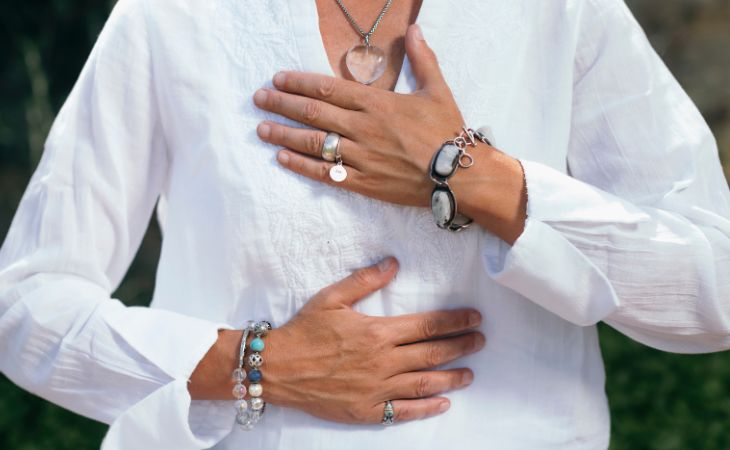
To begin the exercise, place one hand on
your chest and the other on your abdomen, and take a deep, slow breath.
Then exhale the air while making a "voo" sound—try to make the sound
come as much as possible from your abdomen and not your throat. This is
an ancient breathing exercise that calms the vagus nerve, which runs
from the brain to the diaphragm, and supports the parasympathetic
nervous system responsible for relaxation when the body is at rest. Do
this 10 times and see how you feel.
3. Focusing on observing something calming
There are many things that can be calming, like the support of another
person, a warm bath, or even a thick, heavy blanket resting on your
body. However, such things can also be found through sight alone, and
that is the goal of this exercise. Look around for something that can
calm you—some people find it helpful to gaze at something sparkling and
beautiful, while others prefer a natural element like a leaf swaying on a
branch in the wind.
For some people, focusing on something distant works even better—the
farther away it is, the more calming its effect can be. However, you
might find it helpful to concentrate on something close to you, to which
you can direct your entire gaze and examine closely. Try the exercise
both ways to discover what works better for you, and focus your gaze
until you feel its calming effect—this might take a few minutes. If you
like, you can even combine this exercise with one of the previous ones
and perform them simultaneously.
To sum up
When we suffer from PTSD or anxiety, the symptoms can be severe and
exhausting. The recovery process is long and not easy, but don’t let the
symptoms make you think it’s impossible. Try the exercises we suggested
when you feel overwhelmed, and give yourself a chance to relax and
regain functionality in moments when you feel like you’re falling apart.
They will help balance your body and mind, providing quick relief when
you need it most.