Friday, December 05, 2025

6 Ways to Stretch Your Gluteus Medius

The gluteus medius, which makes up the upper and side part of your buttocks, plays a crucial role in hip movement and overall lower body function. Stretching this muscle can help prevent injury and relieve pain in your lower back, knees, and hips. 

As one of your hip abductors - the muscles responsible for moving your leg away from your body - the gluteus medius benefits significantly from regular stretching. Proper stretching can help loosen tight hips, increase range of motion, and strengthen the hip area. 
 
Before You Begin: The Importance of Warming Up Before performing any static stretches, it's essential to warm up your muscles, especially if they feel tight. A stretching session can put considerable strain on your muscles, and without proper warm-up, the risk of injury increases. You'll also find it easier to go deeper into stretches when your muscles are warmed up. 
 
Warm-up suggestions: 
 Light cardio exercises such as walking, jogging, or jumping jacks 
Dynamic hip exercises to improve blood flow to the area 
When performing stretches, remember to relax your muscles and focus on your breathing. This helps relieve tension in your body and allows you to deepen the stretches safely. 
 
6 Stretches for the Gluteus Medius 
 
1. Pigeon Pose
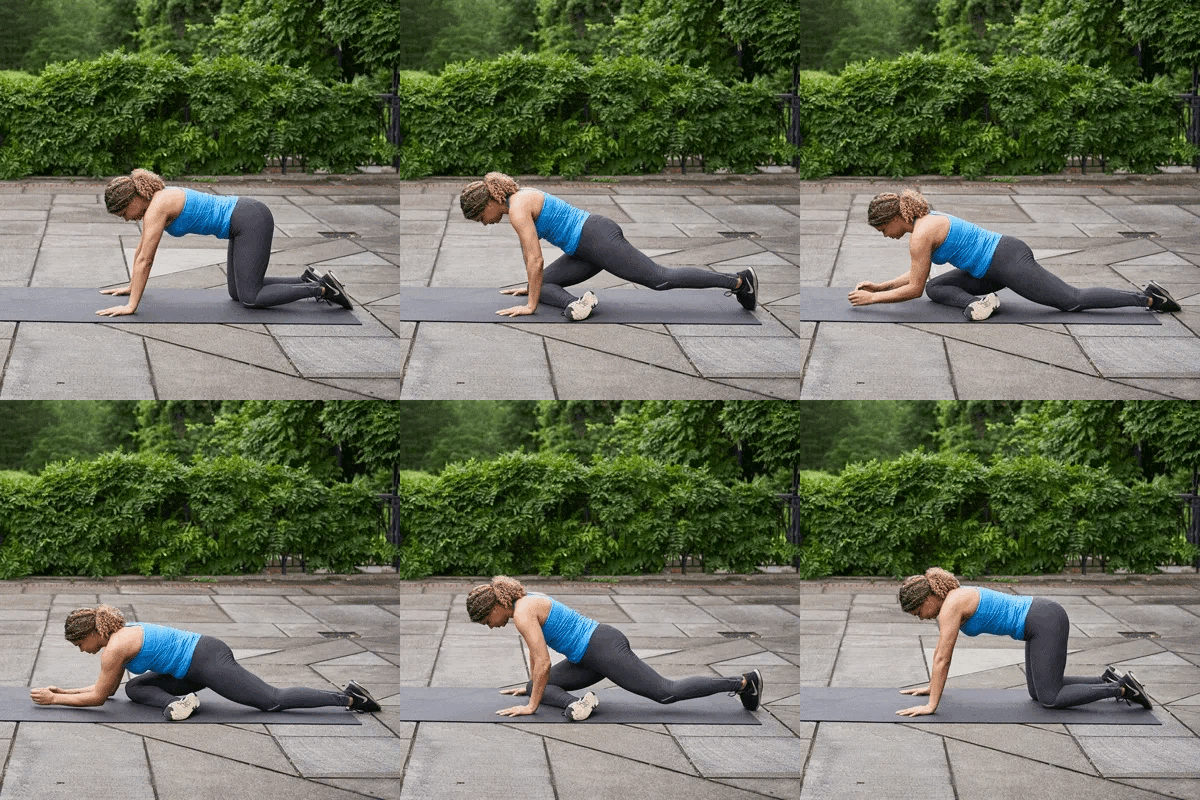


The Pigeon Pose is a popular yoga posture that engages the hip flexor muscles while stretching the gluteus medius.
 
How to do it: 
Kneel on the ground with your hands below your shoulders and hips below your knees 
 
Bring your right knee to a 90-degree position in front of your body, next to your right wrist 
 
Straighten your left leg toward the back of your body 
 
Slowly lean your torso forward toward your front leg and rest your forearms on the ground (or sit upright for a more comfortable variation) 
 
Hold for 30 seconds, then repeat on the other side Perform 3 sets on each side 
 
2. Seated Glute Stretch
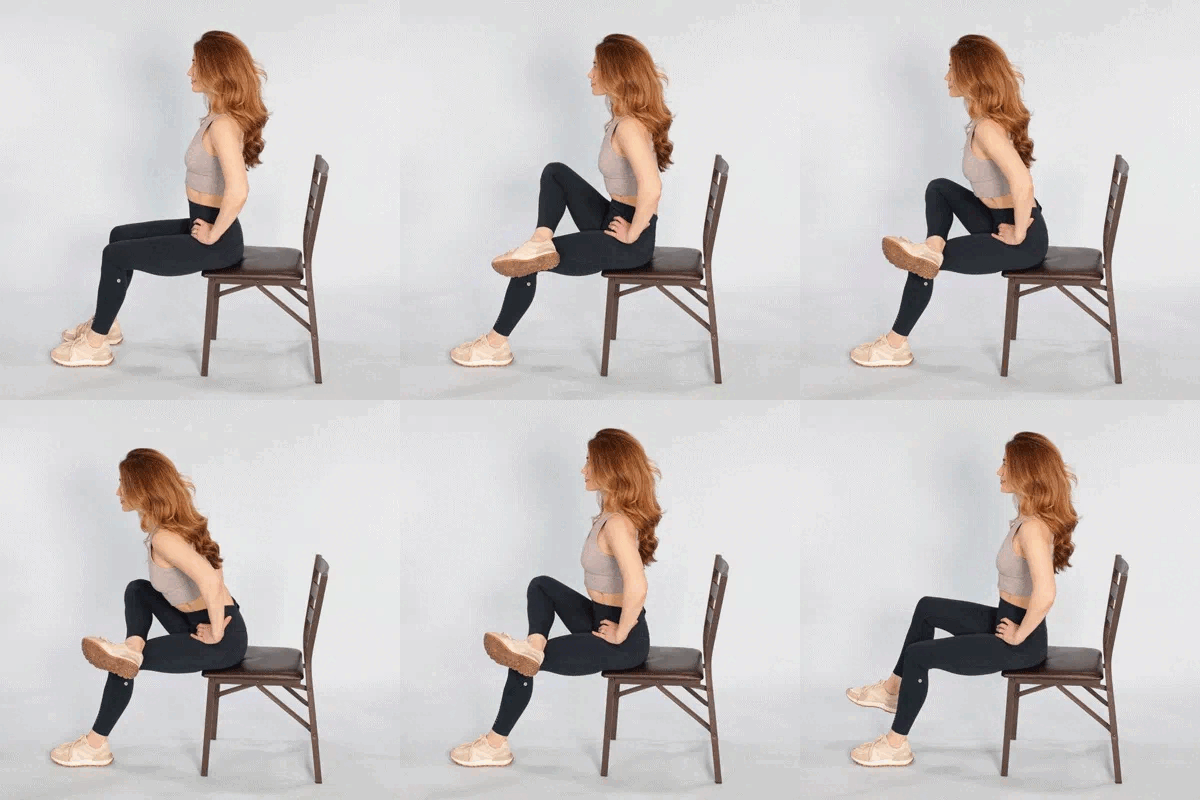


This versatile stretch has many variations, with the chair-seated version being most common as it allows you to adjust height and depth. 
 
How to do it: 
Sit upright with a neutral spine and hands on your hips 
 
Cross your right leg over your left, resting the ankle over the area between the knee and quad muscle 
 
Slowly lean your torso forward to a comfortable position (you should feel the stretch in your right glute) 
 
Hold for 3 to 5 seconds, then rise back up Release your leg and repeat on the other side Perform 8 to 10 reps on each side, 3 times daily 
 
3. Supine Glute Stretch
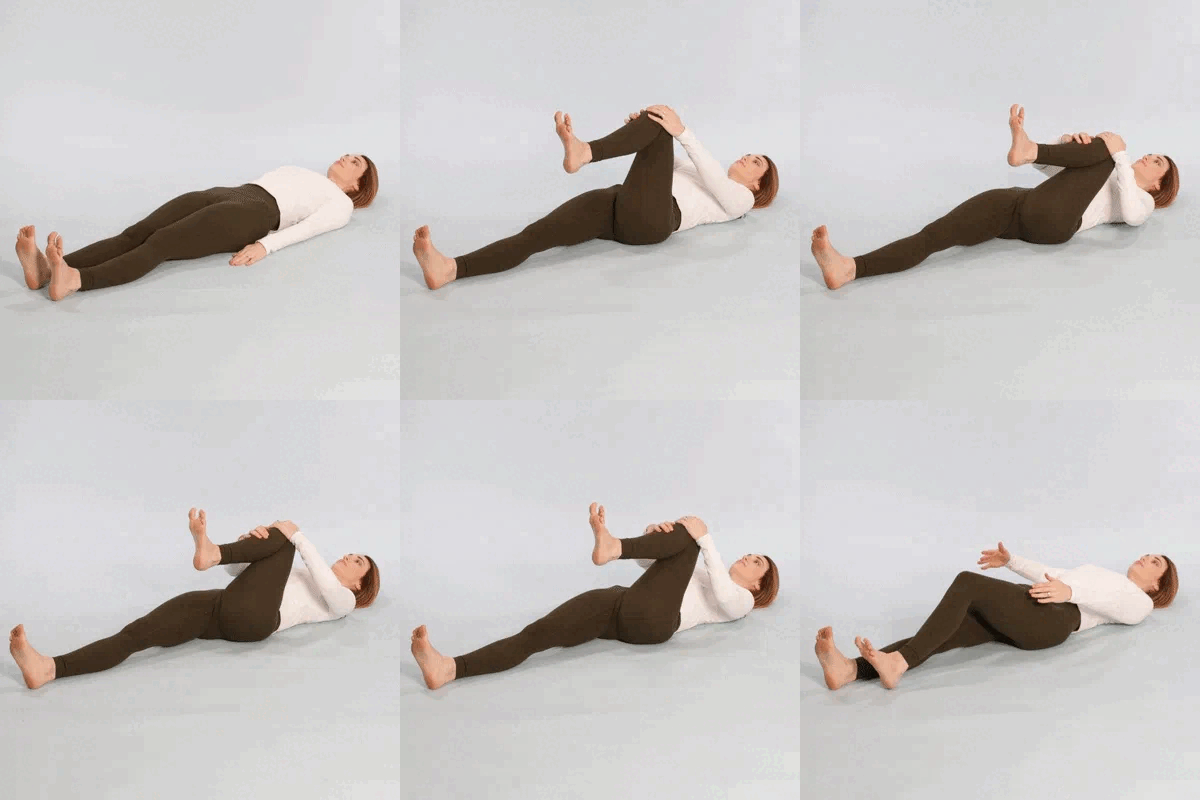

The supine (lying down) glute stretch is ideal for targeting the glute muscles and hip abductors. It's an excellent alternative if the Pigeon Pose causes knee discomfort or if you have very tight hips. 
 
How to do it: 
Lie on your back with arms by your side and legs straight 
 
Bring your left leg up toward your stomach and wrap your hands around the knee 
 
Pull the knee toward your chest, feeling a deep stretch in your left glute 
 
Rotate slightly right and left to deepen the stretch 
 
Release the knee and straighten your leg Perform 10 reps on each leg, 3 times daily 
 
 
4. Seated Spinal Twist
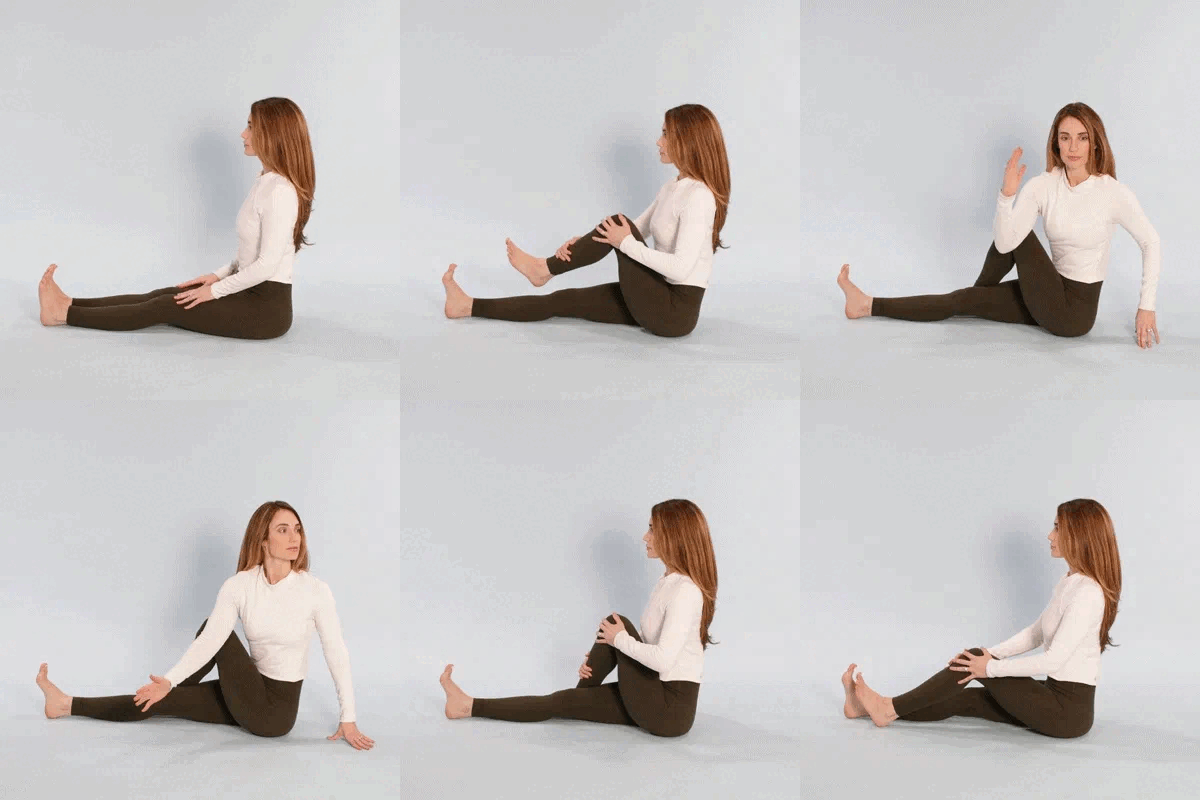
 

The seated spinal twist stretches the muscles in your glutes, hips, and back - all of which are interconnected. 
 
How to do it: 
 
Sit on the floor with legs outstretched 
 
Bend your left knee and bring it over the right leg, planting the foot beside the right knee 
 
Twist your upper body to the left, placing your right elbow on the left side of the bent knee 
 
Plant your left hand on the ground behind you and look in that direction 
 
Hold for 5 to 10 seconds, then slowly twist back to center and straighten your legs 
 
Perform 10 repetitions, then repeat on the other side 
 
Complete 3 sets on each side daily


5. Kneeling side bend
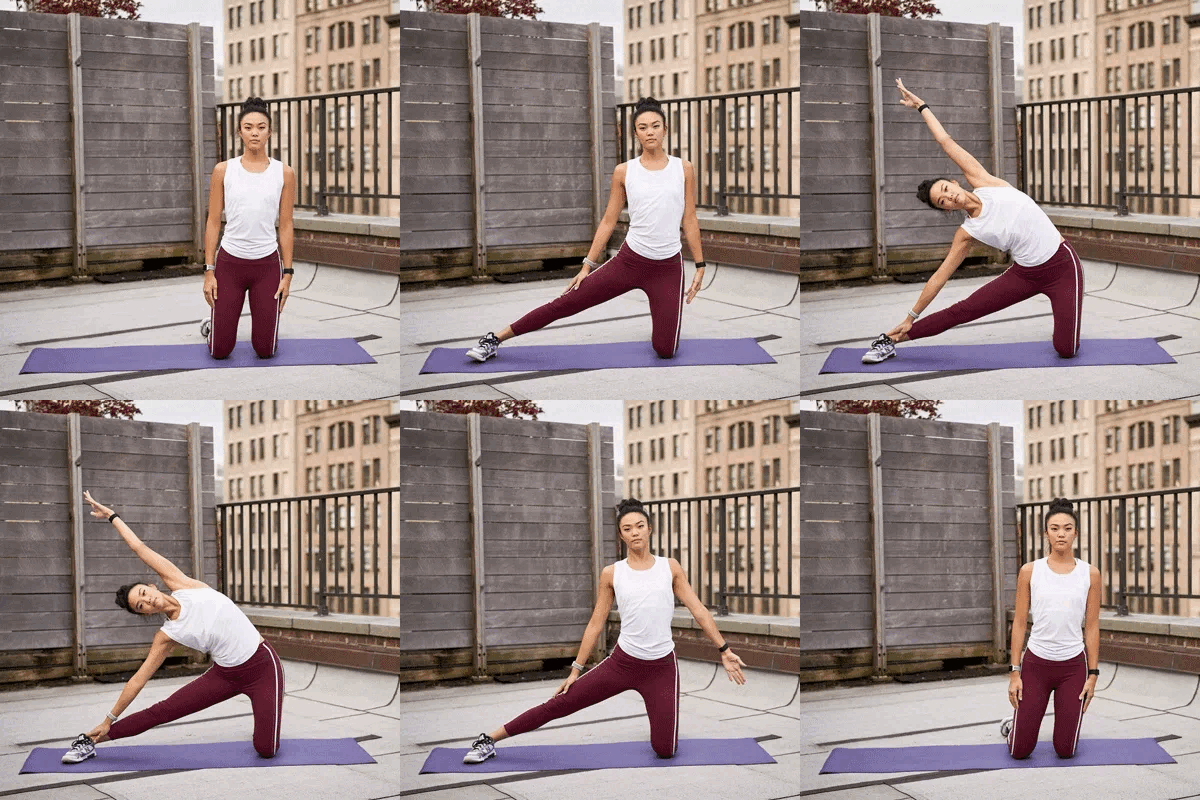


The kneeling side bend stretches the entire side of your upper body, from the gluteus medius up through the back, shoulders, and arms. 
 
How to do it: 
 
Kneel on both knees and extend your right leg straight out to the side 
 
Raise your left arm toward the ceiling, then bend over the outstretched leg 
 
Glide your right arm down the right leg for support and arch the left arm high, bringing it over to the right side (you should feel a deep stretch up the left side of your body) 
 
Hold for 5 to 10 seconds, then return to center 
 
Repeat 5 times on each side, 3 times daily 
 
 
6. Foam Rolling for Glutes
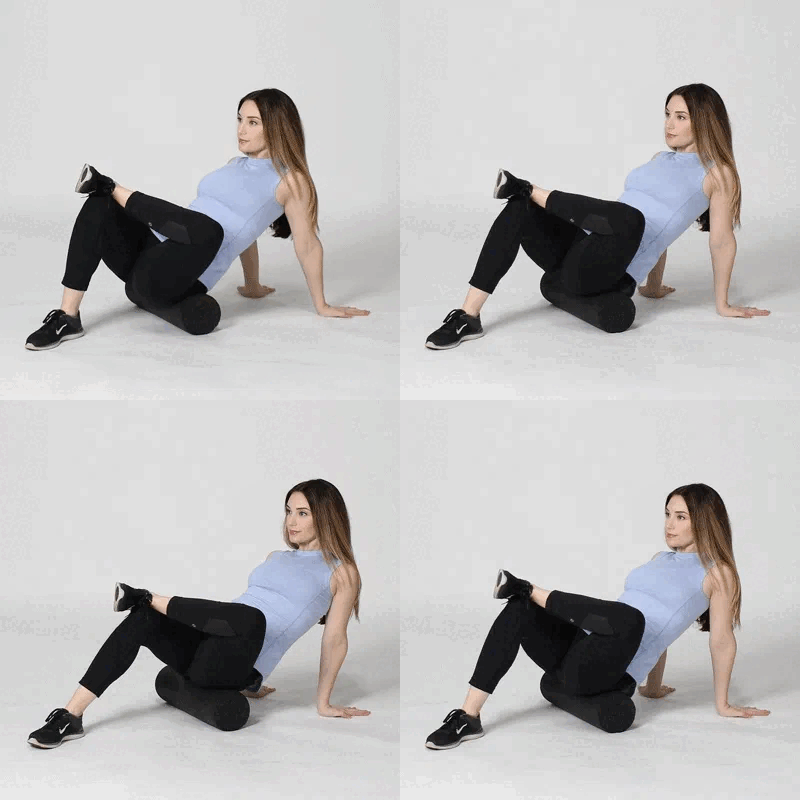
 

Foam rollers are exercise tools that can help loosen tight muscles. Use them before your stretching routine to warm up muscles, or afterward to support muscle recovery. 
 
How to do it: 
 
Sit on a foam roller with your hands planted behind you for support and knees bent at 90 degrees 
 
To target the left gluteus medius, raise your left leg and place the outside of the ankle on your right knee 
 
Rotate your lower body slightly to the side and upper part of your glute 
 
Roll back and forth 10 times, breathing through the movement 
 
Repeat on the other side Perform 3 sets on each side daily 
 
When to See a Doctor  
 
In most cases, tight hip abductors and glute muscles can be managed through exercises, stretches, and foam rolling. However, you should consider consulting a primary care doctor if you experience: 
 
Persistent glute and hip pain that affects your daily activities 
 
 Symptoms that may indicate an underlying health condition, such as arthritis 
 
A physical therapist can also help develop a stretching plan tailored to your individual needs and ensure you're performing exercises correctly.


The Bottom Line 
 
Your glutes are among the most important muscle groups in your body, involved in essential activities like walking and running. Regular stretching of the gluteus medius makes an excellent addition to any cooldown routine, helping to loosen tight hips, improve range of motion, and reduce chronic back pain. 
 
Important reminder: Don't stretch your body too hard or too fast. Doing so could lead to injury. Listen to your body, warm up properly, and progress gradually for the best results.


This is only for your information, kindly take the advice of your doctor for medicines, exercises and so on.   


Labels: , , , , , , , , ,

Tuesday, May 20, 2025

Pain May Be Due to Inflexibility! Try These Stretches

 Do you suffer from chronic pain? Very often, the root cause of everyday aches is a simple case of inflexibility. The below stretches from David Reavy, the founder of React Physical Therapy in Chicago can be done pre- or post- your workout, or whenever you need loosening up. If the pain is persistent, start with a daily dose then switch to one or three times per week to maintain your flexibility. 


For pain in your knees 

The problem: Tight feet or ankles  

How often do you think about the muscles in your feet? Probably, not much at all. But they are constantly working hard for you. Tightness in the feet and ankles can be felt everywhere, though especially in the knees.

stretches for pain
Do this: Plantar fascia stretch 
Kneel with your toes tucked, placing your weight on the balls of both feet. Gently lower your upper body until you are sitting on your heels. Place your hands on the tops of your thighs and lean back. Hold the pose for 20 to 60 seconds. 
 
Tip: Get your knees in top form by working on your glutes and quads. Basic body weights should help fix any lower imbalances you may have.


For pain in your lower back 
 
The problem: Tight hips 
The hip flexors spread across 8 different joints. When the muscles in this area are tight the abdominals and glutes shut down. If these areas of your body aren't working at their full strength, you will likely feel it in your lower back.
stretches for pain

Do this: King cobra stretch 
Lie facedown with your palms under your shoulders slightly turned out. Then, slide the left leg up toward the hip and bend the knee - keep the right leg extended with the toes turned inwards. Push up until the arms are straight. Keep the hips on the floor with the elbows close to the sides. Turn the head and the upper body slightly to the left then hold for 20 to 45 seconds, before you switch sides. 
 
Tip: To reduce back pain, do exercises that strengthen your abdominals and hip flexors. 
 
For pain in your shoulders 
The problem: Tight back 
While you may hear a clicking sound in your shoulders, it's not just the shoulders that are to blame. The shoulder is a ball-and-socket joint, with the ball of the humerus (upper arm) sitting inside a cavity in the scapula, or shoulder blade. But when your lower trapezius muscles, or mid-back muscles are weak it can alter the mechanics of the ball and socket, causing pain. 

stretches for pain

Do this: Lat strech 
Kneel with your arms forward on top of a stability ball, keep your palms in and your thumbs facing the ceiling. Sit back toward your heels, then push your chest toward the floor while keeping your back flat. Hold the pose for 30 seconds. Then, move the ball to the left while stretching your right lat muscle, hold for 30 seconds. Repeat on the other side, stretching your left lat muscle. 
 
Tip: Use weights to strengthen your arms and the lower trapezius. This will help keep your back and shoulders in balance and shoulder joint in position. 
 
For pain in your neck 
 
The problem: Tight chest  
If you spend a lot of time sitting down, traveling in a car or looking at your phone, constantly leaning forward causes a tightness in your pec muscles which run along the front of your chest. Tight pec muscles will pull you forward creating a strain or tightness in the neck.
stretches for pain
Do this: 
Pec stretch Stand facing a wall with your right arm raised to shoulder height, then bring your forearm flush against the wall. Rotate your torso away from your right arm and stretch the front of your chest and right shoulder. Bend sideways at the hip, pushing your body away from the wall. Hold the pose for 30 seconds, then switch sides. 
 
Tip: Try chin tucks (pushing your chin back into your neck) to help reduce the pain. 


This is only for your information, kindly take the advice of your doctor for medicines, exercises and so on.   

Labels: , , , , ,

Tuesday, April 22, 2025

Four Areas in the Body Women Need to Strengthen

When we go to the gym, we usually prefer to focus on limb and abdominal muscles, as they give us a more toned appearance. However, few of us strengthen the "skeletal muscles," special fibers designed to connect our bones to muscles and tendons, and thus are essential for our function. If we don't strengthen these skeletal muscles, they will begin to wear out as early as age 25, potentially increasing the risk of injuries and various problems like weak bones, falls, and reduced lifespan. Whether you are 30 or 50 years old, it's worth starting to invest now in building and strengthening these areas of the body to prevent muscle deterioration in the short term or even in the distant future. In the following article, you will learn a little more about what women suffer from when it comes to muscle health, and get to know 4 very important areas that you must strengthen - and of course, how to do so.

Areas women must strengthen: Woman doing sit-ups
Disadvantages for Women in Muscle Health 
With age, women's muscles wear out faster than men's, for several reasons. Firstly, compared to men, women have fewer muscles, and their bodies find it harder to rebuild them, so they can't afford to lose what already exists. Additionally, it's important to consider that as we age, women find it more difficult to break down food into proteins, an important component that helps in building bones and tissues in the body. So how can we strengthen our muscles, prevent their wear and tear at a young age, and mainly avoid pain when performing simple actions? Basically, you can wait a few years and start strengthening the body only when you start feeling pain, but to get a good muscle network that will reduce the risk of such a situation occurring, it is advisable to start training the following 4 areas right now.

Areas women must strengthen: Woman running at sunset
1. Upper Body 
 
 Why is it important? 
 
As we age, we push or lift objects less, a situation that leads to the wear and tear of muscles such as the trapezius, deltoid, biceps, and triceps. As a result, we may suffer from neck tension, as well as difficulties in carrying grocery bags or lifting grandchildren for a hug - a task many grandmothers are likely familiar with. To avoid such a situation, it is recommended to do push-ups on the wall or the floor. 
 
Exercises to strengthen the area - Wall Push-Ups
Stand in front of a wall, 3-4 steps away from it. 
 
Spread your feet shoulder-width apart. 
 
Place your palms on the wall, at chest height and slightly wider than shoulder-width apart. 
 
Stand on the balls of your feet. 
 
Bring your upper body closer to the wall, and after a second move away again. 
 
Do 10 push-ups a day - they can also be done on the floor.


2. Core Muscles   
 
Why is it important? 
 
Usually, when we talk about core muscles, we first think of the abdominal muscles, which many of us refer to as "abs." However, there are many more layers of muscles worth building and strengthening, such as the external and internal obliques, and many others that can help us in daily functioning. Their development can prevent tension in the area, along with pain caused by lifting or carrying heavy loads that strain the lower back. Therefore, developing the upper body will not only help you develop important abdominal muscles and their surroundings but also avoid nagging back pain, which can bother you when performing simple tasks like sitting or walking. A great way to develop core muscles is with a plank, like the one we'll present now. 
 
Exercise to strengthen the area - Forearm Plank

Areas women must strengthen: Woman doing plank
Lie on the floor with your face down, with your arms folded forward, palms resting on the floor, elbows at your sides, and you are leaning on your forearms. 
 
Lift your upper body, continuing to lean on your forearms. 
 
Lean on your toes, lifting your knees and buttocks so that your body is straight from shoulders to heels. 
 
Stay in this position for 10-30 seconds, depending on your ability. Repeat this exercise every day.


3. Pelvic Floor Muscles 
 
Why is it important?  
 
Many of us train the thighs and pelvic area to achieve a toned look and to fit into certain size pants, but it turns out that we should do so for another reason. According to experts, it is important to strengthen the pelvic floor muscles, which connect the pubic bone to the tailbone, to maintain bladder and bowel function, as well as satisfying sex life, and to support the areas around the pelvis, such as those that weaken after childbirth. 
 
Exercise to strengthen the area - Pelvic Floor Muscle Strengthening Exercises
 
Areas women must strengthen: Woman doing pelvic floor muscle strengthening exercise
Lie on your back, bend your knees, and rest your feet on the floor. 
Place your hands on your lower abdominal muscles as shown in the picture, and apply slight pressure to the area. 
Stay in this position for 5 seconds, then release. 
Repeat this for 10 times. 
Do this exercise twice a day.

4. Knees 
 
Why is it important?  
 
Many of us don't think about knee exercises at a young age, perhaps because there are no muscles in them that can be built and strengthened, but mainly tendons. However, this area does have muscles that are important to train, such as the gluteus maximus and hamstring, which help improve our stability and prevent injuries in these important joints. Additionally, it's worth knowing that our knees are more sensitive than men's, because our hips are wider, so they transfer more weight to these joints. Also, the heels that many of us wear don't contribute much to knee health, as they apply additional pressure directly to this area. Therefore, it's worth starting to train your knees now, to avoid unnecessary pain later on, and a great way to do this is with a leg curl as we will now present. 
 
Exercise to strengthen the area - Leg Curl
 
Areas women must strengthen: Woman doing leg curl exercise
Lie on your stomach, straighten your legs back and lean on your forearms. 
 
Bend your right leg, bringing the heel towards the buttocks - as much as you can. 
 
Note that the foot should be perpendicular to the shin. 
 
Stay in this position for a second, then slowly return the leg to its place. 
 
Repeat the exercise with your left leg. 
 
Do the exercise 10 times for each leg, every day. 
 
A Few Final Words... 
As mentioned, many of us go to the gym to tone our bodies, and some do so as part of a healthy lifestyle they have adopted for themselves. Today, we gave you another reason to start exercising, and mainly to strengthen the body in areas that need it and that many of us neglect. If you want to keep your body and avoid injuries and pain, don't neglect yourself and start taking action. Remember that even if you don't see damage today, it may appear in a few years, and then you'll regret not acting sooner. Prevent the problem in advance, and who knows, you might even enjoy it...


This is only for your information, kindly take the advice of your doctor for medicines, exercises and so on.   


Labels: , , , ,