Thursday, March 20, 2025

Yoga Exercises to Relieve Muscle Tension

The more our muscles exert themselves during the day, the more our body craves rest - but beyond a night's sleep, there’s another way, full of benefits, to allow our body to receive its dose of calm, and that’s through performing yoga exercises. The following 8 yoga poses you’re about to discover might seem familiar at first, but in fact, each one is presented here in a unique version designed to relieve tired, tense, and sore muscles. So, if you regularly engage in sports, perform strenuous physical activity, or simply feel your muscles are exhausted, we recommend disconnecting from your surroundings for the next few minutes and recharging with renewed energy through the following poses.

Exercise 1: Squat for Ankle Strengthening (Ankle Strength Squat)
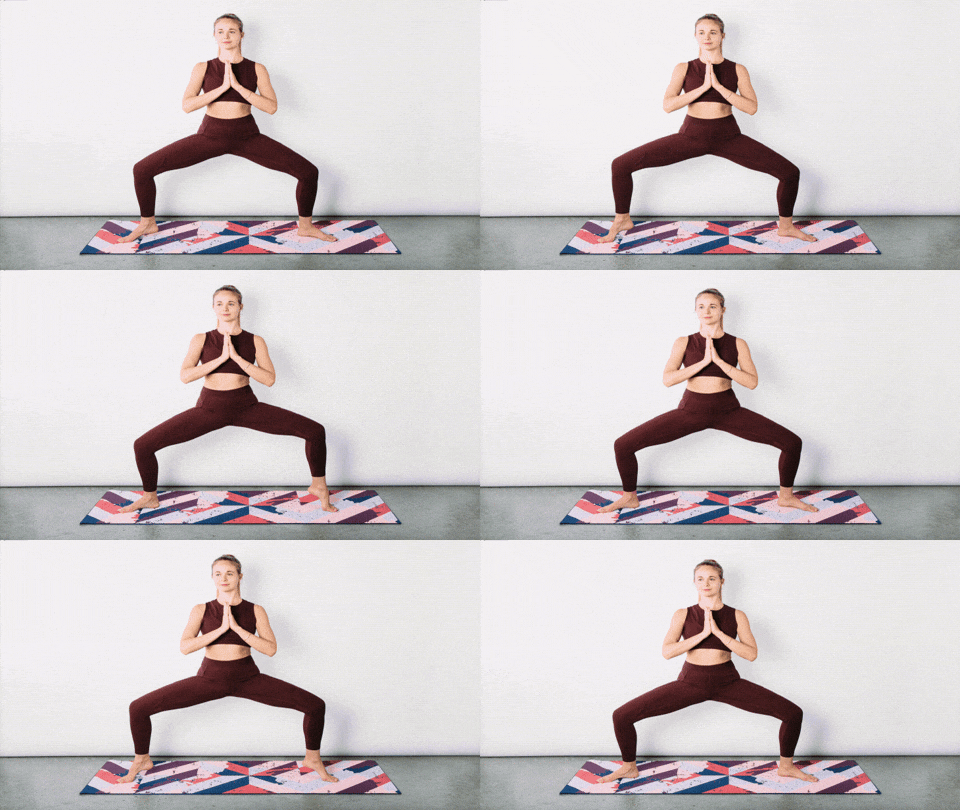
Unique Yoga Exercises: Squat for Ankle Strengthening (Ankle Strength Squat)
What’s the Benefit for the Muscles? The movements in this pose help to slightly "lubricate" the ankle joints, which tend to wear out due to intense physical activity or sports like running. Additionally, they engage the gluteal muscles and the back of the thigh, whose fitness is important and essential for our daily functioning.

How to Perform? Start by standing with a wide stance, with your feet pointing outward. Slightly bend your knees into a squat position as shown above. Press your palms together and bring them to the center of your chest - maintain as stable a stance as possible. Lift your right ankle and then lower it back down, then lift your left ankle and return it, and finally lift both ankles simultaneously and return them to the ground. Ensure full contact of each foot with the ground to avoid arch strain. Repeat the action 8 times. 
 
Exercise 2: Calf, Hamstring, and Achilles Stretch with a Yoga Block (Calf-Hamstring-Achilles Opener With Block)
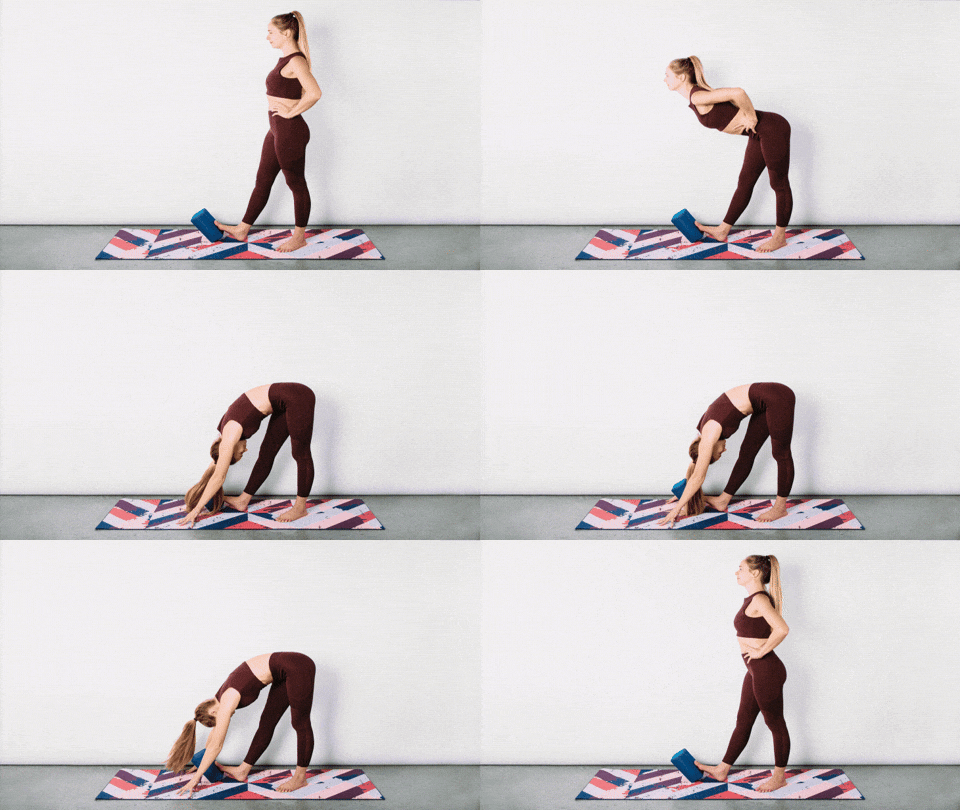
 
Unique Yoga Exercises: Calf, Hamstring, and Achilles Stretch with a Yoga Block (Calf-Hamstring-Achilles Opener With Block)

What’s the Benefit for the Muscles? People who spend most of their time standing need their muscles, especially those in the lower body, to be strong enough to efficiently bear their full body weight. This pose allows you to simultaneously release the calf, hamstring, and Achilles tendon muscles while keeping them fit, ensuring stable standing. 
 
How to Perform? Start in a standing position and touch the yoga block (or any stable object) with the ball of your right foot at a 45-degree angle, with your heel securely on the ground. Step your left leg slightly back and carefully bend your upper body forward along your extended right leg, touching the ground. Hold this position for 60 seconds. Return to the starting point and perform the same action with your left leg. 
 
Exercise 3: Cat-Cow Pose with Crossed Knees (Cat-Cow With Knees Crossed)
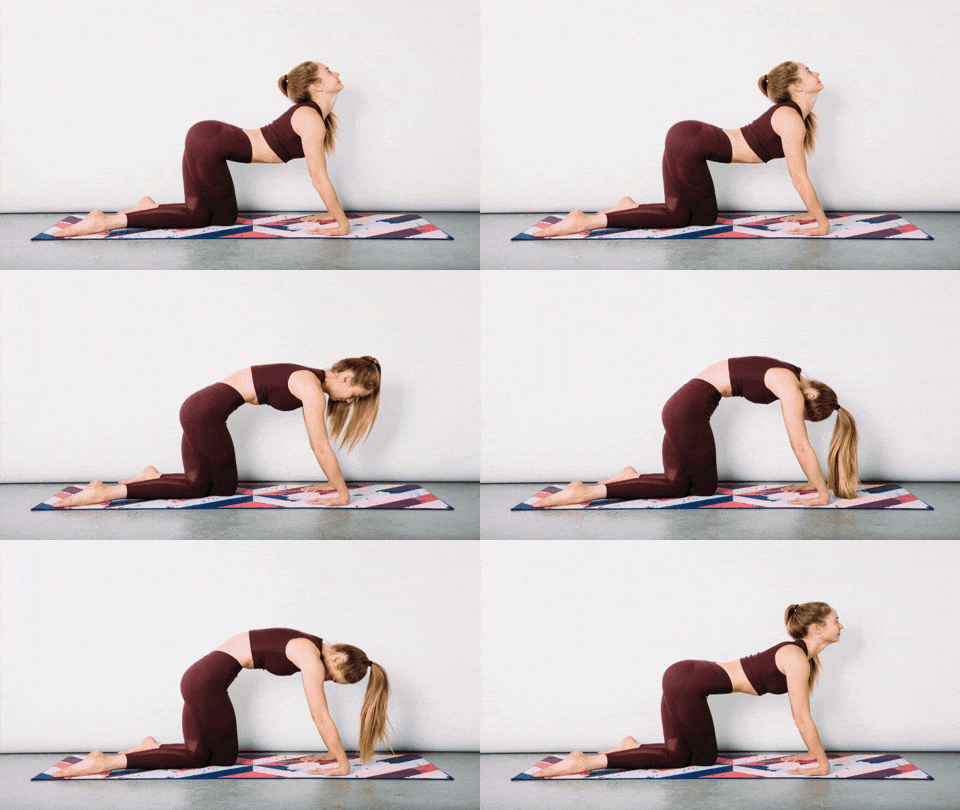
 
Unique Yoga Exercises: Cat-Cow Pose with Crossed Knees (Cat-Cow With Knees Crossed)

What’s the Benefit for the Muscles? This pose helps relieve significant pressure from the pelvic and lower back areas, improving the spine’s daily functioning. It also slightly releases the joints and provides rest to a worn-out body.

How to Perform? Start in a position where your knees, toes, and palms are simultaneously touching the ground - ensure your shoulders align with your hands, your hips align with your knees, and your palms face the center of your body. Now cross your knees by passing your left knee behind your right knee. Both knees should be touching, and your feet should be apart - forming an X shape. Take a deep breath, carefully arch your back, and lift your head upward (Cow Pose). Then exhale while lowering your head toward the floor and gently rounding your back (Cat Pose). Perform this action 20-30 times, then repeat with the other leg. 
 
 
Exercise 4: Child’s Pose on Toes (Child’s Pose on Toes)
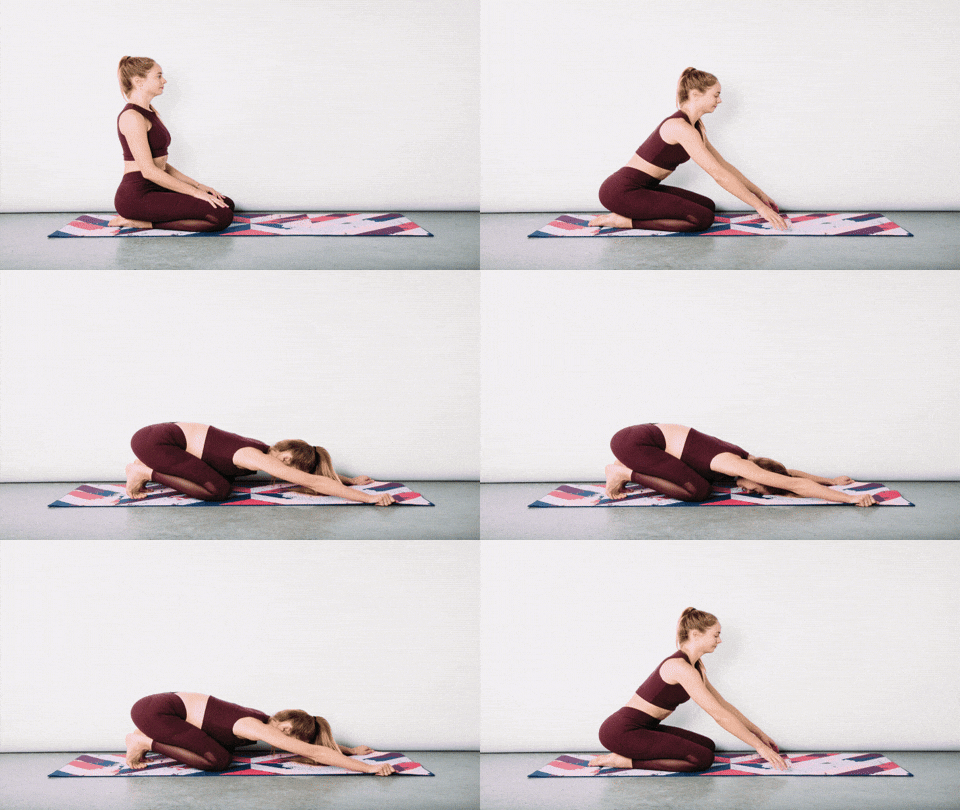
 
Unique Yoga Exercises: Child’s Pose on Toes (Child’s Pose on Toes)


What’s the Benefit for the Muscles? Every time we stand, walk, or run, it’s ideal for our foot’s contact with the ground to be correct and involve all possible parts. Pulling the toes will allow you to widen the foot joint, release the pressure applied to the arch during daily life, and ensure every step on the ground is stable and healthy. 
 
How to Perform? Start by sitting on both knees with an upright torso, hands resting on your knees. Pull your toes toward the center of your body and rest on them, lean your upper body forward while holding the edges of the mat with your hands, and lightly touch your forehead to the ground. Stretch your body by pulling your hips back and your hands forward. Stay in this position for a few deep breaths and release. Repeat the action 10 times. 
 
 
Exercise 5: Quad-Psoas Wall Stretch (Quad-Psoas Wall Stretch)
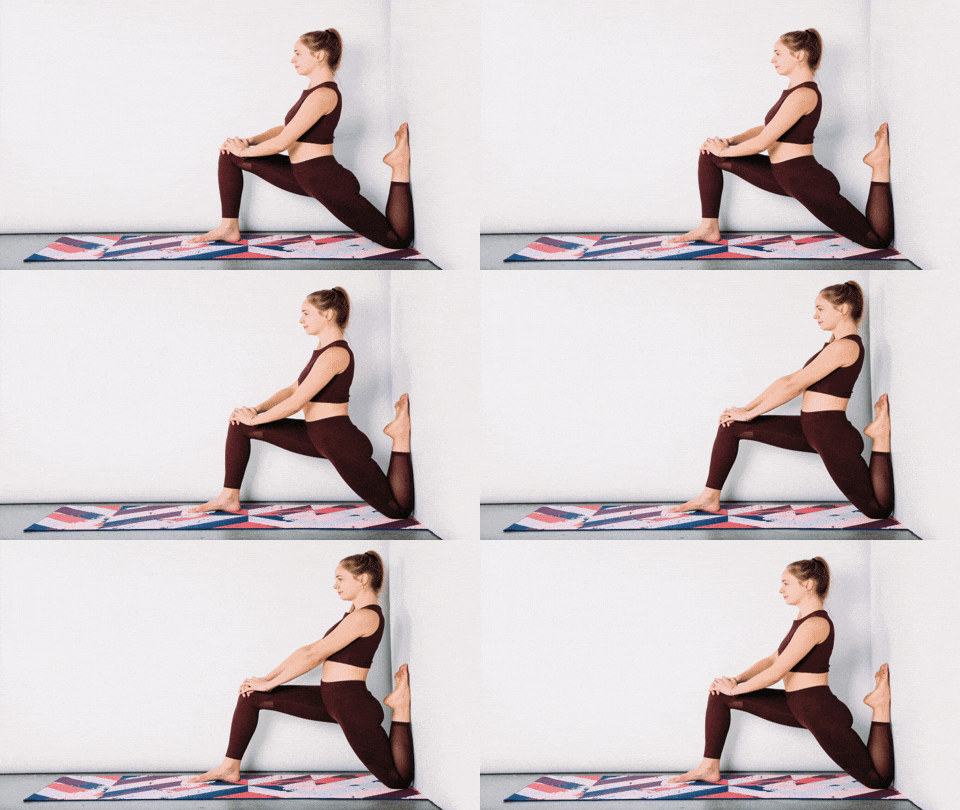
 
Unique Yoga Exercises: Quad-Psoas Wall Stretch (Quad-Psoas Wall Stretch)

What’s the Benefit for the Muscles? The psoas muscle is one of the most important muscles in the body, often called the "king of movement" - located deep in the upper body, it connects the pelvis to the back and thighs, significantly affecting our posture, range of motion, joint function, and core muscle activity. Strengthening this muscle will improve anyone’s stance and is especially crucial for athletes and those engaging in strenuous physical activity. 
 
How to Perform? Start in a lunge position, with your right leg extended forward and bent at a 90-degree angle, and your left knee placed at the junction of the wall and floor, with the entire section from foot to knee touching the wall (it’s recommended to use a mat or blanket between the leg and the ground to avoid knee injury). Place your hands on your right knee and push your hips forward. Then return your hips to their original position. Repeat this action 4-5 times in a slow motion for each leg.


Exercise 6: Shoulder Opener (Shoulder Opener)
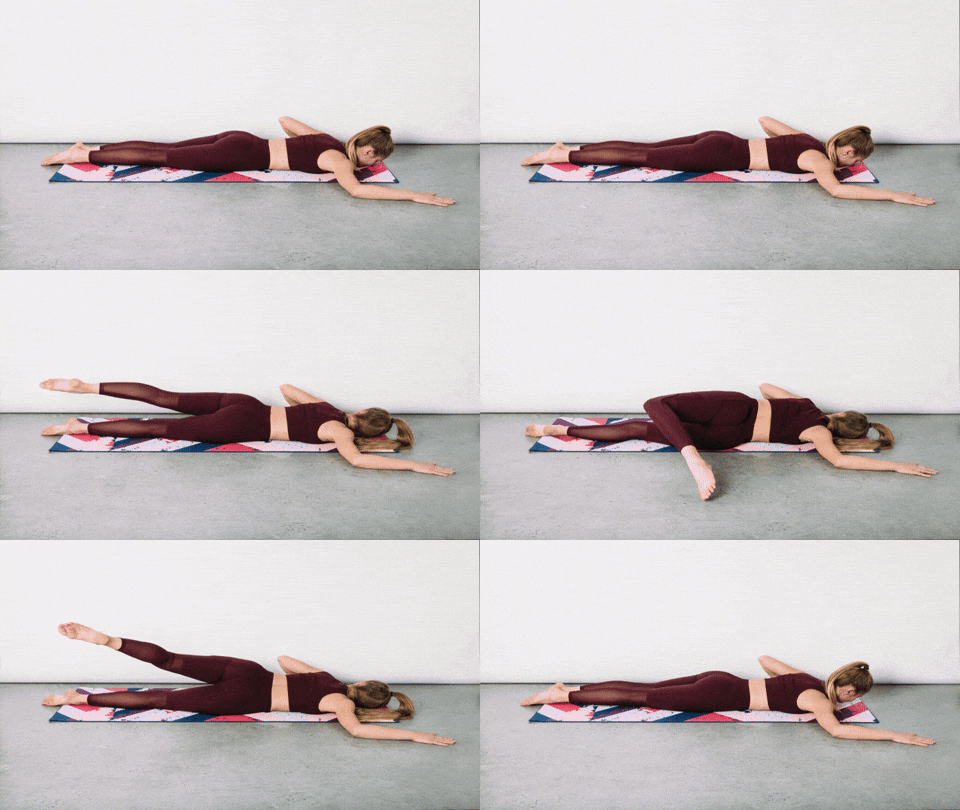
 
Unique Yoga Exercises: Shoulder Opener (Shoulder Opener)
What’s the Benefit for the Muscles? During intense physical activity or sports, we need an especially large amount of oxygen, and releasing pressure from the lung area can help improve our breathing. This pose is an excellent way to "open" the chest muscles. 
 
How to Perform? Lie on a yoga mat face down, with your right elbow resting beside you on the ground at a 90-degree angle. Turn your gaze to the left and carefully roll your lower body to the right, lifting your left leg and touching the ground to your right with your left foot. Stay in this position for 5-10 breaths, then repeat the same action on the other side. 
 
 
Exercise 7: Tabletop Shin Self Massage Saw (Tabletop Shin Self Massage Saw)
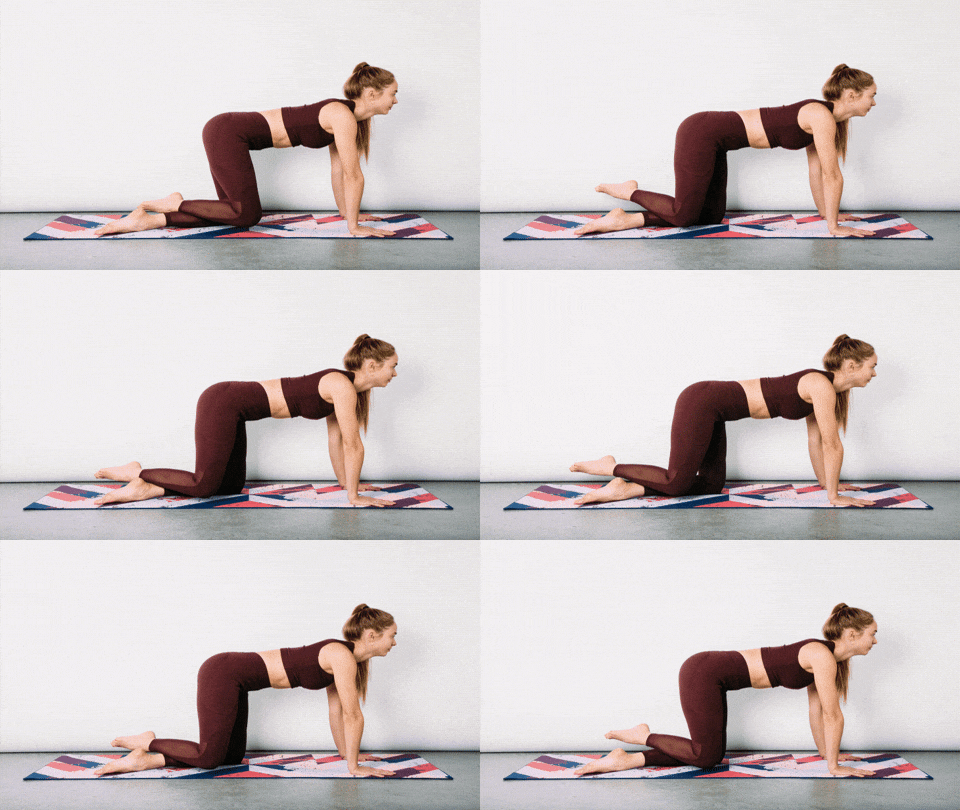
 
Unique Yoga Exercises: Tabletop Shin Self Massage Saw (Tabletop Shin Self Massage Saw)
What’s the Benefit for the Muscles? Spending too much time standing, especially during intense physical activity, puts a heavy burden on the lower legs, and this pose will allow you to improve blood flow and bring calm to that area. 
 
How to Perform? Start in a position where your knees, toes, and palms are simultaneously touching the ground - ensure your shoulders align with your hands and your hips align with your knees. Place your right shin bone on your left calf muscle and begin a "massage" by moving it forward and backward while pressing. Repeat this action 3-5 times with your right leg, then switch legs and perform it with your left leg. 
 
 
Exercise 8: Yoga Toe Stretch (Yoga Toe Stretch)
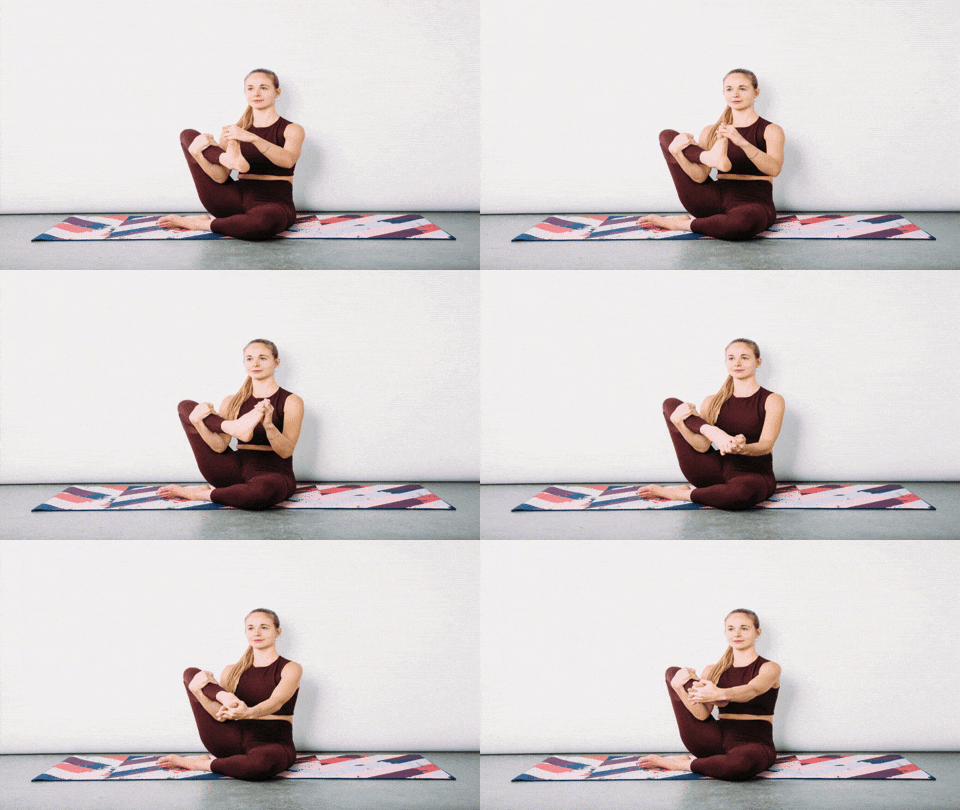
 
Unique Yoga Exercises: Yoga Toe Stretch (Yoga Toe Stretch)
What’s the Benefit for the Muscles? As mentioned, the toes play an important role in maintaining our stable stance, and their contribution increases when they can utilize most of the surface they’re placed on. The action in this yoga exercise will allow you to stretch your toes, helping them spread efficiently during activity and slightly lubricating the ankle joints. 
 
How to Perform? Sit on the floor in an "Eastern" seated position, lift your right leg and cradle it at the calf with your right hand. Insert the fingers of your left hand between the toes of your right foot and begin a gentle circular motion of the ankle clockwise. Do this for a few seconds, then perform the same action on your left leg.


This is only for your information, kindly take the advice of your doctor for medicines, exercises and so on.   


Labels: , , , , , , , , , , ,

Sunday, January 24, 2021

6 Simple Stretches to Alleviate Chronic Pain

It's easy to think that your discomfort will never go away when you're dealing with pain on a regular basis. This partly occurs because your body and brain are stuck in a faulty pain-signaling loop, where the brain continues to receive pain messages long after major damage has been healed. Despite this, psychological factors are not to blame. The pain signal is real and kept alive in a self-perpetuating biochemical loop - very much like a broken record that continues to skip. So, how can you break this terrible cycle? A great place to begin is exercising. 

The following list of exercises can be done even when you feel some discomfort. Nevertheless, if knee pain sensations do kick in, stop immediately as this is an important part of your healing. It's always essential that you exercise in a pain-free way. 
 
1. Side-to side steps
chronic pain exercises
Benefits: Loosens the ankles, legs and hip muscles while improving your circulation.
 
Here's How:  
1. Come into a standing position and slightly bend your knees. 
2. Extend your left leg out to the side as far as possible, stepping carefully and lightly on your foot, while trying to pull the weight of your body upward and away from the floor. This pulling-up method will stop you from landing with a heavy impact on your foot, which is hard on your joints. 
3. Bring your feet together and bend your knees. Keep both heels flat on the ground, ensuring that your weight is evenly distributed over your feet. Ensure that your soles are not rolling inward or outward - rolling will cause joint pain and damage. 
 
Alternate from left to right 16 to 32 times. 
 
2. Full arm circles
chronic pain exercises
Benefits: Stretches and strengthens the torso. 
 
Here's How: 
1. Keep your legs in a wide, comfortable stance, knees slightly bent. 
2. Reach one arm up. Imagine that you are drawing a large circle with your arm and torso, from the ceiling to the floor. Stay relaxed as you do the movements, especially from your shoulders and elbows. And breathe deeply throughout the movements. Don't rush, take your time to move carefully and fully control every movement. 
 
Complete 4 large circles. 
 
3. Shin, calf, ankle and foot mobility sequence
chronic pain exercises
Benefits: Instantly relieves calf, shin and foot pain. Stretches and strengthens the entire lower leg and foot. 
 
Here's How:  
1. Face a chair, holding the back of it with your hands. Stand close enough so that you elbows are slightly bent. 
2. Slowly bend your knees, enabling you to feel your muscles stretching. Then slowly raise your heels - you should feel your muscles lifting the entire body weight. Keep your movements slow to reap the strengthening benefits. 
3. With your heels raised as high as possible slowly straighten your legs - this will actively stretch the shins, helping to relieve the pain. Then slowly lower your heels until they reach the ground once again. 
 
Repeat 3 to 6 times.

4. Hip stretching sequence 
Benefits: Will loosen and stretch a chain of muscles that connects the torso to the legs. Tight hip muscles can cause tension down into the knees and feet, limiting their movement and leading to pain. 
 
Exercise 1:
chronic pain exercises
Here's How: 
1. Stand diagonally behind a chair, placing the outside part of your leg on the seat. Bend both knees while holding the back of your chair for balance. 
2. Lift and lower your hips, swaying your hips from side to side. As you do so, you'll likely feel a loosening within your hip socket. 
 
Repeat 4 times on each side. 
 
Exercise 2:
chronic pain exercises
Here's How: 
1. Adjust your body so that you are facing the seat of the chair. Round your spine, dropping your shoulders forward, and tuck your tailbone under. 
2. Shift your spine into a reverse position slowly, arching your back and sticking your rear out while shifting your weight forward. The more you exaggerate the movements, the better the results in loosening the joint. 
3. Return to the original position, rounding your back and tailbone tucked under. 
 
Repeat 1 full round of arching and rounding for a total of 4 times.

5. Psoas sequence for the hips
chronic pain exercises
The psoas muscles are attached in the front of your thighbone and finish in several of the lower vertebra. Poor walking or lifestyle habits tend to tighten and shrink this area, creating an unbalance in the hip region, leading to chronic hip pain. 
 
Benefits: Stretches the psoas, relieves hip tension and consequently, back pain. 
 
Here's How:  
1. Stand behind a chair. Place one foot flat on the seat of the chair, with your knee bent and the other leg straight behind you. 
2. Hold the back of the chair for support and raise the heel of your standing leg. Then bend the knee of your standing leg and tuck your tailbone under your hips, shifting your weight forward toward the seat of the chair. 
3. Lock your tailbone in the tucked under position, simultaneously straightening the back leg and pressing the back heel into the floor. You may feel a stretch elsewhere in your thigh. Then return to the starting position. 
 
Repeat the psoas stretch slowly, 3 times on each leg.

6. Zombie swings
chronic pain exercises
Benefits: Decompresses the vertebrae as your spine hangs partially upside-down. It helps pull the vertebrae apart, relieving back pain and muscle tension. If you feel pain when you start to move, stop, let the pain dissipate and keep moving. 
 
Here's How: 
1. Stand with your feet parallel, in a wide comfortable stance. Keep your muscles loose and relaxed. 
2. Breathe deeply before beginning, this will help you focus on relaxing your muscles. 
3. Tuck your tailbone under your hips and keep your knees slightly bent. 
4. Slowly walk your fingertips down the front of your thighs and stop when you arrive at your knees. Keep your neck relaxed, hanging your neck lower than your head. 
5. Sway side to side for 4 to 8 times. Then slowly roll up one vertebrae at a time back to your starting position. 
 
Repeat 2 times.

This is only for your information, kindly take the advice of your doctor for medicines, exercises and so on.     

https://gscrochetdesigns.blogspot.com. one can see my crochet creations  
https://gseasyrecipes.blogspot.com. feel free to view for easy, simple and healthy recipes    
https://kneereplacement-stickclub.blogspot.com. for info on knee replacement

Labels: , , , , , , , , ,

Friday, February 28, 2020

Cocoa a Novel Rx for Peripheral Artery Disease?

Cocoa, which is rich in flavanols, may improve walking performance in patients with peripheral artery disease (PAD), a pilot trial suggests.

Investigators randomly assigned 44 patients age 60 or above to receive a cocoa beverage or a placebo beverage. They found that, at the end of the study period, participants who drank the cocoa three times daily had significantly greater improvements in 6-minute walk distance compared with the group on placebo.

Moreover, those who drank the cocoa beverage showed improvement in perfusion to the legs and improvement in calf skeletal muscle characteristics, including improved function of the mitochondria, compared with their counterparts who drank the placebo beverage.

"Few therapies are available for improving walking performance in people with PAD," lead author Mary McGrae McDermott, MD, professor of medicine at Northwestern University Feinberg School of Medicine in Chicago, Illinois, said in a release.

"Our study showed both improved health in blood flow to the legs, improvements in 6-minute walk distance, and also improved calf skeletal muscle health in people who drank cocoa, compared to those who drank placebo," she told the heart.org | Medscape Cardiology.

The study was published online February 14 in Circulation Research.


Therapeutic Properties
Cocoa flavanols, including epicatechin, that are present in dark chocolate "have therapeutic properties that may improve walking performance in people with PAD," the authors write. In particular, cocoa may increase limb perfusion and improve skeletal muscle mitochondrial activity and muscle regeneration.

In animal studies and some preliminary studies of human beings, cocoa flavanols were shown to improve blood flow and muscle health, McDermott said.

"Since people with PAD have difficulty walking due to blood flow problems, we thought this particular therapy may be particularly beneficial for people with PAD," she added.

To investigate the question, the researchers randomly assigned 44 patients with PAD (mean age: 72.3 years [± 7.1], mean ankle brachial index 0.66 [± 0.15]) to drink milk or water mixed with the contents of a powder packet containing either flavanol-rich cocoa (15 g of cocoa and 75 mg of epicatechin; n = 23) or placebo (n = 21) three times daily for a 6-month period.

The researchers measured walking performance using the 6-minute walking test at the beginning of the study and at 6 months, at which point the test was administered twice: 2.5 hours after drinking the beverage, and then 24 hours later, with improvement on the both tests considered to be the primary outcomes.

Additionally, patients underwent a treadmill walking test, MRI to measure blood flow to the legs, and a calf muscle biopsy to assess muscular health.

Calorie Concerns

At 6-month follow-up, after adjusting for confounding variables including smoking, race, and body mass index (BMI), the researchers found that, compared with placebo, the cocoa improved 6-minute walk distance by 42.6 meters (90% confidence interval [CI]: +22.2, +∞, P = .005) at 2.5 hours after the final study beverage and by 18 meters (90% CI: 1.7, +∞, P = .12) at 24 hours after the study beverage.

Drinking the cocoa beverage was associated with other improvements compared with the placebo.

    Improved mitochondrial cytochrome c oxidase activity in calf muscles, as demonstrated by biopsy (P = .013)

    Improved calf muscle perfusion, as demonstrated by cardiovascular MRI (P = .098)

    Increased capillary density (P = .014)

    Reduced central nuclei (P = .024)

There were no statistically significant differences in treadmill walking time or brachial artery flow-mediated dilation between consumers of cocoa vs those who drank placebo.

"Cocoa flavanols are readily available and accessible and safe, so it would be reasonable to recommend cocoa flavanols for people with PAD," McDermott commented.

However, she added several caveats.

The cocoa used in the study was dark cocoa powder, containing >85% cacao, rather than milk chocolate or chocolate with lower cacao content.

"A lot of chocolate that is available over the counter is alkalized, which improves taste and palatability but removes the beneficial cocoa flavanols that have therapeutic effects; moreover, lots of cocoa comes with calories, sugar, and fat, so weight gain is a potential concern from consuming chocolate," she said.


Prescribe More Chocolate?

Commenting on the study for theheart.org | Medscape Cardiology, Eduardo Ramacciotti, MD, PhD, head of vascular surgery at Hospital e Maternidade Dr Christovao da Gama in São Paulo, Brazil, called it "an interesting paper."

Ramacciotti, who was not involved with the study, said that "despite the fact that it is a small phase 2 study, it shows improvements in walking distance for patients with PAD that took cocoa vs placebo."

He noted that only "a few medications" are available to treat PAD and that "we expect to have zero side effects with cocoa, which is good."

Most patients with this condition "usually are taking medications for different conditions and cocoa is unlikely to interact with them," he suggested.

"Larger trials are warranted to confirm the benefit of cocoa to improve walking distance in intermittent claudication patients with PAD," Ramacciotti said.

Also commenting on the study for theheart.org | Medscape Cardiology, William R. Hiatt, MD, professor of medicine, division of cardiology, University of Colorado School of Medicine in Aurora, said that, "while potentially interesting, I think it is too early to determine if cocoa is clinically effective to treat claudication."

Hiatt, who was not involved with the study, agreed that "independent confirmation of the results from this trial" is necessary.

In an accompanying editorial, Reiko Matsui, MD, and Naomi Hamburg, MD, both of the Whitaker Cardiovascular Institute, Boston University School of Medicine, Massachusetts, write that "taken together, the pilot study by McDermott and colleagues provides compelling preliminary evidence to support a potential benefit of epicatechin-rich cocoa on walking ability along with protection from worsening of calf muscle perfusion, skeletal muscle injury, and mitochondrial dysfunction."

They add that, although more research is necessary to confirm the findings, "someday we may be able to prescribe eating more chocolate to our patients with PAD."


This is only for your information, kindly take the advice of your doctor for medicines, exercises and so on.     

https://gscrochetdesigns.blogspot.com. one can see my crochet creations  
https://gseasyrecipes.blogspot.com. feel free to view for easy, simple and healthy recipes    
https://kneereplacement-stickclub.blogspot.com. for info on knee replacement
 

Labels: , , , , , , , , , , , ,

Saturday, March 23, 2019

6 Simple Stretches to Alleviate Chronic Pain

It's easy to think that your discomfort will never go away when you're dealing with pain on a regular basis. This partly occurs because your body and brain are stuck in a faulty pain-signaling loop, where the brain continues to receive pain messages long after major damage has been healed. Despite this, psychological factors are not to blame. The pain signal is real and kept alive in a self-perpetuating biochemical loop - very much like a broken record that continues to skip. So, how can you break this terrible cycle? A great place to begin is exercising.
The following list of exercises can be done even when you feel some discomfort. Nevertheless, if knee pain sensations do kick in, stop immediately as this is an important part of your healing. It's always essential that you exercise in a pain-free way. 
 
1. Side-to side steps
chronic pain exercises
Benefits: Loosens the ankles, legs and hip muscles while improving your circulation.
Here's How:
1. Come into a standing position and slightly bend your knees.
2. Extend your left leg out to the side as far as possible, stepping carefully and lightly on your foot, while trying to pull the weight of your body upward and away from the floor. This pulling-up method will stop you from landing with a heavy impact on your foot, which is hard on your joints.
3. Bring your feet together and bend your knees. Keep both heels flat on the ground, ensuring that your weight is evenly distributed over your feet. Ensure that your soles are not rolling inward or outward - rolling will cause joint pain and damage. 
Alternate from left to right 16 to 32 times. 
2. Full arm circles
chronic pain exercises
Benefits: Stretches and strengthens the torso.
Here's How:
1. Keep your legs in a wide, comfortable stance, knees slightly bent.
2. Reach one arm up. Imagine that you are drawing a large circle with your arm and torso, from the ceiling to the floor. Stay relaxed as you do the movements, especially from your shoulders and elbows. And breathe deeply throughout the movements. Don't rush, take your time to move carefully and fully control every movement.
Complete 4 large circles. 
3. Shin, calf, ankle and foot mobility sequence
chronic pain exercises
Benefits: Instantly relieves calf, shin and foot pain. Stretches and strengthens the entire lower leg and foot. 
Here's How:
1. Face a chair, holding the back of it with your hands. Stand close enough so that you elbows are slightly bent.
2. Slowly bend your knees, enabling you to feel your muscles stretching. Then slowly raise your heels - you should feel your muscles lifting the entire body weight. Keep your movements slow to reap the strengthening benefits.
3. With your heels raised as high as possible slowly straighten your legs - this will actively stretch the shins, helping to relieve the pain. Then slowly lower your heels until they reach the ground once again.
Repeat 3 to 6 times. 
4. Hip stretching sequence
Benefits: Will loosen and stretch a chain of muscles that connects the torso to the legs. Tight hip muscles can cause tension down into the knees and feet, limiting their movement and leading to pain.  Exercise 1:
chronic pain exercises
Here's How: 
1. Stand diagonally behind a chair, placing the outside part of your leg on the seat. Bend both knees while holding the back of your chair for balance.
2. Lift and lower your hips, swaying your hips from side to side. As you do so, you'll likely feel a loosening within your hip socket. 
Repeat 4 times on each side. 
Exercise 2:
chronic pain exercises
Here's How:
1. Adjust your body so that you are facing the seat of the chair. Round your spine, dropping your shoulders forward, and tuck your tailbone under.
2. Shift your spine into a reverse position slowly, arching your back and sticking your rear out while shifting your weight forward. The more you exaggerate the movements, the better the results in loosening the joint.
3. Return to the original position, rounding your back and tailbone tucked under.
Repeat 1 full round of arching and rounding for a total of 4 times. 
5. Posas sequence for the hips
chronic pain exercises
The posas muscles are attached in the front of your thighbone and finish in several of the lower vertebra. Poor walking or lifestyle habits tend to tighten and shrink this area, creating an unbalance in the hip region, leading to chronic hip pain.
Benefits: Stretches the psoas, relieves hip tension and consequently, back pain. 
Here's How: 
1. Stand behind a chair. Place one foot flat on the seat of the chair, with your knee bent and the other leg straight behind you.
2. Hold the back of the chair for support and raise the heel of your standing leg. Then bend the knee of your standing leg and tuck your tailbone under your hips, shifting your weight forward toward the seat of the chair.
3. Lock your tailbone in the tucked under position, simultaneously straightening the back leg and pressing the back heel into the floor. You may feel a stretch elsewhere in your thigh. Then return to the starting position. 
Repeat the psoas stretch slowly, 3 times on each leg.
6. Zombie swings
chronic pain exercises
Benefits: Decompresses the vertebrae as your spine hangs partially upside-down. It helps pull the vertebrae apart, relieving back pain and muscle tension. If you feel pain when you start to move, stop, let the pain dissipate and keep moving.
Here's How: 
1. Stand with your feet parallel, in a wide comfortable stance. Keep your muscles loose and relaxed.
2. Breathe deeply before beginning, this will help you focus on relaxing your muscles.
3. Tuck your tailbone under your hips and keep your knees slightly bent.
4. Slowly walk your fingertips down the front of your thighs and stop when you arrive at your knees. Keep your neck relaxed, hanging your neck lower than your head.
5. Sway side to side for 4 to 8 times. Then slowly roll up one vertebrae at a time back to your starting position.
Repeat 2 times. 
THIS IS ONLY FOR INFORMATION, ALWAYS CONSULT YOU PHYSICIAN BEFORE HAVING ANY PARTICULAR FOOD/ MEDICATION/EXERCISE/OTHER REMEDIES.                                    PS- THOSE INTERESTED IN RECIPES ARE FREE TO  VIEW MY BLOG-                                                                                           https://gseasyrecipes.blogspot.com/                                                                                                                                                         FOR INFO ABOUT KNEE REPLACEMENT, YOU CAN VIEW MY BLOG-                                                  https:// kneereplacement-stickclub.blogspot.com/           

                   FOR CROCHET DESIGNS                                                                                                                                                                                                  https://gscrochetdesigns.blogspot.com


Labels: , , , , , , , , , ,