Friday, April 03, 2020

Mixing These Cleaning Liquids Creates Toxic Fumes

Being a bit of a germaphobe these days is natural, if not necessary, but when we're so focused on cleaning and disinfecting all the surfaces in our home from the coronavirus with whatever supplies we have on hand, we might forget that not all chemicals mix well. In fact, mixing many household cleaners can end in the worst way possible - with toxic fumes and corrosive chemicals being spread throughout your home. Don't get us wrong, thorough cleaning is VERY important, but be careful with the mixtures we list in this article, as they can be incredibly dangerous and damaging to both your home and your health.

How Do I Know Which Chemicals Are Safe to Mix?


First things first, if you ever find yourself in a situation where you end up inhaling toxic fumes, getting some of them on your skin, or accidentally spreading cleaning chemicals in your eyes, mouth or nose, and you're experiencing difficulty breathing, pain, lightheadedness, a rash - seek medical help.
In addition, it's always safer to keep the windows open while cleaning with chemicals to air out the house, and it's also advisable to wear protective gloves while working with chemicals, even if you think it's something benign like a window cleaning solution. 
When it comes to working with different cleaning products, it's always better to stick to one on a specific surface or to wait for the chemical to dry completely before using a different cleaning solution. Layering products right on top of each other usually won't make your home cleaner anyway. On the contrary, it can make surfaces, like countertops, furniture, and tables, sticky, therefore it's ill-advised.
However, mixing certain household chemicals is especially dangerous, as all the products you use to clean your home are chemicals, after all, and mixing those can result in unexpected and often toxic chemical reactions. You should be particularly careful with the following 7 combinations, many of which include common disinfectants and cleaners like bleach, rubbing alcohol, and even vinegar:

1. Mixing Toilet Cleaner and Bleach
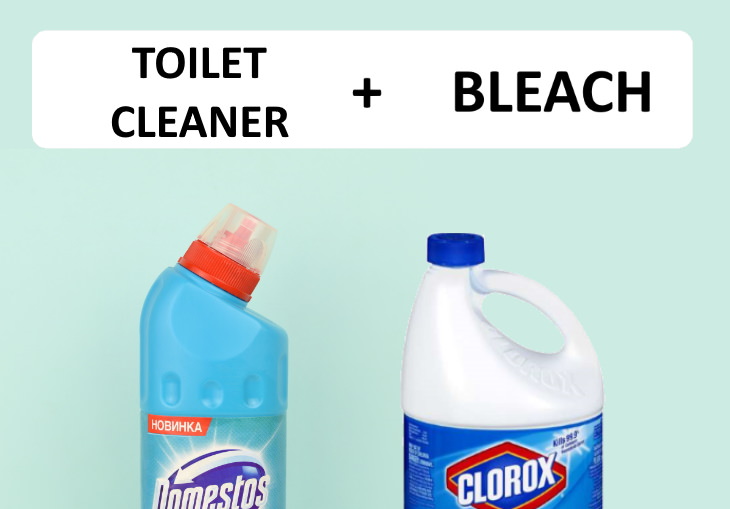
cleaning chemicals you should never mix Mixing Toilet Cleaner and Bleach
Although each toilet cleaning product has a different formula (depending on the brand), most of these products contain various types of alcohols and acids, which don't mix well with bleach. They can result in toxic fumes, which can be extremely dangerous to humans and animals alike. Thus, stick to one or the other, and never mix the two.
2. Mixing Ammonia and Bleach
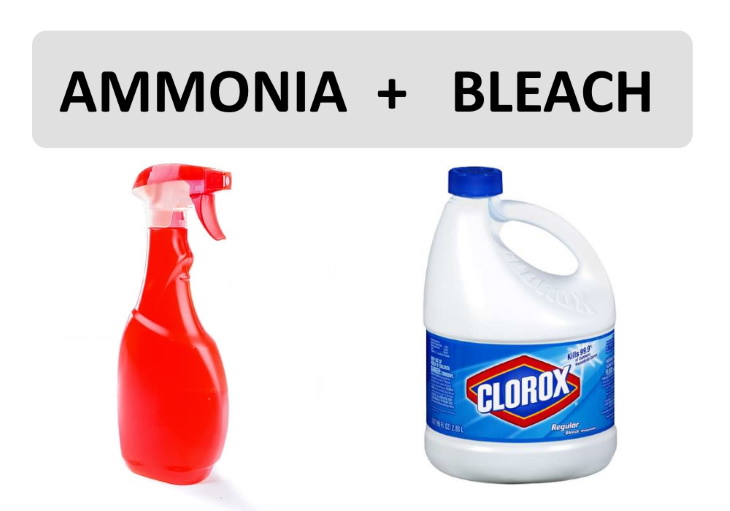
cleaning chemicals you should never mix ammonia and bleach
While most people don't casually keep ammonia in the cleaning cabinet these days, that doesn't mean you don't have products that contain the chemical in your home. In fact, it's very common, and a multitude of common cleaners, such as glass cleaners, bathroom cleaners, multi-surface cleaners, furniture polish, and stainless steel cleaners contain it. 
The problem is that ammonia and bleach mixed create chlorine gas - an incredibly toxic substance. Even in small concentrations, it can cause eye and skin irritation, but if you happen to inhale more of it, it can lead to permanent lung damage and can even be deadly. So, make sure you're not using any products that contain ammonia with bleach, ever.

3. Mixing Different Drain Cleaners

Drain cleaners are very highly concentrated, as their job is to get through all that gunk clogging up the drain, but like many other products, the active ingredients one brand uses will not necessarily be the same with those featured in another brand's drain cleaner. This is a problem, as many of these contain bleach, which is very reactive with other cleaning agents, as you already know. For your own safety, don't use two different types of drain cleaners together or immediately one after another. Better safe than sorry.

4. Mixing Rubbing Alcohol and Bleach
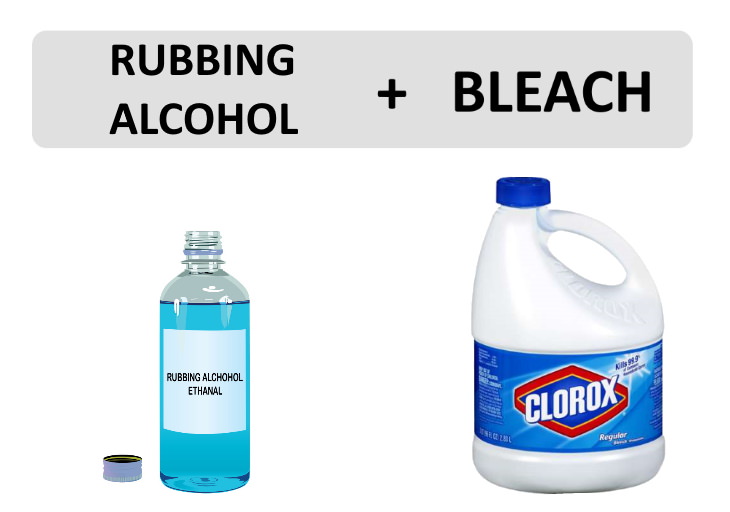
cleaning chemicals you should never mix Mixing Rubbing Alcohol and Bleach
Rubbing alcohol and bleach are probably the two ingredients we hear the most of lately, as both can destroy the virus we're trying to protect ourselves from. And while the two are effective when used separately, mixing the two together is extremely dangerous. 
When mixed, bleach and rubbing alcohol form two compounds - chloroform and chloroacetone, both extremely toxic and hazardous. Chloroform is a chemical that had been used to knock people unconscious in the past when inhaled, but it is now considered a carcinogen. The other one - chloroacetone - is essentially a type of tear gas. Neither of these chemicals is something you'd like to experience, trust us.
product that doesn't contain bleach but is advertised to whiten or remove stains, such as Lysol, OxiClean, as well as many detergents, tile cleaners, etc. 
When the two ingredients are combined, they yield peracetic acid - a corrosive ingredient that will eat through and break down any surface it touches, including the skin. Hence, be careful even with natural alternatives to cleaning, as many contain either vinegar or hydrogen peroxide.

7. Mixing Vinegar and Baking Soda
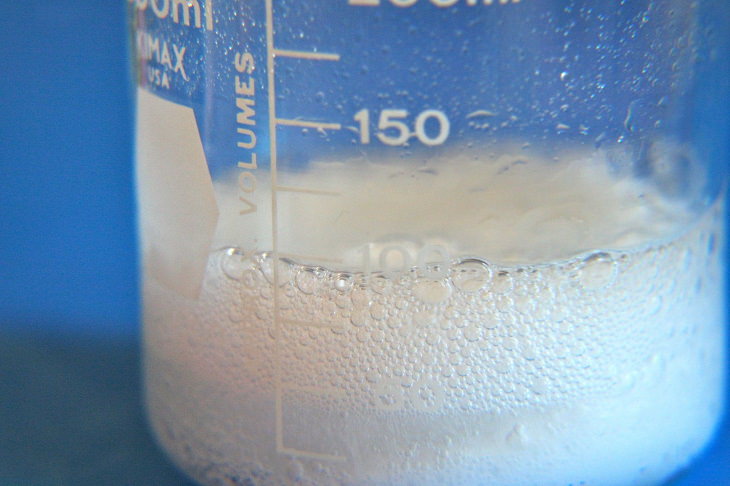
cleaning chemicals you should never mix vinegar and baking soda
While the fizzy substance created when you mix baking soda and vinegar - the natural cleaning staples - is not toxic, but you have to be careful with this mixture nevertheless. This is because the reaction of the two chemicals releases carbon dioxide in great quantities, and if you happen to mix the two in a closed container, it may cause an explosion. Thus, always mix these two in a bowl, to avoid damaging your home or suffering an injury.
 
This is only for your information, kindly take the advice of your doctor for medicines, exercises and so on.     

https://gscrochetdesigns.blogspot.com. one can see my crochet creations  
https://gseasyrecipes.blogspot.com. feel free to view for easy, simple and healthy recipes    
https://kneereplacement-stickclub.blogspot.com. for info on knee replacement


Labels: , , , , , , , , , , ,

Sunday, January 27, 2019

In Just One Minute You Can Check Your Health

It's important to monitor your ongoing health, but few of us actually do it. So, if a visit to the doctor is not something you need to do (assuming that you aren't suffering from anything serious) you can perform a health checkup without leaving your home. Here's what you need to do: 
 
easy health trick
1. Take a spoon and scrape it over the entire surface of your tongue, abundantly wetting it with saliva.
2. Put the spoon into a transparent plastic bag, then place it under a bright light source. It could be the sun or a desk lamp.
3. Then wait one minute, and check the spoon. 

If the spoon appears clean with no stains or any unpleasant odors, then you have no urgent problems with your internal organs.
If on the other hand, there is an odor, take note of the following: 
1. A putrefactive, strong smell indicates problems with the lungs or stomach.
2. A sweet smell indicates the possibility of diabetes.
3. A smell of ammonia shows problems with the kidneys.

If you notice any stains on the spoon, here's what you need to know:
1. White or yellow stains with a thick coating indicate thyroid gland dysfunction.
2. Purple stains indicate bronchitis, poor blood circulation, high cholesterol levels.
3. White stains indicate a respiratory infection.
4. Orange stains show kidney disease.

Always remember that the above information is for informational purposes only and should not replace a doctor's consultation. 

THIS IS ONLY FOR INFORMATION, ALWAYS CONSULT YOU PHYSICIAN BEFORE HAVING ANY PARTICULAR FOOD/ MEDICATION/EXERCISE/OTHER REMEDIES.                                    PS- THOSE INTERESTED IN RECIPES ARE FREE TO  VIEW MY BLOG-                                                                                           https://gseasyrecipes.blogspot.com/       
                                                                                                                                                                      FOR INFO ABOUT KNEE REPLACEMENT, YOU CAN VIEW MY BLOG-                                                  https:// kneereplacement-stickclub.blogspot.com/           
                                                                         
  FOR CROCHET DESIGNS                                                                                                                                                                                                  https://gscrochetdesigns.blogspot.com 
  

Labels: , , , , , , , , , , , , , , , ,

kidney stones- causes and how to get rid of them

Passing a kidney stone is one of the most painful things you can do - apart from childbirth.
Now a new study suggests that they’re becoming more common.
Part of the increase is down to the way doctors monitor stones - they used a CT scan rarely before, but the rise in the technology meant they found the stones easier.
It's not all down to the tests though.
Kidney stones can develop in anyone - and in one or both kidneys, but what actually causes them?
They're quite common, with about three in 20 men and up to two in 20 women developing them at some point.
Most often people aged 30 to 60 are affected by them.

Symptoms

Kidney stones, medically known as nephrolithiasis, cause severe pain, also known as renal colic.
Small stones can go undetected - but they can be passed out when you wee, according to the doctors. It's fairly common for a stone to block part of the urinary system.
If you're suffering from a blockage you'll have severe pain in the abdomen or groin - it can also sometimes cause a urinary tract infection (UTI).
Half the people who have had kidney stones will experience them again within five years of having them.
Look out for:
  • Ache in your lower back, sometimes in the groin - men can have a pain in their testicles and scrotum
  • Periods of intense pain in the back or side of your abdomen
  • Feeling restless and unable to lie still
  • Nausea
  • Needing to urinate more
  • Pain when you urinate
  • Blood in your urine

What causes kidney stones?

Waste products in the blood can occasionally form crystals that collect inside the kidney.
Over time they build up and form hard stone-like lumps.
If you don't drink enough fluids it's more likely to happen. If you're taking some types of medication or if you have a condition that raises levels of certain substances in your urine it can also raise the risk.
The rise in kidney stones - mostly calcium stones - is also down to a change in diet. Stones are helped along by diets high in fat, sugar and salt.
Race also played a factor in the findings. Nearly 90 per cent of kidney stones happen in white people.

What causes kidney stones:
  • calcium
  • ammonia
  • uric acid – a waste product produced when the body breaks down food to use as energy
  • cysteine – an amino acid that helps to build protein
People who have the following are likely to get recurring kidney stones:
  • eat a high-protein, low-fibre diet
  • are inactive or bed-bound
  • have a family history of kidney stones
  • have had several kidney or urinary infections
  • have had a kidney stone before, particularly if it was before you were 25
  • have only one fully working kidney
  • have had an intestinal bypass
Medication that makes it more likely
  • aspirin
  • antacids
  • diuretics (used to reduce fluid build-up)
  • certain antibiotics
  • certain antiretroviral medication (used to treat HIV)
  • certain anti-epileptic medication

How to get rid of them

Smaller stones will pass when you go to the toilet in your urine.
Larger stones may need breaking up. Doctors use an ultrasound or laser energy to do this, but sometimes keyhole surgery is needed to remove the very large stones.

What to eat?
If your stone is caused by too much calcium you need to reduce the amount of oxalates in your diet.
They prevent calcium being absorbed into your body.

 Foods that contain oxalates are:
  • Beetroot
  • Asparagus
  • Rhubarb
  • Leeks
  • Chocolate
  • Berries
  • Parsley
  • Celery
  • Almonds, peanuts and cashew nuts
  • Soy products
  • Grains, such as oatmeal, wheat germ and wholewheat
Always check with your doctor before you change your diet.

How to avoid them

Drink plenty of water everyday. A good test is to check if your urine is diluted (clear) to prevent waste products forming into kidney stones.

Types of Stones

Calcium Stones
They if there's too much calcium in the urine. They're usually either large and smooth or spiky and rough.

Struvite Stones
Often caused by infections and most commonly occur after a urinary tract infection.
More common in women than men.

Uric acid stones
They can form if there's a large amount of acid in your urine. If you have a high-protein diet or a condition like gout.

Cystine stones

 Rarest type of kidney stone. It's caused by an inherited condition called cystinuria.

THIS IS ONLY FOR INFORMATION, ALWAYS CONSULT YOU PHYSICIAN BEFORE HAVING ANY PARTICULAR FOOD/ MEDICATION/EXERCISE/OTHER REMEDIES.                                    PS- THOSE INTERESTED IN RECIPES ARE FREE TO  VIEW MY BLOG-                                                                                           https://gseasyrecipes.blogspot.com/       
                                                                                                                                                                      FOR INFO ABOUT KNEE REPLACEMENT, YOU CAN VIEW MY BLOG-                                                  https:// kneereplacement-stickclub.blogspot.com/           
                                                                         
  FOR CROCHET DESIGNS                                                                                                                                                                                                  https://gscrochetdesigns.blogspot.com 
  

Labels: , , , , , , , , , , , , ,

Thursday, August 30, 2018

Never Mix These Household Products!

 Just as home can offer safety, it can also include lots of hazards we have to be careful of. Many accidents happen in the home but most can be avoided if we just know what not to do. If you avoid these 13 combinations, you’ll save yourself time and money - not to mention a hospital visit - dealing with the consequences.
1. Different battery brands
Mixing batteries from different brands can lead to them leaking battery acid. The reason is that manufacturers use different chemical compositions for their batteries, which produce different levels of current. When one runs out of juice, the other can still keep running, but this causes it to leak, eventually damaging electronic devices and creating a health hazard.
2. Rubbing alcohol and bleach
Rubbing alcohol contains ethanol or isopropyl alcohol, which, when mixed with household bleach containing sodium hypochlorite, will create chloroform and hydrochloric acid, as well as chloroacetone or dichloroacetone. These compounds can cause damage to the nervous system, lungs, kidneys, liver, eyes, and skin. Also, high levels of chloroform can lead to dizziness, nausea, loss of consciousness and even death.
3. Ammonia and bleach
This combination is also very dangerous, producing vapors that can cause severe damage to your respiratory system. And that’s not the worst thing that can happen – if there are large amounts of ammonia, you might create a substance called liquid hydrazine. Liquid hydrazine is highly toxic and potentially even explosive.
4. Vinegar and bleach
If you add a weak acid to bleach, it creates vapors of toxic chloramine and chlorine. These vapors can cause serious chemical burns to your eyes and lungs.
5. Vinegar and baking soda
Vinegar is an acid and baking soda is a base – these two cancel each other out, rendering the resulting solution useless. This one isn't dangerous, it's just a waste of useful materials.
6. Vinegar and hydrogen peroxide
Combining these two products in the same container will create a corrosive peracetic acid. In high enough concentrations, peracetic acid can irritate and even damage your skin, eyes, throat, nose, and lungs.
7. Grapefruit and certain medicines
Compounds in grapefruits interfere with enzymes in the stomach, which are in charge of metabolizing certain types of medicine. This ends up increasing the level of certain chemicals in the blood and can lead to a deadly overdose.
8. Alcohol and Ibuprofen
Taking ibuprofen on an empty stomach can damage the stomach lining. Adding alcohol into the mix stimulates this process and can worsen the effect. Damage to the lining can lead to internal bleeding, ulcers and other stomach problems that can become chronic.
9. Alcohol and acetaminophen
Chronic consumption of alcohol causes the body to produce certain enzymes that adversely interact with acetaminophen. The reaction can damage the liver and can even be lethal. In the U.S. alone, over 200 people die every year due to this deadly combination.
10. Dairy and antibiotics
Dairy is rich in calcium, and while it may be good for your bones, its interaction with antibiotics is anything but. Calcium prevents the antibiotics from being absorbed into your body, reducing their effectiveness. Antibiotics that are most affected by dairy are ciprofloxacin, levofloxacin and tetracycline.
11. Milk and energy drinks
The acid in energy drinks mixes with proteins in the milk, causing the milk to curdle very quickly. The result is usually projectile vomiting.
12. Retinol and glycolic acid or alpha hydroxy acid
Both of these skincare products may help you look younger, but mixing them together is a bad idea. Glycolic acid has a different level of pH than retinol, so when both are used, the glycolic acid becomes dominant, reducing the effectiveness of retinol considerably. It can also cause some skin irritation.
13. Retinol and sunlight
Recent evidence shows that retinol can become toxic when exposed to direct sunlight, and can increase your chances of getting a sunburn. It is recommended that you only use it at night, or if you choose to use it during the day – use sunscreen and avoid direct sunlight as much as possible.

THIS IS ONLY FOR INFORMATION, ALWAYS CONSULT YOU PHYSICIAN BEFORE HAVING ANY PARTICULAR FOOD/ MEDICATION/EXERCISE/OTHER REMEDIES.                                                                                                                                                                                                        PS- THOSE INTERESTED IN RECIPES ARE FREE TO  VIEW MY BLOG-                                                                                           https://gseasyrecipes.blogspot.com/  

FOR INFO ABOUT KNEE REPLACEMENT, YOU CAN VIEW MY BLOG-                                                                                        https:// kneereplacement-stickclub.blogspot.com/                              
FOR CROCHET DESIGNS                                                                                                                                                                                                                                 https://gscrochetdesigns.blogspot.com


Labels: , , , , , , , , , , , , , , , ,