Friday, August 08, 2025

43 Unheard Uses For Orange Peels

Most people love to eat citrus fruits from time to time, with oranges being a particular favorite. This means that your hands will certainly smell of orange rinds every once in a while, and a lot of peels will end up being thrown in the trash. This is a big shame, since there are loads of unique uses for orange rinds that you may not have thought of! Keep reading to discover 45 fantastic uses for orange peels.

Health Benefits 
 
1. Lowers Blood Pressure
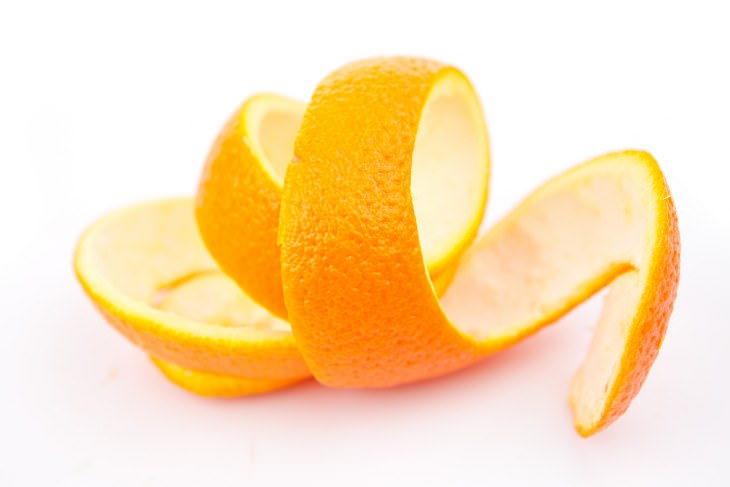
Orange Peel Uses and Tips: orange peel
Orange rinds can be used to lower blood pressure. They have been a part of Chinese herbal medicines for thousands of years for this purpose. 
 
2. Suppresses Depression and Anxiety 
 Orange oil can be used to naturally relieve anxiety and depression by taking a bath or rubbing just a bit on the temple and forehead area. 
 
3. Improves Heart Health 
Orange peel contains a compound called nobiletin, which has been found to lower a person's risk of inflammation and heart disease. 
 
4. Lowers Bad Cholesterol 
The nobiletin present in orange peel also exerts a positive influence on your health by lowering levels of LDL cholesterol (bad cholesterol) in the body. 
 
5. Aids in Weight Loss
Since orange peel is low in calories and high in fiber, it is very useful in preventing you from exceeding your recommended daily calorie intake. It also forms adipose tissue, which helps to prevent obesity. 
 
6. Eases Respiratory Issues 
Consuming orange peel results in your lungs being cleansed, since it helps to break down and expel any trapped phlegm. 
 
7. Protects You From Cancer 
 Research shows that eating orange peel can protect you from a number of different cancers including breast cancer, skin cancer, and colorectal cancer. 
 
8. Prevents Digestive Issues The non-soluble polysaccharides found in orange peel help prevent constipation, heartburn, nausea, and excess acid forming from in the stomach. 
 
9. Improves Oral Health 
Rub an orange peel against the inside of your mouth and teeth to freshen up your breath, whiten your teeth, and even reduce their sensitivity. 
 
10. Gets Rid of a Hangover 
 If you overdid it last night, you can ease today's struggle by mixing salt and orange peel in some boiling water for around 20 minutes. Once it cools, you should drink the whole concoction to help reduce the effects of your hangover.

Beauty Treatments & Applications 
 
11. Natural Skin Bleaching

The Vitamin C that orange peels contain helps to lighten dark spots and blemishes on the skin. Simply rub the skin right onto your skin or mash it into a paste instead.

12. Body Scrub 
 
Wrap up some orange peels in gauze pads and rub them on your skin while you are in the shower. The scrub will brighten your skin and give it a great smell. 
 
13. Bath Oil 
 
Extract the oil from the orange peels by grinding up the peels and fermenting them with vodka or alcohol for about 3 days. Strain the oil and add a few drops to your bath. Orange oil is known for its anti-inflammatory properties as well as its ability to improve skin tone and texture. 
 
14. Bath Powder 
You can also add orange peels to your bath in powder form instead. Simply dry out the orange peels completely and then grind them down to powder in the food processor, then sprinkle only a bit in your bath. 
 
15. Glowing Skin Application
To get skin that is glowing and healthy-looking, simply crush some orange peel powder, dried neem leaves, pomegranate peel and lemon juice, and mix it all together. When the concoction has set, simply rub it into your skin, and sit back and admire the results. 
 
16. Face Mask  
 
You can make an orange face mask by mixing equal proportions of milk and orange powder together until you've got a thick paste. When it's ready, apply it to your face and wash it off after about half an hour. This mask will remove dead skin cells and excess oil from your face. 
 
17. Hair Care 
Add crushed orange peel to some water and leave it there overnight. From the following day, you'll be able to add this mixture to your hair to help rid yourself of dandruff, while cleaning and conditioning your hair at the same time. 
 
18. Lip Balm 
To make orange peel lip balm, first, you'll need to add some almond oil, and an equal amount of sugar and orange peel powder to a bowl. Mix it together and let it set before applying to your lips. 
 
Cleaning Uses 
 
19. Citrus Cleaner
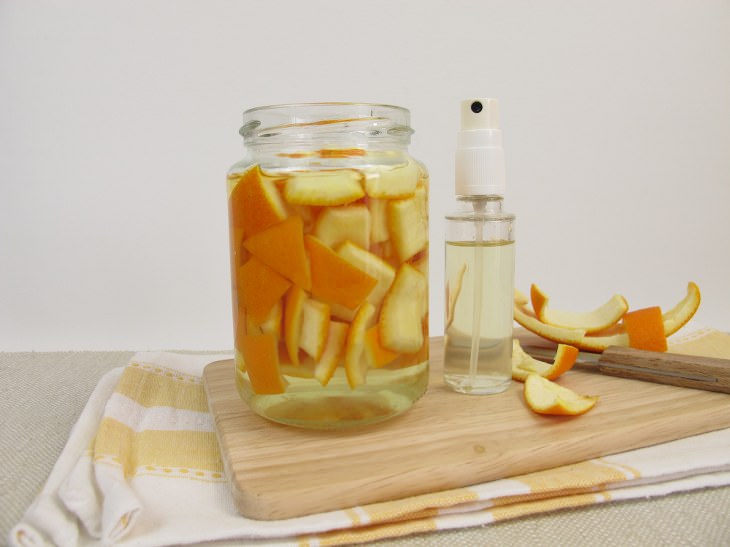
Orange Peels cleaning uses and tips: citrus cleaner

You can make your own citrus cleaner by infusing vinegar with orange peels and a bit of boiling water. Trust us, it works wonders!

20. Create a Natural Sponge 
Orange peels can be used as a sponge too! Before the peel completely dries out, it contains a number of essential oils that are helpful in degreasing surfaces as well as pots and pans. If your sink or counter is full of grease, use an orange peel to scrub it down. 
 
21. Deodorizer 
It's no secret that the smell of a freshly peeled orange can clear out a room. Place the peels at the bottom of your garbage bin, or hang them from a string in your bathroom for a constant fresh scent. 
 
22. Garbage Disposal Cleaner 
A great way to clean out your garbage disposal is by putting orange peels down the disposal. Place them in the disposal and run it until clear, then run some water down after it. The citrus will get rid of any scents coming from the disposal. 
 
23. Air Freshener
Boil orange peels in hot water to help freshen the air in the kitchen. You can also add a cinnamon stick or mint into the mix if you want to recreate the smell of air fresheners. If you have a fire going at home, place a paper bag filled with dried orange peels into the fire and your house will smell wonderful. 
 
24. Refrigerator Deodorizer 
Orange is also an excellent deodorizer for your refrigerator. Cut an orange in half and remove the fruit from the inside (eat it!). Then, fill up half the orange with salt and put it in a small bowl in your refrigerator for up to a week or two. 
 
25. Shine Wood  
You can use the white underside of an orange peel to breathe new life into dull-looking wooden furniture. Simply rub it onto any wooden surface, and give it a rinse with a damp cloth when you're done. 
 
26. Freshen Up Smelly Shoes 
Place some dry orange peels into small sachets, and then place them into the worst offenders on your shoe rack. The peel will absorb the odors naturally, making your life more pleasant and fragrant!

DIY Projects 
 
27. Orange Peel Candle
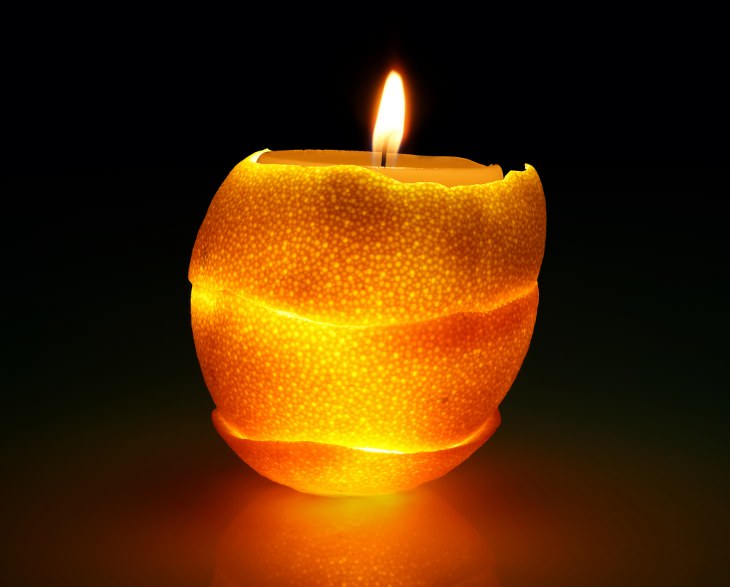
Orange Peel Uses and Tips: orange peel candle

Make a candle at home with orange peels infused inside. Simply add finely shredded pieces of orange peel to the wax and other ingredients to make your home smell fresh and fruity! 
 
28. Topiary Tree 
Make your own topiary tree with orange peels for a fantastic smelling piece of home decor. With enough effort, it will look amazing, too!

29. Make a Bird Feeder  
To make a natural bird feeder that birds will love, cut an orange in half and remove the fruit. Take the orange half and poke 3 evenly spaced holes near the cut section of the peel. There, attach a sturdy piece of string and hang it from a tree. Fill the empty orange peel with birdseed and wait for your flying visitors to pile in! 
 
30. Orange Peel Boats  
Here's an idea that kids will certainly love! Cut an orange in half, remove the fruit and use the halves as little boats in the bathtub or out on the lake! 
 
31. Orange Peel Jewelry 
Make fragrant and fun jewelry with the little princesses you know, entirely out of orange peels! This activity is a perfect way to get kids to love fruit! 
 
Natural Repellents 
 
32. Mosquito Repellent

If you are looking for a natural way to repel mosquitos, take fresh orange peels and rub them all over your skin. The citrus smell will repel the mosquitos. 
 
33. Slug Repellent 
If you have a slug problem in your garden, try spreading some orange peels on top of the soil to keep them at bay. 
 
34. Ant Repellent 
Place orange peels in problem areas of your house where you usually experience an ant problem. Orange oil can also be used instead of peels.

35. Keep Cats Away  
If you want to keep stray cats away from your home, place orange peels outside. If you have a cat at home that tends to get into things it shouldn't, you can rub the peels or place them (or rub orange oil) near the dear things in your home (like your sofa). 
 
Recipes & Cooking 
 
36. Orange Zest
This is probably the most self-explanatory of all the uses for orange peels. Zesting an orange peel with a zester is a great way to add a sweet and tangy taste to your meat marinades or favorite baked goods. Orange zest can even taste great in your morning cup of coffee or afternoon cup of tea! 
 
37. Make Orange Peels Dipped in Chocolate 
A wonderful delicacy, candied orange peels are a popular after-meal snack in a number of European cultures, and they are quite easy to make too! Just melt some chocolate and cover one or all sides in a sugared orange peel. 
 
38. Make Orange Peel Candy 
  Candied orange peels are made by boiling a dried orange peel in sugar for about an hour. You can then cover them in chocolate as mentioned above, or roll them around in sugar for an even sweeter taste! 
 
39. Orange Peel-Infused Olive Oil  
If you want to give your salads a kick, place one dried orange peel in your olive oil to make your greens all the more zesty and exciting! 
 
40. Make Orange Tea
No need for tea bags here! Dry out a few orange peels and place them in hot water next time you are craving a warm 'orangey' beverage. Orange tea is also great for when you are feeling congested - the citrus will open up your sinuses. Add cinnamon sticks and aniseed stars to give it a spicy kick! 
 
Other uses
 
41. Making Compost 
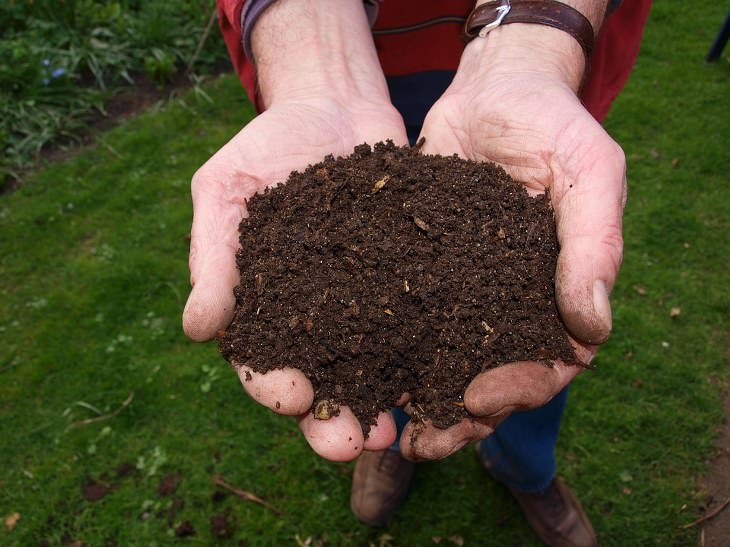
 Orange Peel Uses and Tips: farmer holding soil for compost
 
Orange peel is full of nitrogen and other potent nutrients, which is why it makes brilliant composting material. It will enrich your soil, making your gardening efforts as fruitful as can be! 
 
42. Start a Fire 
Oranges can also be used to start a fire! Use a dried orange peel as kindling the next time you are on a camping trip or use it to make your hearth fires fragrant and bright.

43. Preserve Brown Sugar  
Add your orange peels to brown sugar to help draw the moisture away and keep it from solidifying. This simple practice will save you a lot of money and frustration in the long run! 
 
 
Orange Peel's Nutritional Properties
Based on a 100g serving, here are the nutritional properties of a typical orange peel. The percentage of your recommended daily allowance (RDA) is represented in brackets: 
 
• Energy - 97 Kcal (5%) 
• Protein - 1.5g (3%) 
• Carbohydrates - 25g (19%) 
• Fat - 0.2g (1%) 
• Dietary Fiber - 10.6g (28%) 
• Cholesterol - 0mg (0%) 
• Potassium - 212mg (4%) 
• Sodium - 3mg (0%) 
• Zinc - 0.25mg (2%) 
• Calcium - 161mg (16%) 
• Copper - 92µg (10%) 
• Iron - 0.8mg (10%) 
• Selenium - 1µg (2%) 
• Magnesium - 22mg (5.5%) 
• Vitamin A - 420 IU (14%) 
• Vitamin C - 136mg (226%) 
• Vitamin E - 0.25mg (2%) 
• Thiamin - 0.12mg (10%) 
• Riboflavin - 0.09mg (7%) 
• Pyridoxine - 0.176 (13%) 
• Folates - 30mg (7.5%) 
• Niacin - 0.9mg (6%) 
 
General Tips & Advice

• When working with orange peel, you should usually wash, clean and dry it first. 
 
• Never store unpeeled oranges for an extended period of time. 
 
• Orange peels should not be stored in a refrigerator, but in a cool, dry place instead. 
 
• Always try and choose oranges that have thin skin for the best results. 


This is only for your information, kindly take the advice of your doctor for medicines, exercises and so on.   

Labels: , , , , , , , , , , , , ,

Thursday, July 09, 2020

6 Things You Should Never Do With Bleach

| Liquid bleach can be a safe and efficient cleaner and disinfectant when handled correctly, but can be rather harmful when not used properly. Though a staple in American homes for more than a century, many households appear to be unfamiliar with its potential dangers.

The Centers for Disease Control and Prevention (CDC) has reported a 20 percent increase in calls to poison control centers during the coronavirus outbreak presumably related to the misuse of household cleaning products as people sought to protect themselves from infection. A follow-up survey CDC conducted in May found 39 percent of Americans had engaged in at least one “high-risk practice” in the prior month to prevent the transmission of COVID-19, including gargling with diluted bleach.

Robert Laumbach, an associate professor at Rutgers University’s Environmental and Occupational Health Sciences Institute, says there are some misconceptions people have about liquid bleach including “thinking it has systemic antiviral properties if ingested,” or that diluting concentrated liquid bleach weakens its disinfecting ability.

Clorox, the maker of the oldest and most familiar brand of liquid bleach (active sodium hypochlorite or NaClO), say the best first step is to read and follow the instructions on the label. “To use bleach properly, read and follow the label carefully, as instructions may vary depending on the product,” a spokesperson for the company told AARP in an email exchange.
The U.S. Environmental Protection Agency (EPA) advises to check the label to see if the bleach is intended for disinfection, has a sodium hypochlorite concentration between 5 percent and 6 percent, and is not past its expiration date. “Some bleaches, such as those designed for safe use on colored clothing or for whitening, may not be suitable for disinfection.”


 Here are six things experts say you shouldn’t do with liquid bleach.

1. Don’t mix bleach with other cleaning products

Other than adding water, bleach should be used on its own. Mixing ammonia, vinegar, hydrogen peroxide, alcohol or other chemicals with sodium hypochlorite may cause chlorine gas to be released, a toxic chemical you don’t want to breathe in. 
In 2016, the American Association of Poison Control Centers reported over 6,300 exposures to chlorine, making it the most common inhalational irritant in the U.S. About 35 percent occurred as a result of mixing liquid bleach with other household cleaning products, according to Chlorine Gas Toxicity, a book cowritten by Ashkan Morim, M.D., and Gregory T. Guldner, M.D., of the University of California, Riverside.
Symptoms of chlorine gas exposure include burning of the throat, eye membranes, trachea and the bronchi that conduct air from the windpipe to the lungs, they wrote. Higher concentrations can cause narrowing of the airway, fluid in the lungs and other lung injuries. 

2. Don’t gargle or drink diluted bleach

Some people may think bleach can kill off viruses in the body, but that’s not so, according to Laumbach. Gargling or drinking bleach most likely would cause superficial burns in the esophagus. The CDC notes that adults attempting suicide by ingesting liquid bleach have shown that “a lethal dose” of sodium hypochlorite can vary from 7 to 18 ounces at concentrations of 3 percent to 12 percent.

3. Don’t bathe in bleach

Sure, you can swim in a chlorinated pool – but the concentration of bleach used to keep a pool clean is miniscule compared to the strength of household bleach. “It’s usually recommended to maintain 2-4 ppm (parts per million) free available chlorine in pool water. That’s more than 10,000-fold dilution compared to household bleach,” Laumbach says. Household bleach will irritate skin, and prolonged contact can damage skin, he says.

Wash your skin immediately if bleach gets on it, and do the same if it gets in your eyes, advises Clorox. The company also recommends wearing protective gloves, if you plan on cleaning with bleach for an extended period.

4. Don’t use bleach straight out of the bottle

Household bleach is no more effective in disinfecting at higher concentrations than at those recommended by the manufacturer, according to Laumbach. “You should dilute it to prevent irritation of skin, eyes and the respiratory tract. Higher concentrations are potentially harmful overkill.”
A spokesperson for Clorox echoes that advice: “As with any other bleach product, Clorox Bleach must be diluted.” To properly disinfect hard, nonporous surfaces, Clorox recommends you pre-wash the surface, mop or wipe with a diluted solution of liquid bleach (1/2 cup of Clorox Bleach per gallon of water), and allow the solution to sit on the surface for five minutes before rinsing it off. Also, make sure to use liquid bleach in a well-ventilated area to avoid inhaling harmful fumes.

5. Don’t use bleach to clean fruits and vegetables

The U.S. Food and Drug Administration (FDA) reassures consumers that “there is currently no evidence of human or animal food or food packaging being associated with transmission of the coronavirus that causes COVID-19.”
Instead, the FDA recommends consumers “rinse fresh fruits and vegetables under running tap water, including those with skins and rinds that are not eaten.” It also suggests washing the lids of canned food before opening to limit potential exposure to other food-borne illnesses.

6. Don’t soak your face mask in liquid bleach straight out of the bottle

“Soap and hot water will clean the mask and kill any coronavirus,” says Laumbach, who advises that bleach is not needed to disinfect a cloth face mask.

But, the CDC says it’s okay to hand wash a cloth mask in a diluted solution of bleach. They recommend 4 teaspoons household bleach per quart of room temperature water, soaking the mask for 5 minutes, and then thoroughly rinsing and drying it. Or, CDC says you can use the washing machine: “Use regular laundry detergent and the warmest appropriate water setting for the cloth used to make the face covering".
This is only for your information, kindly take the advice of your doctor for medicines, exercises and so on.     

https://gscrochetdesigns.blogspot.com. one can see my crochet creations  
https://gseasyrecipes.blogspot.com. feel free to view for easy, simple and healthy recipes    
https://kneereplacement-stickclub.blogspot.com. for info on knee replacement

Labels: , , , , , ,

Tuesday, May 05, 2020

Find Out the Truth about Some Well-Known Cleaning Myths

In the wake of the ongoing coronavirus pandemic, one of the most significant tasks people everywhere have undertaken is cleaning their homes. In fact, sanitizing homes has, perhaps, become the second most necessary duty of the common person in curbing the growth of this dangerous virus after hand-washing. What was once a chore has now turned into an important function of our everyday life at home.

While cleaning your home regularly is a very good habit, it is equally important at present to stay away from numerous so-called cleaning hacks and myths that have somehow perpetuated themselves in our society over the last many years. Here, we debunk some of the popular and common household cleaning myths you must be aware of.
 

Myth 1: Spraying surfaces with a disinfectant is enough
Many of us are using disinfectant sprays to sanitize different surfaces of our homes like door handles, switches, tables, etc. While this is a nice habit to have, it is also important to understand that merely spraying surfaces with disinfectants won’t be enough.

“Always follow the directions on the product’s label. Some solutions, like disinfectants, need a full 10 minutes to truly kill bacteria,” says Derek Christian, owner of My Maid Service, a home-cleaning service in Ohio and Texas.

Experts say that you must use soap and water to clean surfaces thoroughly. Another good option is using an alcohol- or bleach-based product which helps remove the ‘biofilms,' the cellular material left behind by human touch. Most disinfectant sprays are blocked by these biofilms from effectively penetrating the virus.
 

Myth 2: Newspaper works the best for cleaning glass
This has been a long-standing myth and many people still believe that using newspapers will give the window glass a streak-free shine. Initially, newspapers were much thicker than they are today and perhaps in those days they actually came in handy while cleaning glass. However, newspapers today are quite thin. So, a wet newspaper can tear easily and stick to your glass while cleaning, making it messy.

Also, the ink from the newspaper can shift to the mirror frames and window sills, and ultimately leave more stuff for you to clean. The better option would be to opt for a glass cleaner and a microfiber cloth instead.
 

Myth 3: Vinegar cleans everything
Vinegar is undoubtedly a wonderful cleaning agent and works well on walls, bathrooms, dishes, and as a fabric softener. However, there is a notion that vinegar can clean literally anything in the house. Is that really true?

While vinegar is good for getting rid of grime from certain surfaces in your home, it won’t work for every surface. Remember, acetic acid is vinegar’s primary ingredient and it has a low pH along with a high acidity level. Thus it can damage marble, natural stone, wax flooring, and wood surfaces like granite countertops and wood floors. Also, for the vinegar to be completely effective it has to be used at its full strength but most people put a capful in a bucket of water which dilutes its potency.
 

Myth 4: Using more detergent helps get your clothes cleaner
There is a general misconception that using more detergent would help you get your clothes cleaner. Surprisingly, however, when it comes to laundry detergent, less is actually more. Firstly, excessive suds damage a washing machine's pump and drain. Also, too many suds can resend soil into your clothes. Furthermore, as we keep using excess detergent, leftovers are formed inside the machine which can then lead to mold. Thus, be mindful that you don’t go overboard with your detergent.
 

Myth 5: Feather dusters are effective
They are soft and fluffy but do feather dusters actually get the job done? The truth, according to several cleanings pros, is that despite being used commonly, feather dusters end up spreading dust around and don’t hold it well either. A majority of household dust comes from tiny fabric fibers and skin flakes that settle on different surfaces in the house. A common feather duster isn’t able to hold them. You can’t also ignore the fact that these dusters do tend to drop many feathers as they grow old. This leaves you with more cleaning to do. Genuine ostrich-feather dusters do work well but they are pretty expensive.

The better alternative is to go for microfiber and lambswool dusters as they actually do pick up dust and hold onto it.
 

Myth 6: Polish wood regularly
A gleaming wood surface is nice to look at, undoubtedly. This is the reason many believe that all wooden furniture inside a home should be polished regularly or they may lose their shine. But is using regular furniture polish really good for our furniture? Experts don’t think so.

Some polishes, apparently, can actually harm wood finishes and attract dust while many others can darken the wooden surfaces after building up over time. If there is dust or litter on a wooden surface, you can wipe it down with a mildly wet cloth.

That being said, you can polish the wood in your house from time to time as it offers protection from sun, heat, and other damage. However, most wooden furniture sold in the market these days don’t need any polishing at all.
 

Myth 7: Handwashing dishes is better than using a dishwasher
If you think you are saving money by hand washing your dishes rather than using a dishwasher, you are actually mistaken. There is a prevailing myth that washing dishes by hand is cleaner and better for the environment. But studies have shown that modern automatic dishwashers use a considerably less amount of water than does hand-washing the dishes with soap and water. In fact, many tests have proven that you end up using five times as much water as a dishwasher uses when you do your dishes manually. Research has also shown that by using a dishwasher you can save 230 hours every year along with 5,000 gallons (18927 liters) of water and $40 dollars in energy costs.

Dishwashers have thus not only become far cheaper to run but they are also much more water and energy-efficient.
 

Myth 8: Bleach is the ultimate cleaner
"Bleach cleans absolutely everything” - this is what we have been made to believe for long. The reason for this belief is the heavy scent of bleach in the air which makes us feel that something is really clean. Surprisingly, though, while bleach is great for killing germs or laundry stains it doesn't really clean dirt and residue from surfaces. Bleach is actually a disinfectant, not a cleaner. So basically, bleach doesn't clean much.

Many use bleach in their bathroom to wipe down their toilets and bathtubs. It is usually done so that bleach can kill any germs on the surface. To remove the grit from your bathtub or a stain on a sink, bleach won’t be of much use and you would need an actual cleaning product for it like baking soda. 


Myth 9: Hairspray removes ink stains
This is one of those tricks that used to be true once upon a time but isn’t anymore. Hairsprays were once loaded with alcohol. This made them useful for getting rid of ink stains on the walls. However, most of the modern hairsprays are either alcohol-free or have lower levels of alcohol because it can dry out your hair. Also, hairspray can leave residue and stiffen fabrics and shouldn’t be used for cleaning purposes. Thus, the next time you find an ink stain on your wall or shirt, find an actual stain remover or opt for rubbing alcohol from your medicine cabinet. It is far less expensive than hairspray and doesn’t have any extra ingredients. 


Myth 10: Lemons can clean your garbage disposal
One of the common myths about garbage disposal is that lemon or lemon peels can actually clean it. Adding lemon to your garbage disposal may make it smell better for a few minutes but that doesn’t mean it will do any cleaning. The citric acid in lemon isn’t potent enough to disinfect or remove stale food from your garbage disposal. In fact, if you use it regularly, the metal inside can corrode over time. Additionally, the blades of your disposal have the risk of becoming dull as they attempt to cut up the lemon rind regularly. 

The safer and better option would be to use a combination of soap and water.

 
This is only for your information, kindly take the advice of your doctor for medicines, exercises and so on.     

https://gscrochetdesigns.blogspot.com. one can see my crochet creations  
https://gseasyrecipes.blogspot.com. feel free to view for easy, simple and healthy recipes    
https://kneereplacement-stickclub.blogspot.com. for info on knee replacement


Labels: , , , , , , , , , , , , , , ,