Saturday, October 25, 2025

Bukgur Is Great For Your Heart and Weight Loss
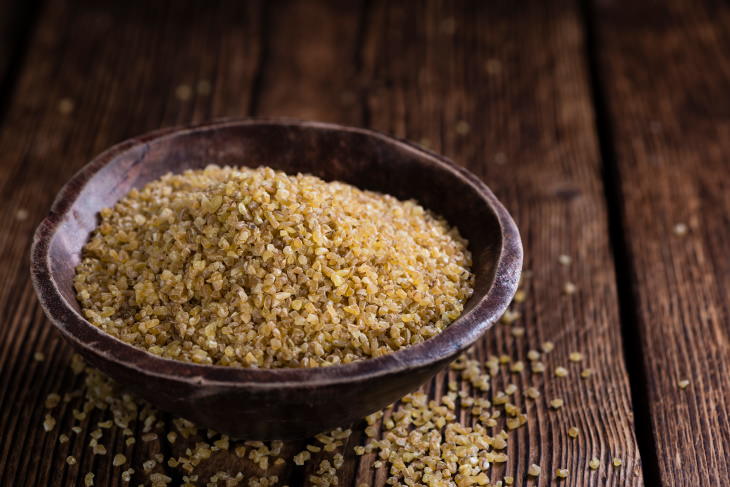
 Bulgur in a bowl 

Even though bulgur is a staple grain in Mediterranean and Middle Eastern cuisines, consumers who live outside of these geographical regions are often unfamiliar with this grain and how to use it. This is a real shame because bulgur is not only a super nutritious grain, but it is also much easier to prepare than other grains, such as rice and oatmeal. 

 
Bulgur is a low-glycemic whole food that can become a useful staple in your kitchen, and we’re here to tell you everything you need to know about the nutrition benefits and uses of this whole grain.

What is bulgur?

Bulgur is similar to cracked wheat. The raw base for bulgur is either durum wheat or another wheat variety. The entire wheat kernel - the germ, the endosperm, and the bran - is used to prepare bulgur, which means that it’s a whole grain and is superior to refined grains like white rice, quick oats, and white flour in terms of nutrition. 

Unlike cracked wheat, however, bulgur is partially steamed, or parboiled, and then cracked, so that it can be prepared quickly. Parboiling also enhances the flavor of this whole grain, giving it a pleasant nuttiness while also preserving a satisfying hearty texture. You can easily find bulgur in the grain aisle at any grocery store, and it’s relatively inexpensive.

The health benefits of Bulgur
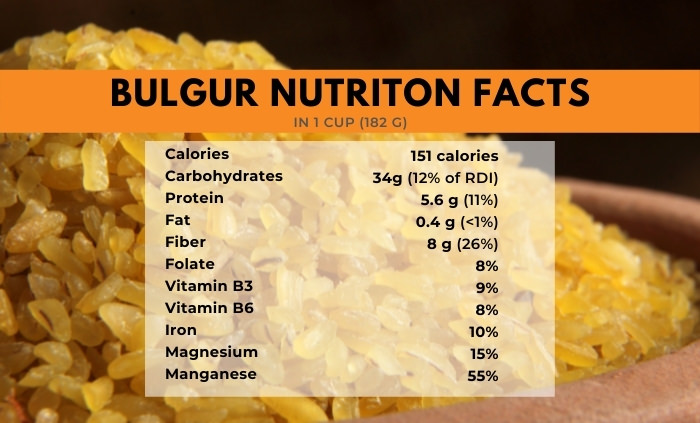
 Bulgur nutrition facts 

Since bulgur is a minimally processed grain, it’s significantly more nutrient-rich than refined products made of wheat, such as white flour, pasta, white bread, and the like. It’s also important to point out that bulgur is also lower in calories than other whole grains, namely brown rice or quinoa. 
 
Bulgur is an excellent source of fiber, with 1 cup of cooked bulgur containing 8 grams of dietary fiber. It’s also particularly rich in vitamins B3, B6, and B9 (folate), as well as magnesium, iron, and manganese (for more information, see the table above). Eating bulgur regularly is rewarding for one’s health, too. 
 
Nutrition experts outline the following health benefits associated with this whole grain:

Weight loss and improved digestion. 
 
The dietary fiber present in high quantities in bulgur, as well as its pleasant chewy texture, make it a very satisfying and filling food to eat. This means fewer food cravings. In addition, eating whole grains is known to promote the growth of healthy gut bacteria, which will improve your digestion and promote regular bowel movements.
Heart health. 
Eating primarily whole grains promotes long-term heart health and keeps that bad LDL (low-density lipoprotein) cholesterol level low. “Whole grains and dietary fiber can help lower total and LDL cholesterol, which reduces the risk of heart disease,” according to Danielle Gaffen, a registered nutritionist and dietitian. Studies point out that a diet rich in whole grains can reduce one’s risk of lifelong heart disease by as much as 20%. In these studies, the participants consumed between 3 and 7.5 servings of whole grains a day, which is about 90-225 g (3-8 oz).

Natural blood sugar control. 
Unlike refined grains, whole grains are what doctors call low-glycemic foods, which are foods that don’t raise blood sugar very quickly and reduce the blood sugar spike after a meal. In fact, research suggests that whole grains improve insulin sensitivity, which means that they’re good for reducing your risk of diabetes. Bulgur has plenty of fiber and phytonutrients, which are good for blood sugar control.
How to use bulgur in cuisine 
Bulgur originated in the Mediterranean thousands of years ago, and it remains a staple food in this region, as well as the Middle East. Bulgur is an extremely versatile ingredient that can be easily combined with other Mediterranean staple ingredients, such as seafood, beans, nuts, fresh herbs, olive oil, and tomatoes, to name just a few. The result is an array of delicious, filling, and healthy dishes.
Preparation.  
All you have to do to prepare bulgur is to add two parts of boiling water and let it steep under a lid for 15-20 minutes. Due to its versatility and easy preparation, you can prepare batches of bulgur and add them to salads or wraps to make them heartier, more filling, and richer in fiber. 

For Tabbouleh salad, kindly see my recipe blog, it is healthy, full of fiber, iron, protein, filling, heart healthy, aids weight loss.


This is only for your information, kindly take the advice of your doctor for medicines, exercises and so on.   


Labels: , , , , , , , , , , , , , , ,

Monday, November 04, 2024

The 13 Essential Vitamins

 Mealpro

The 13 essential vitamins are nutrients that your body needs but can't produce - or produces very little of. These 13 essential vitamins need to come other sources like food or supplements.

Vitamins are essential nutrients that help your body function at its best. They play an important role in regulating bodily functions such as your metabolism, digestion and immune system. A vitamin deficiency could result in health problems, so it’s important that you get your daily dose of these indispensable chemical compounds.

There are 13 essential vitamins and each one plays a unique and vital role in keeping your body healthy. Vitamins can be broken down into two categories.

Fat-soluble vitamins are the likes of vitamins A, D, E and K are stored in the body’s fatty tissues – there can be harmful effects of too little fat that will impair absorption of these vitamins.

Water-soluble vitamins are the B vitamins that include thiamine, niacin, riboflavin and folic acid. These must be replenished regularly because they are excreted in urine.

Vitamins aid in the growth, development and function of all the cells. Your body can’t produce most, or enough, vitamins on its own so we need to get them from outside sources. Although vitamins are available in supplement form and many people do take a daily multivitamin, the vitamins found in supplements are not as easily processed by the body. The best way to meet your daily vitamin intake needs is by eating a nutrient-dense diet.

If you can name all 13 essential vitamins—good for you! But if you’re stumped on the vitamins past A, and C— keep reading.

A list of the 13 Essential Vitamins and their functions

  • A: Promotes cell development, and healthy skin, hair, nails, gums, glands….

  • C: Strengthens blood vessel walls; promotes wound healing and iron absorption; supports the immune system.

  • D: Aids calcium absorption, and builds and maintains strong bones and teeth.

  • E: Protects fatty acids; maintains muscles and red blood cells; and serves as an important antioxidant.

  • K: Used by the body for proper blood clotting.

  • B1 – thiamine: Maintains a healthy metabolism. It also helps maintain normal digestion, appetite and proper nerve function.

  • B2 – riboflavin: Essential for energy metabolism. It also aids adrenal function, supports normal vision and helps maintain healthy skin.

  • B3 – niacin: Is used to metabolize energy and promote normal growth. In large doses, Vitamin B3 can also lower cholesterol.

  • B5 – pantothenic acid: Aids energy metabolism and normalizes blood sugar levels.

  • B6 – pyroxidine: Promotes protein metabolism, metabolism of carbohydrates and the release of energy. It also plays a role in proper nerve function and the synthesis of red blood cells.

  • B7 – biotin: Maintains a healthy metabolism.

  • B9 – folate: To make DNA, RNA, red blood cells, and synthesize certain amino acids. Vitamin B9 is also important for pregnant women, as it helps prevent birth defects.

  • B12 – cobalamin: Used to make red blood cells, DNA, RNA, and myelin for nerve fibers.

Vitamins Recommended Daily Intake For a Healthy Diet

Below is a table of the quantity of vitamins you need to take for optimal health. Ideally, the vitamins and essential minerals you ingest come from quality food sources, but supplements can help where you have deficiencies in your diet.

Vitamin

Daily Intake

A

Adult men should aim for 900 micrograms (mcg) per day. Adult women should aim for 700 mcg per day.

C

Adult women typically need 75 milligrams (mg); adult men need 90 mg.

D

Recommendations vary, but generally speaking, most adults should aim for 600 international units (IU) a day to increase their vitamin D levels.

E

Adults typically need 15 mg per day.

K

Adult women typically need 90 mcg per day; adult men need 120 mcg per day.

B1

Adult women typically need 1.1 mg per day, while adult men typically need 1.2 mg.

B2

Adult women typically need 1.1 mg, adult men typically need 1.3 mg.

B3

Adult women typically need 14 mg; adult men need 16 mg.

B5

Adults typically need 5 mg per day.

B6

Adults typically need 1.3 mg.

B7

Adults typically need 30 mcg.

B9

Adults typically need 400 mcg per day.

B12

Adults typically need 2.4 mcg per day.

What foods contain the 13 essential vitamins?

Below are some examples of foods that contain each of the 13 essential vitamins. This is not meant to be a comprehensive list but the most common ingredients are included below.

  • A: Beef, shrimp, fish, sweet potato, squash, spinach.

  • C: Bell peppers, Brussel sprouts, potatoes, citrus fruits such as oranges.

  • D: Fatty fish like salmon, mackerel, branzino, and tuna, cheese, egg yolk, mushrooms.

  • E: Leafy green vegetables, whole grains, nuts, vegetable oils.

  • K: Cabbage, liver, collards, sprouts, kale, eggs, milk.

  • B1 – thiamine: Pork, fish, legumes, soymilk, watermelons, ham.

  • B2 – riboflavin: Milk, eggs, yoghurt, cheese, meats, green leafy veggies, fortified cereals, whole grains like brown rice.

  • B3 – niacin: Meat, steak, poultry, fish, mushrooms, potatoes, peanut butter.

  • B5 – pantothenic acid: Egg yolk, avocado, broccoli, tomatoes.

  • B6 – pyroxidine: Tofu, soy products, poultry, fish, meat.

  • B7 – biotin: Organ meats (e.g. liver), whole grains, fish, egg yolk.

  • B9 – folate: Asparagus, okra, spinach, turnip, broccoli, orange juice, tomato juice, legumes like chickpeas.

  • B12 – cobalamin: Fortified cereals, meat, fortified soymilk, cheese, poultry, fish, milk.

For a balanced diet include some of the foods from the above list in your nutrition plan. This will ensure you consume the 13 essential vitamins.


This is only for your information, kindly take the advice of your doctor for medicines, exercises and so on.   

https://gscrochetdesigns.blogspot.com. one can see my crochet creations  
https://gseasyrecipes.blogspot.com. feel free to view for easy, simple and healthy recipes    
https://kneereplacement-stickclub.blogspot.com. for info on knee replacement
https://cancersupportindia.blogspot.com  for infor on cancer and health related topics
https://GSiyers home remedies.blogspot.com   is the latest addition to my blogs. I'm going to add posts there, do give me your valuable feed back on my blogs. Thanks a lot, take care, be healthy and be happy.

Labels: , , , , , , , , , , , ,

Sunday, January 26, 2020

These Nutrients Will Boost Your Brain Health

The brain is the most high-powered organ that we have and it requires the right amount and type of fuel to work properly. When we don’t give it the right fuel, it slows us down, decreases our focus, and makes us unhappy and demotivated.

If you want to maximize your brainpower to help increase your focus, think more clearly, and live a much happier and potentially longer life, then pay close attention as we’re about to give you the top nutrients that you need to maximize your brainpower and what foods to include in your diet in order to get them.

1. Omega-3
Enhance Your Mental Strength

Your brain is 60% fat, so if you want a healthy and optimally performing brain, you need to ensure that you’re giving your brain the right building blocks and fat is one of the most important. Fat has been vilified for decades, but in reality, high-quality fat is not only good for you, it’s essential for your brainpower and health.

Omega-3 is one of the most important fats to give your brain. In fact, not getting enough omega-3 in your diet can affect normal brain development and cognition. It has also been shown to be implicated in premature brain aging and cognitive decline.

Best sources: Chia seeds, walnuts, sardines, salmon, eggs, fish oil, and flaxseed.
ous system to the point that it has been called “Nature’s Natural Valium.” Magnesium is essential for hundreds of metabolic processes within the body and brain, yet it’s the second most common nutritional deficiency in the world.

2) Magnesium helps the brain by:

• Decreasing stress hormones
• Providing anti-inflammatory benefits
• Increasing neuroplasticity
• Helping to lift depression
• Reducing anxiety
• Relaxing the nervous system

Best sources: Spinach, almonds, avocado, black beans, and cashews.
 

3. Vitamin B1: Thiamine
Enhance Your Mental Strength

Many B vitamins are known to be beneficial for brain health and well-being. B1, also known as thiamine, is needed for a large number of metabolic processes in the body including the processes that manage your energy levels. Your brain uses a lot of energy throughout the day, so having low levels of thiamine can rob your brain of the vital energy that it requires.

Thiamine can help to boost your mood, energy, and alertness by providing the energy that your brain cells need to work effectively.

Low levels of thiamine have been associated with:

• Nerve inflammation
• Nerve damage
• Fatigue
• Confusion
• Irritability
• Loss of short-term memory

Best sources: Sunflower seeds, lentils, black beans, macadamia nuts, and seaweed.
 

4. Vitamin B6

Vitamin B6 helps to improve your mood, but it’s also needed to combat mental fatigue. B6 is a critical component when it comes to building the neurotransmitters serotonin and norepinephrine.

Serotonin helps to improve your mood while norepinephrine helps your brain to stay focused and alert.

Symptoms of B6 deficiency include:

• Loss of focus and concentration
• Fatigue
• Irritability
• Memory trouble
• Muscle pains

Best sources: Tuna, turkey breast, avocado, pistachios, and grass-fed beef.
 

5. Vitamin B9
Enhance Your Mental Strength

Vitamin B9, also known as folate, is especially important for normal brain development. It’s an important component in creating many neurotransmitters that the brain uses to communicate and regulate our immune system. Folate is also an antioxidant and studies have shown that it helps to preserve brain function and memory.

Low levels of folate can be very detrimental to the brain. A deficiency in folate has been shown to lead to increased degeneration in the cerebral cortex as well as cognitive impairment and decline.

Symptoms of low levels of folate include:

• Chronic fatigue
• A lowered immune system
• Increased irritability
• Anxiety
• Brain fog

Best sources: Broccoli, beef liver, spinach, romaine lettuce, and asparagus.
 

6. Vitamin B12

Vitamin B12 is essential for many aspects of our health and wellbeing. This includes building strong bones, skin, hair, nails, immune system, and heart health. B12 is also extremely important for your brain and mental well-being.

It’s essential for many aspects of mental performance including being able to memorize and stay focused. It also plays an important role in producing serotonin and dopamine (a motivation and reward neurotransmitter).

Having low levels of B12 can have some serious side effects such as:

• Memory loss
• Brain fog
• Anxiety
• Depression
• Confusion
• Hallucinations

Best sources: Wild salmon, eggs, sardines, beef liver, and nutritional yeast.
 

7. Vitamin C
Enhance Your Mental Strength

Your brain consumes a lot of energy and oxygen when it’s doing its job and antioxidant such as vitamin C help to protect the brain from any wear and tear. Vitamin C is also needed to produce important neurotransmitters such as serotonin, dopamine, and norepinephrine. These neurotransmitters are important regulators of your mood, so without adequate vitamin C to produce them, your mood may suffer.

Best sources: Citrus fruits, broccoli, bell peppers, spinach, and watermelon.
 

8. Vitamin D

Vitamin D, known as the sunshine vitamin, is arguably one of the most important vitamins that many of us miss out on. It’s usually associated with bone and heart health, but it has been shown that it also plays a critical role in your brain performance. Several studies have proven that low levels of vitamin D can impair cognitive function and performance.

Fewer people are getting out in the sun leading to more cases of vitamin D deficiency than ever before. The best part about vitamin D is that you can get it for free. Just a couple of minutes of natural sunlight each day can make a huge difference to your vitamin D levels.

Best sources: Natural sunlight or buy a vitamin D supplement.


9. Vitamin E
Enhance Your Mental Strength

This is a very powerful antioxidant. Oxidative stress is a metabolic process that causes wear and tear to our cells. Antioxidants help to fight against this wear and tear to keep our cells youthful and working their best.

Vitamin E is an often overlooked vitamin for brain health. It prevents oxidative stress from damaging important components of our brain cells. DHA forms the outer membrane of our brain cells and vitamin E works to prevent oxidative stress from damaging it, ensuring that our brain cells stay healthy and productive.

Symptoms of a vitamin E deficiency include:

• Cognitive impairment
• Balance issues
• Muscle weakness
• Diarrhea

Best sources: Kale, Swiss chard, almonds, olives, and parsley.


10. Zinc

Zinc is very important for neuron growth and performance. The highest concentration of zinc in our body is located in our brain, particularly in the hippocampus, the area of the brain involved in regulating your limbic system, the region that regulates emotions. Neurons need zinc in order to communicate effectively with one another.

Low levels of zinc are associated with:

• A lowered immune system
• Attention and focusing issues
• Diarrhea
• Acne
• Rashes

Best sources: Grass-fed beef, spinach, mushrooms, cashews, and pumpkin seeds.
 

This is only for your information, kindly take the advice of your doctor for medicines, exercises and so on.     
https://gscrochetdesigns.blogspot.com. one can see my crochet creations  
https://gseasyrecipes.blogspot.com. feel free to view for easy, simple and healthy recipes    
https://kneereplacement-stickclub.blogspot.com. for info on knee replacement
 

Labels: , , , , , , , , , , , , ,

Friday, April 05, 2019

8 Extremely Healthy Common Herbs & Spices

We all like to add herbs to our food. They can improve the taste and give a dish that extra little something it was missing. In addition to these great advantages, did you know that most herbs and spices also have amazing health benefits?
 
 
Chives
herbs-health
Low in calories (100 grams of it contain only 30 calories), chives are rich in dietary fiber, with 100 grams containing 7% of your daily intake. Chives are also rich in antioxidants, such as allicin, which is shown to reduce cholesterol production and has anti-fungal, anti-bacterial and anti-viral properties. Allicin also helps reduce blood pressure and helps prevent strokes, coronary artery disease, and peripheral vascular diseases.

Chives also contain vitamin A and antioxidants, such as carotenes, zea-xanthin, and lutein, which together offer the human body protection from lung and oral cancer. Furthermore, chives are one of the best sources for vitamin K in nature, which helps limit neuronal damage in the brain and is essential for the treatment of Alzheimer’s.

Packed with minerals such as copper, iron, manganese, zinc and calcium, these leafy greens contain several vital vitamins such as B-6, B-5, B-3, B-2, and B-1 in healthy proportions.

Cilantro
herbs-healthCilantro contains many antioxidants, essential oils, vitamins and dietary fibers that help reduce bad cholesterol (LDL) and raise good cholesterol (HDL). The leaves and seeds contain oils such as borneol, linalool, cineole, cymene, terpineol, dipentene, phellandrene, pinene, and terpinolene, and the stems are rich in polyphenolic flavonoids (such as quercetin, kaempferol, rhamnetin, and epigenin).

Cilantro is a good source of minerals like potassium, calcium, manganese, iron and magnesium, which help control heart rate and blood pressure. It is also rich in many vitamins like folic acid, B-2, B-3, vitamin A, beta-carotene and vitamin C (all are essential to your health). Some 100 grams of cilantro leaves provide you with 30% of the daily recommended levels of vitamin C (a powerful antioxidant).

Vitamin A is required for maintaining skin and mucous membrane health. It is also essential for vision, and like chives, cilantro is also rich in vitamin K.

Basil
herbs-health
Basil contains oils such as eugenol, citronellol, linalool, citral, limonene and terpineol, which have anti-inflammatory and anti-bacterial properties. Basil is very rich in beta-carotene, vitamin A, cryptoxanthin, lutein and zea-xanthin. These help protect against free radicals (that play a role in aging and various disease processes). Zea-xanthin was found to filter harmful UV rays and protect your eyes' retinas.

Basil contains a good amount of minerals like potassium, manganese, copper, and magnesium. All help to control heart rate and blood pressure. Basil leaves are an excellent source of iron - a component of hemoglobin inside your red blood cells.

Dill
herbs-health
Dill sprigs and seeds contain many essential oils (d-carvone, dillapiol, DHC, eugenol, limonene, terpinene and myristicin) and have been used as a local anesthetic and anti-septic. Dill was also found to reduce blood sugar levels in people with diabetes. Oil extracted from the seeds has anti-spasmodic, carminative, digestive, disinfectant and sedative properties, and is rich in B-9, B-2, B-3, vitamin A, beta-carotene and vitamin C.

Dill is a great source of minerals such as copper, potassium, calcium, manganese, iron, and magnesium. Copper is essential for many of the body's vital enzymes (like cytochrome c-oxidase and superoxide dismutase).

Zinc is an essential component in many enzymes that regulate the body's growth and development, sperm production, digestion and nucleic acid synthesis. Potassium is important for cell and body fluids that assist with controlling heart rate and blood pressure. Manganese is essential for the antioxidant enzyme, superoxide dismutase.


Thyme
herbs-health
Thyme has disease-preventing and health-promoting properties. It contains thymol, an essential oil, which has been found to have antiseptic and anti-fungal characteristics. Thyme contains flavonoid phenolic antioxidants, like zea-xanthin, lutein, pigenin, naringenin, luteolin, and thymonin.

Thyme leaves are one of the best sources of potassium, iron, calcium, manganese, magnesium, and selenium, and are a rich source of many important vitamins such as B-complex vitamins, beta-carotene, vitamin A, vitamin K, vitamin E, vitamin C and B-9.

Thyme provides about 27% of our recommended daily intake of vitamin-B-6 - a beneficial neurotransmitter for the brain, that helps with reducing stress. Fresh thyme is one of the richest in antioxidant among all herbs.

Turmeric
herbs-health
Turmeric has been in use since ancient times. Known for its anti-inflammatory, carminative and anti-microbial properties, it also contains essential oils such as termerone, curlone, curumene, cineole, and p-cymene. ​
Curcumin is the pigment that gives turmeric its orange color. Studies suggest that curcumin may have anti-tumor, anti-oxidant, anti-arthritic, anti-amyloid, anti-ischemic, and anti-inflammatory properties. Turmeric is rich in antioxidants and dietary fiber, which help control bad cholesterol levels.

Turmeric is a rich source of many vitamins such as B-6, choline, B-3, B-2 and more. B-6 is used in the treatment of CBS deficiency, anemia and even radiation sickness. B-3 helps prevent dermatitis, and B-2 helps the body convert carbohydrates into sugar, which in turn gives us energy.

Fresh turmeric root contains high levels of vitamin C, which helps the body develop immunity against infections and remove harmful free radicals. Turmeric also contains healthy amounts of minerals like calcium, iron, potassium, manganese, copper, zinc and magnesium.

Rosemary
herbs-health
Rosemary leaves contain certain phytochemicals that are known to have disease-preventing and health-promoting properties. The herb parts, (especially the flower tops) contain phenolic antioxidant rosmarinic acid, as well as numerous oils that are beneficial to human health, such as cineol, camphene, borneol, bornyl acetate, alpha-pinene, and more. These compounds are known to reduce irritations and inflammations, as well as for having anti-fungal, antihistaminic and antiseptic properties

Rosemary contains very good amounts of vitamin A, and is exceptionally rich in many B-complex groups of vitamins, such as B-9, B-5, B-6, and B-2. It also contains high levels of folates, which are important for DNA synthesis.

Fresh rosemary leaves are a good source of vitamin C, which is required for collagen synthesis in the body (collagen is required for maintaining the integrity of blood vessels, skin, organs, and bones). Regular consumption of foods rich in vitamin C protects the body from scurvy, boosts its immunity and helps clear it of free radicals.

Fresh or dried, rosemary is a rich source of minerals like potassium, calcium, iron, manganese, copper, and magnesium, and it is an excellent source of iron (a component of hemoglobin inside red blood cells, which determines the oxygen-carrying capacity of the blood).

Parsley
herbs-healthParsley contains essential oils like myristicin, limonene, eugenol, and alpha-thujene, as well as flavonoids, including apiin, apigenin, crisoeriol, and luteolin. Many of these (particularly myristicin) have been shown to inhibit the formation of tumors in the lungs.
​
Myristicin also activates the enzyme glutathione-S-transferase, which helps attach the molecule glutathione to oxidized molecules that can be very harmful to the body. The oils in parsley qualify it as a "chemoprotective" food, meaning it can help neutralize particular types of carcinogens.

The flavonoids in parsley (especially luteolin) function as antioxidants, halting the damage that free radicals cause to the body. Additionally, extracts from parsley will help increase antioxidant capacity in the blood.

Parsley is an excellent source of vitamin A and vitamin C, and is helpful with preventing recurrent ear infections and colds.

Beta-carotene (another important antioxidant in parsley), is known to reduce risk of the development and progression of certain conditions, such as diabetes, atherosclerosis and colon cancer. It may also help with reducing asthma attacks and some forms of arthritis.


THIS IS ONLY FOR INFORMATION, ALWAYS CONSULT YOU PHYSICIAN BEFORE HAVING ANY PARTICULAR FOOD/ MEDICATION/EXERCISE/OTHER REMEDIES.                                    PS- THOSE INTERESTED IN RECIPES ARE FREE TO  VIEW MY BLOG-                                                                                           https://gseasyrecipes.blogspot.com/                                                                                                                                                         FOR INFO ABOUT KNEE REPLACEMENT, YOU CAN VIEW MY BLOG-                                                  https:// kneereplacement-stickclub.blogspot.com/           

                   FOR CROCHET DESIGNS                                                                                                                                                                                                  https://gscrochetdesigns.blogspot.com


Labels: , , , , , , , , , , , , , , , , , , ,