Bukgur Is Great For Your Heart and Weight Loss
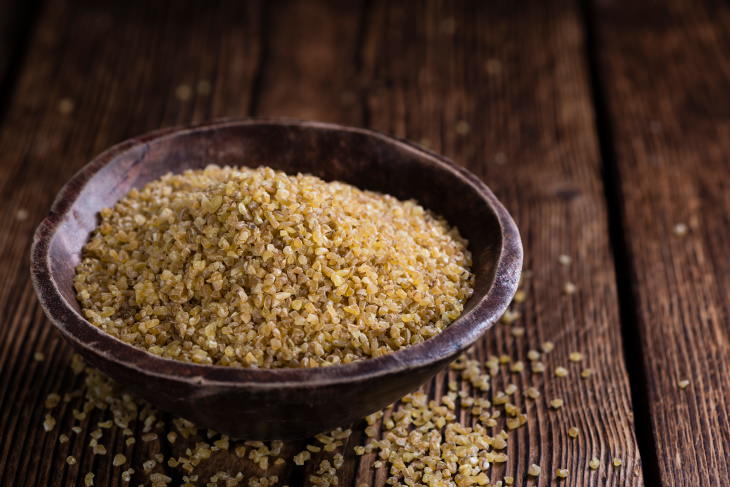
Even though bulgur is a staple grain in Mediterranean and Middle Eastern cuisines, consumers who live outside of these geographical regions are often unfamiliar with this grain and how to use it. This is a real shame because bulgur is not only a super nutritious grain, but it is also much easier to prepare than other grains, such as rice and oatmeal.
Bulgur is a low-glycemic whole food that can become a useful staple in
your kitchen, and we’re here to tell you everything you need to know
about the nutrition benefits and uses of this whole grain.
What is bulgur?
Bulgur is similar to cracked wheat. The raw
base for bulgur is either durum wheat or another wheat variety. The
entire wheat kernel - the germ, the endosperm, and the bran - is used to
prepare bulgur, which means that it’s a whole grain and is superior to
refined grains like white rice, quick oats, and white flour in terms of
nutrition.
Unlike cracked wheat, however, bulgur is
partially steamed, or parboiled, and then cracked, so that it can be
prepared quickly. Parboiling also enhances the flavor of this whole
grain, giving it a pleasant nuttiness while also preserving a satisfying
hearty texture. You can easily find bulgur in the grain aisle at any
grocery store, and it’s relatively inexpensive.
The health benefits of Bulgur
Since bulgur is a minimally processed
grain, it’s significantly more nutrient-rich than refined products made
of wheat, such as white flour, pasta, white bread, and the like. It’s
also important to point out that bulgur is also lower in calories than
other whole grains, namely brown rice or quinoa.
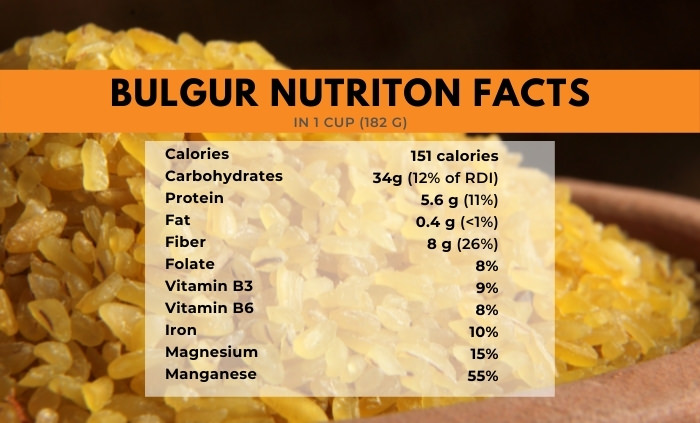
Bulgur is an excellent source of fiber, with 1 cup of cooked bulgur
containing 8 grams of dietary fiber. It’s also particularly rich in
vitamins B3, B6, and B9 (folate), as well as magnesium, iron, and
manganese (for more information, see the table above). Eating bulgur
regularly is rewarding for one’s health, too.
Nutrition experts outline the following health benefits associated with
this whole grain:
Weight loss and improved digestion.
The dietary fiber present in high quantities in bulgur, as well as its
pleasant chewy texture, make it a very satisfying and filling food to
eat. This means fewer food cravings. In addition, eating whole grains is
known to promote the growth of healthy gut bacteria, which will improve
your digestion and promote regular bowel movements.
Heart health.
Eating primarily whole grains promotes long-term heart health and keeps
that bad LDL (low-density lipoprotein) cholesterol level low. “Whole
grains and dietary fiber can help lower total and LDL cholesterol, which
reduces the risk of heart disease,” according to Danielle Gaffen, a
registered nutritionist and dietitian. Studies point out that a diet
rich in whole grains can reduce one’s risk of lifelong heart disease by
as much as 20%. In these studies, the participants consumed between 3
and 7.5 servings of whole grains a day, which is about 90-225 g (3-8
oz).
Natural blood sugar control.
Unlike refined grains, whole grains are what doctors call low-glycemic
foods, which are foods that don’t raise blood sugar very quickly and
reduce the blood sugar spike after a meal. In fact, research suggests
that whole grains improve insulin sensitivity, which means that they’re
good for reducing your risk of diabetes. Bulgur has plenty of fiber and
phytonutrients, which are good for blood sugar control.
How to use bulgur in cuisine
Bulgur originated in the Mediterranean thousands of years ago, and it
remains a staple food in this region, as well as the Middle East. Bulgur
is an extremely versatile ingredient that can be easily combined with
other Mediterranean staple ingredients, such as seafood, beans, nuts,
fresh herbs, olive oil, and tomatoes, to name just a few. The result is
an array of delicious, filling, and healthy dishes.
Preparation.
All you have to do to prepare
bulgur is to add two parts of boiling water and let it steep under a lid
for 15-20 minutes. Due to its versatility and easy preparation, you can
prepare batches of bulgur and add them to salads or wraps to make them
heartier, more filling, and richer in fiber.
For Tabbouleh salad, kindly see my recipe blog, it is healthy, full of fiber, iron, protein, filling, heart healthy, aids weight loss.
For Tabbouleh salad, kindly see my recipe blog, it is healthy, full of fiber, iron, protein, filling, heart healthy, aids weight loss.