Saturday, October 25, 2025

Bukgur Is Great For Your Heart and Weight Loss
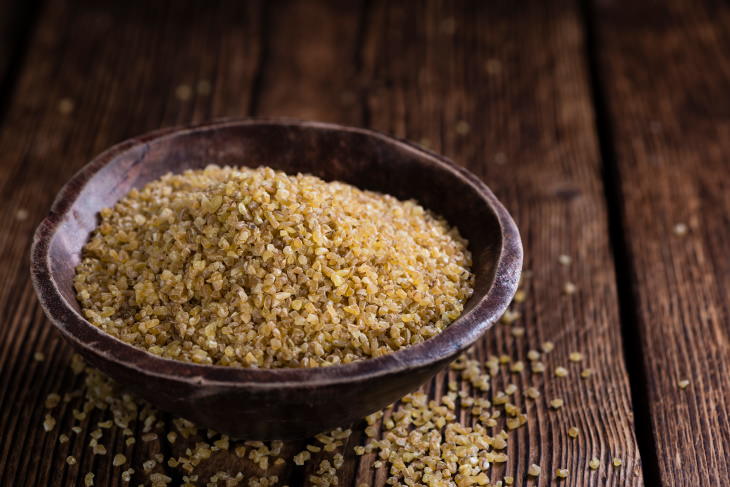
 Bulgur in a bowl 

Even though bulgur is a staple grain in Mediterranean and Middle Eastern cuisines, consumers who live outside of these geographical regions are often unfamiliar with this grain and how to use it. This is a real shame because bulgur is not only a super nutritious grain, but it is also much easier to prepare than other grains, such as rice and oatmeal. 

 
Bulgur is a low-glycemic whole food that can become a useful staple in your kitchen, and we’re here to tell you everything you need to know about the nutrition benefits and uses of this whole grain.

What is bulgur?

Bulgur is similar to cracked wheat. The raw base for bulgur is either durum wheat or another wheat variety. The entire wheat kernel - the germ, the endosperm, and the bran - is used to prepare bulgur, which means that it’s a whole grain and is superior to refined grains like white rice, quick oats, and white flour in terms of nutrition. 

Unlike cracked wheat, however, bulgur is partially steamed, or parboiled, and then cracked, so that it can be prepared quickly. Parboiling also enhances the flavor of this whole grain, giving it a pleasant nuttiness while also preserving a satisfying hearty texture. You can easily find bulgur in the grain aisle at any grocery store, and it’s relatively inexpensive.

The health benefits of Bulgur
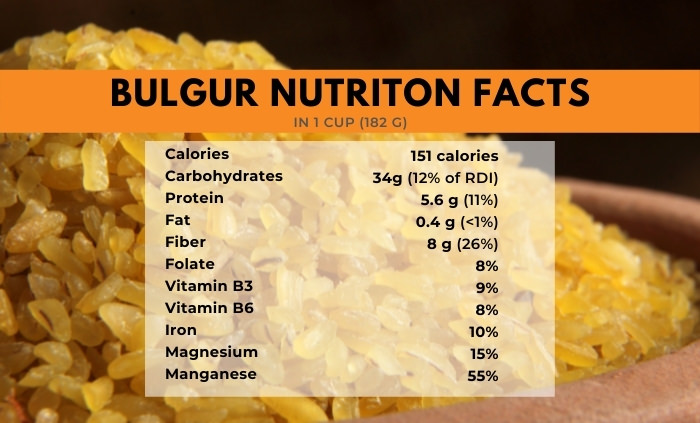
 Bulgur nutrition facts 

Since bulgur is a minimally processed grain, it’s significantly more nutrient-rich than refined products made of wheat, such as white flour, pasta, white bread, and the like. It’s also important to point out that bulgur is also lower in calories than other whole grains, namely brown rice or quinoa. 
 
Bulgur is an excellent source of fiber, with 1 cup of cooked bulgur containing 8 grams of dietary fiber. It’s also particularly rich in vitamins B3, B6, and B9 (folate), as well as magnesium, iron, and manganese (for more information, see the table above). Eating bulgur regularly is rewarding for one’s health, too. 
 
Nutrition experts outline the following health benefits associated with this whole grain:

Weight loss and improved digestion. 
 
The dietary fiber present in high quantities in bulgur, as well as its pleasant chewy texture, make it a very satisfying and filling food to eat. This means fewer food cravings. In addition, eating whole grains is known to promote the growth of healthy gut bacteria, which will improve your digestion and promote regular bowel movements.
Heart health. 
Eating primarily whole grains promotes long-term heart health and keeps that bad LDL (low-density lipoprotein) cholesterol level low. “Whole grains and dietary fiber can help lower total and LDL cholesterol, which reduces the risk of heart disease,” according to Danielle Gaffen, a registered nutritionist and dietitian. Studies point out that a diet rich in whole grains can reduce one’s risk of lifelong heart disease by as much as 20%. In these studies, the participants consumed between 3 and 7.5 servings of whole grains a day, which is about 90-225 g (3-8 oz).

Natural blood sugar control. 
Unlike refined grains, whole grains are what doctors call low-glycemic foods, which are foods that don’t raise blood sugar very quickly and reduce the blood sugar spike after a meal. In fact, research suggests that whole grains improve insulin sensitivity, which means that they’re good for reducing your risk of diabetes. Bulgur has plenty of fiber and phytonutrients, which are good for blood sugar control.
How to use bulgur in cuisine 
Bulgur originated in the Mediterranean thousands of years ago, and it remains a staple food in this region, as well as the Middle East. Bulgur is an extremely versatile ingredient that can be easily combined with other Mediterranean staple ingredients, such as seafood, beans, nuts, fresh herbs, olive oil, and tomatoes, to name just a few. The result is an array of delicious, filling, and healthy dishes.
Preparation.  
All you have to do to prepare bulgur is to add two parts of boiling water and let it steep under a lid for 15-20 minutes. Due to its versatility and easy preparation, you can prepare batches of bulgur and add them to salads or wraps to make them heartier, more filling, and richer in fiber. 

For Tabbouleh salad, kindly see my recipe blog, it is healthy, full of fiber, iron, protein, filling, heart healthy, aids weight loss.


This is only for your information, kindly take the advice of your doctor for medicines, exercises and so on.   


Labels: , , , , , , , , , , , , , , ,

Sunday, January 28, 2018

10 Mood-Boosting Nutrients

A diet that is lacking in key vitamins and nutrients could be to blame for bouts of bad moods. Below are some of the most important supplements for those dealing with the symptoms of anxiety, depression, stress, or other mood-sabotaging conditions:
 
1. Vitamin D
Depending on where you live in the world, vitamin D can be hard to come by. Three-quarters of many teens and adults living above the tropics, are deficient in this vitamin, most likely because their exposure to sunlight is limited – and the body can only make vitamin D when it is exposed to sunlight.
This nutrient is extremely important and plays a role in most bodily functions. Our brains contain a large number of vitamin D receptors, indicating that it plays a role in cognitive function. It’s recommended that everyone gets 20 minutes of sun exposure each day or 2,000 IU daily of vitamin D supplements.
Vitamin D can also be found in fatty fish, cheese, eggs, mushrooms, cereals, and soy milk.
2. Omega 3 fatty acids
Research supports the theory that omega-3 fatty acids play an important role in brain health, specifically when it comes down to improving symptoms of depression and cognitive functioning. One of the best ways to get more omega-3s in your diet is to eat fatty fish such as salmon, mackerel, and herring. If eating fish isn’t your thing, you can supplement with fish oil. You can also get omega-3s from nuts and seeds such as flax seeds, chia seed, walnuts, and almonds.
It’s recommended that we get at least 1,800 - 2,000 mg of two key kinds of omega 3s: DHA and EPA. If you’re taking omega-3 supplements, they should have at least 650 mg of DHA and 1200 mg of EPA.
3. Vitamin B6
This vitamin plays an important role in a wide array of bodily functions, both psychological and physical. It’s especially important for proper nerve functioning, which is one of the reasons that it’s often associated with neuropsychiatric disorders, including depression.
The birth control pill depletes B vitamins, especially B6, so supplementation is recommended for those who are on the pill. If you’re not on the pill, it’s recommended that you get around 25 mg of vitamin B6 each day. Seafood, lean meats, eggs, poultry, legumes, and soy products are great sources of this vitamin.
4. Vitamin B3
This vitamin is involved in the production of serotonin, a neurotransmitter that allows brain cells and other nervous system cells to communicate. Having too little serotonin has been linked to depression.
In other words, a deficiency in B3 can impair levels of serotonin and have a negative impact on your mood. Therefore, if you’re feeling depressed, it’s recommended to get a daily B3 dose of 20 mg, although you might need a higher dose if your depression is severe. This vitamin can be found in mushrooms, peanuts, poultry, fish, peas, potatoes, pasta, milk, and cheese.

5. Magnesium
Magnesium helps with muscle tension, relaxation, constipation, and also plays a key role in the production of brain hormones. Still, nearly half of American adults consume less than the required amount of magnesium.
Foods that are rich in magnesium include dried beans, nuts, dark leafy greens, and whole grains. However, you can also take a supplement of 320-450 mg each day.
6. Vitamin C
A lot of research has been done over the years that have found a link between vitamin C and mood, as well as cognitive functioning, especially in the elderly. These studies have shown a significant reduction in anxiety and depression when sufficient levels of vitamin C were taken, either in through diet or supplements. 
Since it’s a water-soluble vitamin and not stored by the body, it must be taken regularly to ensure that healthy levels are maintained. It’s recommended that we get a minimum of 100 mg per day and no more than 2,000 mg per day, since it can cause diarrhea.
Foods that are high in vitamin C include oranges, strawberries, Brussels sprouts, bell peppers, kiwis, broccoli, tomatoes, and parsley.
7. Vitamin B12
This vitamin helps to boost mood, energy, and depression, which is why many people with mood disorders such as depression are often deficient in it.
An estimated 15% of American adults are vitamin B12 deficient. To keep your vitamin B12 levels adequate enough, add sardines, beef liver, lamb, eggs, mackerel, feta cheese, and cottage cheese to your diet. If you’re a vegetarian or a vegan, you can get it in supplement form.
8. Folate
This vital nutrient, which goes by the name of folic acid or vitamin B9, helps the body to create new cells. This is why it’s extremely important for pregnant women to get their fair share of it. In fact, pregnant women experiencing a vitamin B9 deficiency are at risk of having a baby with neural tube defects such as anencephaly and spina bifida. Additionally, a deficiency in this nutrient can cause depression.
With your doctor’s permission, aim for around 400 mcg per day of folic acid. It can be found in leafy green vegetables, breads, citrus fruits, beans, rice, pastas, and cereal.
9. Iron
The biggest signs of iron deficiency are low energy, mood changes, and chronic fatigue. If these symptoms sound familiar to you, you might be one of the almost 10% of women or 2% of men who suffer from a deficiency.
The recommended daily amount of iron is 18mg for women of childbearing years and 25 mg for pregnant women. However, if iron supplements aren’t your thing, you can get this nutrient from animal protein, lentils, liver, spinach, soy foods, milk, and cereal.
10. Chromium
Humans require a very small amount of this metallic element, though anywhere from 25-50% of American adults are mildly deficient in it. Chromium helps to balance our blood sugar levels which, in turn, stabilizes our mood.
If you’re consuming chromium in a supplement it’s recommended that you get 200 mcg per day. However, it can also be found in animal proteins and potatoes.

THIS IS ONLY FOR INFORMATION, ALWAYS CONSULT YOU PHYSICIAN BEFORE HAVING ANY PARTICULAR FOOD/ MEDICATION/EXERCISE/OTHER REMEDIES.    
PS- THOSE INTERESTED IN RECIPES ARE FREE TO VIEW MY BLOG-                      
HTTP:GSEASYRECIPES.BLOGSPOT.COM/
FOR INFO ABOUT KNEE REPLACEMENT, YOU CAN VIEW MY BLOG-                                                        
HTTP://KNEE REPLACEMENT-STICK CLUB.BLOGSPOT.COM/
FOR CROCHET DESIGNS

HTTP://MY CROCHET CREATIONS.BLOGSPOT.COM

Labels: , , , , , , , , , , , , , , , , , ,