I'm an Associate Professor at The University of Reading in the UK.
Over the years, I've researched a wide range of topics, including
functional brain imaging, how we visually perceive the world and use
information from our senses to perform complex actions such as catching a
ball, and whether brain function can be influenced by what we eat. I'm
now bringing the broad scientific perspective I have developed by
working in these different areas to the question of whether dietary
interventions can improve mental health and wellbeing.
Regarding the inspiration for the current work, about five years ago,
I acted as a reviewer for a study that looked at the effects of eating
marmite (!) every day for a few weeks on visual processing. Remarkably,
the results of that study suggested that eating marmite had increased
the level of the inhibitory neurotransmitter GABA in the brain's visual
part, damping the level of neural activity slightly. But marmite
contains many different B vitamins as well as other ingredients that
could potentially explain this result, plus a lot of people don't like
the taste of marmite!
I wanted to find out which individual ingredients in the marmite were
driving the effect, and B6 and B12 were the most plausible candidates,
so I decided to team up with Innopure, who donated vitamin tablets, and
test them individually versus placebo. I added the measures of anxiety
and depression that were not in the marmite study because I reasoned
that if GABA levels were altered, then this could improve those
disorders because we know that decreased levels of GABA in the brain
occur in both of those conditions.
Despite both anxiety and depression being common mental health
conditions, our knowledge of their mechanisms is limited. Why is this?
My opinion is that the mechanisms underlying anxiety and depression
are relatively poorly understood because multiple different levels of
explanation are required to understand what causes them, and the
science, therefore, takes longer to work out. Let me explain what I
mean: some conditions have an entirely genetic cause, while others might
be caused entirely by exposure to a particular environmental factor
such as a chemical. But part of the explanation of anxiety and
depression is socioeconomic, part of the explanation is psychological,
and part is at the metabolic level.
To illustrate, there is convincing evidence that the increased
prevalence of anxiety and depression over the last few decades is due to
increased wealth inequality and income inequality produced by political
choices. For example, we can see that the increases in mental illness
are greater in more unequal countries. Yet, it is simultaneously true
that in the brain of each depressed or anxious person, there are changes
in the levels of neurotransmitters (signaling molecules), which play a
causal role at a different level to the socioeconomic causes. It is a
very hard scientific problem to work out the relationship between the
different levels of explanation that apply, and I'm not aware of anybody
really trying to do this.
Prior research has been conducted into various vitamins, as well as
marmite, and their effect on anxiety and depression. What makes your
study different?
One thing that makes my study different is that I examined the
effects of individual vitamins (both Vitamin B6 and Vitamin B12)
compared to a placebo. Previous studies have looked at the effects of
cocktails of vitamins, minerals, and sometimes other ingredients on
anxiety/stress/depression. Looking at the effect of individual vitamins
is more useful scientifically because as well as finding out about efficacy,
you also get more clues about mechanism; it is just really hard to
speculate about mechanism when you use a multivitamin or a food item.
Another thing that makes my study different is that as well as
measuring anxiety and depression because I hypothesized that the
underlying mechanism by which B6 might help these things might be
increased GABA, I also included in my study laboratory tasks that give
you a handle on whether GABA in the brain has changed; earlier studies
just measured the anxiety and depression.
My vision science background inspired the lab task I used to see if
GABA was changing: our effortless ability to ignore the background in a
visual scene and focus on what matters depends on inhibitory neurons
that use the neurotransmitter GABA, and this can be measured in the lab
as the strength of 'visual surround suppression'.
Your study focused specifically on vitamin B6. What types of food can this vitamin be commonly found?
Before answering this, it is important to make clear that we gave a
dose of Vitamin B6 that would be very hard to obtain from food sources
alone. It is also important to say that many foods contain Vitamin B6,
and outright deficiency is rare. (But an often ignored point in official
advice based on RDA and similar metrics is that the question of what
the optimum level of any given vitamin is not the same as the question
of the minimum intake for avoiding outright deficiency).
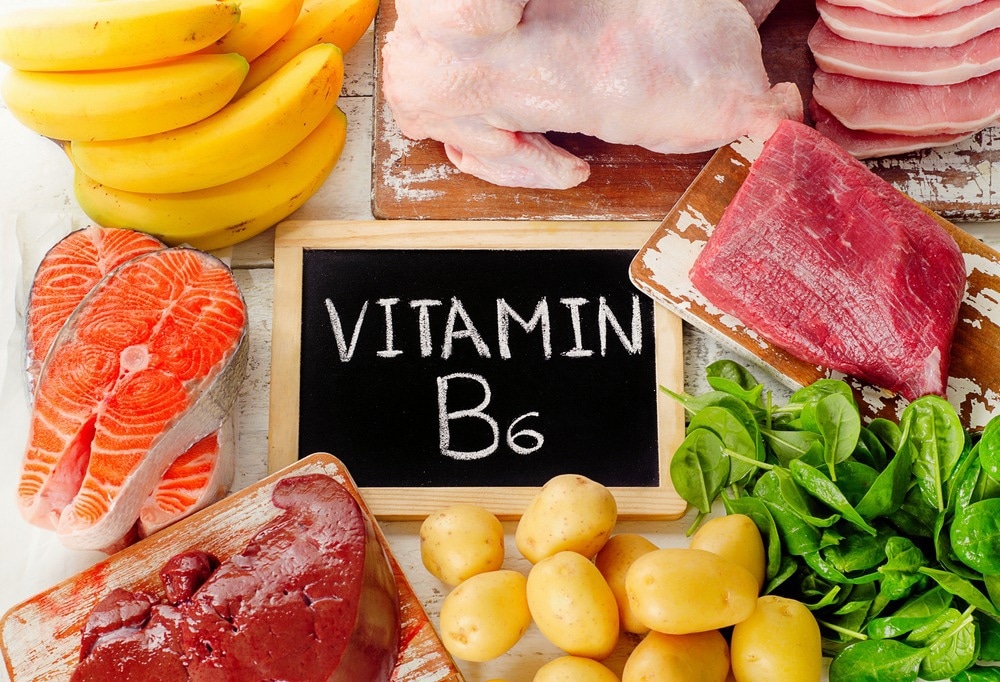
Foods high in B6 include chickpeas, liver, tuna, salmon, chicken,
fortified breakfast cereals, banana, turkey, and yeast-based spreads.
But there are many more.
By randomly allocating participants to three groups, we compared the
effects of taking a high dose of Vitamin B6 to that of a placebo or a
high dose of Vitamin B12. We used questionnaires and laboratory-based
tasks to measure the effects of these interventions. We found a
reduction in the average level of anxiety and a trend towards reduced
depression. Our lab tasks showed subtle changes in visual processing. It
is worth noting that our sample had a high (on average) level of
anxiety at baseline, while this was not the case for depression. It is
plausible to suggest that we were able to find the (on average)
reduction in anxiety due to the high baseline level.
Our evidence is most consistent with the following explanation,
although I would not consider this to be 100% proven as the causal
pathway yet: In the brain, neural excitation and neural inhibition are
constantly in competition with each other. Anxiety is associated with
reduced levels of inhibition and, more specifically, with reduced levels
of the inhibitory neurotransmitter GABA. You can think of GABA as
having a calming influence on the brain. Reducing neural inhibition in
anxiety allows excitatory neural activity to increase above normal
levels. Some recent theories also directly connect depression with
reduced GABA; furthermore, it is accepted that depression and anxiety
are highly connected conditions.
Vitamin B6 comes into the picture because it is a co-factor for a
metabolic pathway in the brain that converts the excitatory
neurotransmitter glutamate into the inhibitory (calming) GABA. By
increasing the quantity of the co-factor, we slightly speed up the rate
of this metabolic process, and so you end up with a bit more of the GABA
neurotransmitter and a bit less glutamate. The net effect of this is to
reduce the activity in the brain slightly.
Despite your study being small, it demonstrated the power of
nutrition-based interventions. What are some advantages of individuals
trying these interventions first instead of turning to medication?
There is currently no data comparing B6 supplements to other
treatments for anxiety and depression, so I can only answer this with
plausible speculations I'd like to test by collecting data. I guess the
reduction in anxiety achieved by taking a high dose of B6 is less than
would be obtained by a patient taking drugs such as SSRIs.
Furthermore, we don't know yet whether Vitamin B6 was effective for
most of our study participants or just for a subset; this is a general
limitation of studies like ours that analyze effects 'on average' in a
sample. To assess Vitamin B6 as a treatment for anxiety that a doctor
would consider diagnosing would require a large clinical trial to be
performed first.
One likely advantage of Vitamin B6 over things like SSRIs is far fewer side effects.
What further research is needed to be carried out before this could be a realistic choice for patients?
See above, a clinical trial. But also see below because I don't think
that taking B6 on its own will prove to be the most effective strategy.
It should be combined with other things.
What are the next steps for you and your research?
We have shown that taking a high dose of Vitamin B6 can influence the
balance of an important metabolic pathway in the brain, causing a small
reduction in anxiety in our participants. But the most important
implication can be seen by thinking beyond this to some other
micronutrients that (given our current understanding of metabolism)
might also influence other metabolic pathways relevant to calming the
brain. If those were also tested rigorously, we could move on to
assessing the combined effect of several such interventions – I am
hopeful that the combined effect could be clinically meaningful for
patients more than Vitamin B6 alone.
But to carry out the necessary program of scientific work and
clinical trials to implement the above proposal requires substantial
financial backing. Unfortunately, because you cannot patent the effects
of taking the high dose of a vitamin, mineral, or plant-derived
compound, the pharmaceutical industry can't make profits from funding
this research, and so that industry is incentivized to keep pushing
pharmacological solutions. This is a major problem, and the government
should look at what it can do to change this.
