Tuesday, October 14, 2025

Sattu vs Besan: Which Is Better For Weight Loss

 On a weight loss journey, choosing the right foods often matters more than what many realise. Protein happens to be the most recommended nutrient while losing weight. And two staples, known for their protein content, that pop up in Indian kitchens are sattu and besan. Both ingredients are made from gram/chickpea, are versatile, and deeply traditional. But are they equally good when your goal is to shed kilos? Sattu, the roasted chana (or barley) flour used in shakes, parathas, and cooling drinks, is often hailed as a “superfood.” Besan (gram flour) is finer and used widely in pakoras, chillas, soups, and sweets, and also packs nutrition. To really figure out which one helps more with weight loss, let's break it down.

What Is Sattu Made Of?

 Latest and Breaking News on NDTV 

 Sattu is a dry powder derived from roasted Bengal gram and serves as a key ingredient in a multitude of dishes. Recognised for its protein content and cooling properties, Sattu is a favoured choice for crafting refreshing sherbet during the scorching summer months. Some individuals also relish Sattu made from barley and wheat, often infused with black pepper for an added kick.

What is besan made up of?
 Latest and Breaking News on NDTV

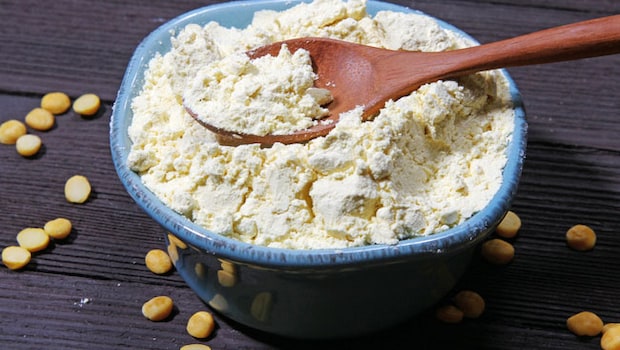
Besan is a fine powder derived from ground chickpeas and serves as a staple ingredient in a multitude of Indian dishes. It is known for its high protein content and versatility, and is a favoured choice for making an array of savoury delights. Some people also enjoy besan for its nutty flavour and texture, often utilising it in traditional recipes passed down through generations.

Sattu For Weight Loss | Can Sattu Help In Weight Loss

Sattu has many characteristics that make it a great option when it comes to dropping weight:

1. High Satiety

As per nutritionist Shweta J Panchal, one scoop of sattu gives you approximately 5-7g of protein. It is also high in fibre – 18 grams – as per 2025 research, which can help you keep full for longer and curb your urge to eat unhealthy snacks.

2. Low Glycaemic Impact

As per a 2021 research paper, sattu has a medium to low glycaemic index. Because it is roasted and often consumed in diluted forms (as drinks), blood sugar rises are slower.

3. Versatile

You can have it as sharbat, in parathas, laddoos, or even porridges. All these preparations can be made with minimal oil.

4. Nutrient Bonus

According to the same research paper, sattu brings along iron, magnesium, potassium, etc., which help in energy metabolism and overall well-being.

Besan For Weight Loss | Is Besan Good For Losing Weight

Besan, which is used extensively in Indian homes, also has plenty going for it in weight-loss diets:
1. Protein-Rich

As per the official website of the USDA, 100 grams of besan contains 22 grams of protein. It helps support muscle maintenance while cutting down calories.
2. Lower Fat Content

As per the USDA, besan is also lower in fat. So, when used properly, it can spread nutrition without excess fat.
3. Wide Culinary Use

From besan chillas, pakoras, to gravies, soups and even desserts, it is easy to incorporate besan into many recipes.
4. Digestibility

Finely ground besan is easier to digest for some, especially when besan batter is fermented (like in dhoklas) or combined with probiotics.


Sattu vs Besan: Which Works Better For Weight Loss? 

When it comes to weight loss, both sattu and besan work well on your body. However, choosing one of them depends entirely on your priorities:

1. Sattu: Choose sattu if you want maximum fibre, a longer feeling of fullness, and a cooling drink/snack during hot days.

2. Besan: Choose besan if you want more culinary variety, lighter texture options, and easier-to-digest recipes.

Honestly, it is best to alternate between the two to get the best of both worlds. You can use sattu for mid-meals or shakes, and besan for savoury dishes, lighter snacks, or breakfasts.

Common Mistakes That Can Ruin Your Weight Loss Goals

While both sattu and besan are great options for weight loss, some mistakes can ruin their weight loss potential.

1. Using too much oil or ghee in making sattu dishes or besan fritters.

2. Adding too much sugar or jaggery in sattu drinks, laddoos, etc.

3. Eating large portions because they are seen as “healthy food.”

4. Not balancing with protein from other sources or vegetables, which may diminish weight-loss effects.

So, choose sattu or besan for your weight loss journey as per your priorities and keep yourself fit and healthy!


This is only for your information, kindly take the advice of your doctor for medicines, exercises and so on.   


Labels: , , , , , ,

Saturday, April 11, 2020

How to Easily Maintain a Nutritious Diet in Lockdown

Social distancing and quarantines are causing us to reinvent many of our usual day-to-day habits and that includes nutrition. Dinner parties and restaurants are no longer an option, at least until further notice, and many of us finally have the time to experiment with cooking. Some may find it fun and others hard to get used to and that’s okay. Even the most enthusiastic cook may find themselves uninspired at times. We have collected a few tips from nutrition experts on how to survive quarantine preparing easy, healthy and satisfying meals at home.

1. Get Creative with Salads
Salads are a great lunch - they are easy to prepare and very nutritious. They can also be more filling than you may think. If you’re short on classic salad staples like tomatoes and cucumbers, or simply bored of them, this is the time to make use of what you already have, and don’t be afraid to experiment. Throw in different veggies, greens and even canned goods like chickpeas and beans and see how they interact. 


If you’re making a chicken or tuna salad, sliced apples or pears can really freshen it up. Check what forgotten condiments you have in the back of your kitchen. Balsamic vinegar, for example, can also be a wonderful addition to chicken or tuna based salads. More dressing ideas can be found here.

2. Oatmeal is More Versatile Than You Thought
Oatmeal doesn’t have to just be for breakfast. Cooking it in unsweetened milk and adding some savory toppings can easily make it into lunch or dinner. Mix in some olive oil, garlic and veggies like spinach and peppers, and you can top it all off with a sunny side up egg (see the full recipe here). Don’t forget to season it to your liking.
The upsides of Oatmeal are that it has a very long shelf-life and it is very high in fiber, both of which make it all the more valuable during quarantine.


3. Veggies Can Be Added to Literally Anything
Even if you’re making a simple dish like meatballs or pasta, and you’re not in the mood for big experiments, there is a way to make your meal more nutritious without fretting. Just add vegetables. You can pretty much toss in any vegetable you like to your pasta sauce or soup. Chopped carrots and squash, and cauliflower, for example, can add flavor and fiber to a meatloaf. Vegetables are much cheaper than most ingredients, and they can be frozen for longer shelf life.


4. Label Your Frozen Items

As mentioned more than once, freezing food items is a great way to make them last longer. Grain bread, fruits and vegetables, pre-cooked meals, chili, sauces, and even dairy and eggs - they can all be frozen and defrosted according to nutritionists. To not get mixed up, do label your items with dates. A tidy freezer can help you feel less stressed and more prepared.


5. Don’t Be Mad at Yourself for Getting Takeout
With much pressure piling up at this strange time, don’t be too hard on yourself. Don’t expect yourself to be always 100% prepared with your meal prep. If it’s accessible to you, treating yourself to takeout from a local business is perfectly valid. Not only do you get to enjoy ‘outside food,’ but you also help support a local business. 


This is only for your information, kindly take the advice of your doctor for medicines, exercises and so on.     

https://gscrochetdesigns.blogspot.com. one can see my crochet creations  
https://gseasyrecipes.blogspot.com. feel free to view for easy, simple and healthy recipes    
https://kneereplacement-stickclub.blogspot.com. for info on knee replacement

Labels: , , , , , , , , ,

Tuesday, November 05, 2019

10 Alternative Uses for Yogurt

A cup of yogurt each morning is a great way to start the day and reap its health benefits. But this versatile dairy product has a number of other uses too, some of which extend beyond eating and drinking it. In fact, yogurt can be used as an excellent skin and hair care product, primarily due to its mild astringent qualities and its high quantities of zinc and lactic acid - making it a great, natural, hydration treatment. Best of all, it's cheap!
Let's take a look at 10 surprising uses for yogurt, you most likely never considered:
 

1. Use yogurt to lower your cholesterol

People with borderline to moderate-high cholesterol levels, may benefit from eating yogurt with probiotic Lactobacillus Acidophilus, alongside a combination of the bacterium Enterococcus Faecium and Streptococcus Thermophilus. This type of yogurt is thought to lower LDL (bad) cholesterol. However, it does not raise HDL (good) cholesterol.
2. Use yogurt to enhance your immune system
Yogurt contains active cultures that enhance the body's immune system. It increases the production of gamma interferons, which play a key role in fighting allergies and viral infections. Studies conducted on yogurt also found that it can help prevent gastrointestinal infections.
3. Use yogurt to naturally whiten your teeth

Teeth whitening treatments are rather expensive, but why spend money when you can prepare a natural remedy with yogurt at home? Just rub some yogurt onto your teeth daily for a couple of weeks for sparkly white teeth. Yogurt is believed to work because of the phosphorus and calcium it contains.
4. Use yogurt to relieve sunburn
Yogurt is a fantastic source of zinc, which helps sooth the burning and itchiness of sunburn. To relieve the symptoms, apply a thick layer of plain, cool yogurt directly to your burn and rinse off with cold water after 20 minutes.
5. Use yogurt to relieve symptoms associated with diarrhea

Yogurt helps restore bacteria in the intestine, and can be used after taking antibiotics or to treat antibiotic-related diarrhea and acute diarrhea in children. In fact, a yogurt formula may be given as a replacement for milk formula in infants and young children to relieve persistent diarrhea.

6. Use yogurt as a replacement for cheese
The consistency of yogurt cheese is similar to cream cheese, but is lower in fat and contains healthy bacteria. Yogurt cheese can be used as a spread on bagels, toast and crackers and may be used as an alternative to cream cheese in cheesecake recipes.

Preparing yogurt cheese is pretty simple. Empty a pint of yogurt into a large, fine-meshed strainer to catch the liquid that drains from the yogurt. The texture will vary depending on how long it drains. Then cover and refrigerate for eight to 24 hours. This will make about one cup of yogurt cheese.
7. Use yogurt as a natural body scrub

Yogurt can be used as a scrub for your hands, feet or the whole body. Simply mix with oats or dried citrus peel. Massage the blend into your skin gently in a circular motion and rinse off with lukewarm water. Your skin should feel smooth and hydrated.
8. Use yogurt as a hair conditioner The properties found in yogurt make it an ideal remedy for smoothing the skin, but it's also great for your scalp and hair. Yogurt helps bring out your hair's natural shine making it soft and silky. It can be used as a hair mask instead of your conditioner. Just take some plain yogurt and rub it all over your hair, then rinse with lukewarm water. Yogurt will also help soothe an inflamed scalp, reduce hair loss and will help banish split ends.
 
9. Use yogurt to relieve canker sores
Canker sores, white and yellow sores which usually form on your gums, inside your mouth and on your lips can be very painful to bear. Using yogurt will help reduce the pain and heal the sores. You may choose to include it in your diet or apply it directly to the affected area.
10. Use yogurt to fight acne and prevent premature aging The natural antibacterial and anti-fungal properties found in yogurt can be used to get rid of pimples. Apply the yogurt to acne prone areas and let it sit for 30 minutes, then wash off with lukewarm water. The lactic acid found in yogurt helps dissolve dead skin and can be used to prevent wrinkles and fine lines as we age.

this is only for your information, kindly take the advice of your doctor for medicines, exercises and so on.     
https://gscrochetdesigns.blogspot.com. one can see my crochet creations  
https://gseasyrecipes.blogspot.com. feel free to view for easy, simple and healthy recipes    
https://kneereplacement-stickclub.blogspot.com. for info on knee replacement


Labels: , , , , , , , , , , , , , ,

Thursday, October 31, 2019

Flax Seeds Benefits: Different Health Perks Of The Crop

Flax is originally a fibre and food crop which grows in Asia, Europe and the Mediterranean. They are the golden yellow to reddish-brown seeds of flax which contain phytoestrogens as well as soluble fibre and oil. They are mostly rich in nutrients which provide various useful benefits to our body and health. They are also known to reduce undesirable fats in the blood and improve circulation. Here is the list of five most important health benefits of flaxseeds.

Health benefits of flaxseeds

1. High-quality protein
Flax seeds are often considered as a great source of plant-based protein which has various health benefits to the human body. They have a rich variety of amino acids and aspartic acid. It is proven to be good for our immune system. Flax seeds might be the answer to all your worries.

2. Digestive problems

Flaxseeds are known to be very effective for all digestive problems. They quickly heal mild digestive problems.  It includes bloating, gas, abdominal pain and nausea. It is best to start with small doses and work your way up to 1-2 tablespoons daily. You can also add it in your diet chart. They are also considered natural laxatives.

3. Versatile Ingredient

Flax seeds are often seen as a versatile ingredient. They can be also added to many of our day to day life food. Mixing them to yoghurt or dressing them on your salad can be a good idea. Adding them in fluids like water or to thicken your smoothies can also help your body to get cleansed.

4. Rich in nutrients

Flax seeds are an excellent source of nutrients. They contain a variety of nutrients that are helpful to our bodies. It has fibre, lignans and omega-3 fatty acids present inside them. They can reduce the level of free radicals inside our body and it can help us in better functioning.

this is only for your information, kindly take the advice of your doctor for medicines, exercises and so on.     
https://gscrochetdesigns.blogspot.com. one can see my crochet creations  
https://gseasyrecipes.blogspot.com. feel free to view for easy, simple and healthy recipes    
https://kneereplacement-stickclub.blogspot.com. for info on knee replacement


Labels: , , , , , , , ,

Wednesday, February 20, 2019

Benefits of Millets

Millets fade from memory, after agricultural revolution. Most people think that millets are for the poor, not knowing its true worth. Now, thanks to many knowing its true values has become an household name again. While quinoa is touted as the most healthy food, but to buy it will surely make a hole is some people's pockets. Compared to quinoa, millets cost almost 1/10th of its price, but equally comparable to quinoa, the rich western counterpart !

Millets are coarse grains and a repository of protein, fibre, vitamins and minerals. They include jowar (sorghum), ragi (finger millet), korra (foxtail millet), arke (kodo millet), sama (little millet), bajra (pearl millet), chena/barr (proso millet) and sanwa (barnyard millet). 

The practice of consuming millets as part of the daily diet is not new to India. “Millets had been the major staple food in central India, southern India and hilly regions of Uttarakhand for centuries till the time of the Green Revolution. After the advent of high-yielding varieties of rice and wheat during the 1970s, millets got sidelined from our food basket," says a researcher. The reason for this is lack of awareness about the nutritional benefits, the not-so-sumptuous taste and the tag of “a poor man’s food". “Also, government pushed only rice and wheat in the subsidized public distribution system, rendering the cultivation of millets uneconomical," he says. 

Globally, it found that over two billion children and adults suffer from health problems related to being overweight or obese. In such a scenario, gluten-free millets could prove to be an effective weapon, believes a nutritionist .

Children learn from their parents. If we eat healthy, they will also learn to eat healthy. Millets were part of our grandparents’ diet, it’s only in the past few decades that their consumption has reduced. We need to embrace the goodness of millets: Their high-fibre content helps in bowel movement and manages diabetes and obesity. Their high magnesium level is good for lowering blood pressure, while the potassium content keeps hypertension at bay," says the nutritionist.

Research validates the goodness of millets. In 2010, a study said that eating korra could help bring down blood glucose in diabetics. The same year, a research paper confirmed that all millets are rich sources of antioxidants, while another study in Nutrition Research concluded that millets may be useful in preventing cardiovascular disease.  
 
 
To make millets popular across India and revive traditional food habits, Bengaluru—regarded as the millet capital—hosted a three-day Organics and Millets National Trade Fair in April. An initiative of the Karnataka government, the fair saw farmers, traders, processors and exporters taking part. . “A stall of the state government read, ‘Let’s Millet,’ along with a tag-line, ‘Next generation smart food’, which really brought the message home. Not only are millets healthy, they are also farmer- and eco-friendly," she says. 

Compared to rice and wheat, millets need less water and chemicals,  he explains. “Besides, some millets can come up in marginal land and harsh weather conditions where no other crop can grow. Bajra, for instance, comes up well in the hot weather of Rajasthan. Little millet, foxtail millet and barnyard millet are known to assure minimum yield even in case of failure of the monsoon. So as global warming becomes an increasingly real phenomenon, millets can actually be a smart way of farming and eating," he says. 


It’s about grain diversity
However, this doesn’t mean that you give up wheat and rice and start eating millets. “Switching completely to millets is not a good idea. We don’t recommend eating a single grain. You need to mix it up depending on your health. If you are diabetic, for instance, you can have more of ragi instead of rice or wheat. Also, since many urban dwellers are not used to eating millets, suddenly shifting to them is not the best idea," says a researcher. 

You should slowly introduce any kind of millet in your diet to give some “adjusting time to your digestive system", suggests another expert. “Have it three-four times a week. You can have it as porridge, in roti or as whole grains in the form of rice or upma. Many people believe that millets shouldn’t be eaten in summer, which is not quite true. As with everything else, eating in moderation is the key (too much of millets can cause stomach ache, bloating and constipation)," he says , adding that you should buy unpolished millets. 

The right cooking technique and a good recipe can lift any ingredient, says an, executive chef. “It is easy to include millets in the diet as they are very versatile. We can have millet pancakes for breakfast, millets can be prepared like rice, substituted for potatoes when cooked with gravy, and even make a great addition to bread. Millets also make a great bed for roasted vegetables and stews," he says.

India was never a two-grain nation, he says. “Our grandparents ate all sorts of grains. We should eat everything in the right quantity, be it rice, wheat, ragi, jowar, bajra, even quinoa (if one wants to spend money)—because each one brings its share of goodness. The key to eating right lies in food diversity, not becoming a victim of a food fad."

THIS IS ONLY FOR INFORMATION, ALWAYS CONSULT YOU PHYSICIAN BEFORE HAVING ANY PARTICULAR FOOD/ MEDICATION/EXERCISE/OTHER REMEDIES.                                    PS- THOSE INTERESTED IN RECIPES ARE FREE TO  VIEW MY BLOG-                                                                                           https://gseasyrecipes.blogspot.com/                                                                                                                                                         FOR INFO ABOUT KNEE REPLACEMENT, YOU CAN VIEW MY BLOG-                                                  https:// kneereplacement-stickclub.blogspot.com/           

                                                                           FOR CROCHET DESIGNS                                                                                                                                                                                                  https://gscrochetdesigns.blogspot.com


Labels: , , , , , , , , , , , , ,