Thursday, December 30, 2021

Winter special parathas that you can eat when trying to shed kilos

Weight loss friendly paranthas
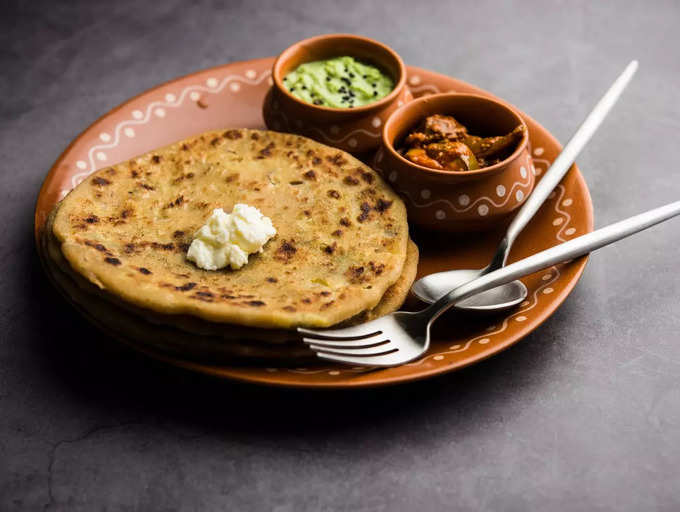
Winters are here and it is officially the season to hide underneath our blankets and sip warm coffee! As difficult as it is to get out of bed and work, it is an even more daunting task to find the motivation to work out or keep oneself fit through exercises. Not just this, winters are infamous for making us gain weight metabolism slows down. Cravings for calorie-rich and fattening foods like puris, parathas and sweets also increase, leading to weight gain. But we got news! We bring to you paranthas that are weight loss friendly and can help you lose the extra kilos if consumed properly. Read on to find out the paranthas and tips to follow to ensure weight loss.

Onion parantha

Onions are great for the skin as it is rich in collagen and copious amounts of vitamin C present in them help the body build strong immunity. Not just weight loss, but the onion parantha is also a storehouse of health and overall fitness.

​Palak/ Spinch  parantha

For a breakfast that is packed with nutrients, palak parantha is the perfect choice for you. Full of Vitamin B, E and K and micronutrients like potassium, calcium and magnesium, palak is a healthy choice. It is low on calories and will provide you with the nutrition you need. Its high glycaemic index also makes you feel fuller for longer and aids weight loss.
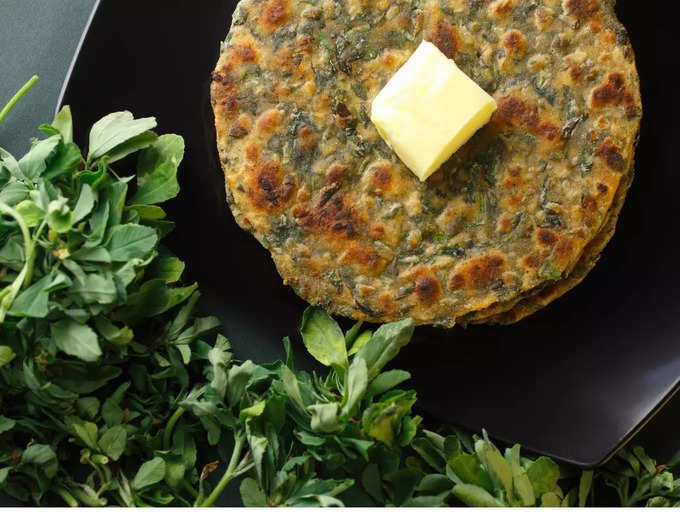
​Methi / Fenugreek leaves parantha

Methi is a seasonal boon that is replete with good quality fibre that helps the digestive system, aids weight loss and is beneficial for the skin and hair. The fibre has other benefits like keeping a check on the blood-glucose levels. It also contains anti-oxidants and anti-inflammatory elements that help the body get rid of any unnecessary harmful elements that may pose a potential threat to health or weight loss.

Stuffed-radish-parantha

Tips to ensure maximum benefits

Do not use too much ghee or oil while cooking the parathas. Applying a little ghee on top of the paratha once it is cooked can help achieve the taste and keep fat at bay.

Have the parantha with curd. Curd contains probiotics that help the metabolism. Curd is also an excellent fat burner and helps the digestive system.

Replacing your regular flour with multigrain flour that contains jawar, bajra and ragi can also help as these grains are a rich source of fibres that help you feel fuller for longer periods.

Whole wheat flour is an unhealthy option that can hamper your weight loss efforts. It is therefore advisable not to use it.

Adding spices will help with flavour and also aid digestion and metabolism.


This is only for your information, kindly take the advice of your doctor for medicines, exercises and so on.   

https://gscrochetdesigns.blogspot.com. one can see my crochet creations  
https://gseasyrecipes.blogspot.com. feel free to view for easy, simple and healthy recipes    
https://kneereplacement-stickclub.blogspot.com. for info on knee replacement

Labels: , , , , , , , , ,

Wednesday, February 20, 2019

Benefits of Millets

Millets fade from memory, after agricultural revolution. Most people think that millets are for the poor, not knowing its true worth. Now, thanks to many knowing its true values has become an household name again. While quinoa is touted as the most healthy food, but to buy it will surely make a hole is some people's pockets. Compared to quinoa, millets cost almost 1/10th of its price, but equally comparable to quinoa, the rich western counterpart !

Millets are coarse grains and a repository of protein, fibre, vitamins and minerals. They include jowar (sorghum), ragi (finger millet), korra (foxtail millet), arke (kodo millet), sama (little millet), bajra (pearl millet), chena/barr (proso millet) and sanwa (barnyard millet). 

The practice of consuming millets as part of the daily diet is not new to India. “Millets had been the major staple food in central India, southern India and hilly regions of Uttarakhand for centuries till the time of the Green Revolution. After the advent of high-yielding varieties of rice and wheat during the 1970s, millets got sidelined from our food basket," says a researcher. The reason for this is lack of awareness about the nutritional benefits, the not-so-sumptuous taste and the tag of “a poor man’s food". “Also, government pushed only rice and wheat in the subsidized public distribution system, rendering the cultivation of millets uneconomical," he says. 

Globally, it found that over two billion children and adults suffer from health problems related to being overweight or obese. In such a scenario, gluten-free millets could prove to be an effective weapon, believes a nutritionist .

Children learn from their parents. If we eat healthy, they will also learn to eat healthy. Millets were part of our grandparents’ diet, it’s only in the past few decades that their consumption has reduced. We need to embrace the goodness of millets: Their high-fibre content helps in bowel movement and manages diabetes and obesity. Their high magnesium level is good for lowering blood pressure, while the potassium content keeps hypertension at bay," says the nutritionist.

Research validates the goodness of millets. In 2010, a study said that eating korra could help bring down blood glucose in diabetics. The same year, a research paper confirmed that all millets are rich sources of antioxidants, while another study in Nutrition Research concluded that millets may be useful in preventing cardiovascular disease.  
 
 
To make millets popular across India and revive traditional food habits, Bengaluru—regarded as the millet capital—hosted a three-day Organics and Millets National Trade Fair in April. An initiative of the Karnataka government, the fair saw farmers, traders, processors and exporters taking part. . “A stall of the state government read, ‘Let’s Millet,’ along with a tag-line, ‘Next generation smart food’, which really brought the message home. Not only are millets healthy, they are also farmer- and eco-friendly," she says. 

Compared to rice and wheat, millets need less water and chemicals,  he explains. “Besides, some millets can come up in marginal land and harsh weather conditions where no other crop can grow. Bajra, for instance, comes up well in the hot weather of Rajasthan. Little millet, foxtail millet and barnyard millet are known to assure minimum yield even in case of failure of the monsoon. So as global warming becomes an increasingly real phenomenon, millets can actually be a smart way of farming and eating," he says. 


It’s about grain diversity
However, this doesn’t mean that you give up wheat and rice and start eating millets. “Switching completely to millets is not a good idea. We don’t recommend eating a single grain. You need to mix it up depending on your health. If you are diabetic, for instance, you can have more of ragi instead of rice or wheat. Also, since many urban dwellers are not used to eating millets, suddenly shifting to them is not the best idea," says a researcher. 

You should slowly introduce any kind of millet in your diet to give some “adjusting time to your digestive system", suggests another expert. “Have it three-four times a week. You can have it as porridge, in roti or as whole grains in the form of rice or upma. Many people believe that millets shouldn’t be eaten in summer, which is not quite true. As with everything else, eating in moderation is the key (too much of millets can cause stomach ache, bloating and constipation)," he says , adding that you should buy unpolished millets. 

The right cooking technique and a good recipe can lift any ingredient, says an, executive chef. “It is easy to include millets in the diet as they are very versatile. We can have millet pancakes for breakfast, millets can be prepared like rice, substituted for potatoes when cooked with gravy, and even make a great addition to bread. Millets also make a great bed for roasted vegetables and stews," he says.

India was never a two-grain nation, he says. “Our grandparents ate all sorts of grains. We should eat everything in the right quantity, be it rice, wheat, ragi, jowar, bajra, even quinoa (if one wants to spend money)—because each one brings its share of goodness. The key to eating right lies in food diversity, not becoming a victim of a food fad."

THIS IS ONLY FOR INFORMATION, ALWAYS CONSULT YOU PHYSICIAN BEFORE HAVING ANY PARTICULAR FOOD/ MEDICATION/EXERCISE/OTHER REMEDIES.                                    PS- THOSE INTERESTED IN RECIPES ARE FREE TO  VIEW MY BLOG-                                                                                           https://gseasyrecipes.blogspot.com/                                                                                                                                                         FOR INFO ABOUT KNEE REPLACEMENT, YOU CAN VIEW MY BLOG-                                                  https:// kneereplacement-stickclub.blogspot.com/           

                                                                           FOR CROCHET DESIGNS                                                                                                                                                                                                  https://gscrochetdesigns.blogspot.com


Labels: , , , , , , , , , , , , ,

Friday, January 09, 2015

10 Indian Foods that Help You Lose Weight

There is a preconceived notion that most of the Indian foods are fattening and high in calories. That is the reason that almost all health conscious individuals are shifting to salads and other western foods these days. However, there are numerous ingredients used in Indian cooking that have great nutritional value and help in burning extra calories. It is wiser to incorporate these ingredients in your daily diet rather than moving on to low-fat continental diet.


1) Turmeric
Turmeric is one of the basic ingredients used in almost all Indian dishes. It is known to have anticancer, antiseptic and healthy weight loss properties. A compound called curcumin present in turmeric is known to help reduce insulin and leptin resistance levels, both of which are responsible for fat deposits. Turmeric also helps in maintaining desired blood pressure and helps in removing bad cholesterol from the body.


2) Garlic
Garlic, another vital ingredient of Indian cuisine is known for its medicinal properties. Allicin, a sulphur compound present in garlic has antibacterial properties. Garlic also has anti-inflammatory properties that help in burning fat deposits.


3)  Cardamom
Another Indian spice that not only works in flavouring but also helps in burning calories is cardamom. This spice is full of digestive properties and helps in enhancing the metabolic activity.


4) Mustard oil
Mustard oil is indeed a healthy option. When compared to other cooking oils, mustard oil has very low quantity of saturated fat. It also has a host of other beneficial elements like fatty acid, linoleic acid, oleic acid, erucic acid, essential vitamins and antioxidants which help in reducing the cholesterol level and maintaining an optimum body weight.


5) Honey
Most of us are aware of honey’s power in reducing calories. Honey dissolved in warm water consumed in the morning helps in cutting down fat within the body.

Curry leaves
6) Curry leaves
Curry leaves not only provide flavour to our food, but they also help in removing harmful toxins and unwanted fat deposits from the body.


7) Chilies
Chilies are a staple ingredient in Indian cuisine. Powered with a key element called capsaicin, chilies help in increasing the metabolism activity and the heat generating property of capsaicin helps in burning additional fat within the body.

8) Bean sprouts
Bean sprouts are quite beneficial because they have loads of essential vitamins, minerals and fiber. They reduce hunger pangs and aid in weight reduction.


9) Cabbage
Cabbage is grown locally in almost all parts of India. It slows the process of transformation of carbohydrates and sugar content into fat, which in turn helps in maintaining the fat content.


10) Millets
Millets such as ragi, jowar and bajra are rich in dietary fibre and help in maintaining a good cholesterol level. Millets also enhance bile secretion which burns down the extra calories.


THIS IS ONLY FOR INFORMATION, ALWAYS CONSULT YOU PHYSICIAN BEFORE HAVING ANY PARTICULAR FOOD/ MEDICATION/EXERCISE/OTHER REMEDIES.


PS- THOSE INTERESTED IN RECIPES ARE FREE TO VIEW MY BLOG-
HTTP:GSEASYRECIPES.BLOGSPOT.COM/ 


FOR INFO ABOUT KNEE REPLACEMENT, YOU CAN VIEW MY BLOG-
HTTP://KNEE REPLACEMENT-STICK CLUB.BLOGSPOT.COM/

FOR CROCHET DESIGNS


HTTP://MY CROCHET CREATIONS.BLOGSPOT.COM

Labels: , , , , , , , , , , , , , , , ,