Thursday, September 26, 2019

How to have barley (Jau) water for weight loss

When it comes to weight loss, there is no single food or exercise that can help you get rid of unwanted fat from the body. The combination of the right food and exercise is the most effective way to lose weight. There are numerous small things that can speed up your weight loss process and one such ingredient is barley water.

Rich in fiber, barley is counted under the category of whole grains like oats and whole wheat. Barley is quite healthy and is considered good when you are on a weight-loss mission.

Nutritional value:
Barley is a major cereal grain and is a nutritional powerhouse. Half a cup of cooked barley contains:
Calories: 96
Fat: 1 g
Saturated Fat: 1 g
Carbohydrate: 22 g
Protein: 2 g
Dietary Fiber: 3 g
Sodium: 2 mg
Manganese: 1 mg


Barley water and weight loss
It is true that barley water is high in calories, but very low in fat content. The fiber content in the barley water helps in easy digestion. It can make you fuller for a longer period and prevent you from getting indulged in unhealthy snacking, which is necessary when you are watching your weight.
Other health benefits of barley water
1. Lowers cholesterol
Drinking barley water every day helps to keep your cholesterol level in control. The antioxidant properties of barley water help to get rid of free radicals from the body, which keeps you healthy.
2. Controls blood sugar level
Barley water can also control your blood sugar level. This drink is quite beneficial for people suffering from diabetes.
3 Rich in vitamins and antioxidants
Barley water is rich in vitamins and antioxidants that enable healthy cell growth. It is packed with folate, iron, copper, and manganese.


How to prepare barley water
Ingredients:
Barley pearls -1 cup
Water -1.5 litres
Lemon juice -2 tablespoon
Honey -1 tablespoon
Cinnamon stick -1
Method:
Step 1: Add half cup Barley pearls in a pan. Now add 1.5 litres water and cinnamon stick in it and then let it boil.
Step 2: Let the pan be on simmer for at least 30 minutes.
Step 3: Turn the gas off and let the barley water cool for a while.
Step 4: Strain this concoction and add lemon juice and honey in it for flavour. Your Barely water is ready.
You can make it in large quantity and store in your refrigerator.
How to have it
To reap maximum benefits, drink barley water at least two times a day. You can have this drink anytime.


this is only for your information, kindly take the advice of your doctor for medicines, exercises and so on.   
https://gscrochetdesigns.blogspot.com. one can see my crochet creations 
https://gseasyrecipes.blogspot.com. feel free to view for easy, simple and healthy recipes    
https://kneereplacement-stickclub.blogspot.com. for info on knee replacement


Labels: , , , , , , , ,

Saturday, August 10, 2019

Pear is good for diabetics

A medium-sized pear contains 6 grams of fibre, which is also helps control cholesterol. 
 
Diabetes makes it difficult to eat normal food like others. Diabetics have to adhere to a strict diet and be careful of the sugar content in the foods they eat.

Managing blood sugar levels is key to managing diabetes. This means that they are restricted from several fruits like mangoes, litchi and chikoo which have high sugar levels. There are a number of fruits and remedies that one can eat to reduce the blood sugar levels, it was reported. 
A particular fruit, available in the monsoons is quite effective to counter sugar levels and is very beneficial for diabetics. Pears, also known as nashpati, are very delicious, juicy and nutritious too. It is also useful in weight loss. Do not miss this monsoonal fruit and its multiple health benefits.

The high fibre content in pears is helpful for diabetes patients. A medium-sized pear contains 6 grams of fibre, which is also helps control cholesterol. It also makes you feel full for longer, thus killing the urge for snacking.

Its low glycemic index is also ideal for diabetics. Glycemic index dictates how fast your body can convert the carbs to glucose; it can also indicate the potential of the food to raise blood sugar levels. Two foods with the same amount of carbs can have different glycemic indices. Due to this property, pears are favourable for diabetes patients.

THIS IS ONLY FOR INFORMATION, ALWAYS CONSULT YOU PHYSICIAN BEFORE HAVING ANY PARTICULAR FOOD/ MEDICATION/EXERCISE/OTHER REMEDIES.                                    PS- THOSE INTERESTED IN RECIPES ARE FREE TO  VIEW MY BLOG-                                                                                           https://gseasyrecipes.blogspot.com/                                                                                                                                                FOR INFO ABOUT KNEE REPLACEMENT, YOU CAN VIEW MY BLOG-                                                  https:// kneereplacement-stickclub.blogspot.com/                                                                      FOR CROCHET DESIGNS                                                                                                    
                                https://gscrochetdesigns.blogspot.com

Labels: , , , , , , , , ,

Thursday, July 25, 2019

Here is how eating potatoes can help you shed those extra kilos

You may think that eating potatoes can increase your weight. However, that is not the case, it is how you eat them determines what they can do to your body. According to the findings of a study, those who followed a healthy recipe and included potatoes in their meals for about 5 times in a week, managed to lose weight. Potatoes carry high amount of fibre, minerals, vitamins and nutrients which can help you to keep various diseases such as cancer at bay and it enhances your health in different ways. Here, there are some ways potatoes can help you to achieve your weight loss goals.

Regulates your blood sugar levels: According to a study published in the journal Nutrition, potatoes are complex carbohydrates which enhances your blood sugar control that encourages insulin resistance and helps you shedding of those extra kilos.

Perfect pre-workout food: Potatoes are rich in fibre and they can be used to fuel your body that will elevate your performance in high-intensity interval training and even in marathon training. Also, potatoes carry enough fibre to keep your blood sugar levels in check.

Low in calories: Try to eat potatoes in baked form or boiled along with poached and baked beans rather than frying them. Although a medium sized potato has 150 calories, but the number of calories you take depends on how you prepare your food.

Prevents overeating: Eating potatoes makes you feel full instantly which stops you from going overboard with food consumption. Also, they are rich in fibre and starch that slows down your digestion process, making you feel full for a long time. 
 
THIS IS ONLY FOR INFORMATION, ALWAYS CONSULT YOU PHYSICIAN BEFORE HAVING ANY PARTICULAR FOOD/ MEDICATION/EXERCISE/OTHER REMEDIES.                                    PS- THOSE INTERESTED IN RECIPES ARE FREE TO  VIEW MY BLOG-                                                                                           https://gseasyrecipes.blogspot.com/                                                                                                                                                FOR INFO ABOUT KNEE REPLACEMENT, YOU CAN VIEW MY BLOG-                                                  https:// kneereplacement-stickclub.blogspot.com/                                                                      FOR CROCHET DESIGNS                                                                                                    
                                https://gscrochetdesigns.blogspot.com
 

Labels: , , , , , , , , , , ,

Saturday, June 22, 2019

People with type 2 diabetes should eat Jackfruit - it helps in blood sugar management

Type 2 diabetes affects millions of people all around the world. While some risk factors of diabetes can be controlled and are linked with lifestyle and food choices, others like family history, age and gender are out of one's control. However, if one happens to be diagnosed with diabetes, they must follow a healthy lifestyle and a proper diet to ensure that their blood sugar does not spike and remains under control. 

The kind of foods one eats has a very direct impact on the blood sugar levels. Jack-fruit, a fruit that grows in the tropical climate and is native to South India is one of the most unique foods in the world with its unusually large size. Jack-fruit is the largest fruit in the world and can weigh up to 30 kg in weight. Jack-fruit is eaten widely all around the country, and vegan and vegetarian people use it as a substitute for meat due to its texture. However, for people with diabetes, is it safe to consume jack-fruit; and does it help manage type 2 diabetes?

Jack-fruit has many properties that can help in the management of blood sugar

Low Glycemic Index

Glycemic Index, abbreviated as GI, is a relative ranking of carbohydrate in foods according to their effect on the blood glucose levels. Jack-fruit has a low GI, which makes it a food fit for people with diabetes. Other food with low GI non-starchy fruits and vegetables like carrots, cucumbers, etc. people with diabetes should include these foods in their diet to keep their blood sugar controlled.

High fibre

Foods high in fibre content are recommended for consumption for people who have type 2 diabetes. Fibre helps slow down the breakdown of sugar in the blood and therefore keeps blood sugar regulated and managed. Fruits like berries, pears, melons and vegetables like broccoli are rich in fibre and should be included in a diet for diabetic people.

High protein

According to a study, protein may help in preventing a rise in blood sugar levels right after a meal. Since jack-fruit is rich in protein, it is a safe fruit to be included in the diet of diabetic people for blood sugar management.

Rich in antibiotics

According to a study conducted on diabetic mice, it was found that the jack-fruit leaf extract helped in reducing fasting blood sugar levels and also helped in the long-term sugar management in the mice. This result was attributed to the presence of flavonoid antioxidants in the jack-fruit. If we go by the research, jack-fruits can help in keeping blood sugar managed due to the presence of flavonoids in them.

THIS IS ONLY FOR INFORMATION, ALWAYS CONSULT YOU PHYSICIAN BEFORE HAVING ANY PARTICULAR FOOD/ MEDICATION/EXERCISE/OTHER REMEDIES.                                    PS- THOSE INTERESTED IN RECIPES ARE FREE TO  VIEW MY BLOG-                                                                                           https://gseasyrecipes.blogspot.com/                                                                                                                                                FOR INFO ABOUT KNEE REPLACEMENT, YOU CAN VIEW MY BLOG-                                                  https:// kneereplacement-stickclub.blogspot.com/                                                                      FOR CROCHET DESIGNS                                                                                                                                                                                     https://gscrochetdesigns.blogspot.com

Labels: , , , , , ,

Thursday, May 30, 2019

11 Proven Health Benefits of Chia Seeds

Chia seeds are among the healthiest foods on the planet.
They’re loaded with nutrients that can have important benefits for your body and brain.
Here are 11 health benefits of chia seeds, supported by science.

Chia seeds are tiny black seeds from the plant Salvia hispanica, which is related to the mint.
Chia seeds were an important food for the Aztecs and Mayans back in the day.
They prized them for their ability to provide sustainable energy. In fact, "chia" is the ancient Mayan word for "strength."
Despite their ancient history as a dietary staple, chia seeds became recognized as a modern-day superfood only recently.
In the past few years, they have exploded in popularity and are now consumed by health conscious people all over the world.
Don't be fooled by the size — these tiny seeds pack a powerful nutritional punch.
A one-ounce (28 grams) serving of chia seeds contains (1):
  • Fiber: 11 grams.
  • Protein: 4 grams.
  • Fat: 9 grams (5 of which are omega-3s).
  • Calcium: 18% of the RDI.
  • Manganese: 30% of the RDI.
  • Magnesium: 30% of the RDI.
  • Phosphorus: 27% of the RDI.
  • They also contain a decent amount of zinc, vitamin B3 (niacin), potassium, vitamin B1 (thiamine) and vitamin B2.
This is particularly impressive considering that this is just a single ounce, equalling 28 grams or about two tablespoons. This small amount supplies only 137 calories and one gram of digestible carbohydrate.
Interestingly, if you subtract the fiber — most of which doesn’t end up as usable calories for your body — chia seeds only contain 101 calories per ounce (28 grams).
This makes them one of the world's best sources of several important nutrients, calorie for calorie.
To top things off, chia seeds are a whole-grain food, usually grown organically. Plus, they’re non-GMO and naturally free of gluten.

Another area in which chia seeds shine is their high antioxidant content.
These antioxidants protect the sensitive fats in the seeds from going rancid.
Though the benefits of antioxidant supplements are debated, researchers agree that getting antioxidants from foods can have positive health effects .
Most importantly, antioxidants fight the production of free radicals, which can damage cell molecules and contribute to aging and diseases like cancer.


One ounce (28 grams) of chia seeds has 12 grams of carbs. However, 11 of those grams are fiber, which your body doesn’t digest.
Fiber neither raises blood sugar nor requires insulin to be disposed of. Though it belongs to the carbohydrate family, its health effects are drastically different from those of digestible carbs like starch and sugar.
The digestible carb content is only one gram per ounce (28 grams), which is very low. This makes chia a low-carb friendly food.
Because of its high soluble fiber content, chia seeds can absorb up to 10–12 times their weight in water, becoming gel-like and expanding in your stomach.
Theoretically, this should increase fullness, slow absorption of your food and help you automatically eat fewer calories.
Fiber also feeds the friendly bacteria in your intestine, which is important — keeping your gut flora well fed is absolutely crucial for health.
Chia seeds are 40% fiber by weight, making them one of the best sources of fiber in the world.

Chia seeds contain a decent amount of protein.
By weight, they’re about 14% protein, which is very high compared to most plants.
They also have a good balance of essential amino acids, so your body should be able to make use of their protein content.
Protein has various health benefits and is by far the most weight loss friendly dietary nutrient.
A high protein intake lowers appetite and has been shown to reduce obsessive thoughts about food by 60% and the desire for night time snacking by 50%.
Chia seeds really are an excellent protein source — especially for people who eat little or no animal products.

Many health experts believe that chia seeds can aid weight loss.
Its soluble fiber absorbs large amounts of water and expands in your stomach, which should increase fullness and slow the absorption of food.
Several studies have examined the soluble fiber glucomannan, which works in a similar way, showing that it can lead to weight loss .
Also, the protein in chia seeds could help reduce appetite and food intake.
In fact, one study found that eating chia seeds for breakfast increased satiety and reduced food intake in the short-term .
However, studies examining the effectiveness of chia seeds for weight loss have provided rather disappointing results.
In a study in 90 overweight people, 50 grams of chia seeds per day for 12 weeks had no effect on body weight or health markers.
In another 10-week study in 62 women, chia seeds had no effect on body weight but did increase the amount of omega-3 fat in the blood.
In contrast, a 6-month study in obese people with type 2 diabetes on a reduced-calorie diet found that eating chia seeds daily caused significantly greater weight loss than a placebo.

Though adding chia seeds to your diet is unlikely to cause weight loss on its own, many experts believe they can be a useful addition to a weight loss diet.
A weight loss diet is about more than just single foods. The entire diet counts, as well as other lifestyle behaviors like sleep and exercise.
When combined with a real-food based diet and a healthy lifestyle,   chia seeds may definitely help promote weight loss.


Like flax seeds, chia seeds are very high in omega-3 fatty acids.
In fact, chia seeds contain more omega 3s than salmon, gram for gram.
However, it’s important to keep in mind that the omega-3s in them are mostly ALA (alpha-linolenic acid), which is not as beneficial as you may think.
ALA needs to be converted into the active forms eicosapentaenoic acid (EPA) and docosahexaenoic acid (DHA) before your body can use it.
Unfortunately, humans are inefficient at converting ALA into these active forms.
Therefore, plant omega-3s tend to be vastly inferior to animal sources like fish oil .
Studies have shown that chia seeds — especially if they’re milled — can increase blood levels of ALA and EPA but not DHA.
This can be a problem.
Because they don't supply any DHA , which is the most important omega-3 fat, most experts consider chia seeds a lower-quality omega-3 source.
To get the DHA your body and brain needs, either eat fatty fish regularly or take fish oil or — if you are vegan or vegetarian — a plant-sourced DHA supplement.
Summary Chia seeds are very high in the omega-3 fatty acid ALA. However, humans are not good at converting this into DHA, the most important omega-3 fatty acid.

Given that chia seeds are high in fiber, protein and omega-3s, they may reduce your risk of heart disease.
Their benefits have been examined in several studies, but the results have been inconclusive.
Rat studies have shown that chia seeds can lower certain risk factors, including triglycerides, inflammation, insulin resistance and belly fat. They may also raise “good “ HDL cholesterol.
However, one human study did not detect any improvements in risk factors .
A few studies show that chia seeds significantly reduce blood pressure in people with hypertension, which is a strong risk factor for heart disease .
Overall, it’s possible that chia seeds may benefit heart health, but they probably won't have a major effect unless accompanied by other beneficial lifestyle and dietary changes.

Chia seeds are high in several nutrients that are important for bone health.
This includes calcium, phosphorus, magnesium and protein.
The calcium content is particularly impressive — 18% of the RDI in a single ounce (28 grams).
Gram for gram, this is higher than most dairy products. As a result, chia seeds may be considered an excellent source of calcium for people who don't eat dairy.
However, chia seeds also contain phytic acid , which reduces calcium absorption to some extent.

High fasting blood sugar levels are a typical symptom of untreated type 2 diabetes.
Consistently high fasting blood sugar levels are associated with an increased risk of several chronic diseases, including heart disease .
But temporary spikes in blood sugar levels after meals may also have adverse health effects when they’re excessively high on a regular basis.
Animal studies have found that chia seeds may improve insulin sensitivity and blood sugar control, stabilizing blood sugar levels after meals.
A few human studies support this by showing that eating bread that contains chia seeds lowers the post-meal rise in blood sugar compared to bread that doesn’t include any chia.

Inflammation is your body’s normal response to infection or injury. Red and swollen skin is a typical example.
Although inflammation helps your body heal and fight off bacteria, viruses and other infectious agents, it can sometimes cause harm.
This mainly applies to chronic inflammation, which is associated with an increased risk of heart disease and cancer.
Chronic inflammation often doesn’t have any visible signs, but can be assessed by measuring inflammatory markers in your blood.
Various unhealthy lifestyle habits increase your risk of chronic inflammation, including smoking, lack of exercise or a poor diet.
On the other hand, certain healthy foods may reduce the blood levels of inflammatory markers.
One 3-month study in 20 people with diabetes showed that eating 37 grams of chia seeds daily reduced the inflammatory marker hs-CRP by 40%. In contrast, those who got wheat bran didn’t experience a significant benefit .
Other studies on chia seeds have failed to detect any significant effects on inflammatory markers .

Chia seeds are incredibly easy to incorporate into your diet.
The seeds themselves taste rather bland, so you can add them to pretty much anything.
They also don't need to be ground like flax seeds, which makes them much easier to prepare.
They can be eaten raw, soaked in juice, added to porridge, pudding, smoothies or added to baked goods.
You can also sprinkle them on top of cereal, yogurt, vegetables or rice dishes.
Because of their ability to absorb both water and fat, they can be used to thicken sauces and as egg substitutes in recipes.
They can also be mixed with water and turned into a gel.
Adding chia seeds to recipes will dramatically boost their nutritional value.

They do also seem to be well tolerated, but if you're not used to eating a lot of fiber, then there is a possibility of digestive side effects if you eat too much at a time.
A common dosage recommendation is 20 grams (about 1.5 tablespoons) of chia seeds, twice per day.

Chia seeds are not only rich in nutrients, omega-3 fat, antioxidants and fiber but also easy to prepare. People commonly add them to their porridge or smoothies.
Studies suggest that they have various health benefits, ranging from weight loss to reduced inflammation.
If you don’t eat chia seeds already, you should definitely consider adding them to your diet. 

 THIS IS ONLY FOR INFORMATION, ALWAYS CONSULT YOU PHYSICIAN BEFORE HAVING ANY PARTICULAR FOOD/ MEDICATION/EXERCISE/OTHER REMEDIES.                                    PS- THOSE INTERESTED IN RECIPES ARE FREE TO  VIEW MY BLOG-                                                                                           https://gseasyrecipes.blogspot.com/    


                                                                                                                                                     FOR INFO ABOUT KNEE REPLACEMENT, YOU CAN VIEW MY BLOG-                                                  https:// kneereplacement-stickclub.blogspot.com/  

                            FOR CROCHET DESIGNS                                                                                                                                                                                                  https://gscrochetdesigns.blogspot.com

Labels: , , , , , , , , , , , ,

Sunday, May 26, 2019

Here is why chilli peppers are good for health

Spices and condiments can definitely add a lot of flavor to your dish, but some spices can do a lot more than simply make a dish taste more exciting. An excellent example are chili peppers, which are used in cooking and medicine alike. Apparently, these hot vegetables can do wonders for pain relief, longevity, and even weight loss. This is great news for those of you who adore spicy food, as you can confidently start adding chili to every dish.

Types Of Chili Peppers

Chili peppers come in all shapes, sizes and spice concentrations, with the pimiento chili having a mild and pleasant flavor and habanero peppers being significantly spicier. As for the spiciest varieties, they often come with a dangerous-sounding name, like the Carolina Reaper, Dragon’s Breath or Pepper X, which is a good thing, as it urges beginners to stay away from these fiery peppers.
This wide variation in spiciness is not surprising, by the way, as in Spanish, the word ‘chile’ can be used to name any pepper, even sweet bell peppers. The chart below showcases some popular varieties of hot peppers categorized by their spiciness.
chili peppers Types Of Chili Peppers

Nutritional Value and Benefits

Different types of chili peppers have different combinations and quantities of nutrients, but the key mutual nutrient found in all of them is a bioactive compound called capsaicin, which is responsible for the spicy taste and several health effects of these peppers.
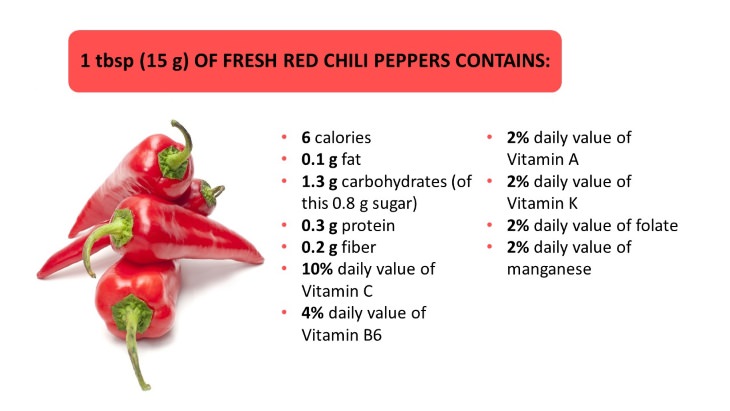
Similarly, all chili peppers are very low in calories but relatively high in fiber and plant nutrients, vitamins and minerals, which makes it a valuable addition to your diet. Below you can find a table summarizing the nutritional value of fresh chili peppers.
chili peppers Nutritional Value and Benefits
Do keep in mind that, in the majority of cases, hot peppers are consumed in low quantities and are used as spices or condiments, so you’re not likely to get a lot of macronutrients from them, but they do pack a punch in the vitamin department. For example, chili peppers contain 3 times the amount of vitamin C compared to oranges.
But probably most importantly, hot peppers contain unique phytochemicals that are responsible for the majority of their positive health effects. These include:
  • Capsaicin. This is the compound that makes peppers spicy. It has been studied the most and is linked to the majority of hot peppers’ health benefits.
  • Capsanthin is an antioxidant that also makes peppers red. The antioxidant properties of this compound may be able to fight cancer.
  • Lutein may improve eyesight, but its levels are greatly decreased as the pepper ripens.
  • Violaxanthin is another antioxidant that’s responsible for the yellow pigment of peppers.
  • Sinapic and ferulic acid. These antioxidants are linked to anti-aging benefits and can prevent the development of chronic diseases.
Given the abundance of vitamins and antioxidants in chilies, it’s no wonder they are associated, both traditionally and in medical science, with several health benefits. Here are the main ones:

1. Pain relief

One of the phytochemicals contained in hot peppers, capsaicin, has a unique property of binding to pain receptors in the brain, causing you to feel a burning sensation, but without any adverse effects on the body.
Since our brain can process only so many kinds of pain at the same time, it is possible to dull the pain you’re experiencing by eating spicy foods or using medical aids that contain capsaicin. By doing so, you will trick your brain into being less sensitive to pain.
Topical patches and creams containing capsaicin, for example, were shown to decrease pain linked to arthritis, joint and muscle pain, as well as nerve damage linked to diabetes. Capsaicin nasal sprays, on the other hand, are also used to deal with migraines. Finally, a study  has shown that heartburn can also be relieved by ingesting 2.5 g of chili peppers every day.

2. Weight loss

Chili peppers are a multi-tasker when it comes to weight loss management, with several studies showing that it can not only suppress one's appetite but also increase fat burning in both men and women.
And while most of these studies do suggest that the best results were achieved in participants who combined exercise and smart diet choices with chili peppers, they do conclude that a daily intake of hot peppers or a capsaicin supplement can boost one’s metabolism and promote weight loss.

3. Longevity

If you eat chili peppers at least once a month, you are more likely to live longer, at least that’s what a large scale study found. More precisely, individuals who ate at least 1 red chili pepper (dry or fresh) a month for 20 years had a 13% lower chance of death compared to people who didn’t.
It seems like the variety of nutrients contained in these spicy peppers might help fight chronic inflammation and obesity, in the long run.

4. Stomach ulcers

chili peppers Weight loss peptic ulcers

One of the leading causes of the development of stomach ulcers is alcohol, NSAID pain relievers and a strain of bacteria called H. pylori. Several studies found that, contrary to popular belief, the anti-inflammatory and antibacterial properties of hot peppers, and particularly capsaicin, helped prevent the development of stomach ulcers among people with high counts of H. pylori in their stomachs, as well as other risk factors.

5. Relieve nasal congestion

Some people experience what is called non-allergic rhinitis, which is when you have a runny or stuffed-up nose that is not due to a cold or allergy. Oftentimes, people with this condition benefit from capsaicin nasal drops. These drops may cause a burning sensation in your nasal cavity at first, but they may relieve you of nasal congestion for weeks or even months.

6. Antibacterial properties

chili peppers Antibacterial properties

People have been using spices, especially pungent ones, like chili, to prevent food from spoiling for thousands of years. This traditional use is certainly supported by science, with chili, in particular, having been proven to possess antibacterial and antifungal properties.
For one, it was found that chili extract can even prevent cholera bacteria from producing toxins. Some scientists even suggest using chili extract as a natural preservative. Apart from preventing food poisoning, however, some studies even used chili extract to treat streptococcus-induced throat infections, chlamydiaand tooth decay. It needs to be noted, however, that all these studies looked at the effect of chili extract, and not whole chili peppers, on these conditions.

7. Help Regulate Blood Pressure

The final advantage of chili peppers is their capability to regulate blood pressure and blood sugar. More specifically, chili peppers can help normalize cholesterol levels, at least in animal models. Apart from that, one study  suggested that eating 5 g of chilies before a meal high in carbohydrates can help prevent sugar spikes, which means that chili peppers can be beneficial for your heart health and diabetes prevention, although we must point out that more evidence is necessary to back that claim.
As you can see, chili peppers are an excellent addition to one’s diet, with even small amounts of this spice being able to do wonderful things to our bodies. Still, it needs to be mentioned that not all people can tolerate spicy food, and personal sensitivity to spice can result in strong burning sensations, indigestion and diarrhea, especially among people who rarely eat spicy food or have bowel conditions, such as IBS. The bottom line is,  if you like spicy peppers, know that they can really improve your health, but if chilies make you suffer and you cannot tolerate the burning sensations, it’s best to avoid them.
THIS IS ONLY FOR INFORMATION, ALWAYS CONSULT YOU PHYSICIAN BEFORE HAVING ANY PARTICULAR FOOD/ MEDICATION/EXERCISE/OTHER REMEDIES.                                    PS- THOSE INTERESTED IN RECIPES ARE FREE TO  VIEW MY BLOG-                                                                                           https://gseasyrecipes.blogspot.com/    

                                                                                                                                                     FOR INFO ABOUT KNEE REPLACEMENT, YOU CAN VIEW MY BLOG-                                                  https:// kneereplacement-stickclub.blogspot.com/  

                            FOR CROCHET DESIGNS                                                                                                                                                                                                  https://gscrochetdesigns.blogspot.com
 

Labels: , , , , , , , , , , , , , , , ,