Wednesday, September 03, 2025

The non-glam fibre foods your gut actually needs

Fiber may not show up next to collagen coffee or infrared saunas on your wellness feed, but if you want to feel clearer and lighter from the inside out, this is where it begins.

We’ve been trained to count macro-nutrients—protein, carbs, fats—as if they’re the whole story. But fibre doesn’t play by those rules. You can’t just “hit your goal” by eating the same foods on repeat. And yet, that’s exactly what most of us do: cycle through the same handful of fiber-rich staples and assume we’re covered.

A clinician-scientist and gut health entrepreneur, explains: “While the amount of fibre is important, diversity is equally crucial. You want them all coming together to create short-chain fatty acids, which are going to impact your entire metabolic health.”

You don’t need to track which food does what. Just start including a wider mix because that’s the secret to unlocking fiber’s true potential.

The different types of fibre your gut craves

We’ve popularised kale and broccoli as the face of fibre, but every plant food—grains, greens, lentils, legumes, fruits, vegetables, nuts and seeds—contains a different kind. Each feeds a unique group of microbes in your gut.

Think of your gut like an organisation. Each fiber-rich food fuels a different department. If one is overworked and the rest neglected, the system slows down. Your body doesn’t need just one superfood; it needs a full staff, all working in sync.

The fibre in beetroot nourishes a different “team” than what’s found in flaxseed or chickpeas. Even between leafy greens—amaranth, spinach, methi—the microbial impact varies.

And since each bacterial strain supports a different body function, the more varied your fibre sources, the more balanced your entire internal ecosystem becomes.

Gut health expert Dr Will Bulsiewicz compares the gut to the Amazon rain-forest. Its health depends on biodiversity. In your body, that translates to more stable moods, clearer skin and better digestion, without obsessing over food rules or micromanaging your meals.

What fibre diversity looks like in real life

You don’t need a kitchen overhaul or 25 ingredients in every meal. Focus on variety across the week, not every single plate. Start by noticing which foods you’re repeating and where you could swap something in.

For example, most Indian meals revolve around one or two staples—dal and rice, or sabzi and roti. Can you slightly reduce that base—not the calories, just the dominance—and add a small side of something different? That’s a simple way to diversify fibre without eating more.

The high-fibre line-up

Global picks
  • Chia seeds – Easy to use and high in fibre, especially when soaked
  • Avocado – Creamy and rich, helps stabilise blood sugar
  • Nutritional yeast flakes – A savoury fibre boost for toast, salads or roasted veggies
  • Ground flax or pumpkin seed powder – Mild in flavour, easy to stir into oats, smoothies or yoghurt
  • Quinoa – A light grain that offers fibre and protein
Local staples
  • Guava, amla and chikoo – “Some of the highest-fibre fruits we have,” says Dr Motwani, rich in both soluble and insoluble fibre
  • Rajma, chickpeas, black-eyed beans – Rotate these to support microbial diversity
  • Jowar and nachni (ragi) – Gluten-free millets that naturally boost fibre intake
  • Red and black rice – Unpolished and more fibrous than white rice
  • Methi and spinach – Everyday greens that make a difference when rotated weekly

Even these small tweaks, adding different types of fibre to your meal, can give your gut new information to work with. You don’t need perfection, just a bit more intention.

While I still take a good daily probiotic, your gut needs its first line of support from food—diverse, fiber-rich, plant-based meals that do what capsules can’t. There’s a whole world of nourishing fibre add-ins that taste good and do good, even if they sound boring on paper. When you start building that relationship with food, it becomes less about rules and more about rhythm.


This is only for your information, kindly take the advice of your doctor for medicines, exercises and so on.   

https://gscrochetdesigns.blogspot.com. one can see my crochet creations  
https://gseasyrecipes.blogspot.com. feel free to view for easy, simple and healthy recipes    
https://kneereplacement-stickclub.blogspot.com. for info on knee replacement
https://GSiyers home remedies.blogspot.com   is the latest addition to my blogs
 

Labels: , , , , , , , , , , , , , , , ,

Thursday, December 30, 2021

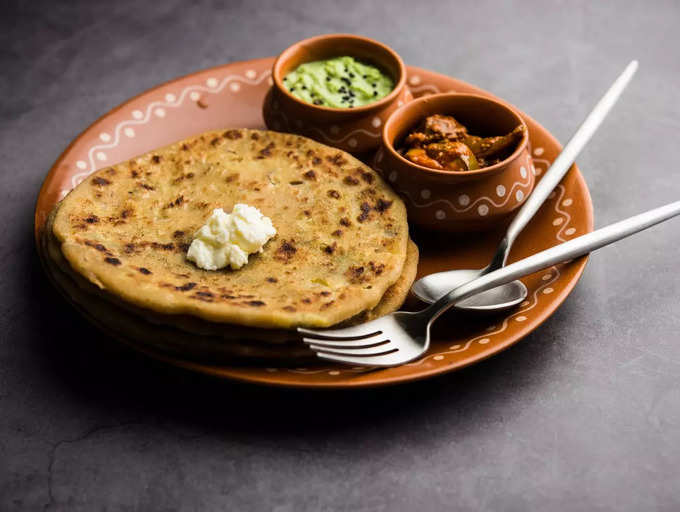
Winter special parathas that you can eat when trying to shed kilos

Weight loss friendly paranthas

Winters are here and it is officially the season to hide underneath our blankets and sip warm coffee! As difficult as it is to get out of bed and work, it is an even more daunting task to find the motivation to work out or keep oneself fit through exercises. Not just this, winters are infamous for making us gain weight metabolism slows down. Cravings for calorie-rich and fattening foods like puris, parathas and sweets also increase, leading to weight gain. But we got news! We bring to you paranthas that are weight loss friendly and can help you lose the extra kilos if consumed properly. Read on to find out the paranthas and tips to follow to ensure weight loss.

Onion parantha

Onions are great for the skin as it is rich in collagen and copious amounts of vitamin C present in them help the body build strong immunity. Not just weight loss, but the onion parantha is also a storehouse of health and overall fitness.

​Palak/ Spinch  parantha

For a breakfast that is packed with nutrients, palak parantha is the perfect choice for you. Full of Vitamin B, E and K and micronutrients like potassium, calcium and magnesium, palak is a healthy choice. It is low on calories and will provide you with the nutrition you need. Its high glycaemic index also makes you feel fuller for longer and aids weight loss.

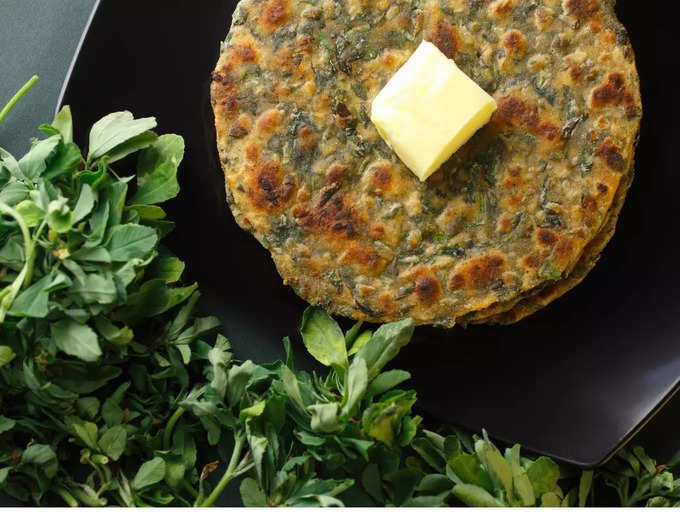
​Methi / Fenugreek leaves parantha

Methi is a seasonal boon that is replete with good quality fibre that helps the digestive system, aids weight loss and is beneficial for the skin and hair. The fibre has other benefits like keeping a check on the blood-glucose levels. It also contains anti-oxidants and anti-inflammatory elements that help the body get rid of any unnecessary harmful elements that may pose a potential threat to health or weight loss.

Stuffed-radish-parantha

Tips to ensure maximum benefits

Do not use too much ghee or oil while cooking the parathas. Applying a little ghee on top of the paratha once it is cooked can help achieve the taste and keep fat at bay.

Have the parantha with curd. Curd contains probiotics that help the metabolism. Curd is also an excellent fat burner and helps the digestive system.

Replacing your regular flour with multigrain flour that contains jawar, bajra and ragi can also help as these grains are a rich source of fibres that help you feel fuller for longer periods.

Whole wheat flour is an unhealthy option that can hamper your weight loss efforts. It is therefore advisable not to use it.

Adding spices will help with flavour and also aid digestion and metabolism.


This is only for your information, kindly take the advice of your doctor for medicines, exercises and so on.   

https://gscrochetdesigns.blogspot.com. one can see my crochet creations  
https://gseasyrecipes.blogspot.com. feel free to view for easy, simple and healthy recipes    
https://kneereplacement-stickclub.blogspot.com. for info on knee replacement

Labels: , , , , , , , , ,

Sunday, January 03, 2021

The best types of rotis for diabetics

Around 70 million people in our country suffer from diabetes, which makes the health condition a big matter of concern. The data is alarming but the good news is that the condition can be managed by making certain lifestyle changes, eating healthy and exercising. Diabetics are often recommended to alter their diet by including more fibre and protein and reducing the consumption of carbs and of course sugar to manage their blood glucose levels.

When we talk about changing the way we eat, we must take a look at our daily food items like chapatis. We generally eat rotis made of wheat flour but talking about diabetes, there are healthier options that can help manage the health condition. Here is a list of the best types of rotis for diabetics.

Ragi atta

Ragi is full of fibre, which makes it a great option for diabetics. Fibre helps by keeping your fuller for longer, thus preventing overeating and keeping your weight in check. Maintaining a healthy weight plays a crucial weight in controlling diabetes. The long time taken by fibre to get digested also causes blood sugar to spike gradually.

​Amaranth

Amaranth has recently become popular due to its anti-diabetic and antioxidative properties. The flour keeps your blood sugar levels in check and is packed with minerals, vitamins, proteins and lipids that are beneficial for the condition.

Jau (Barley)

Jau flour helps by increasing the gut hormones and boosting metabolism. It also helps in reducing low-grade inflammation, keeping your body healthy and saving it from getting various diseases.

​Chana (Chickpea)

Chane ka atta is rich in soluble fibre that helps in reducing cholesterol levels and aids slow absorption of sugar, which causes blood sugar to rise slowly.

Avoid

Wheat (genhu)

The glycemic index of the whole wheat kernel is around 30. But with the process of milling, the glycemic index shoots up to 70, which makes it not a healthy option for diabetics.


Labels: , , , , , ,