Monday, August 02, 2021

Curd for weight loss: Dahi can help you get a flat belly. Here's how

Curd for weight loss: Dahi can help you get a flat belly. Here's how

Curd, commonly called dahi in our Indian households, is an integral part of our diet. The cooling effect of dahi makes it perfect for the summer season. Some people like to have it sweet, while others like it with condiments and spices.

It helps in curing dehydration and improves digestion. And what can be better than a bowl full of chilled dahi in scorching summer? But did you know this yummy dahi can also help you lose weight? Don't believe it? Here is what studies have to say.

Helps in achieving a healthy BMI
​Helps in achieving a healthy BMI

Curd is a rich source of calcium and plays a vital role in keeping our BMI in check. Thus, including curd in your diet can be helpful in shedding extra kilos and losing weight.

Keeps you fuller
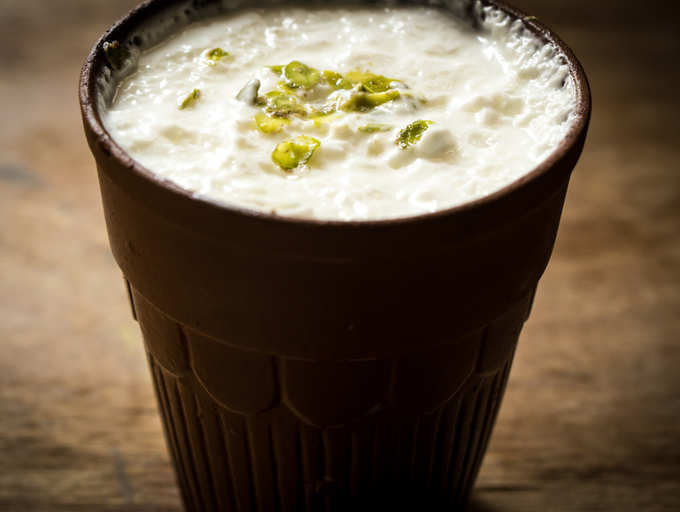
The one thing that we start consuming more as we decide to lose weight is protein. Curd is low carb and high protein food, which makes it perfect for weight loss. The protein in it also helps in maintaining lean muscle mass while helping you get rid of extra belly fat.

Improves metabolism

​Improves metabolism

An increased metabolism is the key to losing weight. The probiotics in curd help in improving digestion and thus metabolism. It helps in the absorption of nutrients. Getting enough nutrients is equally important so that you stay energetic.

​How to include curd in your diet

​How to include curd in your diet

There are ample ways you can include curd in your daily meals. Some of the easiest methods are:

Have a bowl with your lunch/dinner

Have it in the form of a smoothie for your breakfast

Make fruit/vegetable raita

Add it to your gravies, to make them more thick and healthy

Try to have plain or spiced curd, instead of having it with sugar. Sugar will add extra calories and defeat the purpose of having it.

In summer, you can have lassi/ buttermilk to keep yourself cool and hydrated.

Add some dry fruits and have your curd to soothe your sweet tooth.

readmore

This is only for your information, kindly take the advice of your doctor for medicines, exercises and so on.   

https://gscrochetdesigns.blogspot.com. one can see my crochet creations  
https://gseasyrecipes.blogspot.com. feel free to view for easy, simple and healthy recipes    
https://kneereplacement-stickclub.blogspot.com. for info on knee replacement

Labels: , , , , , , , , , , , , , ,

Monday, March 23, 2020

What is kosher salt and why everyone is talking about it?

Everything you need to know about Kosher Salt

Have you ever wondered how bland the world of food would be if we had not discovered salt? Salt is one such ingredient that not just adds the maximum taste to our food but also elevates other flavours and helps everything taste better. Apart from being an integral ingredient for food, it has a lot of medicinal benefits like helping the body in maintaining thyroid levels, preventing low blood pressure, keeping the body hydrated. Did you know that there are more than 10 varieties of edible salt? While the most commonly used amongst all the varieties of salt is our regular table salt, Kosher Salt is now becoming the talk of the town. To find out what is Kosher salt, read on:


What is Kosher Salt and how is it made?
Every kind of salt found is a naturally occurring substance that is generally harvested from seawater and rock salt deposits in mines made of salt. To get a step ahead to achieve the final product, water has to be completely evaporated from seawater salt and brine the rock-salt by pumping water on these rocks. Once the salt is clean, its crystals can be used in many ways. Kosher salt is a kind of salt is gained from these crystals. The texture of this salt is coarse and it is generally not iodised. This is one of the major reasons why people are preferring to use Kosher instead of regular, table salt. The structure and texture of the salt might depend on particular brands and also on the production.


How was the name derived?
The word ‘Kosher’ is used for food that is cooked according to Jewish dietary laws. So, technically, almost everything can be Kosher and every salt produced can be Kosher if it is cooked or made in Kosher supervision. But the idea behind its name had nothing to do with the Jewish Laws of cooking. The word Kosher signifies cleanliness and Kosher salt was first used to brine meat. So, it was quite literally Koshering the meat by making it free of any parasites or blood. With the process, the name stuck with this flaky variation of salt.


How and when to use it?
Kosher salt, if measured correctly, is usually lighter than table salt or the regular salt that we generally use in our households. So, if the quantity of the salt isn’t mentioned in any particular recipe, it is advised to use your judgement. The reason why most people these days are inclined towards using Kosher salt is that it is lighter and distributes easily all over your food but has a little difficulty in dissolving and that is when table salt comes to use. The versatility of Kosher salt mas made its demand rise even though the final product will end up tasting just the same as any other food cooked with regular salt. You can use it in a recipe where it asks you to use ‘coarse salt’. The main purpose of it is to either brine or give your food final seasoning. 


This is only for your information, kindly take the advice of your doctor for medicines, exercises and so on.     

https://gscrochetdesigns.blogspot.com. one can see my crochet creations  
https://gseasyrecipes.blogspot.com. feel free to view for easy, simple and healthy recipes    
https://kneereplacement-stickclub.blogspot.com. for info on knee replacement

Labels: , , , , , , , ,

Monday, February 17, 2020

Your diet can help fight against hospital-acquired infection

The popular opinion that low carb and high protein diets help in maintaining the waistline, also have the chance to alleviate hospital-acquired infections.

The study surrounding the hospital-acquired infection Clostridioides difficile was published in the journal mSystems.

In the study, scientists found that an interaction between antibiotic use and a high-fat/high-protein diet exacerbate C. diff infections in mice. Conversely, they found that a high-carbohydrate diet - which was correspondingly low in fat and protein - nearly eliminated symptoms.

C. diff, an intestinal infection designated as an urgent threat by the U.S. Centers for Disease Control and Prevention, is often acquired when antibiotics have wiped out the "good" bacteria in the gut. Hundreds of thousands of people are diagnosed with C. diff infections each year and more than 10,000 die.

"Every day, we are learning more about the human microbiome and its importance in human health. The gut microbiome is strongly affected by diet, but the C. diff research community hasn't come to a consensus yet on the effects of diet on its risk or severity," said the lead microbiologist Brian Hedlund.

"Our study helps address this by testing several diets with very different macronutrient content. That is, the balance of dietary carbohydrate, protein, and fat were very different," added Hedlund.

Though studies suggest dietary protein exacerbates C. diff, there's little or no existing research exploring the interaction of a high-fat/high-protein diet with the infection.

Hedlund and the co-author of the study, Ernesto Abel-Santos, a UNLV biochemist, caution that the study was conducted using an animal model, and more work is underway to begin to establish a link between these diets and infections in people.

"Extreme diets are becoming very popular but we do not know the long-term effects on human health and specifically on the health of the human gut flora. We have to look at humans to see if it correlates," said Abel-Santos.

Recent studies suggest that because antibiotics kill bacterial species indiscriminately, the medications decimate populations of organisms that compete for amino acids, leaving C. diff free to propagate.

"It's clear that it's not just a numbers game," said Hedlund.

The new work suggests that diet may promote microbial groups that can be protective, even after antibiotics. For an infection to flourish, Hedlund said, "you might need this combination of wiping out C. diff competitors with antibiotics and then a diet that promotes overgrowth and disease."

"Lots of papers say that a lower microbial diversity is always a bad thing, but in this case, it had the best disease outcome," said Abel-Santos.

However, he cautions that a high-carb diet could lead to animals becoming asymptomatic carriers that can disseminate the infection to susceptible subjects. 


This is only for your information, kindly take the advice of your doctor for medicines, exercises and so on.     
https://gscrochetdesigns.blogspot.com. one can see my crochet creations  
https://gseasyrecipes.blogspot.com. feel free to view for easy, simple and healthy recipes    
https://kneereplacement-stickclub.blogspot.com. for info on knee replacement
 

Labels: , , , , , , , , , ,

Saturday, November 23, 2019

16 Signs There’s A Toxic, Congested Lymph In The Body And How To Help Drain It

Since we are constantly surrounded by numerous toxins from various sources, and lead fast-paced lifestyles, toxins start to accumulate and clog the lymphatic system, residing the body in stress and weakening the immunity. 

According to Medical News Today:
“The lymphatic system is part of the immune system. It also maintains fluid balance and plays a role in absorbing fats and fat-soluble nutrients.

The lymphatic or lymph system involves an extensive network of vessels that passes through almost all our tissues to allow for the movement of a fluid called lymph. Lymph circulates through the body in a similar way to blood. There are about 600 lymph nodes in the body. These nodes swell in response to infection, due to a build-up of lymph fluid, bacteria, or other organisms and immune system cells.

The lymphatic system plays a key role in the immune system, fluid balance, and absorption of fats and fat-soluble nutrients. ”

The lymphatic system supports every body system, so it is very important to flush it out from time to time and prevent numerous conditions, from cellulite to cancer.

The first symptom of lymph congestion is dehydration. To check this issue, sip hot water every 10-15 minutes throughout the day, and at the end of the day, if your mouth is dry and thirsty, you are dehydrated and your lymph is congested. To rehydrate the body, repeat this therapy for 2 weeks.

Additionally, drink 1/2 your ideal body weight in ounces of water daily during these two weeks.
Here are the most common symptoms of lymphatic congestion:
  • Dry skin
  • Mild rash or acne
  • Swollen fingers
  • Brain fog
  • Weak immune system
  • Mild headaches
  • High histamine levels and irritations due to common environmental allergens
  • Occasional constipation, diarrhea and/or mucus in the stool
  • Swollen glands
  • Itchy skin
  • Tiredness
  • Soreness and/or stiffness in the morning
  • Bloating/water retention
  • Weight gain and extra belly fat
  • Breast swelling or soreness with each cycle
  • Hypersensitivity
All red-staining foods are powerful natural lymph-moving agents that detoxify the body, including beets, berries,  Echinacea, Red Root, cherries, pomegranate, and cranberries. 

Beets are among the most successful ones, as they thin the bile and scrub the villi of the gut, which is where the digestive lymph originates. 

Therefore, combine the warm water rehydration therapy with the consumption of red foods, and you will optimize the function of the lymphatic system and improve overall health.

this is only for your information, kindly take the advice of your doctor for medicines, exercises and so on.     
https://gscrochetdesigns.blogspot.com. one can see my crochet creations  
https://gseasyrecipes.blogspot.com. feel free to view for easy, simple and healthy recipes    
https://kneereplacement-stickclub.blogspot.com. for info on knee replacement


Source: fitlife.tv


Labels: , , , , , , , , , , , , , , , ,

Friday, November 22, 2019

Unknown Signs and Symptoms Of Vitamin D deficiency

When we say that vitamin D is not like any other vitamins, it's because, unlike other vitamins, this functions like a hormone. It can be produced inside the body. Each cell in the body has receptors for producing vitamin D. These receptors get activated when skin is exposed to sunlight. This vitamin helps in maintaining the bones and teeth health, supports the immune system, brain and central nervous system. It is also responsible for regulating insulin levels in the body. People often wonder that, If the body produces vitamin D, then how can there be a deficiency of it? Deficiency of Vitamin D is related to the time a person spends in sunlight. Covered homes, covered cars and covered offices often make it difficult to get enough sunlight. National Institute of Health, (NIH), USA, has recommended at least 400-800 IU of vitamin D should be taken daily. Apart from exposure to sunlight, you can also increase your vitamin D consumption by eating foods such as fatty fish and fortified dairy products. Here are some unknown signs of vitamin D deficiency that your body is sending out.

Frequently falling sick: Without Vitamin D in the body, the cells building the immune system become weak, this affects your immunity and makes you sick more often with cold and flu, fever, allergies, asthma and eczema.

Fatigue: Do you feel exhausted all day or feel tired after even a super-easy task? You might have a vitamin D deficiency. Vitamin D is responsible for boosting a person’s energy level and keep them active whole day long.

Weak bone health: Vitamin D, combined with calcium, leads to strong bones and joints. Without ample vitamin D in the system, the risk of fracture and other bone-related injuries increases. Back pain and other bone damages are signs of this deficiency.

Hair breakage: According to a study published in the NIH, Vitamin D deficiency is linked with Alopecia. This is an autoimmune disease, which begins with the shedding of hair. In the study, it has been found that alopecia patients have low levels of vitamin D. A lot more research is required to prove the connection.

Muscle pain: According to a study published in the NIH, vitamin D deficiency is linked with muscle weakness and aches in adult and children. It is still not clear which muscles especially ache. But, it is clear that lack of vitamin D, if not treated promptly, can build-up into chronic pain in muscles.

this is only for your information, kindly take the advice of your doctor for medicines, exercises and so on.     
https://gscrochetdesigns.blogspot.com. one can see my crochet creations  
https://gseasyrecipes.blogspot.com. feel free to view for easy, simple and healthy recipes    
https://kneereplacement-stickclub.blogspot.com. for info on knee replacement


Labels: , , , , ,