Saturday, August 31, 2019

7 Step Baking Soda Solution to Your Troublesome Splinter

Having a splinter is awful. At best it's uncomfortable, at worst it can be horribly painful, particularly to small children. What's more, the thought of removing that wooden intruder with tweezers or a pin is enough to strike any soul with trepidation. But, luckily, here is a simple homemade solution you can make using baking soda. So, whip that magical powder out of its cupboard and let's get to work!
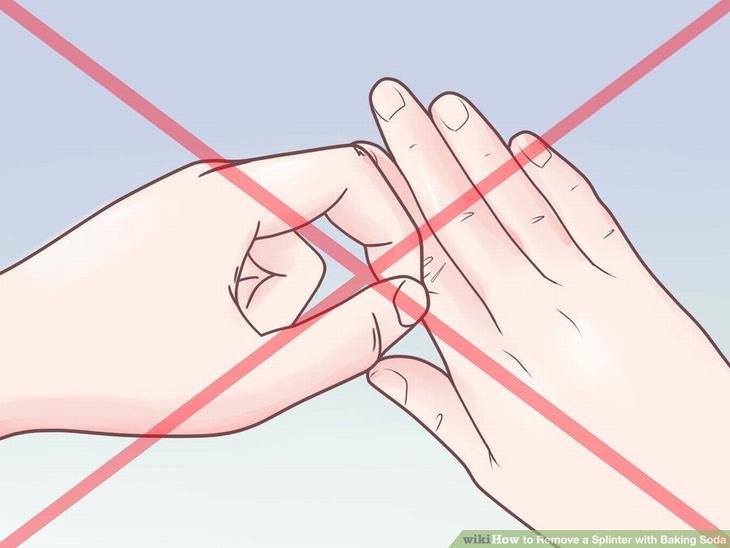
Step 1: Do not squeeze at it!
First, it's important you get a good idea of what kind of splinter you are dealing with, and where precisely it is. Squeezing may cause the splinter to go deeper into your skin, or even break it up into smaller pieces that are even harder to remove. So, refrain from squeezing.
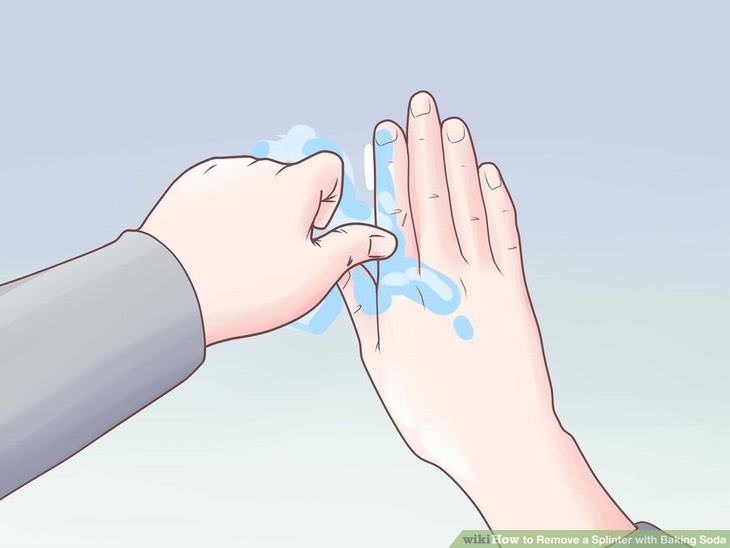
Step 2: Clean the area, using soap and water
Always do this when you have any kind of open wound, to avoid infections. Then dry yourself off with a paper towel. Do so very gently, so as not to aggravate the wound. Remember that wood loves moisture, so keep it as dry as you can. 
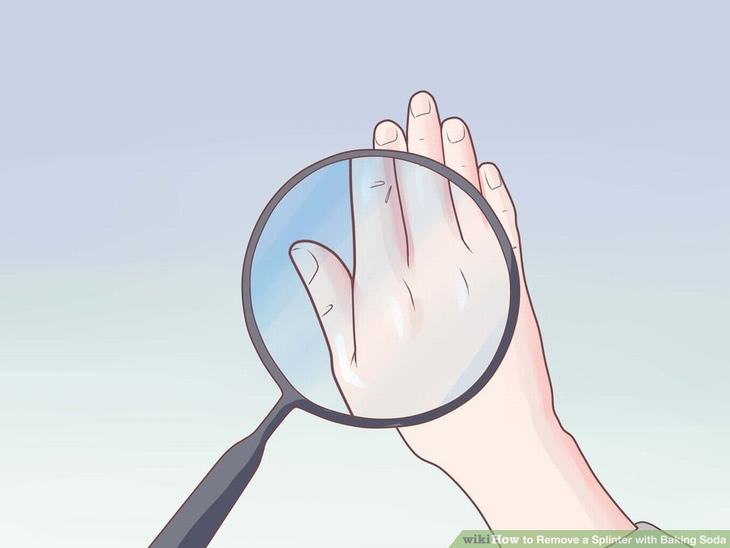
Step 3: Look at the splinter using a magnifying glass
Make sure that the splinter is small. The method we are about to use makes the skin swell. This swelling will push out the splinter. But this will only work on small splinters. If yours seems rather large, you will have to consider some other methods.
Step 4: Make Your Baking Soda Paste
Your paste will be made with 1/4 teaspoon of baking soda and a little water. We want a nice thick paste.
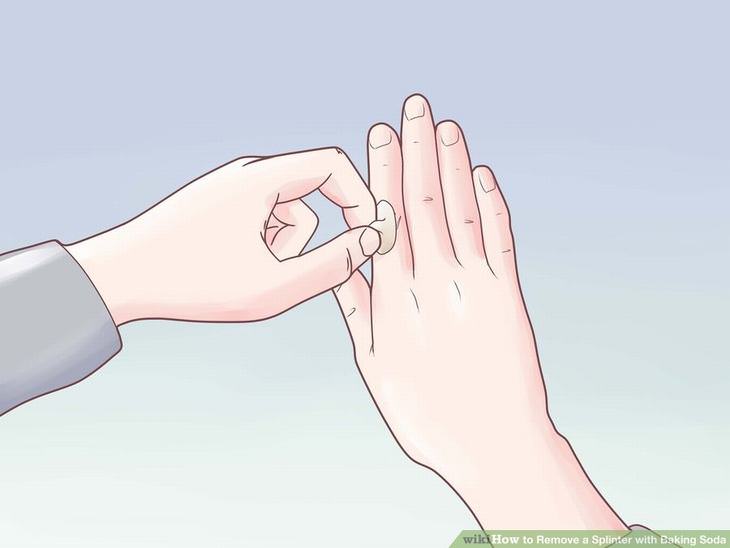
Step 5: Apply your paste to the area
The best way to do this is to spread the paste on a bandage and place it over the splinter.
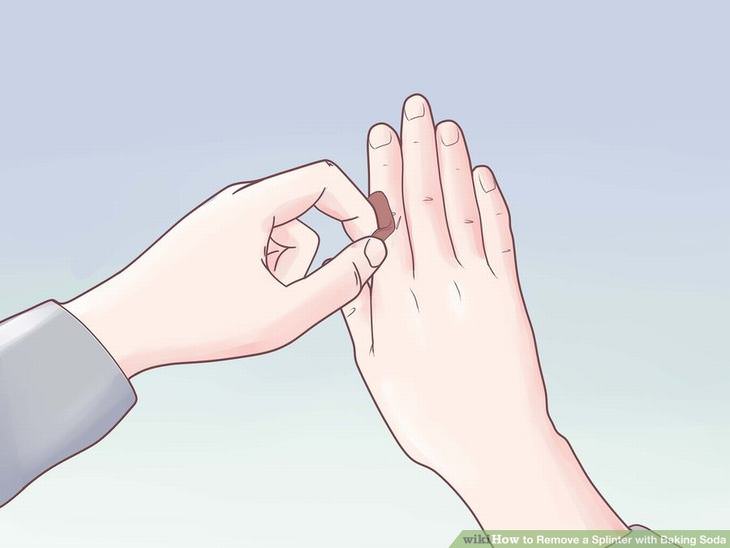
Step 6: Wait 1 day, then take the bandage off
Take the bandage off after one day. If you can see the splinter sticking out, you will then be able to pull it out (step 7) with a pair of tweezers, without penetrating your skin. And if it's sticking out but you can barely see it, it may naturally come out when you take a wash. 
If the splinter is still inside, repeat steps 4-6 as many times as necessary.
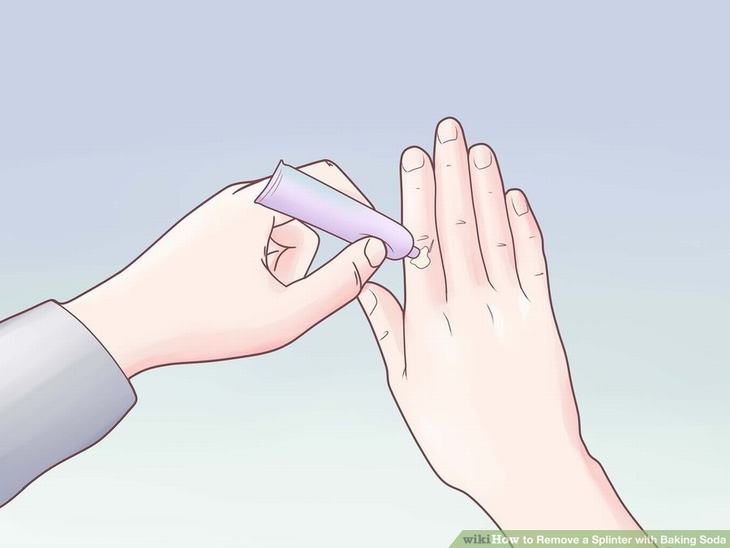
Step 7: Apply a topical anesthetic
Once you are ready to pull out the splinter, the area will still fees quite painful, apply some Baby Orajel to the wound. This ointment causes numbing, which should furnish you with the confidence to proceed. Wait just a couple of minutes and then pull it out with some tweezers. Finished.
THIS IS ONLY FOR INFORMATION, ALWAYS CONSULT YOU PHYSICIAN BEFORE HAVING ANY PARTICULAR FOOD/ MEDICATION/EXERCISE/OTHER REMEDIES.                                    PS- THOSE INTERESTED IN RECIPES ARE FREE TO  VIEW MY BLOG-                                                                                           https://gseasyrecipes.blogspot.com/                                                                                                                                                FOR INFO ABOUT KNEE REPLACEMENT, YOU CAN VIEW MY BLOG-                                                                       https:// kneereplacement-stickclub.blogspot.com/                                                                                                                     FOR CROCHET DESIGNS                                                                                                   
                                https://gscrochetdesigns.blogspot.com
 

Labels: , , , , , , , , , , , , , , , , , , ,

Sunday, July 28, 2019

A Guide to Lyme Disease

Lyme disease is caused by Borrelia burgdorferi, a bacterium that’s transmitted to humans when they are bitten by an infected black-legged or deer tick. Once infected, symptoms can occur anywhere from 3-30 days after the bite, and they can be wide-ranging, depending on the stage of infection. The chances of contracting Lyme disease from a tick bite depends on the kind of tick, where you were bitten, when the bite occurred, and how long the tick was attached to you. According to the CDC, black-legged ticks must be attached for at least 24 hours to transmit Lyme disease.
What Are the Symptoms of Lyme Disease?
Early signs and symptoms of this disease include chills, fever, fatigue, headaches, muscle and joint pain, and swollen lymph nodes. In about 70-80% of infections a rash is seen. This rash will gradually expand over a period of days and can grow to around 12 inches wide. It may feel warm to the touch, but it shouldn’t be itchy or painful, and it can appear anywhere on the body.

As the infection progresses, symptoms can include:
• Severe headaches or neck stiffness
• Heart palpitation or an irregular heartbeat
• Inflammation of the spinal cord and brain
• Loss of muscle tone or drooping on one or both sides of the face
• Additional rashes on other parts of the body
• Arthritis with severe joint pain and swelling, particularly in the knees
• Shooting pains, numbness, and tingling in the hands or feet


How is Lyme Disease Diagnosed?
Lyme disease is diagnosed based on symptoms and history of tick exposure. A two-step blood test may also be taken, but the accuracy of this test depends on the stage the disease is in. For example, in the first few weeks of infection, the test may be negative, as antibodies take a few weeks to develop. These tests aren’t recommended for patients who don’t have any of the common symptoms of Lyme disease.

How is Lyme Disease Treated?
The antibiotics amoxicillin and tetra cycline are used, usually for 10-21 days. Other antibiotics that might be used are cefuroxime and doxycycline. If you get treatment for Lyme disease when the infection is at an early stage, it is likely that you will make a full recovery.
How Prevalent is Lyme Disease?
About 30,00 cases are reported each year, but the CDC estimates that you can add another 300,000 infections to this figure. Infection is more common in males up to age 15 and between the ages of 40 and 60. The reason for this is these are people who are more likely to play outside, and go hiking, camping, and hunting.

What Areas Are More Likely to Have Lyme Disease?
Mainly the Mid-Atlantic states, New England, and parts of the upper Midwest. According to the CDC, 95% of confirmed cases in 2015 were in the following 14 states: Delaware, Maine, Connecticut, Minnesota, Maryland, Massachusetts, New Hampshire, New York, New Jersey, Pennsylvania, Vermont, Rhode Island, Wisconsin, and Virginia.

Black-legged ticks can be found in 43 states, but they behave differently according to the climate. For example, in the South, which is more prone to hot weather, ticks tend to stay under leaf litter and don’t come out to feed as they’ll dry out. This means that Southern ticks don’t transmit Lyme disease frequently as they don’t tend to feed on humans.

What’s Driving up Lyme Disease Numbers?
While increasing temperatures worldwide has made more Northern areas such as Maine, Canada, and Minnesota hospitable to ticks, the population of deer carrying the ticks probably plays a much bigger role.

Development led to record low numbers of deer early in the last century, but the deer population has increased as a result of reforestation over the past several decades, 
meaning the tick population has increased as well. Furthermore, white-footed mice, which also transmit Lyme disease to ticks that bite them, are moving closer to humans as their habitat disappears.

Another reason is that warm weather and mild winters may bring more people outside, increasing their chances of being bitten, especially in Lyme-prone areas.
How Do You Know If You’ve Been Bitten?
Since ticks are the size of a poppy seed, you’ve got to have pretty good eyesight to spot them. The CDC recommends that if you’ve been walking in the woods, tall grass, or working in your garden, that you check your skin afterwards, ideally in the bath or shower.

What Do You Do If There’s a Tick Under Your Skin
Remove it with a pair of tweezers as soon as possible, pulling upward with steady pressure. If parts of the tick remain in your skin, try to remove them with the tweezers. After everything is out, clean the area with rubbing alcohol or soap and water. Put the tick in a piece of tissue, and close it in a zip bag.

When should You See Your Doctor?
A rash is a pretty good indication that you might have Lyme disease. Therefore, if a rash starts to develop in the area you were bitten, you should visit your doctor immediately. At this stage of the illness, treatment with some antibiotics will likely see you make a full recovery.

What’s the Best Way to Prevent a Tick Bite?
Ticks cannot fly or jump, but instead live in shrubs and bushes, and grab onto someone when they walk by. To avoid getting bitten, wear pants and socks in woods, areas with a lot of trees, and while handling fallen leaves. Wear some tick repellents and clothing that has DEET, lemon oil, or eucalyptus.

Shower as soon as you get home. This lets you look at your skin and wash any ticks out of your hair. Furthermore, put the clothes you were wearing into a hot wash to kill whatever ticks might remain.

THIS IS ONLY FOR INFORMATION, ALWAYS CONSULT YOU PHYSICIAN BEFORE HAVING ANY PARTICULAR FOOD/ MEDICATION/EXERCISE/OTHER REMEDIES.                                    PS- THOSE INTERESTED IN RECIPES ARE FREE TO  VIEW MY BLOG-                                                                                           https://gseasyrecipes.blogspot.com/                                                                                                                                                FOR INFO ABOUT KNEE REPLACEMENT, YOU CAN VIEW MY BLOG-                                                  https:// kneereplacement-stickclub.blogspot.com/                                                                      FOR CROCHET DESIGNS                                                                                                    
                                https://gscrochetdesigns.blogspot.com

Labels: , , , , , , , , , , , , , , ,

Monday, April 15, 2019

What Should You Do if Bitten by a Tick?

Parasites are never a pleasant thing to discover on your body, but ticks are of special concern, as some strains carry and transmit Lyme disease, a harrowing medical condition which may result in long-term fatigue, joint pain, facial paralysis and severe headaches if left untreated.

Here is what you should know about dealing with ticks


Locating the tick

Ticks: skin

Ticks like humidity and warmth. As a consequence, their favorite haunts are areas of the body that also offer them a lot of concealment, like the armpits, under the breasts, between toes and on the groin. Make sure to check these tricky areas when returning from an outing in a grassy area.

Identifying the threat

Ticks: grass
Time is of the essence

Ticks: engorged
Do not use any “remedy” like applying a cream to the area and the tick or painting the tick in nail polish, and do not wait for the tick to detach on its own. The average time it takes for a tick nymph to transmit Lyme disease is around 36-48 hours. Try to gauge how long the tick has been there by remembering the last time you’ve been around grass and looking at the tick. The longer the tick has been feeding, the more obviously bloated its abdomen will be.
Removing the pest
Ticks: removal
Grasp the tick with fine-tipped tweezers as close to the skin as possible and pull it upwards with a steady hand. In case the tick is torn in the process, with the mouth still attached to the skin, remove it separately with clean tweezers. Place the tick in a plastic bag or sealed box. It may be important to keep it, as not all ticks transmit Lyme disease, and identifying the culprit may be important. After handling the tick, clean the bite area with alcohol or soap.
Follow Up
Ticks: rash
If you develop a rash at the site of the tick bite after removing the tick, consult with a doctor. The rash may take weeks to manifest, so try to remember the time and spot of the bite. Make sure to mention the tick to the doctor. The rash is typically painless, does not itch, and may grow in size, appearing like a “bull’s eye”. The rash doesn’t always appear this way, and in 20% of cases, there won’t be a rash at all. If no rash is present, be on the lookout for other symptoms, such as fever, fatigue and joint pain. If a knee begins to swell painlessly and without connection to any physical activity, that too may be a telltale sign of Lyme disease.
Early identification and treatment is crucial, as it may save you from some of the harsher, permanent symptoms of Lyme disease, including long-term brain damage.

THIS IS ONLY FOR INFORMATION, ALWAYS CONSULT YOU PHYSICIAN BEFORE HAVING ANY PARTICULAR FOOD/ MEDICATION/EXERCISE/OTHER REMEDIES.                                    PS- THOSE INTERESTED IN RECIPES ARE FREE TO  VIEW MY BLOG-                                                                                           https://gseasyrecipes.blogspot.com/    
                                                                                                                                                     FOR INFO ABOUT KNEE REPLACEMENT, YOU CAN VIEW MY BLOG-                                                  https:// kneereplacement-stickclub.blogspot.com/  
         
                   FOR CROCHET DESIGNS                                                                                                                                                                                                  https://gscrochetdesigns.blogspot.com 

Labels: , , , , , , , , , , , , , , , ,

Saturday, December 29, 2018

How to manage foreign bodies in our ear/ nose/ throat

Foreign body is an object or piece of extraneous matter that has entered the body by accident or design. It is common to see certain items getting stuck in the ear, nose or throat especially, in young children. While most of the time they do not raise an alarm, however, sometimes they can lead to severe consequences like rupture of the eardrum or even choking.

 Children , as they explore the environment around them, they tend to put items such as peas, beans, marbles, beads, cotton, paper, etc, in their mouth, nose or ears. A similar trend can be seen in adults with mental disorders.

Trauma/ fall/accident can force foreign bodies like rock, pebbles into the ear, nose or throat.

Adults while riding a bike or sleeping on the ground (campsites) can have insects: flies, ants, roaches fly into the nose or ear.

Choking occurs when foreign bodies block the airway, common reasons are: not chewing the food properly, diseases like Parkinsonism, drinking alcohol or certain drugs that slowdowns the process of swallowing.

Foreign bodies in the ear Symptoms: Pain in the ear, discharge or bleeding from the ear, feeling of fullness or pressure in the ear and dizziness and nausea in extreme cases.
Management:
Make sure the patient is sitting in an upright position, pull the pinna or outer semicircle of the ear towards the back. This can help you see the object clearly and also loosen it to wiggle out. If you can see the object clearly, use a tweezers to grasp the object and gently remove.

In case a live insect gets trapped inside the ear lie down and place few drops of warm vegetable or baby oil. Use oil only if symptoms of eardrum perforation like pain, bleeding/discharge from the ear is absent.

Magnets are sometimes used if the object is metal

Cleaning the ear canal with water

A machine with suction to help pull the object out

Tilting the head to the affected side can facilitate gravity to dislodge the object.

After removal of the object, your child's physician will then re-examine the ear to determine if there has been any injury to the ear canal. Antibiotic drops for the ear may be prescribed to treat any possible infections.

Foreign bodies in the nose:
Symptoms: 
Pain and difficulty in breathing from that side of the nose.
Management: Keep the uninvolved nostril closed by pressing a finger against the side of the nose and gently ask the person to blow from the affected nostril.
Suction machines with tubes attached
Instruments may be inserted in the nose

After removal of the object, your child's physician may prescribe nose drops or antibiotic ointments to treat any possible infections.

Foreign bodies in the throat: Symptoms: Choking, inability to breathe and speak  
Coughing at first
Wheezing (a whistling sound, usually made when the child breathes out) 

Although the initial symptoms listed above may subside, the foreign body may still be obstructing the airway. The following symptoms may indicate that the foreign body is still causing an airway obstruction:
Stridor (a high-pitched sound usually heard when the child breathes)
Cough that gets worse
Child is unable to speak
Pain in the throat area or chest
Hoarse voice
Blueness around the lips
Not breathing
 The child may become unconscious
 
Management: Perform Heimlich maneuver, abdominal thrusts, if trained otherwise, it is advised to call for medical help immediately.
How can you prevent foreign bodies from entering your ear, nose, throat?

Discourage talking, playing, laughing when food is in the mouth.
Do not give whole grapes, popcorn, nuts to children below 3 years.
Keep small objects out of reach of small children.
Teach children to avoid placing objects into their nose, ears.

THIS IS ONLY FOR INFORMATION, ALWAYS CONSULT YOU PHYSICIAN BEFORE HAVING ANY PARTICULAR FOOD/ MEDICATION/EXERCISE/OTHER REMEDIES.                                                                                
 PS- THOSE INTERESTED IN RECIPES ARE FREE TO  VIEW MY BLOG-                                                                                           https://gseasyrecipes.blogspot.com/                                                                                                                                                                             FOR INFO ABOUT KNEE REPLACEMENT, YOU CAN VIEW MY BLOG-                                               
     https:// kneereplacement-stickclub.blogspot.com/                                                                                     
  FOR CROCHET DESIGNS                                                                                                                                                                                                              https://gscrochetdesigns.blogspot.com

Labels: , , , , , , , , , , , , , , , ,