Saturday, March 18, 2023

Delirium: It’s More Common Than You Think

Also called "acute confusional state" or "organic brain syndrome,” delirium is a scary condition most of us don’t want to think about. Sadly, this brain disorder is way more common than you think, especially among older adults. It’s a serious condition that should not be ignored or confused with dementia, as any delay in treatment can be very dangerous. The good news is that delirium is curable (and one in three cases are preventable too), which is why knowing how to spot it in a spouse, family member, friend, or yourself is so incredibly important.

What is delirium? 
Delirium is a neurological condition when brain activity gets so disrupted that it impairs one’s cognitive abilities and causes widespread confusion. People who have delirium act nothing like themselves, and they may not even recognize their own family members.

This health condition is most common in older adults at the hospital; 1 in 3 hospitalized adults over age 70 have it. However, anyone can experience delirium, even if it’s less widespread. 
 
Delirium is a very serious condition, but the good news is that it’s often temporary. Treatment is administered depending on the cause, be it illness, medication side effects, or infection. 
 
So you already know that hospitalization and age can increase one’s risk of developing delirium. But there are also a few other factors, namely: 
 
Surgery or injury 
 
Misuse of medications 
 
Dementia or Parkinson's disease 
 
Insomnia 
 
Living in a nursing home 
 
Hearing or vision impairment 
 
Multiple underlying health conditions.
 
A history of depression. 
 
A past history of delirium. 
 
Symptoms of delirium 
 
Confusion is considered the primary symptom of delirium. Practically, this symptom manifests itself through: 
 
Trouble concentrating and shifting attention from one thing to another 
 
Disorientation 
 
Having difficulties recalling the date, time, and where you are 
 
Not recognizing family members, friends, and acquaintances 
 
Trouble explaining yourself clearly, rambling 
 
Difficulties recalling recent memories.
In addition, individuals going through delirium may display: 
 
Rapid changes in movement (such as being hyperactive or unusually slow) 
 
Drowsiness, withdrawal, and apathy 
 
Mood swings, increased irritability, paranoia, fear, or anger 
 
Moaning or calling out 
 
Sudden difficulties completing everyday activities, such as eating, walking, reading, or writing. 
 
Symptoms appear rather rapidly – within hours or days, and they fluctuate throughout the day. In general, a person experiencing delirium may also feel better during the day, but get worse at night when the surroundings look more unfamiliar. 
 
As you may have noticed, some of these symptoms contradict each other. That’s because delirium can make a person more active, less active, or have them ping-pong between hyperactivity and reduced activity. That’s why doctors typically distinguish between the following three types of delirium:

Types of delirium 
 
1. Hyperactive delirium 
Individuals with this type of delirium are anxious, agitated, and have mood swings. They may refuse to cooperate with caregivers, display aggression, and talk with a “filter,” meaning that they are more rude than usual or use profanity even though they’ve never done so in the past. Symptoms of psychosis, such as hallucinations, delusions, and paranoia, may also be present. All in all, the individual suddenly becomes more restless and active than usual. 
 
2. Hypoactive delirium
Hypoactive delirium is the flip side of the previous type, as it is accompanied by a reduced level of activity. Individuals with this type of delirium appear sluggish, unable to concentrate, and appear to be in a daze. They may also have a blank facial expression while speaking or display no interest in the surroundings. Movements may become slower, they may sleep more, miss meals, and seem quiet and withdrawn. 
 
3. Mixed delirium  
As the name indicates, this type combines the features of the previous two types. A person may switch back and forth between hyperactive and hypoactive delirium. Generally, you may not see a change in activity level, but the person will display hyperactive symptoms, like agitation, and then return to hypoactive symptoms by sleeping all day. 
 
What is the difference between delirium and dementia? 
These two conditions are often confused because they are similar on the surface. Even though both delirium and dementia involve confusion and memory issues as a symptom, there are several key differences between these two conditions. 
 
The primary difference is the rapid onset. Delirium begins quickly and abruptly, whereas a person with dementia will generally get worse over a long period of time, often years. Another feature of delirium are the fluctuations between periods of alertness and confusion during the day. In contrast, dementia is a more constant reduction in cognitive abilities. The memory issues tend to be different too: while dementia patients have long-term memory problems, delirium patients have issues with short-term memory.

This is only for your information, kindly take the advice of your doctor for medicines, exercises and so on.  

https://gscrochetdesigns.blogspot.com. one can see my crochet creations  
https://gseasyrecipes.blogspot.com. feel free to view for easy, simple and healthy recipes    
https://kneereplacement-stickclub.blogspot.com. for info on knee replacement
https://GSiyers home remedies.blogspot.com     is my latest addition to my blogs. I'm going to add posts there, do give me your valuable feed back on my blogs. Thanks a lot, take care, be healthy and be happy.  

Labels: , , , , , , , , , ,

Wednesday, February 08, 2023

The Signs of a Ministroke (TIA) and Ways to Prevent It

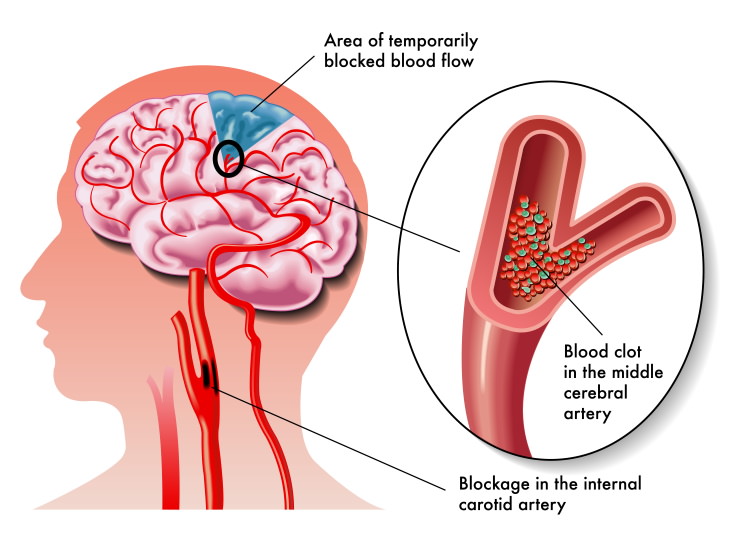
Have you ever heard of the word “ministroke”? The proper term for this health emergency is transient ischemic attack (or simply TIA), and it occurs when blood flow is temporarily cut off to a part of the brain. Ministrokes usually resolve within a day and do not inflict lasting damage to the brain. 
 
“Since it doesn’t cause permanent damage, it’s often ignored. But this is a big mistake. TIAs may signal a full-blown stroke ahead,” warns the American Stroke Association. If you or someone you know is experiencing symptoms of TIA, never turn a blind eye and get urgent medical help. 
 
Let’s investigate how a ministroke differs from a full-blown stroke, learn about the signs of TIA, and what you can do to prevent it.

How is a ministroke different from a stroke?

Ministroke (TIA) ministroke chart illustrating TIA

TIA and stroke are two sides of the same coin. The only real difference between a ministroke and a full-blown stroke is time. During a ministroke, the blockage of the blood vessel in the brain is brief enough that it doesn’t cause lasting damage to the brain tissue. In a stroke, blood flow is cut off long enough for such damage to occur. 
 
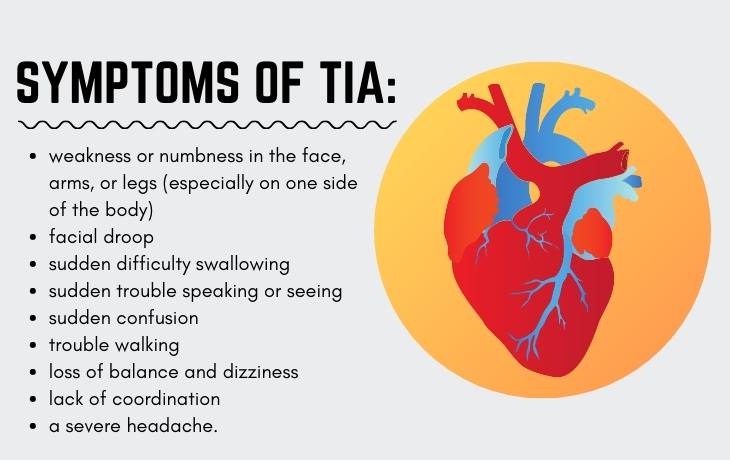
Due to this causal similarity, the signs and symptoms of TIA are identical to that of stroke. However, the duration of symptoms is different. In a ministroke, the neurological symptoms last anywhere from a few minutes and up to 24 hours. The symptoms and complications of a stroke last for a day or more and may never clear up. 
 
The exact symptoms of a ministroke are very individual, it all depends on which part of the brain is depleted of blood supply. We list the common symptoms of both ministroke and stroke as per the CDC in the image below, and you can read more on the topic in our article titled What Can You Do to Save Yourself in Case of a Stroke?
Ministroke (TIA) Symptoms of TIA
All things considered, a ministroke should always be treated as a stroke because only a doctor can distinguish between the two and administer proper treatment. If you or someone you know is experiencing any of these symptoms, seek immediate medical attention. If the symptoms go away by the time the doctor arrives, describe your symptoms and ask for a more thorough evaluation. 
 
Those diagnosed with a ministroke in the past should never disregard it because TIA can signal an imminent stroke. According to the CDC, “More than a third of people who have a TIA and don’t get treatment have a major stroke within 1 year. As many as 10% to 15% of people will have a major stroke within 3 months of a TIA.”

The causes of TIA 
 
TIAs and stroke have the same root cause — a blood clot blocking a blood vessel in the brain. This usually occurs as a result of: 
 
Embolism - a blood clot travels from another part of the body (e.g. the heart) to the brain. 
 
Atherosclerosis - fatty plaque builds up in a blood vessel, obstructing blood flow. Those suffering from high blood pressure are at a high risk of atherosclerosis and therefore ministroke and stroke too.

What puts you at risk of TIA? 
 
 A number of factors increase the risk of stroke and ministroke, and not all of them are under our control. Unfortunately, the risk of TIA and stroke increases with age, so we all have a chance to develop one of these conditions over time. Women are also more likely to experience a ministroke and stroke than men. Everyone with a family member who has had a stroke, no matter their age or gender, has a higher risk of developing TIA and stroke. Lastly, diabetes sufferers are more likely to experience TIA and stroke than non-diabetics. 
 
On the bright side, there are many risk factors of ministroke you can eliminate from your life. These are:

Not enough physical activity can contribute to TIA and stroke. 
 
Smoking - cigarette smoke damages the cardiovascular system, which raises the risk of ministroke and stroke. 
 
High cholesterol - a diet high in trans fat and saturated fat (fatty cuts of red meat, fast food, and anything fried) makes your levels of LDL “bad” cholesterol surge, which then raises the risk of ministroke and stroke. ​
 
What can you do if someone nearby is having a stroke? 
Symptoms of ministroke and stroke tend to arise suddenly and unexpectedly, and you need to act fast and call an ambulance as soon as possible. 
 
The word “FAST” also helps you remember the things you should pay attention to if you suspect a stroke: 
 
Face - look at the person and ask them to smile. If one of the sides of the face droops, that points to a stroke. 
 
Arms - ask the person to raise their arms. If the arms are uneven and one arm drifts downward, that is a sign of a stroke. 
 
Speech - make the person repeat any simple phrase. Unorganized, strange, or slurred speech is a symptom of stroke. 
 
Time - If you notice any of these symptoms, call 911(or your local emergency service) immediately. 
 
Treatment and Prevention of TIA

A patient who has experienced TIA will undergo a thorough medical examination with the goal to identify the root cause of the issue and prevent a future stroke. A neurological examination, brain imaging, and blood-work will most likely be required to diagnose the issue. 
 
The treatment will depend on the results of the medical examinations, but it nearly always involves changing your lifestyle to manage atherosclerosis and prevent a future ministroke and stroke. 
 
You can follow the same tips to prevent TIA:  
 
1. Seek medical help to manage high blood pressure, diabetes, or high cholesterol if you suffer from any of these conditions. 
 
2. If you smoke, it’s necessary to stop. If someone in your household smokes, avoid secondhand smoke. 
 
3. Consume antioxidant-rich fruits, vegetables, and whole grains and avoid foods high in trans fats and saturated fats.
 
4. Be physically active and exercise on a regular basis. 
 
5. Limit your alcohol consumption as much as you can.

This is only for your information, kindly take the advice of your doctor for medicines, exercises and so on.   

https://gscrochetdesigns.blogspot.com. one can see my crochet creations  
https://gseasyrecipes.blogspot.com. feel free to view for easy, simple and healthy recipes    
https://kneereplacement-stickclub.blogspot.com. for info on knee replacement

https://GSiyers home remedies.blogspot.com     is my latest addition to my blogs. I'm going to add posts there, do give me your valuable feed back on my blogs. Thanks a lot, take care, be healthy and be happy.

Labels: , , , , , , ,

Saturday, October 16, 2021

Be Challenged. Not Overwhelmed.

There is a fine line between fulfillment and burnout.

Fulfillment is largely linked to purpose, which is driven by your sense of agency over a given result. If you believe that a marginal increase in effort will lead to an outcome you’re proud of, purpose ensures that you’ll put in that extra hour. This is especially true if there’s no one else but you that is responsible for what is created.

But at what point does this marginal effort actually harm the overall result? Or in economics-speak, at what point does the law of diminishing marginal utility kick in? And how do we know when we’ve arrived at that point?

To answer this, let’s explore the bottlenecks of human effort.

The utility of effort generally faces one of two constraints:

(1) Motivation, or
(2) Fatigue.

Let’s start with motivation.

You can have thousands of productive hours amassed in one space, but if those people find zero purpose in what they’re doing, you will have a sub-par result. Imagine an employer that boasts about how many employees he has, but no one believes in the vision. It won’t be long before that company loses ground to a small team of five people that are fanatical about what they do.

In this case, the bottleneck isn’t the lack of manpower. It’s the poverty of enthusiasm that is needed to make that manpower useful. After all, the quantity of workable hours is meaningless without the quality necessary to make it productive.

To solve this problem, employers often use money to bridge the gap. But as I’ve noted before, an increase in pay cannot increase motivation. The best thing it can do is to prevent a decrease in motivation, which is entirely different. Increasing motivation can only come through what psychologist Frederick Herzberg aptly referred to as “motivators,” which are things like challenging work, recognition, responsibility, and personal growth.

This is why people with high salaries doing difficult work can still feel that it’s pointless. If the nature of that work doesn’t align with their values or their curiosities, then it will feel like they’re watering a plant that looks fine on the outside, but its roots are quickly decaying. Being dead on the inside will eventually find its way to the outside, no matter how much you effort you put into taking care of appearances.

So that’s the first bottleneck. If a surge of effort hits a wall of indifference, nothing too great is going to come out of it.

But perhaps this bottleneck is one that doesn’t concern you. You find immense purpose in what you work on, and derive a ton of meaning from it. You regularly enter flow states and are happy to invest whatever time you have into your craft.

First off, congratulations, that’s a wonderful spot to be in. But over time, you’ll realize that you’ll regularly hit the second bottleneck of effort:

Fatigue.

The thing about purposeful work is that the boundary between work and the rest of life tends to dissolve. This is especially true now, where remote work has removed the age-old physical boundaries that we once relied upon to switch over to leisure mode. As the cues to relax become more subtle, we are less prone to recognize nor heed them.

This creates a condition where any given moment is an opportunity to spend more effort on your work. The only real constraint seems to be time, and given that we all have 24 hours in a day, it seems fitting to spend much of it on what we find so meaningful. As they say, being awake is much more fun than being asleep.

But of course, fatigue is the bottleneck here. What I find most interesting about the law of entropy is that it’s not confined to the material world. It applies to our attention as well. While you can muster the effort required to sharpen attention and keep it focused on a task, it’s only a matter of time before it disintegrates and submits to the arms of disorder.

Burnout is what happens when we try to fight this natural tendency for too long. It happens when we’ve exhausted our productive effort, but still believe that squeezing in another hour will contribute something substantive. Or when we think that having the gift of challenge has empowered with us the energy we need to solve every problem thrown at us.

At the start of this reflection, I asked how we could tell when our expenditure of effort begins to cross into burnout territory. And I think this is where the answer lies:

The pivot point is where the tide of challenge balloons into the storm of overwhelm.

Challenge is good. In fact, it’s the one thing that gives purpose to what we do. And purpose is about figuring out how to ride that tide, to solve problems when they arise, and to change directions when situations call for it. This is effort well spent.

Overwhelm, however, is a different story.

When you’re overwhelmed, you are lost in the current of circumstance. You are going against the tide of challenge, and have entered a whirlpool where you feel like you’ve lost all control. It’s when you relieve tension not by taking a deep breath, but by letting out a long exasperated sigh. That’s a telltale physical release of an overwhelmed mind.

When we start our days, I find that we are largely energized by the promise of challenge. But as we progress through it, the winds of discontent may come and disturb the tide, causing it to morph into something far larger and scarier.

We get an unexpected, urgent request. We get distracted by social media, and are upset at ourselves for wasting time. We are pressed by deadlines that keep looming nearer, and we feel so behind.

But in each moment, if you’re aware enough, you’ll notice each disturbance. When you get that unexpected email, you’ll feel the slight sensation of overwhelm hit. The key is to recognize it, and to remind yourself that you won’t contribute to the formation of a storm. Instead, you’ll see it as a small wave you can mindfully ride, and allow it to subside in due time.

This is how you navigate the ocean of your mind. By being grateful for the problems you have to solve, but by observing whenever those problems morph into something exasperating. By giving yourself the space to go to back to shore, and to take a moment to rest.

It’s an amazing privilege to solve problems you care about. Just make sure you’re in the position to remind yourself that it’s a privilege whenever you can.

This is only for your information, kindly take the advice of your doctor for medicines, exercises and so on.   

https://gscrochetdesigns.blogspot.com. one can see my crochet creations  
https://gseasyrecipes.blogspot.com. feel free to view for easy, simple and healthy recipes    
https://kneereplacement-stickclub.blogspot.com. for info on knee replacement


Labels: , , , , , , , , , , , , , ,