Wednesday, February 08, 2023

The Signs of a Ministroke (TIA) and Ways to Prevent It

Have you ever heard of the word “ministroke”? The proper term for this health emergency is transient ischemic attack (or simply TIA), and it occurs when blood flow is temporarily cut off to a part of the brain. Ministrokes usually resolve within a day and do not inflict lasting damage to the brain. 
 
“Since it doesn’t cause permanent damage, it’s often ignored. But this is a big mistake. TIAs may signal a full-blown stroke ahead,” warns the American Stroke Association. If you or someone you know is experiencing symptoms of TIA, never turn a blind eye and get urgent medical help. 
 
Let’s investigate how a ministroke differs from a full-blown stroke, learn about the signs of TIA, and what you can do to prevent it.

How is a ministroke different from a stroke?
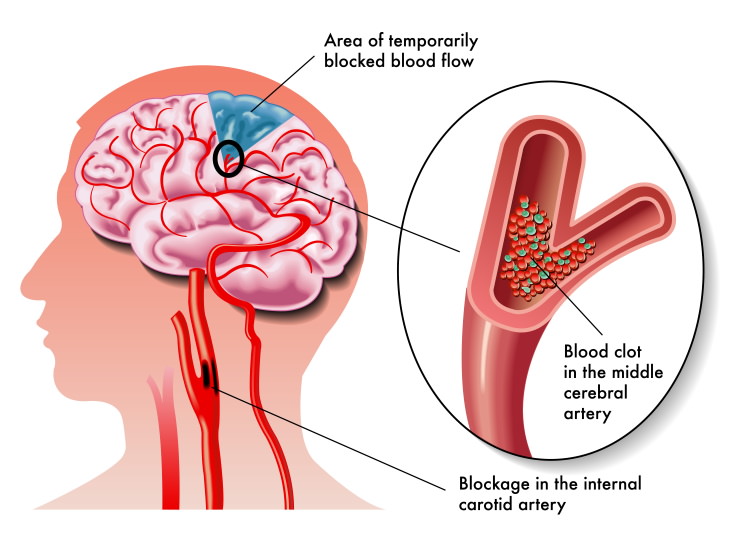
Ministroke (TIA) ministroke chart illustrating TIA

TIA and stroke are two sides of the same coin. The only real difference between a ministroke and a full-blown stroke is time. During a ministroke, the blockage of the blood vessel in the brain is brief enough that it doesn’t cause lasting damage to the brain tissue. In a stroke, blood flow is cut off long enough for such damage to occur. 
 
Due to this causal similarity, the signs and symptoms of TIA are identical to that of stroke. However, the duration of symptoms is different. In a ministroke, the neurological symptoms last anywhere from a few minutes and up to 24 hours. The symptoms and complications of a stroke last for a day or more and may never clear up. 
 
The exact symptoms of a ministroke are very individual, it all depends on which part of the brain is depleted of blood supply. We list the common symptoms of both ministroke and stroke as per the CDC in the image below, and you can read more on the topic in our article titled What Can You Do to Save Yourself in Case of a Stroke?
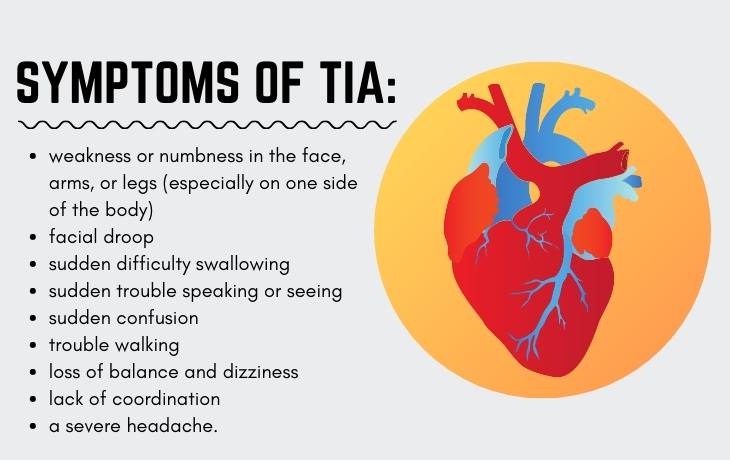
Ministroke (TIA) Symptoms of TIA
All things considered, a ministroke should always be treated as a stroke because only a doctor can distinguish between the two and administer proper treatment. If you or someone you know is experiencing any of these symptoms, seek immediate medical attention. If the symptoms go away by the time the doctor arrives, describe your symptoms and ask for a more thorough evaluation. 
 
Those diagnosed with a ministroke in the past should never disregard it because TIA can signal an imminent stroke. According to the CDC, “More than a third of people who have a TIA and don’t get treatment have a major stroke within 1 year. As many as 10% to 15% of people will have a major stroke within 3 months of a TIA.”

The causes of TIA 
 
TIAs and stroke have the same root cause — a blood clot blocking a blood vessel in the brain. This usually occurs as a result of: 
 
Embolism - a blood clot travels from another part of the body (e.g. the heart) to the brain. 
 
Atherosclerosis - fatty plaque builds up in a blood vessel, obstructing blood flow. Those suffering from high blood pressure are at a high risk of atherosclerosis and therefore ministroke and stroke too.

What puts you at risk of TIA? 
 
 A number of factors increase the risk of stroke and ministroke, and not all of them are under our control. Unfortunately, the risk of TIA and stroke increases with age, so we all have a chance to develop one of these conditions over time. Women are also more likely to experience a ministroke and stroke than men. Everyone with a family member who has had a stroke, no matter their age or gender, has a higher risk of developing TIA and stroke. Lastly, diabetes sufferers are more likely to experience TIA and stroke than non-diabetics. 
 
On the bright side, there are many risk factors of ministroke you can eliminate from your life. These are:

Not enough physical activity can contribute to TIA and stroke. 
 
Smoking - cigarette smoke damages the cardiovascular system, which raises the risk of ministroke and stroke. 
 
High cholesterol - a diet high in trans fat and saturated fat (fatty cuts of red meat, fast food, and anything fried) makes your levels of LDL “bad” cholesterol surge, which then raises the risk of ministroke and stroke. ​
 
What can you do if someone nearby is having a stroke? 
Symptoms of ministroke and stroke tend to arise suddenly and unexpectedly, and you need to act fast and call an ambulance as soon as possible. 
 
The word “FAST” also helps you remember the things you should pay attention to if you suspect a stroke: 
 
Face - look at the person and ask them to smile. If one of the sides of the face droops, that points to a stroke. 
 
Arms - ask the person to raise their arms. If the arms are uneven and one arm drifts downward, that is a sign of a stroke. 
 
Speech - make the person repeat any simple phrase. Unorganized, strange, or slurred speech is a symptom of stroke. 
 
Time - If you notice any of these symptoms, call 911(or your local emergency service) immediately. 
 
Treatment and Prevention of TIA

A patient who has experienced TIA will undergo a thorough medical examination with the goal to identify the root cause of the issue and prevent a future stroke. A neurological examination, brain imaging, and blood-work will most likely be required to diagnose the issue. 
 
The treatment will depend on the results of the medical examinations, but it nearly always involves changing your lifestyle to manage atherosclerosis and prevent a future ministroke and stroke. 
 
You can follow the same tips to prevent TIA:  
 
1. Seek medical help to manage high blood pressure, diabetes, or high cholesterol if you suffer from any of these conditions. 
 
2. If you smoke, it’s necessary to stop. If someone in your household smokes, avoid secondhand smoke. 
 
3. Consume antioxidant-rich fruits, vegetables, and whole grains and avoid foods high in trans fats and saturated fats.
 
4. Be physically active and exercise on a regular basis. 
 
5. Limit your alcohol consumption as much as you can.

This is only for your information, kindly take the advice of your doctor for medicines, exercises and so on.   

https://gscrochetdesigns.blogspot.com. one can see my crochet creations  
https://gseasyrecipes.blogspot.com. feel free to view for easy, simple and healthy recipes    
https://kneereplacement-stickclub.blogspot.com. for info on knee replacement

https://GSiyers home remedies.blogspot.com     is my latest addition to my blogs. I'm going to add posts there, do give me your valuable feed back on my blogs. Thanks a lot, take care, be healthy and be happy.

Labels: , , , , , , ,

Wednesday, July 06, 2022

Covid-19 impact: Immune response triggered by infection can damage brain, says report

A study from the National Institutes of Health (NIH) said the immune response triggered by Covid-19 infection can damage the brain's blood vessels and may lead to short- and long-term neurological symptoms. In a study published in Brain, researchers from the National Institute of Neurological Disorders and Stroke (NINDS) examined brain changes in nine people who died suddenly after contracting the virus.The scientists found evidence that antibodies - proteins produced by the immune system in response to viruses and other invaders - are involved in an attack on the cells lining the brain's blood vessels, leading to inflammation and damage.

Consistent with an earlier study from the group, SARS-CoV-2 was not detected in the patients' brains, suggesting the virus was not infecting the brain directly. Understanding how SARS-CoV-2 can trigger brain damage may help inform the development of therapies for Covid-19 patients who have lingering neurological symptoms, according to NIH. "Patients often develop neurological complications with Covid-19, but the underlying pathophysiological process is not well understood," said Avindra Nath, M.D., clinical director at NINDS and the senior author of the study. "We had previously shown blood vessel damage and inflammation in patients' brains at autopsy, but we didn't understand the cause of the damage. I think in this paper we've gained important insight into the cascade of events."

Dr Nath and his team found that antibodies produced in response to Covid-19 may mistakenly target cells crucial to the blood-brain barrier. Tightly packed endothelial cells help form the blood-brain barrier, which keeps harmful substances from reaching the brain while allowing necessary substances to pass through. Damage to endothelial cells in blood vessels in the brain can lead to leakage of proteins from the blood. This causes bleeds and clots in some Covid-19 patients and can increase the risk of stroke. For the first time, researchers observed deposits of immune complexes - molecules formed when antibodies bind antigens (foreign substances) - on the surface of endothelial cells in the brains of Covid-19 patients. Such immune complexes can damage tissue by triggering inflammation.

The study builds on their previous research, which found evidence of brain damage caused by thinning and leaky blood vessels. They suspected that the damage may have been due to the body`s natural inflammatory response to the virus, the NIH said. To further explore this immune response, Dr Nath and his team examined brain tissue from a subset of patients in the previous study. The nine individuals, age 24 to 73, were chosen because they showed signs of blood vessel damage in the brain based on structural brain scans. The samples were compared to those from 10 controls. The team looked at neuroinflammation and immune responses using immunohistochemistry, a technique that uses antibodies to identify specific marker proteins in the tissues.

As in their earlier study, researchers found signs of leaky blood vessels, based on the presence of blood proteins that normally do not cross the blood-brain barrier. This suggests that the tight junctions between the endothelial cells in the blood-brain barrier are damaged. Dr Nath and his colleagues found evidence that damage to endothelial cells was likely due to an immune response - discovering deposits of immune complexes on the surface of the cells. These observations suggest an antibody-mediated attack that activates endothelial cells. When endothelial cells are activated, they express proteins called adhesion molecules that cause platelets to stick together. High levels of adhesion molecules were found in endothelial cells in the samples of brain tissue."Activation of the endothelial cells brings platelets that stick to the blood vessel walls, causing clots to form and leakage to occur. At the same time the tight junctions between the endothelial cells get disrupted causing them to leak," Dr Nath explained. "Once leakage occurs, immune cells such as macrophages may come to repair the damage, setting up inflammation. This, in turn, causes damage to neurons."

Researchers found that in areas with damage to the endothelial cells, more than 300 genes showed decreased expression, while six genes were increased. These genes were associated with oxidative stress, DNA damage, and metabolic dysregulation. This may provide clues to the molecular basis of neurological symptoms related to Covid-19 and offer potential therapeutic targets. Together, these findings give insight into the immune response damaging the brain after Covid-19 infection. But it remains unclear what antigen the immune response is targeting, as the virus itself was not detected in the brain. It is possible that antibodies against the SARS-CoV-2 spike protein could bind to the ACE2 receptor used by the virus to enter cells. More research is needed to explore this hypothesis.

According to NIH, the study may also have implications for understanding and treating long-term neurological symptoms after Covid-19, which include headache, fatigue, loss of taste and smell, sleep problems and "brain fog." Had the patients in the study survived, the researchers believe they would likely have developed Long Covid. "It is quite possible that this same immune response persists in Long Covid patients resulting in neuronal injury," said Dr Nath. "There could be a small indolent immune response that is continuing, which means that immune-modulating therapies might help these patients. So these findings have very important therapeutic implications."The results suggest that treatments designed to prevent the development of the immune complexes observed in the study could be potential therapies for post-Covid neurological symptoms.


This is only for your information, kindly take the advice of your doctor for medicines, exercises and so on.   

https://gscrochetdesigns.blogspot.com. one can see my crochet creations  
https://gseasyrecipes.blogspot.com. feel free to view for easy, simple and healthy recipes    
https://kneereplacement-stickclub.blogspot.com. for info on knee replacement


Labels: , , , , , , ,