What Should You Do if Bitten by a Tick?
Parasites
are never a pleasant thing to discover on your body, but ticks are of
special concern, as some strains carry and transmit Lyme disease, a
harrowing medical condition which may result in long-term fatigue, joint
pain, facial paralysis and severe headaches if left untreated.
Here is what you should know about dealing with ticks
Locating the tick

Ticks
like humidity and warmth. As a consequence, their favorite haunts are
areas of the body that also offer them a lot of concealment, like the
armpits, under the breasts, between toes and on the groin. Make sure to
check these tricky areas when returning from an outing in a grassy area.
Identifying the threat


Do
not use any “remedy” like applying a cream to the area and the tick or
painting the tick in nail polish, and do not wait for the tick to detach
on its own. The average time it takes for a tick nymph to transmit Lyme
disease is around 36-48 hours. Try to gauge how long the tick has been
there by remembering the last time you’ve been around grass and looking
at the tick. The longer the tick has been feeding, the more obviously
bloated its abdomen will be.
Removing the pest

Grasp
the tick with fine-tipped tweezers as close to the skin as possible and
pull it upwards with a steady hand. In case the tick is torn in the
process, with the mouth still attached to the skin, remove it separately
with clean tweezers. Place the tick in a plastic bag or sealed box. It
may be important to keep it, as not all ticks transmit Lyme disease, and
identifying the culprit may be important. After handling the tick,
clean the bite area with alcohol or soap.
Follow Up

If
you develop a rash at the site of the tick bite after removing the
tick, consult with a doctor. The rash may take weeks to manifest, so try
to remember the time and spot of the bite. Make sure to mention the
tick to the doctor. The rash is typically painless, does not itch, and
may grow in size, appearing like a “bull’s eye”. The rash doesn’t always
appear this way, and in 20% of cases, there won’t be a rash at all. If
no rash is present, be on the lookout for other symptoms, such as fever,
fatigue and joint pain. If a knee begins to swell painlessly and
without connection to any physical activity, that too may be a telltale
sign of Lyme disease.
Early
identification and treatment is crucial, as it may save you from some
of the harsher, permanent symptoms of Lyme disease, including long-term
brain damage.
FOR
CROCHET DESIGNS
https://gscrochetdesigns.blogspot.com
THIS IS ONLY FOR INFORMATION, ALWAYS CONSULT YOU PHYSICIAN BEFORE
HAVING ANY PARTICULAR FOOD/ MEDICATION/EXERCISE/OTHER REMEDIES.
PS-
THOSE INTERESTED IN
RECIPES ARE FREE TO VIEW MY BLOG-
https://gseasyrecipes.blogspot.com/
FOR INFO ABOUT KNEE
REPLACEMENT, YOU CAN VIEW MY BLOG-
https:// kneereplacement-stickclub.blogspot.com/
Labels: brain damage, clean with soap or alcohol, eight legs, Fatigue, fever, identify, Joint Pain, knee swelling, Lyme disease, no pain, no wings, rashes, small nymphs, tick bite, time, transmits, tweezers
posted by G S Iyer at 3:28 AM
0 comments

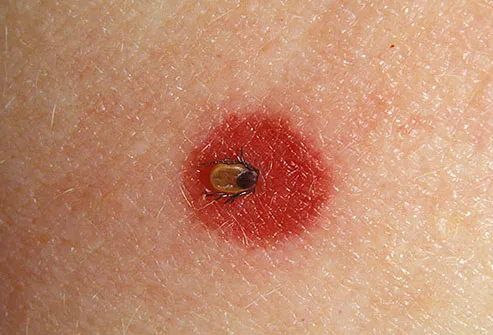 Lyme disease is an infection that is transmitted through the bite of a tick infected with a bacterium called Borrelia burgdorferi.
Ticks typically get the bacterium by biting infected animals, like deer
and mice. Most people who get tick bites do not get Lyme disease. Not
all ticks are infected, and the risk for contracting the disease
increases the longer the tick is attached to the body
Lyme disease is an infection that is transmitted through the bite of a tick infected with a bacterium called Borrelia burgdorferi.
Ticks typically get the bacterium by biting infected animals, like deer
and mice. Most people who get tick bites do not get Lyme disease. Not
all ticks are infected, and the risk for contracting the disease
increases the longer the tick is attached to the body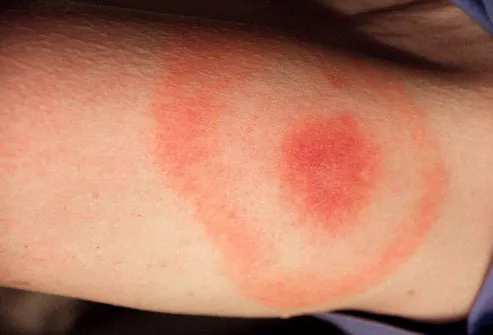
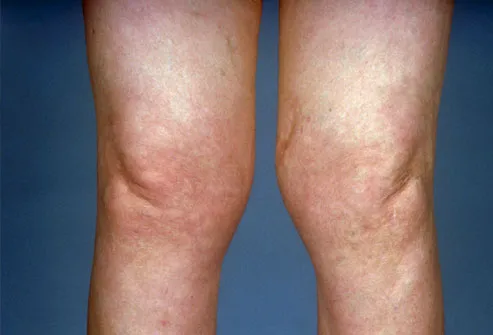 This is the most serious stage of the disease, when treatment was either
not successful or never started occurring many months after
the initial bite. Joint inflammation (arthritis), typically in the
knees, becomes apparent, and may become chronic. The nervous system can
develop abnormal sensation because of disease of peripheral nerves
(peripheral neuropathy), and confusion. Heart problems are less common,
but can include inflammation of the heart muscle and an irregular beat.
This is the most serious stage of the disease, when treatment was either
not successful or never started occurring many months after
the initial bite. Joint inflammation (arthritis), typically in the
knees, becomes apparent, and may become chronic. The nervous system can
develop abnormal sensation because of disease of peripheral nerves
(peripheral neuropathy), and confusion. Heart problems are less common,
but can include inflammation of the heart muscle and an irregular beat.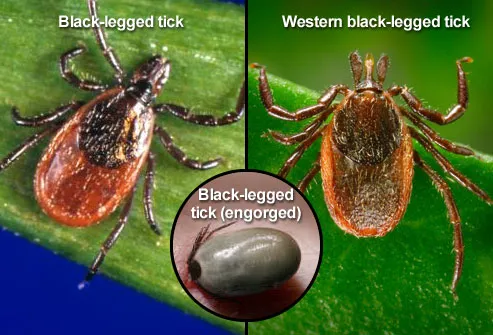 In NE and north-central U.S., the black-legged tick (or
deer tick) transmits the disease. In the Pacific coastal U.S., the
disease is spread by the western black-legged tick. Other major tick
species found in the U.S., including the lone star tick and the dog
tick, have NOT been shown to transmit the Lyme disease bacterium. But
beware: Lyme disease has been reported in all 50 states, as well as in
Canada, Europe, Asia, Australia, and South America.
In NE and north-central U.S., the black-legged tick (or
deer tick) transmits the disease. In the Pacific coastal U.S., the
disease is spread by the western black-legged tick. Other major tick
species found in the U.S., including the lone star tick and the dog
tick, have NOT been shown to transmit the Lyme disease bacterium. But
beware: Lyme disease has been reported in all 50 states, as well as in
Canada, Europe, Asia, Australia, and South America.