Lyme Disease: Symptoms, Treatments, and Prevention!
Lyme disease is caused by Borrelia
burgdorferi, a bacterium that’s transmitted to humans when they are
bitten by an infected black-legged or deer tick. Once infected, symptoms
can occur anywhere from 3-30 days after the bite, and they can be
wide-ranging, depending on the stage of infection. The chances of
contracting Lyme disease from a tick bite depends on the kind of tick,
where you were bitten, when the bite occurred, and how long the tick was
attached to you. According to the CDC, black-legged ticks must be
attached for at least 24 hours to transmit Lyme disease.
What Are the Symptoms of Lyme Disease?
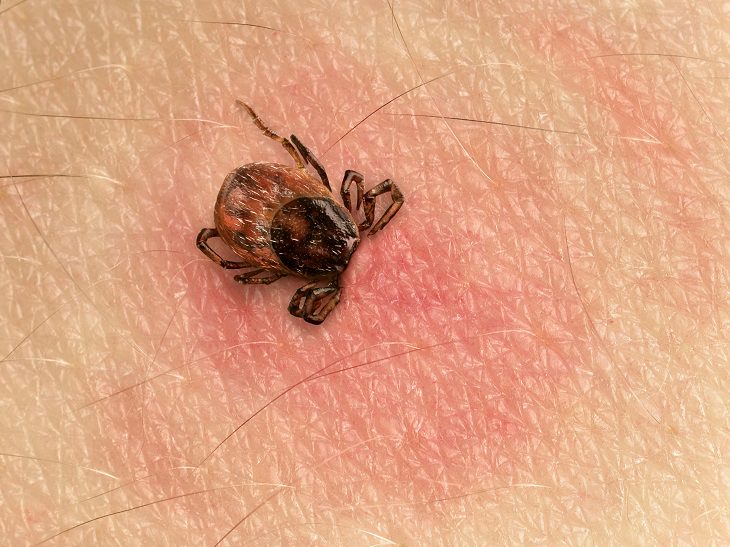
Early signs and symptoms of this disease
include chills, fever, fatigue, headaches, muscle and joint pain, and
swollen lymph nodes. In about 70-80% of infections a rash is seen. This
rash will gradually expand over a period of days and can grow to around
12 inches wide. It may feel warm to the touch, but it shouldn’t be itchy
or painful, and it can appear anywhere on the body.
As the infection progresses, symptoms can include:
• Severe headaches or neck stiffness
• Heart palpitation or an irregular heartbeat
• Inflammation of the spinal cord and brain
• Loss of muscle tone or drooping on one or both sides of the face
• Additional rashes on other parts of the body
• Arthritis with severe joint pain and swelling, particularly in the
knees
• Shooting pains, numbness, and tingling in the hands or feet
How is Lyme Disease Diagnosed?
Lyme disease is diagnosed based on symptoms and history of tick
exposure. A two-step blood test may also be taken, but the accuracy of
this test depends on the stage the disease is in. For example, in the
first few weeks of infection, the test may be negative, as antibodies
take a few weeks to develop. These tests aren’t recommended for patients
who don’t have any of the common symptoms of Lyme disease.
How is Lyme Disease Treated?
The antibiotics amoxicillin and tetra cycline are used, usually for
10-21 days. Other antibiotics that might be used are cefuroxime and
doxycycline. If you get treatment for Lyme disease when the infection is
at an early stage, it is likely that you will make a full recovery.
How prevalent is Lyme Disease?
About 30,00 cases are reported each year,
but the CDC estimates that you can add another 300,000 infections to
this figure. Infection is more common in males up to age 15 and between
the ages of 40 and 60. The reason for this is these are people who are
more likely to play outside, and go hiking, camping, and hunting.
How to avoid ticks completely and prevent catching Lyme disease
What Areas Are More Likely to Have Lyme Disease?
Mainly the Mid-Atlantic states, New England, and parts of the upper
Midwest. According to the CDC, 95% of confirmed cases in 2015 were in
the following 14 states: Delaware, Maine, Connecticut, Minnesota,
Maryland, Massachusetts, New Hampshire, New York, New Jersey,
Pennsylvania, Vermont, Rhode Island, Wisconsin, and Virginia. It can
also be found in California, where it is carried by deer.
Black-legged ticks can be found in 43 states, but they behave
differently according to the climate. For example, in the South, which
is more prone to hot weather, ticks tend to stay under leaf litter and
don’t come out to feed as they’ll dry out. This means that Southern
ticks don’t transmit Lyme disease frequently as they don’t tend to feed
on humans.
What’s Driving up Lyme Disease Numbers?
While increasing temperatures worldwide has made more Northern areas
such as Maine, Canada, and Minnesota hospitable to ticks, the population
of deer carrying the ticks probably plays a much bigger role.
Development led to record low numbers of deer early in the last century,
but the deer population has increased as a result of reforestation over
the past several decades, meaning the tick population has increased as
well. Furthermore, white-footed mice, which also transmit Lyme disease
to ticks that bite them, are moving closer to humans as their habitat
disappears.
Another reason is that warm weather and mild winters may bring more
people outside, increasing their chances of being bitten, especially in
Lyme-prone areas.
How do you know if you have been bitten ? 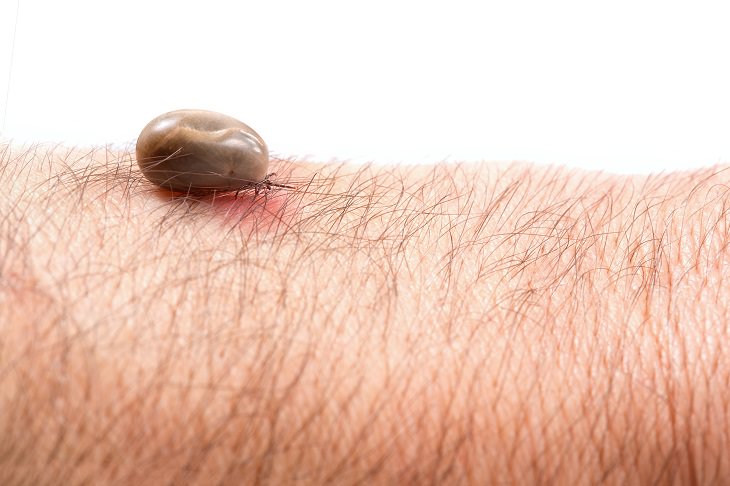
Since ticks are the size of a poppy seed,
you’ve got to have pretty good eyesight to spot them. The CDC recommends
that if you’ve been walking in the woods, tall grass, or working in
your garden, that you check your skin afterwards, ideally in the bath or
shower.
What Do You Do If There’s a Tick Under Your Skin
Remove it with a pair of tweezers as soon as possible, pulling upward
with steady pressure. If parts of the tick remain in your skin, try to
remove them with the tweezers. After everything is out, clean the area
with rubbing alcohol or soap and water. Put the tick in a piece of
tissue, and close it in a zip bag.
When should You See Your Doctor?
A rash is a pretty good indication that you might have Lyme disease.
Therefore, if a rash starts to develop in the area you were bitten, you
should visit your doctor immediately. At this stage of the illness,
treatment with some antibiotics will likely see you make a full
recovery.
What’s the Best Way to Prevent a Tick Bite?
Ticks cannot fly or jump, but instead live in shrubs and bushes, and
grab onto someone when they walk by. To avoid getting bitten, wear pants
and socks in woods, areas with a lot of trees, and while handling
fallen leaves. Wear some tick repellents and clothing that has DEET,
lemon oil, or eucalyptus.
Shower as soon as you get home. This lets you look at your skin and wash
any ticks out of your hair. Furthermore, put the clothes you were
wearing into a hot wash to kill whatever ticks might remain.
T