Thursday, September 12, 2024

Early symptoms of blood cancer and common tests to diagnose it

 Blood cancer, also known as hematologic cancer, encompasses a variety of cancers affecting blood, bone marrow, and lymphatic systems, such as leukemia, lymphoma, and myeloma. These cancers often share early symptoms that may appear vague or resemble other common illnesses, making early detection challenging. Recognizing these symptoms is crucial for timely diagnosis and treatment.

Unexplained fatigue: Persistent and unexplained fatigue is one of the earliest and most common symptoms of blood cancer. This fatigue is often severe and does not improve with rest.

Frequent infections: Blood cancers weaken the immune system, leading to frequent infections. Patients may find themselves susceptible to recurrent colds, flu, or other infections that take longer than usual to recover from.

Unexplained bruising or bleeding: Easy bruising, frequent nosebleeds, or bleeding gums can be early signs of blood cancer. This happens due to a lack of platelets, the blood cells responsible for clotting.

Swollen lymph nodes: Enlarged lymph nodes, particularly in the neck, armpits, or groin, can be a sign of lymphoma, one of the types of blood cancer.

Bone pain: Some blood cancers, particularly myeloma, cause pain in the bones, particularly in the back or ribs, as the cancer cells multiply within the bone marrow.

Paleness or anemia: Blood cancers often cause a significant decrease in red blood cells, leading to anemia. This may manifest as pale skin, shortness of breath, or dizziness.

Fever and night sweats: Unexplained fevers and night sweats are also common early signs of blood cancer. These symptoms often come and go and may not be associated with an obvious infection.

Common diagnostic tests for Blood CancerWhen blood cancer is suspected, doctors will order several tests to confirm the diagnosis. Here are the most common diagnostic tests used:

Complete Blood Count (CBC): This is often the first test ordered when blood cancer is suspected. A CBC measures the levels of red blood cells, white blood cells, and platelets in the blood. Abnormal counts can indicate the presence of blood cancer.

Bone Marrow Biopsy: A bone marrow biopsy involves extracting a small sample of bone marrow, usually from the hip bone, to examine for the presence of cancerous cells. This test is crucial for diagnosing leukemia, lymphoma, and myeloma.

Flow Cytometry: This test analyzes the physical and chemical properties of cells in a sample of blood or bone marrow. It helps identify specific markers on the surface of cancer cells, aiding in diagnosis and classification.

Imaging Tests: X-rays, CT scans, or PET scans may be used to check for enlarged lymph nodes, tumors, or other signs of blood cancer in different parts of the body.

Cytogenetic Testing: This test examines the chromosomes of blood or bone marrow cells to identify genetic abnormalities that may indicate the presence of blood cancer.

Early diagnosis of blood cancer significantly improves treatment outcomes, highlighting the importance of recognizing symptoms and undergoing appropriate tests.


This is only for your information, kindly take the advice of your doctor for medicines, exercises and so on.   

https://gscrochetdesigns.blogspot.com. one can see my crochet creations  
https://gseasyrecipes.blogspot.com. feel free to view for easy, simple and healthy recipes    
https://kneereplacement-stickclub.blogspot.com. for info on knee replacement
https://cancersupportindia.blogspot.com  for infor on cancer and health related topics
https://GSiyers home remedies.blogspot.com   is the latest addition to my blogs. I'm going to add posts there, do give me your valuable feed back on my blogs. Thanks a lot, take care, be healthy and be happy.


Labels: , , , , , , , ,

Sunday, July 31, 2022

Monkeypox vs. Chickenpox: How to differentiate between the two?

Know the key differences between Monkeypox and Chickenpox

The World Health Organisation (WHO) on Saturday declared monkeypox a 'global health emergency' due to the rising number of cases worldwide.

Just recently, India confirmed three cases of Monkeypox in small districts of Kerala. On Sunday, official sources detected India's fourth and Delhi's first case of the disease.

The 31-year-old man was admitted to Maulana Azad Medical College with fever and skin lesions, revealed the Health Ministry.

"1st case of Monkeypox detected in Delhi. The patient is stable & recovering. There's no need to panic. The situation is under control. We have made a separate isolation ward at LNJP. Our best team is on the case to prevent the spread & protect Delhiites," Delhi CM Arvind Kejriwal wrote in a tweet.

Amid increasing chaos and concern, it is important to know what monkeypox is and how it differs from chickenpox, which is said to be somewhat similar to the illness.


What is Monkeypox vs. Chickenpox?

Monkeypox is an illness caused by the monkeypox virus, which belongs to the Orthopoxvirus genus in the family Poxviridae, whereas Chickenpox is caused by the varicella-zoster virus, which also causes shingles.

Both these viruses have the potential to spread through close contact, through respiratory droplets and/or through direct contact with skin lesions.

It is to note that while chickenpox is extremely common and contagious, monkeypox is a rare occurrence and does not spread as easily.


Fever may be a common symptom, but time of occurrence may differ

Monkeypox and chickenpox may cause mild illness and with the right treatment, the disease might get cured over time.

Some of the common symptoms include: fever, headache, muscle aches, backache, chills and exhaustion.

Since fever is a common symptom, the time of onset may differ in monkeypox and chickenpox.

While fever with monkeypox may arise 1-5 days before rash appearance, which is another common symptom of both monkeypox and chickenpox, fever associated with the latter may appear 1-2 days before rash.


Difference in incubation period

According to the US Centers for Disease Control and Prevention (CDC), the incubation period for monkeypox can go from 7 to 14 days, while symptoms of chickenpox can take upto 16 days to appear.


One key difference in symptoms

While most initial symptoms of monkeypox coincide with chickenpox, one distinctive feature of the former is swollen lymph nodes, which do not occur with chickenpox.

According to the Mayo Clinic, swollen lymph nodes usually occur as a result of infection from bacteria or viruses. Generally, the lymph glands play an essential role in fighting off infections.


How different is monkeypox-related rash to chickenpox rash

Rash is a common symptom in both monkeypox and chickenpox infection.

While monkeypox-related rash usually occurs within one to three days of a fever, chickenpox rash starts to appear 1 to 2 days after the fever.

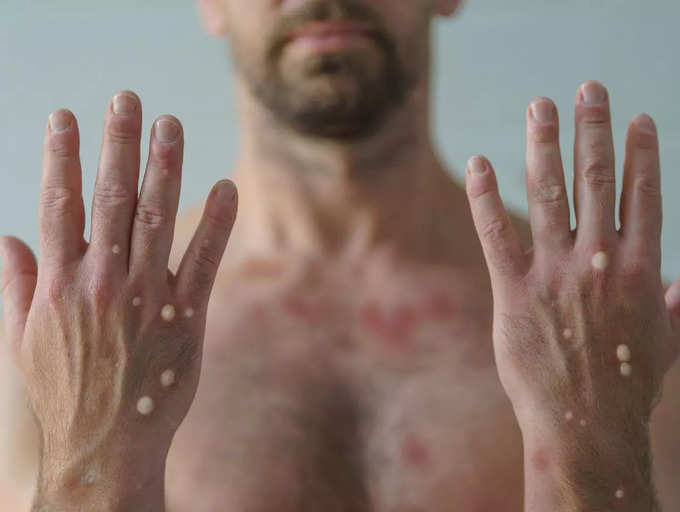
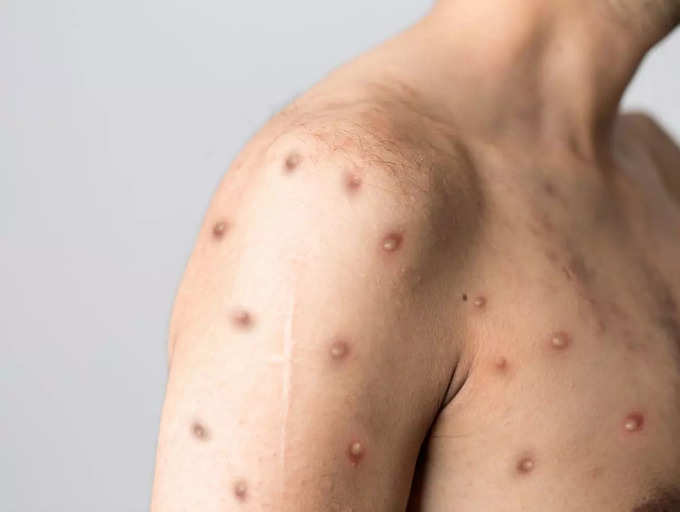
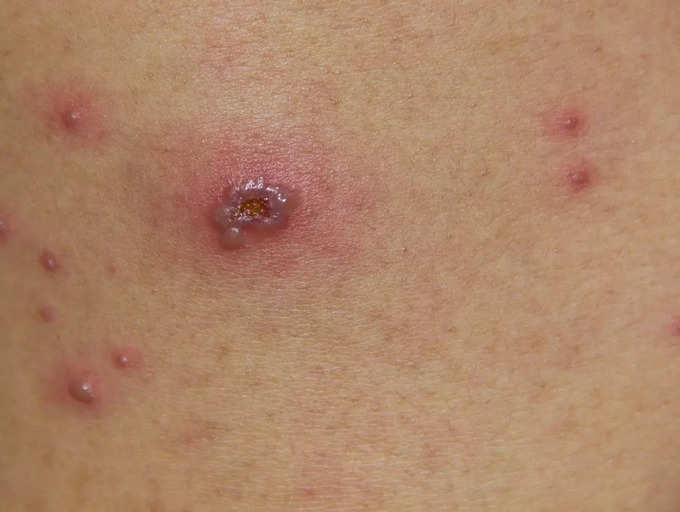
Often monkeypox rash starts on the face and spreads to other parts of the body, including palms and soles. First it develops into papules and fluid filled pustules and then takes the form of a scab and falls off.

Chickenpox rash is an itchy, blister-like rash, which first appears on the chest, back and the face. Then it spreads over the entire body, except on the palms and soles. 

Ways to prevent the spread

Monkey and chickenpox can be spread through close contact, either through direct contact with skin lesions or through respiratory droplets.

That said, coming in close contact with someone infected with the viruses must be avoided. Additionally, any clothing or bedding of the infected individual must be kept away from people.

In case of monkeypox, the CDC recommends washing your hands often with soap and water or using an alcohol-based hand sanitizer.

The best way to prevent chickenpox is by getting a chickenpox vaccine. Two doses of the vaccine are important for everyone, who have never had chickenpox or were never vaccinated.


This is only for your information, kindly take the advice of your doctor for medicines, exercises and so on.   

https://gscrochetdesigns.blogspot.com. one can see my crochet creations  
https://gseasyrecipes.blogspot.com. feel free to view for easy, simple and healthy recipes    
https://kneereplacement-stickclub.blogspot.com. for info on knee replacement
readmore

Labels: , , , , , , , , ,

Sunday, May 29, 2022

Monkeypox Fever: What Is It? Causes, Symptoms And Treatment, Explained

It’s just when we thought, coronavirus is reaching an endemic state, another viral infection Monkeypox is raising alarm, across the globe. This unusual occurrence of virus that was largely confined to central and western Africa, till a week back, is now being reported in 11 countries across Europe and North America and in Australia. The United States has also confirmed its first monkeypox case in a patient hospitalised in Massachusetts.

According to the Centers for Disease Control and Prevention (CDC) in 2021, two persons travelling from Nigeria to the US were diagnosed with this infection.

Monkeypox is mostly found in West and Central Africa, but in recent years cases have been seen in Europe, including the United Kingdom. However, those cases are usually associated with international travel or imported animals infected with pox, states the CDC.

The first case of monkeypox viral infection in humans was reported in 1970 in the Democratic Republic of the Congo, which otherwise infects simians. Infectious disease experts reveal that there have been only a few cases of monkeypox outside central and west Africa in the last 50 years. That’s why the sudden spurt of the infection in European regions has raised concerns.

The World Health Organisation (WHO) is keenly monitoring the outbreak of this viral fever. Further, it has been warned that the number of patients affected with monkeypox fever is expected to increase in the coming days.

Till now, no such case has been reported in India. However, in India, the National Centre for Disease Control and the Indian Council of Medical Research is closely watching the outbreak and the department has asked states to be vigilant. Renowned medical experts told the media that, there is no need to panic, as the potential of monkeypox fever is very less, besides being a self-limiting infection. Further, experts also stated that smallpox vaccination works against it, and can be immunologically speculated that certain people in India may be immune to monkeypox.

Read this article to know what is monkeypox fever, its causes, symptoms and treatment options available.

What Is Monkeypox?

Monkeypox is a viral zoonosis, a virus transmitted to humans from animals with symptoms related to smallpox, however, it is clinically less severe. With the elimination of smallpox in 1980 and following the ending of smallpox vaccination, monkeypox fever has emerged as the most vital orthopoxvirus for public health. Monkeypox mainly occurs in the rainforest regions of central and west Africa. Animal hosts include a wide variety of rodents and non-human primates.


Monkeypox virus is an enclosed double-stranded DNA virus, that belongs to the Orthopoxvirus genus of the Poxviridae family. Two unique genetic clades of the monkeypox virus are identified- the Central African (Congo Basin) clade and the West African clade. The Congo Basin clade has caused more serious diseases and is thought to be highly transmissible.

What Are Natural Hosts For Monkeypox Virus?

Several kinds of animal species have been identified as susceptible to the monkeypox virus, which includes rope squirrels, tree squirrels, Gambian pouched rats, dormice, non-human primates, and other species. However, it is still not clear about the history of the monkeypox virus and further studies are required to identify the exact source and how virus transmission is maintained in nature.

Symptoms Of Monkeypox

In humans, monkeypox is quite similar to smallpox, except for the enlargement of lymph nodes with monkeypox. Around 12 days of the incubation period, the infection starts with fever, headache, muscle aches, backache, swollen lymph nodes, feeling of discomfort and tiredness are common symptoms, Within 1 to 3 days, after developing a fever, the patient may see a popular rash (ie raised bumps), mostly seen on the face first, but at times initially on other regions of the body. The lesions happen through different stages, before crusting and falling off.

Key Facts Of Monkeypox:

  • This is caused by the monkeypox virus, a member of the Orthopoxvirus genus in the family Poxviridae
  • It is a viral zoonotic disease that develops mainly in tropical rainforest regions of Central and West Africa and is rarely distributed to other areas
  • This viral infection usually shows clinically with fever, rash and swollen lymph nodes and may result in a range of medical conditions
  • It is a self-limited disease with symptoms lasting from 2 to 4 weeks, severe cases can happen. The case-fatality ratio has been around 3-6%
  • Monkeypox is transmitted to human beings via close contact with an infected person or animal or any material contaminated with the virus
  • It spreads from one person to another by close contact with lesions, body fluids, respiratory droplets, and soiled materials like bedding
  • Vaccines used to eradicate smallpox also offered protection against monkeypox. Newer vaccines have been developed and one of them has been approved for the prevention of monkeypox
  • Antiviral medicine used for the treatment of smallpox has been also licensed for the treatment of monkeypox

How Long Does Monkeypox Last?

Monkeypox infection usually lasts for 2 to 4 weeks.

Is Monkeypox Fatal?

Human studies carried out in remote areas of central and west Africa have revealed case-fatality ratios of as high as 10%.

Treatment For Monkeypox

Currently, there is no treatment available for this viral infection. However, the smallpox vaccine has been found to lower the risk of monkeypox among previously vaccinated individuals. The Centres for Disease Control And Prevention is evaluating the possible role of smallpox vaccines as well as the therapeutic use of the antiviral drug cidofovir.

Prevention

Raising awareness of risk factors and educating people about effective steps they can take to lessen exposure to viruses is the key prevention strategy for monkeypox. Research is now underway to assess the viability and suitability of vaccination for the prevention and spread of monkeypox. 


This is only for your information, kindly take the advice of your doctor for medicines, exercises and so on.   

https://gscrochetdesigns.blogspot.com. one can see my crochet creations  
https://gseasyrecipes.blogspot.com. feel free to view for easy, simple and healthy recipes    
https://kneereplacement-stickclub.blogspot.com. for info on knee replacement


Labels: , , , , , , ,