Sunday, July 31, 2022

Monkeypox vs. Chickenpox: How to differentiate between the two?

Know the key differences between Monkeypox and Chickenpox

The World Health Organisation (WHO) on Saturday declared monkeypox a 'global health emergency' due to the rising number of cases worldwide.

Just recently, India confirmed three cases of Monkeypox in small districts of Kerala. On Sunday, official sources detected India's fourth and Delhi's first case of the disease.

The 31-year-old man was admitted to Maulana Azad Medical College with fever and skin lesions, revealed the Health Ministry.

"1st case of Monkeypox detected in Delhi. The patient is stable & recovering. There's no need to panic. The situation is under control. We have made a separate isolation ward at LNJP. Our best team is on the case to prevent the spread & protect Delhiites," Delhi CM Arvind Kejriwal wrote in a tweet.

Amid increasing chaos and concern, it is important to know what monkeypox is and how it differs from chickenpox, which is said to be somewhat similar to the illness.


What is Monkeypox vs. Chickenpox?

Monkeypox is an illness caused by the monkeypox virus, which belongs to the Orthopoxvirus genus in the family Poxviridae, whereas Chickenpox is caused by the varicella-zoster virus, which also causes shingles.

Both these viruses have the potential to spread through close contact, through respiratory droplets and/or through direct contact with skin lesions.

It is to note that while chickenpox is extremely common and contagious, monkeypox is a rare occurrence and does not spread as easily.


Fever may be a common symptom, but time of occurrence may differ

Monkeypox and chickenpox may cause mild illness and with the right treatment, the disease might get cured over time.

Some of the common symptoms include: fever, headache, muscle aches, backache, chills and exhaustion.

Since fever is a common symptom, the time of onset may differ in monkeypox and chickenpox.

While fever with monkeypox may arise 1-5 days before rash appearance, which is another common symptom of both monkeypox and chickenpox, fever associated with the latter may appear 1-2 days before rash.


Difference in incubation period
According to the US Centers for Disease Control and Prevention (CDC), the incubation period for monkeypox can go from 7 to 14 days, while symptoms of chickenpox can take upto 16 days to appear.


One key difference in symptoms

While most initial symptoms of monkeypox coincide with chickenpox, one distinctive feature of the former is swollen lymph nodes, which do not occur with chickenpox.

According to the Mayo Clinic, swollen lymph nodes usually occur as a result of infection from bacteria or viruses. Generally, the lymph glands play an essential role in fighting off infections.


How different is monkeypox-related rash to chickenpox rash

Rash is a common symptom in both monkeypox and chickenpox infection.

While monkeypox-related rash usually occurs within one to three days of a fever, chickenpox rash starts to appear 1 to 2 days after the fever.

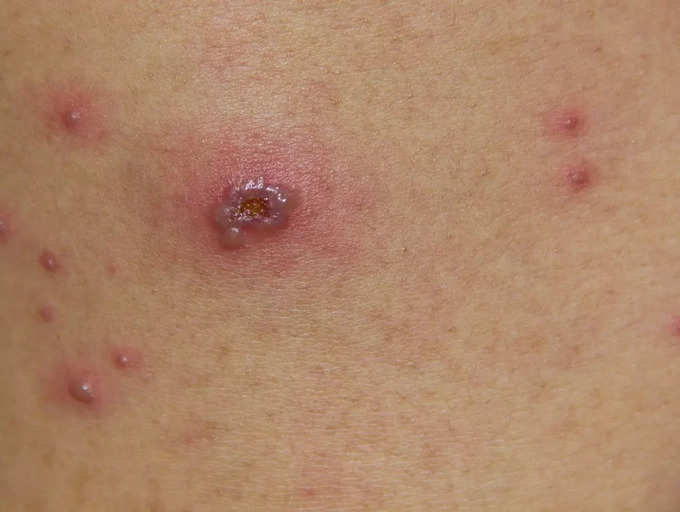
Often monkeypox rash starts on the face and spreads to other parts of the body, including palms and soles. First it develops into papules and fluid filled pustules and then takes the form of a scab and falls off.

Chickenpox rash is an itchy, blister-like rash, which first appears on the chest, back and the face. Then it spreads over the entire body, except on the palms and soles. 

Ways to prevent the spread

Monkey and chickenpox can be spread through close contact, either through direct contact with skin lesions or through respiratory droplets.

That said, coming in close contact with someone infected with the viruses must be avoided. Additionally, any clothing or bedding of the infected individual must be kept away from people.

In case of monkeypox, the CDC recommends washing your hands often with soap and water or using an alcohol-based hand sanitizer.

The best way to prevent chickenpox is by getting a chickenpox vaccine. Two doses of the vaccine are important for everyone, who have never had chickenpox or were never vaccinated.


This is only for your information, kindly take the advice of your doctor for medicines, exercises and so on.   

https://gscrochetdesigns.blogspot.com. one can see my crochet creations  
https://gseasyrecipes.blogspot.com. feel free to view for easy, simple and healthy recipes    
https://kneereplacement-stickclub.blogspot.com. for info on knee replacement
readmore

Labels: , , , , , , , , ,

Wednesday, September 07, 2016

Health Benefits of Melissa or emon Balm

Melissa is a member of the mint family, and is commonly known as “Lemon Balm” in some countries.The plant can be used for cooking and has a lemony aroma, and its calming properties are well-documented.
 Image result for melissa/lemon balm
1. Reduce Alzheimer’s and dementia symptoms
It was discovered that the essential oils released when chewing on Melissa leaves help improve our memory, extend our attention span and concentration in Alzheimer patients, as well as reduce the more extreme symptoms of dementia.
2. Treat herpes, plus other anti-viral effects
Melissa contains polyphenols, which are beneficial in treating herpes-induced cold sores. Furthermore, research found that regular consumption of Melissa will reduce the frequency in which the sores appear.
3. Facial cleanser
A Melissa infusion can be used as an effective facial cleanser. Put a handful of leaves in 4 cups of boiling water and let the steam soften your face and open up your pores. Once the water cools down, massage the infusion into the skin, and then wash your face with cold water.
 4. Treat anxiety and insomnia
Regular consumption of Melissa was shown to be effective in reducing anxiety, stress, and sleep disorders. One research even found it to be as effective as prescription medicine. Chewing Melissa releases various chemicals with calming and beneficial properties, and the German version of the FDA approved the use of Melissa as treatment for sleep disorders.
5. Relieve headaches
Melissa's calming effects are perfect for treating headaches, and a Melissa infusion is particularly effective. Next time you get a headache, try a cup of Melissa infusion instead of pain relief medication.
6. Help with chronic fatigue and thyroid balancing
The chemicals in Melissa leaves have been shown to have a measurable effect on the thyroid, as well as the production of hormones. The same chemicals help treat chronic fatigue and other thyroid-related disorders like Graves’ disease.
 7. Improve the levels of concentration
Research conducted by Northumbria University in England found that regular consumption of Melissa dramatically increased the scores of students, compared to other students who did not consume the plant. As long as six hours after consumption, students were much more calm and focused.
 8. Calming an upset stomach
Melissa's calming properties work wonders for an upset digestive system. It is also beneficial in reducing stomach cramps and gas buildup. 9. Anti-aging properties
Melissa is a great source of antioxidants, which protect our bodies from free radicals that speed up the aging process.
10. Treat bug bites and skin lesions
Using a Melissa infusion on insect bites and minor skin lesions can help in relieving the irritation and speed up the healing process.


this is only for your information, kindly take the advice of your doctor for medicines, exercises and so on.
https://gscrochetdesigns.blogspot.com. one can see my crochet creations
https://gseasyrecipes.blogspot.com. feel free to view for easy, simple and healthy recipes

https://kneereplacement-stickclub.blogspot.com. for info on knee replacement

Labels: , , , , , , , , , , , , , ,

Friday, April 03, 2015

Incredible Calming Properies of Melissa

Melissa is a member of the mint family, and is commonly known as “Lemon Balm” in the U.S. or “Balm” in the U.K. The plant can be used for cooking and has a lemony aroma, and its calming properties are well documented. Here are just 10 examples of the benefits you can derive from it.
Melissa
1. Reduce Alzheimer’s and dementia symptoms
It was discovered that the essential oils released when chewing on Melissa leaves help improve our memory, extend the attention span and concentration in Alzheimer patients, as well as reduce the more extreme symptoms of dementia.
2. Treat herpes, plus other anti-viral effects
Melissa contains polyphenols, which are beneficial in treating herpes-induced cold sores. Furthermore, research found that regular consumption of Melissa will reduce the frequency in which the sores appear.
3. Facial cleanser
A Melissa infusion can be used as an effective facial cleanser. Put a handful of leaves in 4 cups of boiling water and let the steam soften your face and open up your pores. Once the water cools down, massage the infusion into the skin, and then wash your face with cold water.
Melissa
4. Treat anxiety and insomnia
Regular consumption of Melissa was shown to be effective in reducing anxiety, stress, and sleep disorders. One research even found it to be as effective as prescription medicine. Chewing Melissa leaves releases various chemicals with calming and beneficial properties, and a the German version of the FDA approved the use of Melissa as treatment for sleep disorders.
5. Relieve headaches
Melissa's calming effects are perfect for treating headaches, and a Melissa infusion is particularly effective. Next time you get a headache, try a cup of Melissa infusion instead of a headache pill.
6. Help with chronic fatigue and thyroid balancing
The chemicals in Melissa leaves have been shown to have a measurable effect on the thyroid, as well as the production of hormones. The same chemicals help treat chronic fatigue and other thyroid-related disorders like Graves’ disease.
Melissa
7. Improve the levels of concentration
A research conducted by Northumbria University in England found that regular consumption of Melissa dramatically increased the scores of students, compared to other students who did not consume the plant. As long as six hours after consumption, students were much more calm and focused.

8. Calming an upset stomach
Melissa's calming properties work wonders for an upset digestive system. It is also beneficial in reducing stomach cramping and gas buildup.
9. Anti-aging properties
Melissa is a great source of antioxidants, which protect our bodies from free radicals that speed up the aging process.

10. Treat bug bites and skin lesions
Using a Melissa infusion on insect bites and minor skin lesions can help in relieving the irritation and speed up the healing process.

FOR INFO ABOUT KNEE REPLACEMENT, YOU CAN VIEW MY BLOG-
HTTP://KNEE REPLACEMENT-STICK CLUB.BLOGSPOT.COM/

FOR CROCHET DESIGNS


HTTP://MY CROCHET CREATIONS.BLOGSPOT.COM

Labels: , , , , , , , , , , , , ,