Tuesday, November 09, 2021

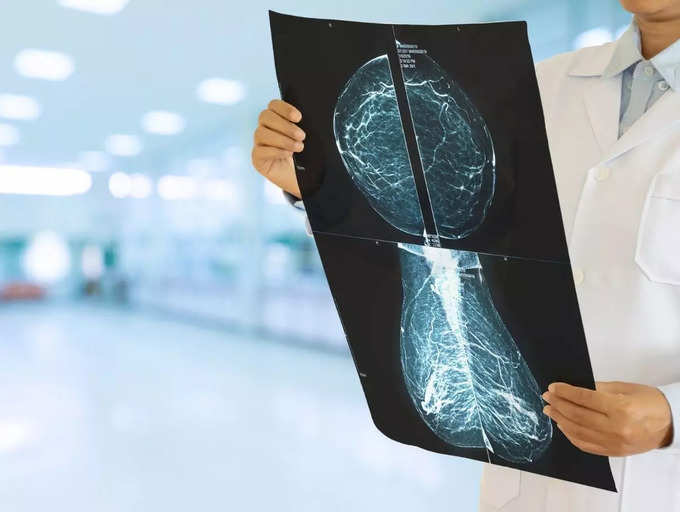
What does breast cancer in men look like? Signs and symptoms to watch out for

Breast cancer are prevalent in women, but men can be at risk too

While we're all aware of the breast cancer risks in women, we often neglect the possibilities of breast cancer in men. Although rare, men can also develop cancerous breasts. Clinical evidence suggests that less than 1% of all breast cancers occur in men. About 2,650 men are expected to be diagnosed with breast cancer, and an estimated 530 men are expected to die from it. So, even if the chances are slim, there is no way one should strike out the possibility and should make oneself aware of the signs and symptoms of male breast cancer.

readmore

Male breast cancer is most common in older men

According to the Centre for Disease Control and Prevention, "The risk for breast cancer increases with age." Most breast cancers are found after age 50, the health agency suggests. That said, regular breast screenings could be an efficient way to detect any signs of breast cancer risks in men.

Are there any symptoms to watch out for?

There are many signs of breast cancer in men. As per the American Cancer Society (ACS), below are some of the common symptoms of male breast cancer.

- A painless lump in one breast

- Nipple retraction, ulceration, and discharge

- Dimpling of breast

- Discoloration of the breast or nipple skin

While the above mentioned signs are the early warning signs of breast cancer, there are some signs that can tell that the cancer is spreading. Swelling in the lymph nodes, breast pain and bone pain can mean something more serious.

readmore

What type of breast cancers can be diagnosed in men and how?

The CDC suggests three types of breast cancer that can be detected and diagnosed in men.

- Invasive ductal carcinoma: This type of breast cancer starts in the ducts and then grows outside the ducts into other parts of the breast tissues.

- Invasive lobular carcinoma: The cancer cells begin in the lobules and then spread to the closely-knitted breast tissues.

- Ductal carcinoma in situ (DCIS): These may lead to invasive breast cancer, since they're only in the lining of the ducts, and have not spread to other breast tissues.

Breast cancers in men and women can be diagnosed with the help of mammogram, ultrasound, a nipple discharge test or a biopsy. Regular self-examination of the breast can also help with diagnosis.

readmore

Do genes play a role?

Breast cancer can also be an outcome of genetic mutations. A strong family history of breast cancer can increase a man's risk of developing the same condition. Men who inherit abnormal BRCA1 or BRCA2 genes may have an increased risk of male breast cancer. However, genetic mutations are not the only factor that could lead to breast cancer in men.

Treatment

Depending on the size of the tumour, the doctor is likely to suggest the treatments. Surgery, chemotherapy, radiation therapy, hormone therapy, and targeted therapy are some of available treatments for breast cancer.


Labels: , , , , , , , , , ,

Sunday, February 28, 2021

Brain cancer, tumour can be triggered by healing process that follows stroke, brain injury

The human body is amazing, and even when the body only intends to do good, heal, and recover from certain health issues it is faced with, sometimes the healing processes can backfire. One such incidence is seen in auto-immune diseases, where the body's immune response can also target the healthy cells. As per the latest study, for instance, the healing process that follows a stroke, trauma, brain infection, or brain injury can trigger the development of cancer, a study has found. 

According to researchers from Canada, when they analysed cells from tumours of 26 patients with a common but aggressive form of brain cancer known as glioblastoma, it was found that mutations can derail the process which is supposed to create new cells to replace those that have been lost, and spike tumour growth. 

The team hopes that the research will help in developing more tailored therapies for individual brain cancer patients. As per researchers, the findings could lead to new therapies for glioblastoma patients, who currently have limited treatment options and an average lifespan of only 15 months after diagnosis. 

'Our data suggest that the right mutational change in particular cells in the brain could be modified by injury to give rise to a tumour,' said paper author and neurosurgeon Peter Dirks of The Hospital for Sick Children in Toronto. 

'Glioblastoma can be thought of as a wound that never stops healing,' Dr Dirks said.

'We're excited about what this tells us about how cancer originates and grows and it opens up entirely new ideas about treatment by focusing on the injury and inflammation response.'

The researchers used single-cell RNA sequencing and machine learning technologies to map out the molecular make-up of glioblastoma stem cells – the one that is responsible for tumour initiation and recurrence after treatment. 

The team found new subpopulations of glioblastoma stem cells which bear the molecular hallmarks of inflammation and are comingled with other cancer stem cells inside patients' tumours.

These findings, as per Dr Dirks, suggest that some cancer start to form when the normal tissue healing process begins, which is actually supposed to generate new cells to replace those lost to injury, gets derailed by mutations. 

This, he added, might happen many years before a patient becomes symptomatic.

Once a mutant cell becomes engaged in wound healing, it doesn't stop multiplying — with all normal controls broken — spurring tumour growth, the team said.

'The goal is to identify a drug that will kill the glioblastoma stem cells,' said paper author and molecular geneticist Gary Bader of the University of Toronto.

'But we first needed to understand the molecular nature of these cells in order to be able to target them more effectively.'

The findings of the study were published in the journal Nature Cancer. 

As the initial study is now complete, researchers are now looking to target these biases for tailored therapies. 

'We're now looking for drugs that are effective on different points of this gradient,' said paper author and cancer genomicist Trevor Pugh of the Princess Margaret Cancer Centre in Toronto.

'There's a real opportunity here for precision medicine — to dissect patients' tumours at the single-cell level and design a drug cocktail that can take out more than one cancer stem cell subclone at the same time.'

This is only for your information, kindly take the advice of your doctor for medicines, exercises and so on.     

https://gscrochetdesigns.blogspot.com. one can see my crochet creations  
https://gseasyrecipes.blogspot.com. feel free to view for easy, simple and healthy recipes    
https://kneereplacement-stickclub.blogspot.com. for info on knee replacement


Labels: , , , , , , ,

Saturday, July 18, 2020

The Surprising Reasons the Color of Your Eyes Can Change

No matter what eye color you have, we all wondered at one point or another, what it would be like to have a different eye color. It turns out that some people do experience a change in their eye color throughout life. Does it necessarily indicate a health risk? Not always, but of course it is important to be cautious. "The factors that can cause eyes to change colors — or appear to have different colors — include genes, diseases, and trauma," said ophthalmologist Omar Chaudhary, MD. However, it’s also possible for the rare phenomenon to occur for harmless reasons.

How does our eye color develop?

When you were born, you likely had blue eyes. Babies’ eyes display this color because their bodies and eyes contain low levels of melanin, the pigment that gives your eyes, skin, and hair their color. Once your body becomes exposed to light, it starts to produce more melanin, the shade of your hair, skin, and eyes usually darkens to an extent, depending on your genes.
The color of our eyes is usually the last to fully form. The eye color of the majority of the world’s population usually darkens to the point it becomes dark brown, regardless of how much or little light exposure they have and will stay the same for the rest of their lives (some peoples' eyes remain a certain shade of blue or green, depending on one's genes). In the rare occurrence the eyes change color significantly throughout adulthood, there are several common causes that are important to be aware of. 

The common causes of eye color change


1. Mood Intense joy or rage can change the regularity of the heartbeat and release hormones that cause the pupils to expand or contract. When the pupil changes size, the pigments in the iris compress or spread apart, and change the shade of your eye color.
 

2. Iris Freckles
Iris freckles, medically called iris ephelis, are small brown spots that can appear on the surface of the iris. Occurring in about 60 percent of people, these flecks on the surface of the iris (the colored part of the eye) are due to increased amounts of the pigment melanin produced by cells called melanocytes. They do not affect your vision and do not develop into malignant melanoma; they might, however, lead to a change in eye color

Surprising Reasons for Adult Eye Color Change iris freckles

3. Aging
Many seniors develop a state called arcus senilis. It is manifested in a hazy blue or white ring on the cornea from a build-up of natural fatty substances - lipids. It’s common with aging and is usually harmless. Most people develop some degree of arcus senilis as they age. 

4. Cataract
A cataract is a clouding of the lens of the eye, behind the pupil, that makes it look milky or gray. This state usually develops when aging or injury changes the tissue that makes up your eye's lens. Some inherited genetic disorders that cause other health problems can increase your risk of cataracts. In most cases, it isn’t a cause for great concern as it can be successfully removed with surgery.
Surprising Reasons for Adult Eye Color Change cataract
5. Clothing
You might remember from your school days that complementary colors enhance one another. When reds and greens are placed together, the reds appear more vibrant while the greens appear lusher. This principle applies to eye color as well. If you wear certain colors of clothing, the pigments in your shirt, jacket, tie, or scarf could temporarily change the color of your eyes. Depending on the color you wear, your eyes may appear lighter or darker.
Surprising Reasons for Adult Eye Color Change woman with heterochromia
6. Heterochromia
Heterochromia refers to a condition where each iris has a different color. However, a few kinds of this condition exist. People with central heterochromia have a different color near the border of their pupils, while complete heterochromia means having eyes that are completely different colors. That is, one eye may be green and their other eye brown, blue, or another color.

Some people are born with some type of heterochromia, in which case it doesn’t affect their health. However, it is possible to develop heterochromia as an adult for various reasons: eye injury, eye surgery, glaucoma, or a tumor in the iris. Therefore, if you notice a drastic change in your eye color, it’s best to visit an ophthalmologist or optometrist to rule out any possible health risks.

This is only for your information, kindly take the advice of your doctor for medicines, exercises and so on.     

https://gscrochetdesigns.blogspot.com. one can see my crochet creations  
https://gseasyrecipes.blogspot.com. feel free to view for easy, simple and healthy recipes    
https://kneereplacement-stickclub.blogspot.com. for info on knee replacement


Labels: , , , , , , , , , , , , , , ,

Sunday, July 28, 2019

Modified radiotherapy less likely to damage healthy cells: Experts

A modified way of concentrating radiotherapy dose in tumour while minimising damage to healthy cells has been proposed in a recent research.

The study —proposes that focusing high-energy particle beams on a small spot deep inside the body could potentially enable clinicians to target cancerous tumour precisely.

External beam radiotherapy involves treating patients with either high energy X-rays or particle beams. Tumour cells are killed by the radiation, which is usually administered in multiple fractions, which are applied daily over several weeks.

The lead of the project, said: “Around half of the population will suffer from cancer at some time in their lives. Of these people, half will be treated using radiotherapy or a combination of radiotherapy and chemotherapy.”

One of the challenges in radiotherapy is to deposit a high radiation dose in a way that the dose fully ‘conforms’ to the tumour to ensure that all cancerous cells are killed while preventing damage to healthy cells. Our study showed that we can very simply focus radiation onto a tumour to irradiate it while reducing the dose in surrounding healthy tissue.”

One of the disadvantages of using X-rays in radiotherapy is that these are absorbed in the body and their effects diminish, resulting in a high entrance dose. Proximal and distal doses before and after the tumour can also be as high as, or higher than, the radiation dose in the tumour.

To eradicate the tumour precisely with sufficient radiation to kill all tumour cells, the X-ray beam is often rotated while pointing at the tumour from different directions, while the patient remains stationary.

An effective radiotherapy modality uses heavier particles such as protons and ions. These have the advantage of radiation doses that can be confined to a small region called the “Bragg peak.”

“This work presents a comprehensive numerical study of fundamental issues encountered in cancer treatment with very high energy electrons for a wide range of geometries. Results suggest that technology and beam transport systems routinely employed in high-energy particle accelerators could find direct application in this field, expanding the range of tools available for radiotherapy,” said  one of the researchers of the study.

THIS IS ONLY FOR INFORMATION, ALWAYS CONSULT YOU PHYSICIAN BEFORE HAVING ANY PARTICULAR FOOD/ MEDICATION/EXERCISE/OTHER REMEDIES.                                    PS- THOSE INTERESTED IN RECIPES ARE FREE TO  VIEW MY BLOG-                                                                                           https://gseasyrecipes.blogspot.com/                                                                                                                                                FOR INFO ABOUT KNEE REPLACEMENT, YOU CAN VIEW MY BLOG-                                                  https:// kneereplacement-stickclub.blogspot.com/                                                                      FOR CROCHET DESIGNS                                                                                                    
                                https://gscrochetdesigns.blogspot.com

Labels: , , , , , , , , , , , ,

Monday, May 06, 2019

Brachytherapy: Low-risk prostate cancer now finds cure

A new technique, in which a single high dose of radiation can be delivered directly to the tumour within a few minutes, is safe and effective for treating men with low-risk prostate cancer, recent findings suggested.

Radiotherapy traditionally involves a series of lower dose treatments that take place over several days or week. The new treatment is called high dose-rate brachytherapy and it delivers radiation via a set of tiny tubes.

Researchers said this technique could offer an effective treatment that is convenient for patients and brings potential time and cost savings for hospitals.

"Brachytherapy, where we use temporary catheters to directly treat tumours, has already proved to be a good treatment for prostate cancer, both in terms of killing the cancer cells and minimising side effects. This usually means patients make four to six visits to the hospital for a series of lower dose treatments.

We wanted to see whether we could get similar results but with just one high dose treatment, saving time for the patient and the hospital," saidone of the researchers. The research included 441 men with prostate cancer who were treated at one of the seven United Kingdom hospitals between 2013 and 2018.

Their cancers were classified depending on how likely they were to spread, as low risk (total of 44 men), medium risk (285 men) or high risk (112 men). All were treated with a single high dose (19 Gy) of radiation; 166 men also received hormone therapy but none had any surgery or chemotherapy.

Researchers monitored the men's progress for an average of 26 months. They measured the levels of prostate-specific antigen (PSA) in the men's blood two years after the treatment and again three years after the treatment.

PSA is considered to be a good indicator of how well prostate cancer treatment has worked. If levels increase, this can indicate cancer has returned. Overall, after two years, 94 per cent of men showed no sign of the cancer returning, according to their PSA levels.

For men with low-risk cancer this figure was 100 per cent, in men with the medium risk it was 95 per cent and in men, with high-risk cancer, it was 92 per cent. After three years, the overall figure was 88 per cent, and in men with low, medium and high-risk cancers, the figures were 100 per cent, 86 per cent and 75 per cent respectively.

Of the 27 men with raised PSA levels, researchers were able to identify where cancer had returned in 25. In 15, cancer had returned in the prostate. In the rest, it had spread to other parts of the body.

At the time of the treatment, there were no serious side effects. Later on, two men developed urethral strictures that required surgery and two developed rectal fistulae that required a colostomy.

The Dr. said: "These results indicate that high dose-rate brachytherapy is a safe and effective treatment for men with low-risk prostate cancer but further research is needed in medium and high-risk patients to see if the results can be improved with a higher dose".

"This type of treatment offers an attractive alternative to surgery or other forms of radiotherapy as it has a comparatively low risk of side effects. It is also a patient-friendly option because the treatment can be given quickly at a single hospital visit," the Dr.  added.

The team hope to continue studying the impact of using this type of radiotherapy, especially in patients with higher risk prostate cancer who are more likely to suffer a recurrence. She believes it would be possible, given the low risk of side effects, to modify the treatment or increase the dose even further in higher risk cases.

THIS IS ONLY FOR INFORMATION, ALWAYS CONSULT YOU PHYSICIAN BEFORE HAVING ANY PARTICULAR FOOD/ MEDICATION/EXERCISE/OTHER REMEDIES.                                    PS- THOSE INTERESTED IN RECIPES ARE FREE TO  VIEW MY BLOG-                                                                                           https://gseasyrecipes.blogspot.com/    
                                                                                                                                                     FOR INFO ABOUT KNEE REPLACEMENT, YOU CAN VIEW MY BLOG-                                                  https:// kneereplacement-stickclub.blogspot.com/  
         
                   FOR CROCHET DESIGNS                                                                                                                                                                                                  https://gscrochetdesigns.blogspot.com

Labels: , , , , , , , , , , , ,