Friday, July 30, 2021

There’s a Better Way Than Finger Prick to Monitor Diabetes

One of the unpleasant adjustments diabetes patients must get accustomed to is regular finger pricks as a means to monitor blood sugar levels. A new study suggests that there is a more efficient and painless way to monitor diabetes. The clinical trial published in the Journal of American Medical Association (JAMA) found that the use of a real-time glucose monitor helps patients manage their condition better in the long term.

Over the course of 8 months, the researchers followed 175 diabetes patients who used a continuous glucose monitor (CGM) instead of a standard blood glucose meter. During this time, the group’s overall hemoglobin A1C levels dropped by 1.1 percent. The blood sugar of participants using a lancet, on the other hand, only dropped by 0.16 percent. Remarkably, the group using continuous glucose monitors spent an average of 3.8 hours more each day within the optimal range of blood sugar and 3.6 hours less in the dangerous high-glucose range. 
 
This study is among the first ones to focus on type 2 diabetes patients who use basal insulin, the long-lasting variety which is taken once or twice a day. Earlier research had shown that the monitors improved glucose control for patients with type 1 diabetes as well.
CG monitors are to become the new standard, according to the study
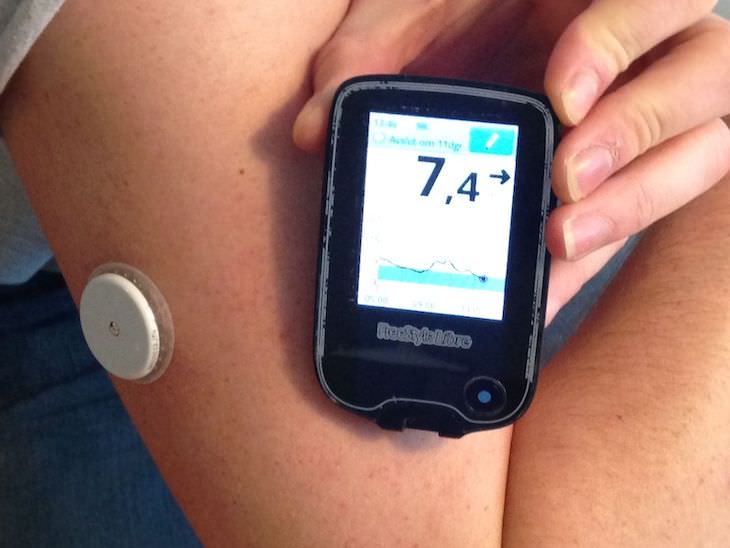
Study Finds CG monitors more efficient for diabetes patients, continuous glucose monitor
Along with testing the functionality of continuous glucose monitoring, the team also looked at the impact these devices have on patients’ quality of life and how they aid in the management of their condition. With the help of a continuous monitor, participants were better able to manage their blood sugar levels throughout the day. As a result, life satisfaction scores increased as well. 
 
A CGM works through a tiny sensor inserted under your skin, usually on your stomach or arm. The sensor measures your interstitial glucose level, which is the glucose found in the fluid between the cells. The sensor tests glucose every few minutes, and a transmitter wirelessly sends the information to a monitor.
 
“For me, what’s most exciting is that this work demonstrates that using continuous glucose monitoring is effective in substantially improving blood sugars levels and decreasing the risks of hypoglycemia in those that were randomized to use a continuous glucose monitor compared with the usual finger-prick,” said one of the authors of the study, Rodica Busui, M.D., Ph.D., vice chair of clinical research at Michigan Health’s Department of Internal Medicine, in a university release. 
 
Busui added that he and his team hope that this game-changing technology soon becomes available to all patients with diabetes.

This is only for your information, kindly take the advice of your doctor for medicines, exercises and so on.   

https://gscrochetdesigns.blogspot.com. one can see my crochet creations  
https://gseasyrecipes.blogspot.com. feel free to view for easy, simple and healthy recipes    
https://kneereplacement-stickclub.blogspot.com. for info on knee replacement

Labels: , , , , , , , , , , ,

Tuesday, June 11, 2019

These Tests are a Must for All Men Post 40

In a life full of stresses, pressure, unhealthy habits and at times health crisis too, the body is bound to face long periods of depreciation. Its no secret that even if you're 25 at heart, the body fails to keep up. These tests will tell you exactly where you stand as compared to the fittest version of yourself. They will tell you what you need to work on, and what old age problems you must definitely beware of. Ensure that you don't risk anything, prevention is certainly better than cure. This International  Men's Health Week, we want to tell all the men out there the tests you must get done as you turn older. 

So, here are 9 tests that all men over 40 must take:

1. Digital rectal exam: The digital rectal exam detects early signs of prostate cancer and other problems with the prostate gland. Lumps or enlargement could be early signs of this disease, and all men after 40, must take special care to ensure they don't suffer from this it. The prostate-specific antigen test can also be conducted to back the findings of the digital rectal exam.

2. Testosterone test: Testosterone levels in a man can be monitored through a simple blood or saliva test. A low testosterone level can cause serious cases of erectile dysfunction, fatigue, weight gain, muscle loss, hair fall, insomnia, focus loss, thinning of bones and mood swings.

3. Bone density: Osteoporosis is extremely common with people above the age of 50. and causes the body to extract calcium from the bones to put to use in other places, leading to a thinning of the bones. A bone density exam can measure the strength of your bones and help you answer other such important questions.

4. Blood sugar: Diabetes is an extremely common disease, and is extremely dangerous. Being overweight, having high blood pressure, are all important factors to be considered when checking for diabetes. A simple blood sugar test would suffice.

5. Blood pressure: Get the sphygmomanometer out. Its time to check whether your blood is flowing at a healthy pace. Its a hidden problem, and can cause problems with your vital organs if unchecked. To ensure you are clocking 110/70, make sure to get yourself checked.

6. Cholesterol screening: Having high levels of cholesterol is more common than you'd think. With the influx of fast food, and other high cholesterol varieties, the risk of heart disease will only increase. This is part of the routine blood test, so look out for it.

7. Colorectal screening: Colon cancer can be prevented by tests such as a colonoscopy, sigmoidoscopy or a faecal occult blood test. You must consider a screening if you have a history of inflammatory bowel etc. The need for a colorectal exam also increases if there exists a family history of colon cancer.

8. Dental exam: Get your teeth cleaned more often, calcium is now a prized commodity in your body, and make sure you don't lose your teeth in the process.

9. Eye exam: Hypermetropia or long sightedness is quite common with old age, myopia is just as likely. Simultaneously, glaucoma can be prevented with regular eye exams, specially if you are already diagnosed with diabetes.

THIS IS ONLY FOR INFORMATION, ALWAYS CONSULT YOU PHYSICIAN BEFORE HAVING ANY PARTICULAR FOOD/ MEDICATION/EXERCISE/OTHER REMEDIES.                                    PS- THOSE INTERESTED IN RECIPES ARE FREE TO  VIEW MY BLOG-                                                                                           https://gseasyrecipes.blogspot.com/                                                                                                                                                FOR INFO ABOUT KNEE REPLACEMENT, YOU CAN VIEW MY BLOG-                                                  https:// kneereplacement-stickclub.blogspot.com/  

                            FOR CROCHET DESIGNS                                                                                                                                                                                              https://gscrochetdesigns.blogspot.com


Labels: , , , , , , , , , , , ,

Wednesday, December 26, 2018

Here's Why It's Important to Fast Before a Blood Test

Before certain types of blood tests, doctors tell patients to fast — to avoid eating or drinking anything for 8 to 12 hours before the test. You also shouldn’t do anything that requires too much exertion, smoke, or even chew gum. It’s okay to take prescription medication, but not over-the-counter stuff. But if you’re starving and desperate for a caffeine fix, isn’t it okay to just have a little nosh and a couple sips of coffee?

Nope. When the doctor says to fast, they mean it. Here’s why.

The types of blood tests you need to fast for are typically ones that test for glucose in your blood, cholesterol level, kidney function, electrolyte and fluid balance, vitamin B12, iron, and an enzyme called GGT. Fasting creates a baseline that can be compared against previous or future tests, and eating sends nutrients into your bloodstream that can temporarily change the amount of the specific things the doctor is testing for. So, for example, if you eat something sweet right before a blood test, the amount of glucose in your blood will be higher than if you hadn’t eaten.

So unless you want your blood test results to be skewed, take the doctor’s advice and don’t eat or drink beforehand. 

THIS IS ONLY FOR INFORMATION, ALWAYS CONSULT YOU PHYSICIAN BEFORE HAVING ANY PARTICULAR FOOD/ MEDICATION/EXERCISE/OTHER REMEDIES.                                                                                
 PS- THOSE INTERESTED IN RECIPES ARE FREE TO  VIEW MY BLOG-                                                                                           https://gseasyrecipes.blogspot.com/                                                                                                                                                                             FOR INFO ABOUT KNEE REPLACEMENT, YOU CAN VIEW MY BLOG-                                               
     https:// kneereplacement-stickclub.blogspot.com/                                                                                     
  FOR CROCHET DESIGNS                                                                                                                                                                                                              https://gscrochetdesigns.blogspot.com

Labels: , , , , , , , , , , , , ,

Saturday, December 22, 2018

Health Tests All Men Over 40 Should Undergo

As you start getting older, it's essential to start getting yourself medically tested on a regular basis, in order to keep yourself as strong and healthy as can possibly be. That's why we've compiled a list of tests that every man over 40 should start taking. Women should check out this article instead, as( many) men tend to take their health seriously.
Read on to find out all about the most important tests:
1. Testosterone
Low levels of testosterone may cause many unpleasant changes in your body, such as fatigue, erectile dysfunction,weight gain, loss of body hair, loss of muscle mass, difficulty concentrating, trouble sleeping, a reduction in bone density, or even subtle changes in your personality. Your doctor can quickly assess your testosterone levels through a saliva or blood test.
2. Digital Rectal Exam (DRE)
Undergoing a DRE will help with the early detection of prostate cancer and other irregularities of the prostate gland. Your doctor will need to insert a lubricated gloved finger into your rectum to feel for abnormalities, and while this might sound uncomfortable, it's very important to get it done, because it might just save your life!
3. Blood Pressure
Blood pressure is a symptom-less killer, which can wreak havoc on your lungs, brain, heart, kidneys and blood vessels. That's why it is a good idea for over-40s to keep portable blood pressure monitors on them at all times, since there's nothing better than having peace of mind at all times.
4. Prostate-Specific Antigen (PSA)
Taking the PSA test will help your doctor determine how much prostate-specific antigen, a prostate health indicator, is present in your blood. High or rising levels of PSA could be indicative of prostate cancer or other prostate-related illnesses.
5. Cholesterol
Once you reach the age of 40, you really should get all of your cholesterol levels checked by your doctor.
These include:

1. Total cholesterol level
2. Low-density lipoprotein (LDL)
3. High-density lipoprotein (HDL)
4. Triglycerides

6. Blood Sugar
This is an important test to help screen for insulin resistance, diabetes, and pre-diabetes. Insulin resistance may cause weight gain, high cholesterol levels, high blood pressure, bloating, or even high blood sugar. If left untreated, diabetes may cause problems with your feet, eyes, skin, heart, kidneys, nerves, and even your mental health.
7. Colorectal Cancer
Doctors recommend that people over 40 get screened for colon cancer with any of the following tests: sigmoidoscopy, colonoscopy, or a fecal occult blood test. A colonoscopy is considered the best option for the prevention of colorectal cancer, but a fecal occult blood test is the best at detecting the early stage of this cancer.
8. HIV
Because birth control becomes less of a concern for people over 40, many of them are having unprotected sex. That's why around a quarter of HIV cases are actually people over 40, so you should still get yourself checked no matter how old you are.
THIS IS ONLY FOR INFORMATION, ALWAYS CONSULT YOU PHYSICIAN BEFORE HAVING ANY PARTICULAR FOOD/ MEDICATION/EXERCISE/OTHER REMEDIES.                                                                                
 PS- THOSE INTERESTED IN RECIPES ARE FREE TO  VIEW MY BLOG-                                                                                           https://gseasyrecipes.blogspot.com/                                                                                                                                                                             FOR INFO ABOUT KNEE REPLACEMENT, YOU CAN VIEW MY BLOG-                                               
     https:// kneereplacement-stickclub.blogspot.com/                                                                                     
  FOR CROCHET DESIGNS                                                                                                                                                                                                                                 https://gscrochetdesigns.blogspot.com


Labels: , , , , , , , , , , , ,

Wednesday, November 28, 2018

Lung disease associated with dementia in later life

According to a recent study, lung disease in middle age could be a risk factor for dementia or cognitive impairment later in life. 
 
A group of researchers report that both restrictive and obstructive lung diseases were associated with dementia, including Alzheimer's disease and with mild cognitive impairment. The link was stronger for restrictive lung diseases, such as idiopathic pulmonary fibrosis and sarcoidosis, than it was for chronic obstructive pulmonary disease (COPD).

"Preventing dementia is a public health priority, and previous studies have suggested that poor lung health, which is often preventable, may be linked to a greater risk of developing dementia," said the Dr.

"In this study, we looked at the long-term association between poor lung function and the risk of developing dementia, using high-quality measures," added the author.

The study found that compared to those without lung disease, the odds of dementia or mild cognitive impairment were:
- 58 percent higher among those with restrictive lung disease.
- 33 percent higher among those with obstructive lung disease.
The study also found that low results on two spirometry tests--forced expiratory volume in one second (FEV1) and forced vital capacity (FVC) - were associated with dementia. FEV1 is the amount of air a person can forcefully exhale in one second. FVC is a measurement of lung size.

According to the authors, possible explanations for these findings are that lung disease produced low blood oxygen levels, which in turn may have led to inflammation, stress and damage to the brain's blood vessels.

Study limitations included the fact that participants' lung function was assessed only at the beginning of the study and that many patients died before being assessed for dementia or cognitive impairment.

Because it was not a randomised, controlled trial, the study cannot prove a cause and effect relationship between lung disease and dementia or mild cognitive impairment.

If these associations are causal, the researchers wrote, this would give added weight to efforts to improve air quality and to help people quit smoking. These public health measures might also lower rates of dementia as well as decrease lung disease.

"Preventing lung disease is inherently important," the Dr. said, adding that if other studies confirm their study's findings, "both individuals and policymakers will have an added incentive to make changes that protect lung health, as doing so may also prevent dementia."

THIS IS ONLY FOR INFORMATION, ALWAYS CONSULT YOU PHYSICIAN BEFORE HAVING ANY PARTICULAR FOOD/ MEDICATION/EXERCISE/OTHER REMEDIES.                                                                                                                                                                                                                                                                                        PS- THOSE INTERESTED IN RECIPES ARE FREE TO  VIEW MY BLOG-                                                                                           https://gseasyrecipes.blogspot.com/                                                                                                                                                                             FOR INFO ABOUT KNEE REPLACEMENT, YOU CAN VIEW MY BLOG-                                                                                                                             https:// kneereplacement-stickclub.blogspot.com/                                                                                       FOR CROCHET DESIGNS                                                                                                                                                                                                                                 https://gscrochetdesigns.blogspot.com


Labels: , , , , , , , , , , , , , ,