Sunday, October 26, 2025

This Fruit Can Be Great for Your Bone Health!

If you're looking to build strong bones, adding prunes to your diet can be extremely helpful. Recent research indicates that prunes, known for their digestive benefits, may also contribute to bone health. A study published in Osteoporosis International revealed that daily prune consumption can help slow down bone loss and reduce the risk of fractures. 

This finding challenges traditional notions about bone health and introduces prunes as a potential dietary addition for stronger bones.
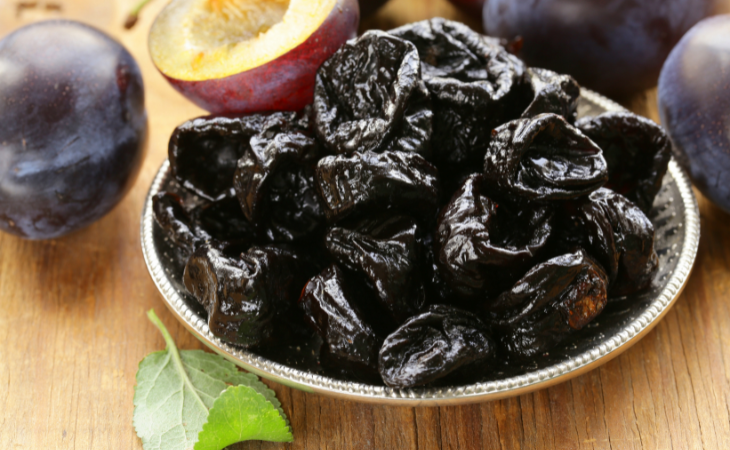
prunes 
“This is the first randomized controlled trial to look at three-dimensional bone outcomes with respect to bone structure, geometry, and estimated strength,” says Mary Jane De Souza, a distinguished professor of kinesiology and physiology at Penn State, in a media release. “In our study we saw that daily prune consumption impacted factors related to fracture risk. That’s clinically invaluable.”

Our bones are in a constant state of renewal, with old bone tissue being replaced by new. However, this process slows down as we age. The body becomes less efficient at rebuilding bone, potentially leading to bone health concerns. 
 
Postmenopausal women face a higher risk of bone loss compared to younger adults. Osteoporosis is more prevalent in this group. 
 
Osteoporosis is a disease of the bones that occurs when bone mineral density and bone mass decreases or when the structure and strength of the bones change. It affects one in three women and one in five men over the age of 50. Women in this age group are at a heightened risk of developing osteoporosis due to decreased estrogen production, which plays a key role in preserving bone mass. This increases the likelihood of fractures. 
 
Research has established a link between prunes and enhanced bone health. Osteoporosis currently has no cure, and many people do not use medications to manage the condition. Prunes provide an affordable and readily available option for maintaining optimal bone health. Rich in bioactive compounds like polyphenols, prunes have the potential to inhibit inflammatory pathways associated with bone loss. 
 
Measuring how prunes affect bone health 
To understand bone health, researchers have previously used DXA scans to measure bone density. While helpful, DXA scans have limitations in providing a complete picture of bone health. They cannot differentiate between various bone tissues or assess the overall strength and quality of the bone structure.

Bone mineral density tells us how much calcium and other minerals are stored in our bones. However, to fully understand bone health, we need to look beyond just density. Examining the bone's structure, shape, and internal makeup provides a clearer picture of overall bone health, explains De Souza. 
 
Researchers conducted a year-long study to investigate the link between prune consumption and bone health in postmenopausal women. Participants were divided into three groups: a no-prune control group, a group consuming 50 grams of prunes daily, and a group consuming 100 grams daily. Bone density, geometry, and strength were measured using a peripheral quantitative computed tomography scan every six months.

Results
 
Results showed that women who regularly ate prunes experienced improved bone density and strength, particularly in the shinbone. This was especially evident in those consuming at least four to six prunes daily. The study suggests consuming four to six prunes daily for optimal health benefits. While increasing the intake to ten to twelve prunes might offer additional benefits, researchers found that participants in this group were more likely to discontinue the study due to consumption fatigue. 
 
“It’s pretty exciting data for a 12-month study,” De Souza continues. “We were able to maintain and preserve bone at the weight-bearing, cortical bone of the tibia and the maintenance of cortical bone and bone strength is key to avoiding fracture.” 
 
The new study suggests that prunes may benefit bone health, especially in older adults and postmenopausal women. While more research is needed to fully understand the extent of these benefits, including the potential to reduce osteoporosis risk, the findings offer promising insights into the fruit's nutritional value.

Are there any other health benefits to eating prunes? 
Prunes have long been considered a natural remedy for constipation. Research supports this claim, showing that increased prune consumption can improve bowel regularity. However, like any food, prunes might cause digestive discomfort for some individuals. On the other hand, prunes have also been linked to heart health benefits, including improved cholesterol levels and reduced inflammation.


This is only for your information, kindly take the advice of your doctor for medicines, exercises and so on.   


Labels: , , , , , , , ,

Monday, February 10, 2025

Taking Omega-3 Could Help Slow Biological Aging, New Study Suggests. Doctors Say This Is Why

 Every person has their chronological age and biological age: The former is how many years you’ve been on this planet, while the latter reveals how old your body actually is, based on a bunch of biomarkers. And although you can’t change your chronological age, a growing body of research suggests you may be able to sway your biological one.

Now, a new study suggests that a simple supplement combination—including omega-3 and vitamin D—can help slow your biological age. Here’s what the study found, plus what a neurologist wants you to know. 

What did the study find?

The study, which was published in the journal Nature Aging on February 3, analyzed data from 777 people who participated in the DO-HEALTH trial—which is a large randomized controlled clinical trial that looks at the impact of vitamin D, omega-3 fatty acids, and a home exercise program on healthy aging in older adults—over the course of three years.

The scientists looked at a bunch of biomarkers, and found that people who took one gram of omega-3 fatty acids daily slowed down their biological aging across several areas by up to four months. But people who took 2,000 international units (IU) of vitamin D and did 30 minutes of strength training three times a week (in addition to taking the one gram of omega-3 fatty acids) saw an even greater boost: The combination had the highest effect in lowering cancer risk and preventing frailty.

What is biological age?

Biological age is a measurement of how old your cells are, according to Northwestern Medicine. Biological age can be measured a few different ways, but usually involves a mix of blood biomarkers, DNA tests, and physiological tests. 

Can omega-3 make you live longer?

This is just one study, and it’s hard to draw big conclusions from it. But the findings do suggest that taking an omega-3 supplement may help slow biological aging.

In fact, the researchers said this in the study conclusion: “Our trial indicates a small protective effect of omega-3 treatment on slowing biological aging over three years across several clocks, with an additive protective effect of omega-3, vitamin D, and exercise.”

Omega-3 supplements are usually used by doctors to help manage high cholesterol, which is a more common issue as you get older, says Clifford Segil, DO, a neurologist at Providence Saint John’s Health Center in Santa Monica, California. High cholesterol is linked to a slew of cardiovascular complications, so getting this under control can help extend your life, he says.

How do vitamin D and strength training affect biological age?

Vitamin D is believed to help with bone density, especially when it’s paired with calcium, Segil says. When you add in exercise, it can create a big boost for your bone health.

“Exercise stops your bones from getting brittle, lubricates your joints, and maintains your muscle mass,” Segil says. “All of these would help with biological aging.”

What are other ways to slow down aging?

There are a few things you can do to age well. Experts previously told Women’s Health that walking for 30 minutes daily, staying on top of regular doctor’s appointments, socializing, focusing on whole foods, and sticking to a consistent sleep routine can help.

 If you're interested in working more omega-3s into your diet, two servings of fatty fish per week will do the trick, doctors previously told Women's Health. However, if you're vegan or just can't stand the taste of fish, a fish oil supplement is a great way to get omega-3s. This softgel, for example, packs in 300 mg of omega-3 and is certified by the National Science Foundation (NSF):

However, it's important to consult with your healthcare provider before taking a new supplement, so be sure to talk with your doctor before starting. 


This is only for your information, kindly take the advice of your doctor for medicines, exercises and so on.   

https://gscrochetdesigns.blogspot.com. one can see my crochet creations  
https://gseasyrecipes.blogspot.com. feel free to view for easy, simple and healthy recipes    
https://kneereplacement-stickclub.blogspot.com. for info on knee replacement
https://GSiyers home remedies.blogspot.com   is the latest addition to my blogs. I'm going to add posts there, do give me your valuable feed back on my blogs. Thanks a lot, take care, be healthy and be happy.


Labels: , , , , ,

Monday, November 04, 2024

This Fruit Can Be Great for Your Bone Health!

If you're looking to build strong bones, adding prunes to your diet can be extremely helpful. Recent research indicates that prunes, known for their digestive benefits, may also contribute to bone health. A study published in Osteoporosis International revealed that daily prune consumption can help slow down bone loss and reduce the risk of fractures. 
 
This finding challenges traditional notions about bone health and introduces prunes as a potential dietary addition for stronger bones.
prunes
“This is the first randomized controlled trial to look at three-dimensional bone outcomes with respect to bone structure, geometry, and estimated strength,” says Mary Jane De Souza, a distinguished professor of kinesiology and physiology at Penn State, in a media release. “In our study we saw that daily prune consumption impacted factors related to fracture risk. That’s clinically invaluable.”

Our bones are in a constant state of renewal, with old bone tissue being replaced by new. However, this process slows down as we age. The body becomes less efficient at rebuilding bone, potentially leading to bone health concerns. 
 
Postmenopausal women face a higher risk of bone loss compared to younger adults. Osteoporosis is more prevalent in this group. 
 
Osteoporosis is a disease of the bones that occurs when bone mineral density and bone mass decreases or when the structure and strength of the bones change. It affects one in three women and one in five men over the age of 50. Women in this age group are at a heightened risk of developing osteoporosis due to decreased estrogen production, which plays a key role in preserving bone mass. This increases the likelihood of fractures. 
 
Research has established a link between prunes and enhanced bone health. Osteoporosis currently has no cure, and many people do not use medications to manage the condition. Prunes provide an affordable and readily available option for maintaining optimal bone health. Rich in bioactive compounds like polyphenols, prunes have the potential to inhibit inflammatory pathways associated with bone loss. 
 
Measuring how prunes affect bone health 
To understand bone health, researchers have previously used DXA scans to measure bone density. While helpful, DXA scans have limitations in providing a complete picture of bone health. They cannot differentiate between various bone tissues or assess the overall strength and quality of the bone structure.

Bone mineral density tells us how much calcium and other minerals are stored in our bones. However, to fully understand bone health, we need to look beyond just density. Examining the bone's structure, shape, and internal makeup provides a clearer picture of overall bone health, explains De Souza. 
 
Researchers conducted a year-long study to investigate the link between prune consumption and bone health in postmenopausal women. Participants were divided into three groups: a no-prune control group, a group consuming 50 grams of prunes daily, and a group consuming 100 grams daily. Bone density, geometry, and strength were measured using a peripheral quantitative computed tomography scan every six months.

 RESULTS
Results showed that women who regularly ate prunes experienced improved bone density and strength, particularly in the shinbone. This was especially evident in those consuming at least four to six prunes daily. 
 
The study suggests consuming four to six prunes daily for optimal health benefits. While increasing the intake to ten to twelve prunes might offer additional benefits, researchers found that participants in this group were more likely to discontinue the study due to consumption fatigue. 
 
“It’s pretty exciting data for a 12-month study,” De Souza continues. “We were able to maintain and preserve bone at the weight-bearing, cortical bone of the tibia and the maintenance of cortical bone and bone strength is key to avoiding fracture.”
 
The new study suggests that prunes may benefit bone health, especially in older adults and postmenopausal women. While more research is needed to fully understand the extent of these benefits, including the potential to reduce osteoporosis risk, the findings offer promising insights into the fruit's nutritional value.

Are there any other health benefits to eating prunes? 
Prunes have long been considered a natural remedy for constipation. Research supports this claim, showing that increased prune consumption can improve bowel regularity. However, like any food, prunes might cause digestive discomfort for some individuals. On the other hand, prunes have also been linked to heart health benefits, including improved cholesterol levels and reduced inflammation.


This is only for your information, kindly take the advice of your doctor for medicines, exercises and so on.   

https://gscrochetdesigns.blogspot.com. one can see my crochet creations  
https://gseasyrecipes.blogspot.com. feel free to view for easy, simple and healthy recipes    
https://kneereplacement-stickclub.blogspot.com. for info on knee replacement
https://cancersupportindia.blogspot.com  for infor on cancer and health related topics
https://GSiyers home remedies.blogspot.com   is the latest addition to my blogs. I'm going to add posts there, do give me your valuable feed back on my blogs. Thanks a lot, take care, be healthy and be happy.

Labels: , , ,

Friday, January 15, 2021

Curd with raisins will reset your gut, recommends a nutritionist

Have curd with raisins for good gut health

It is said that for good health, you must have a good gut. Your gut microbiome is not only significant for good digestion but can play a significant role in improving skin health, sex drive, energy levels and hormone balance. When your gut health is out of form, it can disturb your entire body function and even negatively influence your mood. Many chronic and autoimmune diseases are also linked with microbial imbalance.

Lack of activity, your dietary choices and lifestyle habits, a lot of things can affect your gut health. But the good news is that your microbiome can quickly change within two to four days of eating right. Celebrity Nutritionist Rujuta Diwekar recently took to her Instagram handle to share a simple home remedy that can promote the growth of good bacteria in your gut: Have curd set with raisins. 

How to set the curd

Ingredients: A bowl of full-fat warm milk, some raisins (preferably black) and half a teaspoon of curd or buttermilk.

Directions: Take a bowl of warm milk and add 4-5 raisins in it. Take half a teaspoon of curd or buttermilk and add that to the milk. Stir it properly, cover it with a lid and set it aside for up to 8-12 hours. When the top layer appears thick, the curd is ready to eat

You can have this with your lunch or post-lunch at 3 or 4 pm.

​Benefits of having curd with raisins

Increasing your gut bacteria is important to improve your overall health and there is nothing better than having probiotics like yoghurt and curd for it.

The combination of curd and raisins works on your gut in two ways. Curd acts as a probiotic and raisins with their high content of soluble fibre works as a prebiotic. Together they help to:

Neutralise the bad bacteria: They kill all the bad bacteria that disrupts the digestive system and are responsible for different health ailments.

Promote the growth of good bacteria: The combination of the two foods can help to increase the numbers of healthy gut bacteria, which can help to keep your internal system working.

Reduce the inflammation in the intestines: Eating too much fatty and spicy food often leads to inflammation in the lining of the intestine. Having curd with raisins helps to reduce the inflammation. 

Other health benefits

Keep your teeth and gums healthy: Rise in the number of bad bacteria in the gut also impacts our oral health. To keep your gums and teeth healthy, include this post-meal snack in your diet.

Good for the bones and joints too: Both raisins and curd contain a high amount of calcium. This nutrient helps to strengthen the bones and increase bone density.

Apart from this, the curd is also beneficial in regulating cholesterol levels, reducing high blood pressure and promoting weight loss. Curd with raisins is highly recommended for those dealing with constipation.

​Other items that you can add

Raisins are good for health and have numerous proven health benefits. But if you are trying to get pregnant the nutritionist recommends adding dates or dry dates (Khajoor) in your curd. 

This is only for your information, kindly take the advice of your doctor for medicines, exercises and so on.     

https://gscrochetdesigns.blogspot.com. one can see my crochet creations  
https://gseasyrecipes.blogspot.com. feel free to view for easy, simple and healthy recipes    
https://kneereplacement-stickclub.blogspot.com. for info on knee replacement


Labels: , , , , , , , , , , , , ,

Wednesday, December 30, 2020

Take These Health Tests When You Reach 50

It's a midlife fact: once we've hit our fifties, we are more likely to need certain medical tests and exams to maintain our health. While this can be unsettling, knowing what tests are available to us can help us make better-informed health decisions. Here is a list of tests you should consider doing once you've reached your fifties:

Routine Yearly Physical Exam 
Whether you are seeing a gynecologist or a family doctor for your routine checkup, it's important to know exactly what tests you need and what to expect. Routine physical checkups take time, so book your appointment in advance, making it clear that you are coming for a complete physical. If seeing your family doctor, it's best to stick with a general physical exam, screening for chronic conditions such as heart disease and cancer. On the other hand, see your gynecologist for gynecological exams. 
 
The following tests and exams get the best snapshot of your overall health:
 
1. General Physical Exam
health tests, aging, guide
A general physical includes your doctor taking a detailed history to learn all about you and your family history. A head-to-toe physical exam includes your skin, eyes, ears, nose, throat, lymph nodes, chest, breast area, abdomen, rectum, and extremities (hands and feet).

2. Waist Circumference 
 A larger waist circumference could put you at an increased risk of metabolic syndrome, which in turn can cause a cluster of medical conditions including high blood pressure, high blood sugar, abnormal cholesterol or triglyceride levels, which can increase your chances of heart disease, stroke, and diabetes. Among women, an increased waist circumference can also put you at risk of breast and uterus cancer.

3. BMI (Body Mass Index) 
Your BMI is another indicator of possible future health risks. However, your waist circumference and body shape make for a more reliable estimate. 
 
4. Blood Pressure 
Once you've reached 50, your blood pressure should be tested at each visit to the doctor. According to treatment guidelines, if you have diabetes, your blood pressure target should be around 120/80. 
 
5. Pelvic Exam 
Your yearly visit to the gynecologist usually entails a pelvic exam. If you rely on your family doctor, you will most likely have to ask for this to be performed. A pelvic exam can determine the condition of your uterus, cervix, ovaries, and rectum. You should also ask for a rectal exam, as well as for a stool sample to be taken to test for the presence of blood. 
 
A regular pap smear will also examine your cervical cells, determining any changes or the possibility of cervical cancer. Along with your pap smear, you should also ask for the HPV (Human Papilloma Virus) test. Testing positive for HPV could mean that you are a chronic carrier of the virus, which is believed to be the sole cause of cervical cancer. Consequently, additional tests for any abnormal cells caused by the virus can then be carried out. 
 
6. Blood Work Your blood record contains a great deal of information about your health. By the time you hit your forties, it's important to run a complete series of blood tests. Doing so will allow you to find out about the state of your liver, thyroid, blood cholesterol, blood sugar and more. An overnight fast or fasting sample is critical. The following is an overview of what your doctor will test: 
 
• Complete Blood Count: CBC measures the number, size, and shape of the different types of cells in your blood. It may be ordered as part of a complete physical examination, before surgery or if you have unexplained symptoms. 
 
• C-reactive Protein: Women with a waist circumference of 35 inches or over should ask for this important test to determine blood inflammation and risk of heart disease.
 
7. Blood Chemistry
The state of your blood chemistry can be determined by a series of tests that can be conducted quickly and inexpensively. Here's what your doctor will test: 
 
• Glucose: This test will determine whether you have diabetes. A fasting glucose of less than 100 is normal, while a level of 100 to 125 is abnormal and called impaired glucose tolerance. Meanwhile, a level of 126 or greater indicates diabetes. 
 
• Blood Urea Nitrogen and Chloride: This tests your kidney function. 
 
• Sodium, Potassium, and Chloride: These are your blood salts or electrolytes. This test is especially important if you are taking diuretics (water pills) for hypertension or heart disease. 
 
• Uric Acid: Determines the waste product of all cells. If elevated, it may indicate kidney disease or gout. 
 
• Albumin: A blood protein produced by the liver. If low, it can indicate liver or kidney disease. 
 
• Globulin: A blood protein produced by your immune system. A high count can indicate chronic inflammation, infection or blood disorders such as multiple myeloma. 
 
• Calcium: A component of your blood that helps all the cells in your body function normally. A high count in your blood can point to hyperparathyroidism, which predisposes you to kidney stones and low bone density. 
 
• Serum Glutamine Pyruvic Transaminase (SGPT) and Serum Glutamate Oxaloacetate Transaminase (SGOT): Determines the enzymes (proteins) produced by the liver and red blood cells. 
 
• Lactate Dehydrogenase: This enzyme is produced by many cells in the body. If high, your doctor will likely do additional tests to rule out malignancy. 
 
• Bilirubin: A chemical in bile that gives it its yellow color. If high, the bile passages from the liver to the intestine are blocked, indicating gallstones or liver disease. 
 
• Gamma Glutamyl Transpeptidase (GGT): An enzyme produced by the liver. Obesity and excessive alcohol use are the most common factors for a GGT increase. It may also be elevated due to liver disease. 
 
• Alkaline Phosphatase: An enzyme produced by the liver and bones. If elevated, determining the levels of GGT may help understand why - in which case, if both GGT and Alkaline Phosphate are high, the liver is likely to be the reason.

8. Blood fats and lipids
health tests, aging, guide
The levels of your blood fats and lipids determine whether heart disease is present. This is generally what your doctor should test for: 
 
• Total Cholesterol: This determines the sum of your LDL and HDL (more on this below). High total cholesterol levels are linked to heart disease. Your total cholesterol level should be below 200. 
 
• High-Density Lipoprotein (HDL): HDL indicated your good cholesterol levels. Your HDL should be at least 30 percent of your total amount. In men, an HDL greater than 40 is normal, while in women, an HDL greater than 50 is normal. 
 
• Low-Density Lipoprotein (LDL): LDL determines your bad cholesterol levels. If your LDL is high, it puts you at risk for heart disease. Your doctor will likely recommend a change in diet and medication to get your LDL cholesterol below 130. If you suffer from diabetes or heart disease, your treatment goal for LDL should be below 100. 
 
• Triglycerides: This determines the form of fat in your blood. Your triglyceride levels are much more likely to be higher after a meal. Elevated levels indicate an increased risk of heart disease and could also be a sign of early diabetes. Your triglyceride levels should ideally be under 150. 
 
9. Thyroid Function 
Women over the age of 50 should be tested for an under-active thyroid. A thyroid function test measures the level of the two hormones produced by the thyroid glands: thyroxine 3 (T3) and thyroxine 4 (T4), both of which regulate your metabolism. If your thyroid hormone levels are low, the TSH (Thyroid Stimulating Hormone) level will be high, whereas if the thyroid hormone levels are too high, then the TSH will be low or immeasurable. 
 
10. Bone Density  
An x-ray, known as the DXA scan, measures your bone density. The lower your bone density, the greater your risk for bone fractures. The most important score detected by a DXA scan is your T-score, which indicates how well your bones compare to that of a healthy 35-year-old-woman. If it falls between -1 and -2.5, you likely have mild protein and mineral loss in your bones, called osteopenia. If your T-score is -2.5 or lower, then you have osteoporosis and thus are exposed to a significantly increased risk of fractures.

11. Mammogram 
This X-ray can detect breast cancer early, often before a lump can be felt. It is ideally scheduled a week after your period, a time when your breasts are least tender and glandular. Women over 50 should take this test yearly, while women at high risk of breast cancer should ask about a digital mammogram and an MRI. 
 
12. Colon Cancer Screening
Once you've hit 50, talk to your doctor about a colon cancer screening. If colon cancer, colon polyps, inflammatory bowel disease or other cancers such as breast, ovarian, endometrial or prostate cancer run in your family, it is important to get screened. Have an annual rectal exam and check the stool for hidden blood once a year. Get a colonoscopy done once at age 50, then depending on your family history, once every 5 to 10 years. 
 
13. Dental 
Every six months, get your teeth and gums checked for decay or plaque buildup as well as signs of inflammation and infection, particularly if you are at risk for heart disease, metabolic syndrome or diabetes, or if you have a waist circumference over 35 inches. 

14. Vision 
Getting your eyes checked on a regular basis can determine your vision, cataracts, and even glaucoma. If you suffer from metabolic syndrome or diabetes, you should have an annual ophthalmology exam done by an ophthalmologist, to check the retina too. 
 
15. Skin Examination 
Ask your doctor for a head to toe check of your skin on an annual basis. Melanoma is one of the most serious forms of skin cancer, that arises due to excessive sun exposure. 
 
16. ECG (Electrocardiogram) 
A baseline ECG assesses your heart's electrical activity. Be sure to get this test done by age 50, particularly if you are at increased risk for heart disease. For an accurate picture of your heart ask for a CT scan, a stress test which uses a heart ultrasound or special dye to get more accurate pictures of your heart. It may be a good idea to ask your doctor for a printout on a copy machine, which you carry with you along with your emergency health card. 
 
In case an emergency crops up in the future, your doctors will be able to compare a new ECG with your old one, enabling them to determine how best to treat you.

17. Prostate Cancer Screening
Once you've hit your 50s, it is important to discuss screening for prostate cancer with your doctor. If you have a family history of prostate cancer among first degree relatives, you should discuss screening at age 45. 
 
 In Summary  
You know you are healthy at 50-60 if you have: 
 
• Waist circumference under 35 inches 
 
• Blood pressure <120/80 
 
• Blood lipids: LDL cholesterol <100, HDL > 50, TG (triglycerides) <150 
 
• Fasting blood glucose <100 
 
• ECG: baseline and CRP blood test if WC over 35 inches 
 
• Sleep 7-8 hours at night 
 
• Eat fruits, veggies, grains and healthy fats 
 
• Don’t smoke 
 
• Reduce stress in your life 
 
• <1 glass wine daily 
 
• Exercise/walk 30 minutes or more daily.


This is only for your information, kindly take the advice of your doctor for medicines, exercises and so on.     

https://gscrochetdesigns.blogspot.com. one can see my crochet creations  
https://gseasyrecipes.blogspot.com. feel free to view for easy, simple and healthy recipes    
https://kneereplacement-stickclub.blogspot.com. for info on knee replacement


Labels: , , , , , , , , , , , , , , ,