Wednesday, April 28, 2021

What Spider Bites Look Like and How to Treat Them At Home

The weather is getting much warmer now, and you will likely be spending more time outdoors. As you take a walk in nature or decide to do a bit of gardening, you may encounter insects or even get a few insect bites. While mosquito bites and bee stings are quite common and we usually know how to deal with them, knowing what to do about a spider bite is not common knowledge. But before we get into the nitty-gritty of identifying and treating spider bites, let us preface this article with an important and reassuring message - most spider bites are completely harmless.

Of the more than 40,000 species of spiders that exist on our planet, only 500 species bite people and only 12 have venom strong enough to cause humans any harm. Moreover, only two spider species in North America - the black widow and the brown recluse - pose a medical risk when they bite people (more on that later). With that said, being able to distinguish these dangerous spider bites from non-dangerous ones and knowing how to treat a spider bite at home are two important skills everyone should know.

What a Spider Bite Looks Like
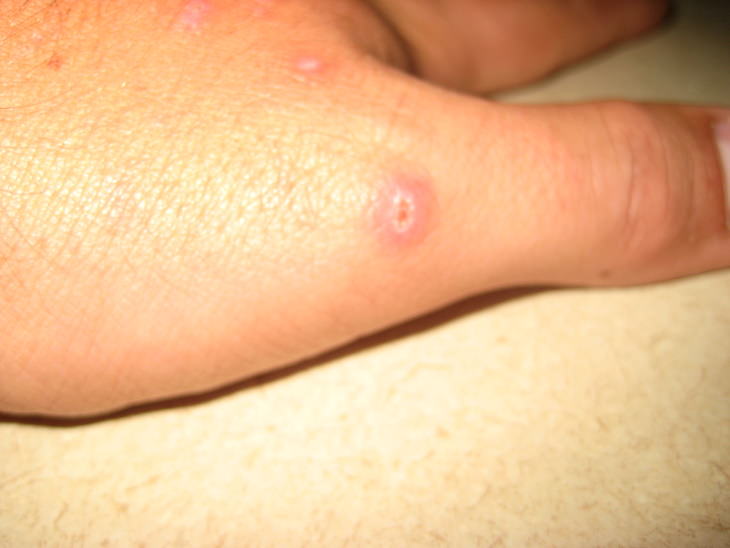
 Spider Bites what it looks like
It’s not always easy to identify a spider bite unless you know for a fact that you’ve been bitten by an arachnid. Like any other insect bite, a spider bite usually appears as a small red bump on your skin. It can be itchy and painful, but it can also cause no discomfort whatsoever and clear up within a few hours. A spider bite itself may be painful, but if the spider isn’t venomous, the pain will usually go away within an hour or two. 
 
The Symptoms of a Spider Bite  Spider Bites itchy arm

The severity of a spider bite depends on the type of spider that bit you. Some of the important signs that distinguish a mosquito bite or bee sting from a venomous spider bite are the following. The bites of some spiders may turn the area around the bite pale, which is a symptom called blanching. 
 
Other bites may generate blistering, much like a burn would, but this is much rarer. If you’ve been bitten by a venomous spider, such as the Hobo spider, you may also experience significant swelling and redness in the affected area, headaches, and fatigue. While these symptoms are bothersome, they usually go away within a week. 
 
That being said, there are two spiders in North America that can pose a significant danger to humans. Those two spiders are the brown recluse spider and the black widow spider. These bites can be deadly to humans and may require urgent medical help. Luckily, they’re usually easier to diagnose, as the bites of both of these spiders have a characteristic pattern of symptoms.
Brown Recluse (Loxosceles reclusa) 
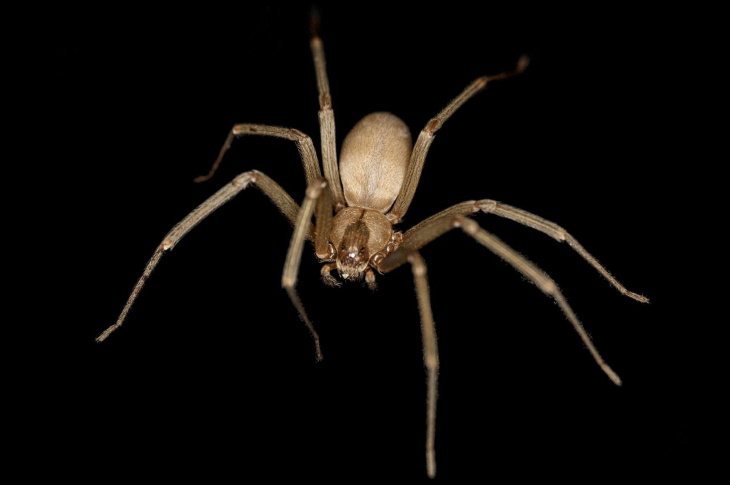
 Spider Bites Brown Recluse (Loxosceles reclusa)
The brown recluse spider is mostly found in the Southeastern and Midwestern states. Brown recluse bites are rare, but they are more potent than that of a rattlesnake and could be deadly. As the name of this arachnid suggests, brown recluse spiders live in undisturbed places

They are non-aggressive and only bite in life-threatening situations, but their proclivity to shelter in people’s attics, basements, sheds, closets, and garages makes some accidents unavoidable. If you live in an area where this spider is common, be careful while rummaging in your garage, basement, or attic. Check gloves and shoes you haven’t worn for a while before putting them on. 
 
Brown recluse bites are often painless, but you will notice symptoms that something is wrong a few hours later. This spider only bites once, so you will usually only see one lesion. The initial symptoms include a bluish sinking patch of skin surrounded by redness, swelling, and sometimes a pale center that contains a blister. A few days later, the venom may spread and the wound expands, causing significant pain.
 
In more serious cases, the venom can lead to tissue necrosis 7-14 days after the bite occurs. The venom kills the skin and surrounding tissues, creating a hard black scab surrounded by red skin called an eschar. People with compromised immune systems, the elderly, and children may develop a severe systemic reaction to a brown recluse bite that requires urgent medical care.
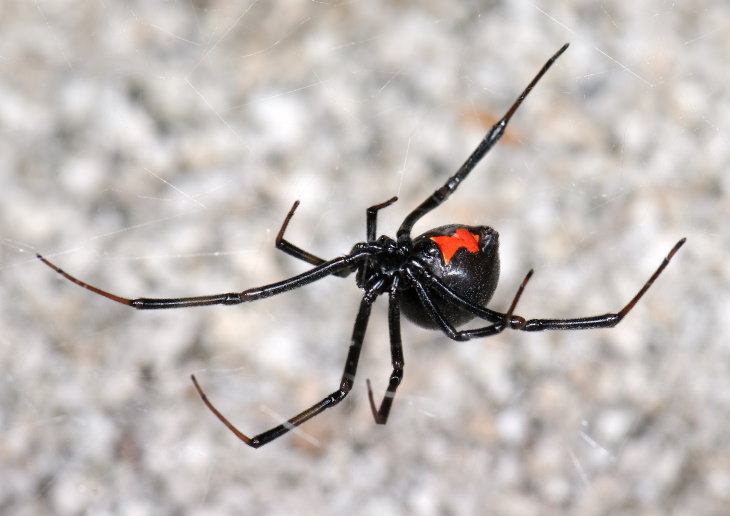
Black Widow (Latrodectus mactans)  
 Spider Bites  Black Widow (Latrodectus mactans)
The second venomous spider species that can be found throughout the US and can pose a severe threat to humans is the black widow spider. Despite the threatening name and scary appearance, black widows are actually quite shy creatures. Like the brown recluse, black widow spiders only bite when disturbed. And like the brown recluse, they reside in dark places like attics, storage containers, drain pipes, woodpiles, and basements.

Identifying a black widow bite is usually easy, as the bite feels like a pinprick and leaves a distinctive mark - two puncture marks. Unlike brown recluse bites, black widow bites do not cause skin necrosis in the puncture site. Almost immediately, you will start feeling a dull ache or numbness in the bite area and see skin irritation. 
 
In the following day or two, you may just experience pain, numbness, and burning in the area of the wound. However, some people develop severe symptoms, such as: 
-Sweating and increased saliva production 
-Nausea or vomiting 
-Muscle cramps and pain in the chest, abdomen, and the lower back 
-High blood pressure 
-Restlessness. 
 
Children, seniors, and people with immune deficiencies are the most likely to develop a severe reaction to a black widow bite. If you develop any of the above-listed symptoms or any other unusual symptoms, it’s important to act fast and seek medical help. Black widow antivenom can be administered to remove the venom from your body. 
 
How to Deal With a Spider Bite at Home
Severe reactions to spider bites are extremely rare. In most cases, you can treat a spider bite at home. Doctors recommend the so-called RICE method - which stands for rest, ice, compression, and elevation - to treat a fresh bite. Immediately after a bite, apply an ice pack wrapped in a clean cloth or towel for 10 minutes to prevent the spider’s venom from spreading. 
 
You can repeat this several times within the first hours after the bite. Then, bandage up the area to prevent you from scratching it and introducing germs to the wound. Rest and keep the affected area elevated to prevent the venom from spreading. You can also apply a topical antibiotic for a few days to prevent infection or a topical hydrocortisone cream or anti-itch cream to soothe the bite. A typical spider bite will heal within a few weeks. 
 
When to Seek Medical Help  
Not all spider bites, even those of the black widow or the brown recluse, require medical treatment. There are a few red flags that point that the venom is spreading through the body and you need to see a doctor: 
-Fever 
-Dark urine 
-The bite is not getting better or getting worse after a few days 
-You’re experiencing severe burning and pain 
-There’s a red and black ring-shaped rash in the area of the bite. 
 
If you’re experiencing any of these symptoms, it’s important to go to the emergency room as soon as possible.


This is only for your information, kindly take the advice of your doctor for medicines, exercises and so on.     

https://gscrochetdesigns.blogspot.com. one can see my crochet creations  
https://gseasyrecipes.blogspot.com. feel free to view for easy, simple and healthy recipes    
https://kneereplacement-stickclub.blogspot.com. for info on knee replacement


Labels: , , , , , , , , , , ,

Friday, February 08, 2019

A Single “Cell of Origin” Might Trigger All Forms of Cancer

A team of scientists are claiming that all cancer growth in the body starts from a single “cell of origin” — and that they’ve found that cell.

If they’re right, the discovery could dramatically change how we treat cancer, potentially saving millions of life.
Not all cancer cells are alike. A particular type, called cancer stem cells, are the only cells that can make a new tumor.

In a paper published, the team describes how its study of cells from a human breast tumour allowed it to identify a sub-class of cancer stem cells, which it calls “energetic” cancer stem cells (e-CSCs).

According to the researchers, these cells produce large amounts of energy and proliferate rapidly. They also grow in suspension, without attaching to any tissues, allowing cancer to spread through blood and lymphatic vessels.

Ultimately, they believe it’s e-CSCs that lead to the growth of all cancers in the body.

“It feels like finding the proverbial needle in a haystack,” a researcher  said in a news release, “and it crucially gives us a new window on cancer and how we might stop it.”

Targeted Treatment

 Now that they’ve identified e-CSCs as the “cell of origin,” the team suggests researchers shift their focus from cancer treatments that target “bulk” cancer cells and toward ones that go after e-CSCs in particular. And thanks to the cells’ natural phosphorescent glow, hunting them down won’t be as difficult.

“Now that we have found them and we know how they behave, it should be relatively simple to find drugs to target cancer stem cells,” he wrote. “In our new paper, we have already shown that they are easily targeted with a mitochondrial inhibitor or a cell cycle inhibitor such as Ribociclib, an FDA-approved drug in the U.S. which would prevent their proliferation.”

“Ultimately, this means that if we focus on energetic cancer stem cells, we may be able to directly hit the target,” he continued. “We might be able to turn cancer into a manageable chronic disease, like diabetes.”

 THIS IS ONLY FOR INFORMATION, ALWAYS CONSULT YOU PHYSICIAN BEFORE HAVING ANY PARTICULAR FOOD/ MEDICATION/EXERCISE/OTHER REMEDIES.                                    PS- THOSE INTERESTED IN RECIPES ARE FREE TO  VIEW MY BLOG-                                                                                           https://gseasyrecipes.blogspot.com/       
                                                                                                                                                                      FOR INFO ABOUT KNEE REPLACEMENT, YOU CAN VIEW MY BLOG-                                                  https:// kneereplacement-stickclub.blogspot.com/           
                                                                           FOR CROCHET DESIGNS                                                                                                                                                                                                  https://gscrochetdesigns.blogspot.com


Labels: , , , , ,

Saturday, November 24, 2018

Take Leave When You Have Flu

Biologists have detected what they say is the first evidence of changes in the social networks of ants through collective altered behaviour to protect their colonies from potentially deadly infections.

The scientists, who intentionally introduced a fungus in ant colonies grown in their laboratory, found that the fungus-contaminated ants and the uncontaminated ants stayed away from each other, displaying behavioural changes that protected vulnerable members of their colonies.

“The isolation of sick individuals had been observed earlier in ants and honeybees,” said  an evolutionary scientist and lead researcher.

“But this is the first time we’re seeing behaviour changes in contaminated and healthy ants affecting their colonies’ social networks.”

The findings point towards evolutionary mechanisms meant to prevent infections from spreading within colonies of social insects that are extremely vulnerable to infections because of their high population counts, frequent physical contact between individuals, and genetic similarities.

Researchers used an automated system to track the movements of thousands of black garden ants, maintained in 22 colonies, before and after exposing about 10 per cent of the worker ants to fungal spores.

They noticed changes in the ants’ behaviour even before the fungus-exposed ants had become sick. In the presence of the fungal spores, the ants changed how they interacted with each other -– the foragers and the nurses had fewer contacts with one another.

Using sensitive laboratory techniques, the scientists also found that this altered behaviour lowered the risk of the transfer of fungal spores from the infected ants to the others.

A few individuals received a high dose of the fungus but more ants received a low dose that, the scientists believe, could help bolster their immunity from future infections.

“The ants’ immune system can deal well with this lower pathogen level, which provides a form of immune memory,”  an evolutionary biologist said.

The biologist said the precise mechanisms through which the ants are able to detect the arrival of the fungus and subsequently alter their behaviour and social networking remain unclear.

“The detection itself may be through the sense of smell, which is very developed in ants,” the biologist said.

THIS IS ONLY FOR INFORMATION, ALWAYS CONSULT YOU PHYSICIAN BEFORE HAVING ANY PARTICULAR FOOD/ MEDICATION/EXERCISE/OTHER REMEDIES.                                                                                                                                                                                                                                                                                        PS- THOSE INTERESTED IN RECIPES ARE FREE TO  VIEW MY BLOG-                                                                                           https://gseasyrecipes.blogspot.com/                                                                                                                                                                             FOR INFO ABOUT KNEE REPLACEMENT, YOU CAN VIEW MY BLOG-                                                                                                                             https:// kneereplacement-stickclub.blogspot.com/                                                                                       FOR CROCHET DESIGNS                                                                                                                                                                                                                                 https://gscrochetdesigns.blogspot.com

Labels: , , , , , , , , , , , ,

Thursday, February 08, 2018

Spread of breast cancer linked to compound in asparagus and other foods

Breast cancer patients could be encouraged to cut asparagus and other foods from their diets in the future to reduce the risk of the disease spreading, scientists say.
 
Researchers are investigating whether a change in diet could help patients with breast tumours after studies in mice showed that asparagine, a compound first identified in asparagus but present in many other foods, drives the spread of the disease to other organs.

When scientists reduced asparagine in animals with breast cancer, they found that the number of secondary tumours in other tissues fell dramatically. The spread of malignant cells, often to the bones, lungs and brain, is the main cause of death among patients who are diagnosed with breast cancer.

“This is a very promising lead and one of the very few instances where there is a scientific rationale for a dietary modification influencing cancer,” said the lead scientist.

Asparagine is an amino acid that is made naturally in the body as a building block for proteins. But it is also found in the diet, and in high levels in certain meats, vegetables and dairy products. 

The international team of cancer specialists from different countries studied mice with an aggressive form of breast cancer. The mice develop secondary tumours in a matter of weeks and tend to die from the disease within months.

Writing in the journal, the researchers describe how they reduced the ability of breast cancer to spread in the animals by blocking asparagine with a drug called L-asparaginase. To a lesser extent, by putting the animals on a low-asparagine diet worked too. Inspired by the results, the scientists examined records from human cancers and found that breast tumours that churned out the most asparagine were most likely to spread, leading patients to die sooner. The same was seen in cancers of the head, neck and kidney.

Asparagine appears to help cancer cells change into a form that easily spreads from the breast, through the bloodstream, to other organs where they grow into secondary tumours,the scientist said. While suppressing levels of asparagine reduced the spread of breast cancer around the body, it did nothing to prevent breast tumours forming in the first place.

If the findings hold in humans, breast cancer patients may be put on low asparagine diets while they have conventional treatments, such as chemotherapy, for the disease. But because asparagine is so ubiquitous in food, drugs that target the amino acid may be more effective. L-asparagine breaks the amino acid down in the bloodstream, but more targeted drugs could block its production altogether.

“This is one case where we can show at a deep biochemical level how a change in diet can impact properties of cells that are relevant to the progression of lethal disease,” said a scientist. “But of course, until human studies are done, this isn’t a DIY method to prevent cancer.”

A cancer researcher said that lowering asparagine levels, either with drugs or dietary restriction, would help prevent cancer cells from spreading. But for patients, he said that drug treatments held more promise than changes to their diets. 

“Asparagine is frequently found in various animal sources including beef, poultry, eggs, fish and seafood. It is also found in many vegetables including asparagus, potatoes, nuts, legumes and soy. Since these foods are so common, it seems that diet restriction may not be the ideal approach,” he said.

Another spokesperson said: “This early discovery could offer a long-awaited new way to help stop breast cancer spreading – but we first need to understand the true role of this nutrient in patients. With nearly 11,500 women still dying from breast cancer each year in a country, we urgently need to stop the disease spreading around the body, where it becomes incurable.

“On current evidence, we don’t recommend patients totally exclude any specific food group from their diet without speaking to their doctors. We’d also encourage all patients to follow a healthy and varied diet – rich in fruit, vegetables and pulses, and limited in processed meat and high fat or sugar foods – to help give them the best chance of survival.”

THIS IS ONLY FOR INFORMATION, ALWAYS CONSULT YOU PHYSICIAN BEFORE HAVING ANY PARTICULAR FOOD/ MEDICATION/EXERCISE/OTHER REMEDIES.    

PS- THOSE INTERESTED IN RECIPES ARE FREE TO VIEW MY BLOG-                      
HTTP:GSEASYRECIPES.BLOGSPOT.COM/
FOR INFO ABOUT KNEE REPLACEMENT, YOU CAN VIEW MY BLOG-                                                        
HTTP://KNEE REPLACEMENT-STICK CLUB.BLOGSPOT.COM/
FOR CROCHET DESIGNS

HTTP://MY CROCHET CREATIONS.BLOGSPOT.COM

Labels: , , , , , , , , , , , , , , , , ,