Thursday, September 08, 2022

New Hope Against Antibiotic-Resistant Bacteria

A new synthetic molecule could be the torch that shines a new light of hope in humanity’s battle against drug-resistant bacteria. The CDC estimates that at least 30% of antibiotic prescriptions are unnecessary. This misuse of antibiotics has caused a surge of antibiotic-resistant bacteria. Essentially these are the same bacteria we’ve known all our lives, but they’ve developed and mutated to become immune to classic antibiotics. Some of them are even resistant to penicillin.  
 
How bacteria become resistant
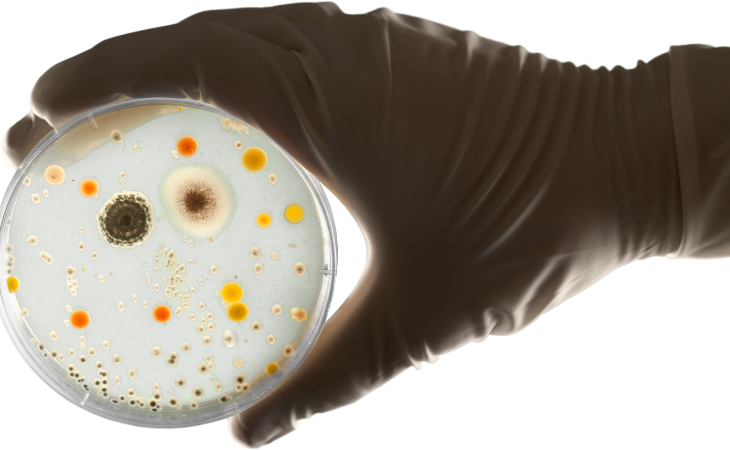
bacteria growing in petri dish
Taking an antibiotic when you don’t really have an infection may cause more harm than good. Antibiotics have a negative effect on the abilities of white blood cells and gut bacteria responsible for healthy digestion and inhibiting the growth of bad bacteria in the body.

Most antibiotic-resistant bacteria can be classified as gram-negative bacteria. It is a class of bacteria that have thicker cell walls and a built-in mechanism called an efflux pump that gives them the ability to export toxins out of the cells. The harder, thicker cell walls make these bacteria more resistant and challenging to penetrate, while the efflux pump makes them exceptionally challenging to tackle, as they become more toxic under attack. This pump may prevent antibiotics from getting inside the cell. 
 
Some varieties of gram-negative bacteria you may know are cholera, E. coli, and Salmonella typhi, which causes typhoid fever. Today these are treated with antibiotics, sometimes more than one. Older antibiotics may be more effective at times. 
 
Fabimycin - a new hope
A new player just hit the field. It is a molecule called fabimycin. This molecule inhibits the bacterial enzyme called FabI, which is vital for the bacteria‘s fatty acid biosynthesis. In other words, this new molecule has the potential to starve drug-resistant bacteria. Trials showed that, in addition to that, fabimycin is also relatively harmless to some types of healthy bacteria found in the gut. 
 
Fabimycin was developed in a lab. The synthetic drug was created by altering and improving existing antibiotics effective against less aggressive infections. Then, they started testing it on drug-resistant bacteria. 
 
The researchers found fabimycin to be effective on more than 300 types of drug-resistant bacteria. It cured mice with pneumonia and urinary tract infections. The medication is yet to undergo human testing and looks promising.


This is only for your information, kindly take the advice of your doctor for medicines, exercises and so on.   

https://gscrochetdesigns.blogspot.com. one can see my crochet creations  
https://gseasyrecipes.blogspot.com. feel free to view for easy, simple and healthy recipes    
https://kneereplacement-stickclub.blogspot.com. for info on knee replacement


Labels: , , , , , , , , , , ,

Friday, February 14, 2020

Taming pathogens with mucus and phages

Millions of people are treated with antibiotics each year for infections or as a preventative measure. The Centers for Disease Control and Prevention reports that at least 2.8 million people are infected with antibiotic-resistant bacteria each year, meaning the germs have found ways to overpower antibiotics and continue to grow. Treating antibiotic-resistant infections is costly and time-intensive. Two teams of NIBIB-funded scientists have been working to find alternative solutions for treating bacterial infections, especially antibiotic-resistant bacteria.

How does your runny nose fight bacteria?

A runny nose isn't the only place mucus exists in our bodies; it also lines many passageways, like the digestive system, to keep them lubricated. Massachusetts Institute for Technology (MIT) researchers have found that sugars in mucus help control and disarm pesky microbes in our bodies. Most people think the slimy substance is a nuisance and gross, but it plays a vital role in many bodily systems.

Mucins, the gel-forming component in mucus, are coated in glycans, or sugars, and have been known to suppress the formation of biofilm, a microbial growth form that is often associated with infections and difficult to treat with antibiotics. This study, published in Nature Microbiology, finds a broader range of functions for the glycans attached to mucins. Researchers think they may not need to actually kill the pesky microbes, but instead, disarm them and render them less infectious.

Antibiotics are becoming less effective against fast-adapting bacteria. We need to leverage naturally--occurring defense mechanisms to protect ourselves from microbes."David Rampulla, Ph.D., director of the NIBIB Biomaterials and Biomolecular Constructs program
Mucus is densely packed with harmful microbes, so how does the body use this slimy substance to prevent infections? One would think something in mucus may kill the bacteria. The MIT team, led by Katharina Ribbeck, Ph.D., Professor in the Biological Engineering Department, has found that mucus tames pathogens contained in its sticky matrix so the immune system can kick in and fight when it needs to-;but mucus doesn't kill bacteria on its own.

Many used to think the structural network of mucus was purely for mechanical purposes, but we've learned it plays a critical role in the way it controls problematic pathogens as well. We are testing to see if this function is universal across many species."Katharina Ribbeck, Ph.D., Professor in the Biological Engineering Department, MIT 

The researchers dissected the different parts of mucus and found that the key ingredient that tamed bacteria was glycans. Glycans are chains of sugar molecules that form branched structures. The researchers questioned if the glycans would have the same power without the other components in mucus. Results confirmed that the glycans are robust at defusing pathogens on their own.

This study focused on the glycans' response to a specific bacterium, P. aeruginosa, that causes infections in people with a compromised immune system. Graduate student, Kelsey Wheeler, found the glycans made the bacteria less potent by suppressing genetic pathways responsible for bacterial communications and ones that allow clumping or toxin production. These pathways enable their infectious behavior.

Ribbeck said one of her greatest challenges has been convincing people that mucus is worth studying and not just a waste product. "We can create alternative therapeutic approaches that don't use antibiotics to kill microbes, but instead use nature's form of biological engineering – mucus," said Ribbeck.

Up next for Ribbeck is to break the glycan code and understand which glycans tame a specific pathogen and how they bind together. She also wants to learn more about if and how microbes can sense glycans and consequently try to escape them. Many different types of bacteria coexist in communities inside our bodies and, in part, make up a person's microbiome, which plays an essential role in digestion and immune health. Ribbeck thinks glycans play a significant part in maintaining and altering the microbiome in our bodies, and her lab is beginning to test the theory.

Manufacturing viruses to fight antibiotic-resistant bacteria

Timothy Lu, Ph.D., an MIT Associate Professor in the Department of Biological Engineering and Electrical Engineering and Computer Science, has been working on another alternative approach to treating antibiotic-resistant bacterial infections. Lu has been developing a way to engineer a special type of virus called a bacteriophage or phage to kill different strains of E. coli.

Antibiotics typically inhibit or regulate enzymes that are responsible for controlling the growth and spread of bacteria, giving the immune system time to fight infections. Phages kill bacteria through a different mechanism. Most commonly, phages recognize a specific receptor on a bacterium that allows them to bind and inject their virus into the bacteria. The virus will replicate and eventually kill the bacteria.

"Using phages to treat antibiotic-resistant infections is not a new concept," said Lu. He explained that one could perform an extensive, timely screen to identify naturally occurring phages that kill specific types of bacteria. "But at the end of the screen, you will likely be left with a diverse group of phages that will be difficult to manufacture and scale-up in a commercially reproducible, cost-effective way."

This is only for your information, kindly take the advice of your doctor for medicines, exercises and so on.     
https://gscrochetdesigns.blogspot.com. one can see my crochet creations  
https://gseasyrecipes.blogspot.com. feel free to view for easy, simple and healthy recipes    
https://kneereplacement-stickclub.blogspot.com. for info on knee replacement
 

Labels: , , , , , , , , ,

Saturday, September 14, 2019

Viruses could be the best bet for fighting antibiotic-resistant superbugs

Antibiotics won the battle against resistant bacteria, but they may not win the war.

You probably know that antibiotic-resistant bacteria, also known as superbugs, have hampered physicians’ ability to treat infections. You may also be aware that there has been a steep decline in the number of new antibiotics coming to market. Some headlines suggest humanity is doomed by antimicrobial resistance; even politician and governments have weighed in, comparing rising antimicrobial resistance to other popular crises such as climate change. Although I believe these assertions are exaggerated, antimicrobial resistance is a serious problem.

I am a physician scientist with a specialty in infectious diseases. I have been fascinated by the role that bacteria play in human health, and the potential for using viruses to treat bacterial infections.

What causes antimicrobial resistance?

One significant factor contributing to antimicrobial resistance is the excessive use of antibiotics. In the U.S., where antibiotics are widely available, some patients demand these drugs for many different illnesses. Many physicians appease their patients because they don't understand when and when not  to use them and because there is no regulatory structure to limit their use. Anyone with a prescription pad can prescribe any antibiotic to treat any condition and rarely, if ever, face any consequences. There are some efforts to reduce antibiotic use, but the scope of the problem in the U.S. remains large.

Some countries, such as Sweden, use incentives to encourage doctors to improve antibiotic uses. But there is no counterpart for this system in U.S. hospitals and clinics.

The problem goes beyond humans; 70 percent of all antibiotics are actually used on animals. This means that humans can be exposed to antibiotics by just handling animal products. The drumstick you are preparing for dinner might also have antibiotic-resistant bacteria tagging along.  

Once antimicrobial resistance develops in a bacterium, it doesn’t always go away. For example, methicillin-resistant Staphylococcus aureus (MRSA) evolved resistance to multiple different antibiotics; yet, despite efforts to reduce its spread by limiting the use of antibiotics that led to its emergence, MRSA still persists in hospitals and the community.

An alternative to antibiotics

Another reason for finding alternatives to antibiotics is that we share our microbes with the people and pets who live around us ; thus, others can acquire one of these superbugs without ever taking an antibiotic.

A not-so-obvious reason for developing new therapies is that our bodies are home to a large community of microorganisms, including bacteria, called our microbiome. These microorganisms are necessary to maintain our health. Those same antibiotics that kill harmful bacteria also kill the good ones.

There is an alternative to antibiotics, but it was dismissed by medicine years ago.
Antibiotics or wrong diet damage the good and bad bacteria flora living in the gut

The original phage therapy story

That alternative was something called phage therapy, which uses viruses that infect bacteria, called bacteriophages, to kill disease-causing bacteria. Bacteriophages, or phages, were used frequently in the early - and pre-antibiotic eras  between the 1920s and ‘40s to treat life-threatening infections.

But phage therapy had many disadvantages. The first was that phages were unpredictable. One type of phage might wipe out the bad bacteria in one individual but not another. So hospitals had to keep a broad collection of phages to kill disease-causing bacteria from all their patients. An antibiotic such as vancomycin, by comparison, predictably kills entire groups of bacteria.

Another downside is that phage collections require maintenance. So not only did hospitals have to keep a large variety of phages on hand, but they had to keep them in shape. So medicine chose antibiotics for convenience, and hadn’t looked back in any meaningful way, until recently.

Making a comeback?

So, why is phage therapy making a comeback? Antibiotic resistance is an obvious answer, but doesn’t explain the full story.

As a specialist in infectious diseases, I have been interested in phage therapy as long as I can remember, but only recently have I felt comfortable saying this out loud. Why? A physician might be considered a “quack” just for mentioning phage therapy because the early attempts were neither a rousing success or a colossal failure. Like any therapeutic, it had its strengths and weaknesses.

However, now scientific advances can guide us toward which phage is best for destroying a particular microbe. With the rising antimicrobial resistance crisis, physicians and scientists have a well-timed opportunity to work together to develop effective phage therapies.

The proof of this comes from recent landmark phage therapy cases. The successful treatment of a physician with a life-threatening infection and a grave prognosis caused by a multi-drug resistant- a life- threatening infection and a grave prognosis caused by a multi-drug resistant bacterium at my institution serves as a great example. Another pivotal case circulating in popular media has kept this trend going. We physicians may be able to treat just about any disease-causing bacterium; it is just a matter of finding a suitable phage.

A big part of phage therapy research is devoted to “phage hunting ,” where we microbiologists scour the soil, the oceans and the human body to identify phages with the potential to kill the bacteria that ail us. While the pace of these studies has been slow, the new research is revealing the therapeutic potential of phages in medicine.

You might think that with all the phage hunting and landmark cases that we would start using phage therapy all the time, but we don’t.
Bacteriophages target only specific stains of bacteria

The case for using phages

One advantage of antibiotics is that since they have been used for decades, we know a lot about their safety. Physicians make simple calculations every day about the risk-benefit ratio of using antibiotics, but aren’t equipped to make the same calculations about phages. Does anyone really want a doctor injecting them with a virus to cure a bacterial infection? I doubt that would be anyone’s choice when the question is posed that way.

But, remember that phages are natural. They’re on every surface of your body. They are in the ocean and soil, and in your toilet and sink. They are literally everywhere. Thus, putting a phage into your body to kill a bacterium quite frankly is something that nature does to us every single day, and as far as we know, we are no worse for the wear.

Phages are estimated to kill half the world's bacteria every 48 hours and are probably the most potent antibacterial agents out there. Is there really a compelling reason to be concerned when a doctor gives us a phage instead of us acquiring that same phage from our sink at home? Only time will tell. Unfortunately, as antimicrobial resistance continues to rise, time may not be on our side.

this is only for your information, kindly take the advice of your doctor for medicines, exercises and so on.   
https://gscrochetdesigns.blogspot.com. one can see my crochet creations 
https://gseasyrecipes.blogspot.com. feel free to view for easy, simple and healthy recipes    
https://kneereplacement-stickclub.blogspot.com. for info on knee replacement
     

Labels: , , , , , ,