Tuesday, October 15, 2019

Coffee bean extract may be beneficial in reducing fat-induced inflammation

When coffee beans are processed and roasted the husk and silverskin of the bean are removed and unused, and often are left behind in fields by coffee producers.

Food science and human nutrition researchers have discovered  inflammation-fighting phenolic compounds — protocatechuic acid and gallic acid — in the silverskin and husk of coffee beans not only for their benefits in alleviating chronic disease but also in adding value to would-be ‘waste’ products from the coffee processing industry.

“This material from coffee beans is interesting mainly because of its composition. It’s been shown to be non-toxic. And these phenolics have a very high anti-oxidant capacity,” said  co-author of the study.

When fat cells of mice were treated with water-based extracts from coffee beans skins, the phenolic compounds reduced fat-induced inflammation in the cells and improved glucose absorption and insulin sensitivity.

The findings show promise for these bioactive compounds, when consumed as part of the diet, as a strategy for preventing obesity-related chronic illnesses, such as Type 2 diabetes and cardiovascular disease.

For the study, the fat cells and immune cells were cultured together to recreate the ‘real-life’ interaction between the two cells.

When obesity-related inflammation is present, the fat cells and immune cells work together — stuck in a loop–to increase oxidative stress and interfere with glucose uptake, worsening the situation.

In order to block this loop and prevent chronic disease, the researchers’ goals are to eliminate or reduce as much inflammation as possible in order to allow glucose uptake to be facilitated, as well as to have healthy cells that will produce adequate insulin.

The researchers also stressed the positive impact on the environment of using the coffee bean by-products.

During coffee processing, the bean is separated from the husk, the external outer layer of the bean. After the bean is roasted, the silverskin layer is separated.

“It’s a huge environmental problem because when they separate this husk after processing, it usually stays in the field fermenting, growing mold, and causing problems,” explained one of the researcher.

Worldwide, 1,160,000 tonnes of husk are left in fields per year, potentially causing contamination.

Additionally, 43,000 tonnes of silverskin is produced each year, which, the researcher  adds, may be easier to utilize because it stays with the bean as it is exported to different countries to be roasted.

this is only for your information, kindly take the advice of your doctor for medicines, exercises and so on.   
https://gscrochetdesigns.blogspot.com. one can see my crochet creations  

https://gseasyrecipes.blogspot.com. feel free to view for easy, simple and healthy recipes    
https://kneereplacement-stickclub.blogspot.com. for info on knee replacement


Labels: , , , , , , , , , ,

Saturday, September 14, 2019

Viruses could be the best bet for fighting antibiotic-resistant superbugs

Antibiotics won the battle against resistant bacteria, but they may not win the war.

You probably know that antibiotic-resistant bacteria, also known as superbugs, have hampered physicians’ ability to treat infections. You may also be aware that there has been a steep decline in the number of new antibiotics coming to market. Some headlines suggest humanity is doomed by antimicrobial resistance; even politician and governments have weighed in, comparing rising antimicrobial resistance to other popular crises such as climate change. Although I believe these assertions are exaggerated, antimicrobial resistance is a serious problem.

I am a physician scientist with a specialty in infectious diseases. I have been fascinated by the role that bacteria play in human health, and the potential for using viruses to treat bacterial infections.

What causes antimicrobial resistance?

One significant factor contributing to antimicrobial resistance is the excessive use of antibiotics. In the U.S., where antibiotics are widely available, some patients demand these drugs for many different illnesses. Many physicians appease their patients because they don't understand when and when not  to use them and because there is no regulatory structure to limit their use. Anyone with a prescription pad can prescribe any antibiotic to treat any condition and rarely, if ever, face any consequences. There are some efforts to reduce antibiotic use, but the scope of the problem in the U.S. remains large.

Some countries, such as Sweden, use incentives to encourage doctors to improve antibiotic uses. But there is no counterpart for this system in U.S. hospitals and clinics.

The problem goes beyond humans; 70 percent of all antibiotics are actually used on animals. This means that humans can be exposed to antibiotics by just handling animal products. The drumstick you are preparing for dinner might also have antibiotic-resistant bacteria tagging along.  

Once antimicrobial resistance develops in a bacterium, it doesn’t always go away. For example, methicillin-resistant Staphylococcus aureus (MRSA) evolved resistance to multiple different antibiotics; yet, despite efforts to reduce its spread by limiting the use of antibiotics that led to its emergence, MRSA still persists in hospitals and the community.

An alternative to antibiotics

Another reason for finding alternatives to antibiotics is that we share our microbes with the people and pets who live around us ; thus, others can acquire one of these superbugs without ever taking an antibiotic.

A not-so-obvious reason for developing new therapies is that our bodies are home to a large community of microorganisms, including bacteria, called our microbiome. These microorganisms are necessary to maintain our health. Those same antibiotics that kill harmful bacteria also kill the good ones.

There is an alternative to antibiotics, but it was dismissed by medicine years ago.
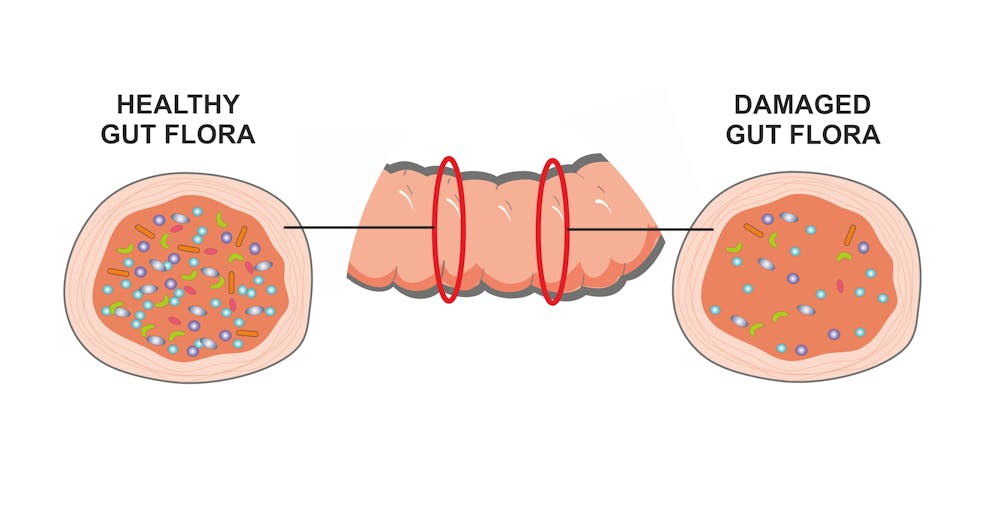
Antibiotics or wrong diet damage the good and bad bacteria flora living in the gut

The original phage therapy story

That alternative was something called phage therapy, which uses viruses that infect bacteria, called bacteriophages, to kill disease-causing bacteria. Bacteriophages, or phages, were used frequently in the early - and pre-antibiotic eras  between the 1920s and ‘40s to treat life-threatening infections.

But phage therapy had many disadvantages. The first was that phages were unpredictable. One type of phage might wipe out the bad bacteria in one individual but not another. So hospitals had to keep a broad collection of phages to kill disease-causing bacteria from all their patients. An antibiotic such as vancomycin, by comparison, predictably kills entire groups of bacteria.

Another downside is that phage collections require maintenance. So not only did hospitals have to keep a large variety of phages on hand, but they had to keep them in shape. So medicine chose antibiotics for convenience, and hadn’t looked back in any meaningful way, until recently.

Making a comeback?

So, why is phage therapy making a comeback? Antibiotic resistance is an obvious answer, but doesn’t explain the full story.

As a specialist in infectious diseases, I have been interested in phage therapy as long as I can remember, but only recently have I felt comfortable saying this out loud. Why? A physician might be considered a “quack” just for mentioning phage therapy because the early attempts were neither a rousing success or a colossal failure. Like any therapeutic, it had its strengths and weaknesses.

However, now scientific advances can guide us toward which phage is best for destroying a particular microbe. With the rising antimicrobial resistance crisis, physicians and scientists have a well-timed opportunity to work together to develop effective phage therapies.

The proof of this comes from recent landmark phage therapy cases. The successful treatment of a physician with a life-threatening infection and a grave prognosis caused by a multi-drug resistant- a life- threatening infection and a grave prognosis caused by a multi-drug resistant bacterium at my institution serves as a great example. Another pivotal case circulating in popular media has kept this trend going. We physicians may be able to treat just about any disease-causing bacterium; it is just a matter of finding a suitable phage.

A big part of phage therapy research is devoted to “phage hunting ,” where we microbiologists scour the soil, the oceans and the human body to identify phages with the potential to kill the bacteria that ail us. While the pace of these studies has been slow, the new research is revealing the therapeutic potential of phages in medicine.

You might think that with all the phage hunting and landmark cases that we would start using phage therapy all the time, but we don’t.
Bacteriophages target only specific stains of bacteria

The case for using phages

One advantage of antibiotics is that since they have been used for decades, we know a lot about their safety. Physicians make simple calculations every day about the risk-benefit ratio of using antibiotics, but aren’t equipped to make the same calculations about phages. Does anyone really want a doctor injecting them with a virus to cure a bacterial infection? I doubt that would be anyone’s choice when the question is posed that way.

But, remember that phages are natural. They’re on every surface of your body. They are in the ocean and soil, and in your toilet and sink. They are literally everywhere. Thus, putting a phage into your body to kill a bacterium quite frankly is something that nature does to us every single day, and as far as we know, we are no worse for the wear.

Phages are estimated to kill half the world's bacteria every 48 hours and are probably the most potent antibacterial agents out there. Is there really a compelling reason to be concerned when a doctor gives us a phage instead of us acquiring that same phage from our sink at home? Only time will tell. Unfortunately, as antimicrobial resistance continues to rise, time may not be on our side.

this is only for your information, kindly take the advice of your doctor for medicines, exercises and so on.   
https://gscrochetdesigns.blogspot.com. one can see my crochet creations 
https://gseasyrecipes.blogspot.com. feel free to view for easy, simple and healthy recipes    
https://kneereplacement-stickclub.blogspot.com. for info on knee replacement
     

Labels: , , , , , ,

Sunday, December 16, 2018

8 Reasons to See Fighting in Your Relationship Positively

We all experience moments of quarrels and disagreements with our spouses from time to time, and no one enjoys this because we all grew up with the idea that a fight is something negative. Well, this fact is only partially true, because a disagreement, differing opinions, and fights that are conducted within a loving and supportive framework can be much more positive than you think. In fact, there are many psychology and relationship experts who even point to a host of advantages that are related to fights in relationships, and after you get to know them, you’ll understand that fights really don’t have to hurt your relationship...

1. Conflicts are a sign of a mature relationship

As long as you aren’t fighting about leaving the toilet seat up, who’s eaten the last slice of cake or what you’re going to watch tonight on TV, marital disputes are a sign of a certain maturity to be assessed. Many of us try to avoid conflicts with our environment as much as possible, but such an approach in relationships can be devastating, which is why it’s good to fight from time to time to act for what is important to us. As we mentioned earlier, these fights should be over important issues and must be held in a mature way without personally attacking the other side or shouting. Remember that your goal shouldn’t be to convince the other person and change their opinion, rather, "We need to reach an agreement, and maybe there’ll be a compromise that requires effort from both sides."

2. Conflicts are a sign that you care

The easiest way to deal with most of the things that bother us about our partners is simply to ignore them, but we don’t. Why? Because we care and we are prepared to deal with the discomfort and sometimes with the emotional pain caused by a fight, in order to invest in improving our marital future. Just like many parents and children who fight, an argument between spouses indicates commitment, hope for a better future and a deep bond, not a desire to “throw in the towel.”

3. Fighting can improve communication

It’s difficult to create a relationship with mutual trust if you do not raise points of disagreement and take care of them when necessary, even though sometimes doing so will lead to an unpleasant argument. In fact, couples who know how to fight in a healthy and correct way only benefit from talking to their partners about things that bother them. A good fight helps people honestly share the things that bother them without feeling ashamed or insecure, and helps couples promote changes in behavior through verbal communication.

4. Conflicts are an inseparable part of a healthy relationship

According to marital and psychologist experts, relationships have a number of key principles such as mutual respect, shared interests, sexual compatibility, and even fights. So, if a couple never argues it may be a sign that something is wrong in their relationship, and that neither side wants to improve the existing situation. The truth is that there is no such thing as perfect relationships and relationships between people are something that constantly changes, moves and develops, so you should always have a desire to engage in the parts of it that can be improved, and sometimes this creates inevitable friction. Keep in mind that although this situation isn’t desirable, it is part of reality and should be understood that at its core it is not necessarily a bad thing.

5. Conflicts strengthen your relationship

During a fight, it is important to remember that the goal is not to "win" or to cause the other side to "lose," but to teach and learn to create a process of positive change. The things you say and hear represent thoughts, preferences, personality and core values on both sides, and sometimes you’ll even be surprised by what you might discover about yourself! Exposing this information is an act that requires a lot of openness and willingness to be hurt, which is why the relationship grows stronger when and if the other side responds correctly and changes the conflict from something negative to an experience that strengthens the relationship in the long term.

6. Feelings of resentment can be mollified through arguments

Being part of a relationship is a wonderful thing, but it isn’t always easy and there will always be a need for mutual compromise around certain issues. Sometimes it’s natural to feel that you’re more flexible than your partner and give up more of them, and as a result, a feeling of resentment can begin to develop. The most direct way to deal with this situation is simply to raise the issues that bother you, to talk about them openly even if there is disagreement, and reach a situation where you feel that your relationship is more balanced than it was. But remember, it’s difficult and almost near impossible to achieve perfect balance in any area of your relationship and co-existence at home. You can’t start holding grudges about every little thing, as this behavior is destructive to a relationship.

7. Reasonable arguments that don’t lead to hurt feelings are a sign of long-term relationships

According to one of the authors of the bestselling book on human communication, avoiding unpleasant conversation about a topic that bothers us is a big mistake that affects all relationships, especially in romantic relationships. This avoidance is the first step on the road to creating a communication crisis because our feelings aren’t going anywhere, and if they are kept in and start piling up, it will inevitably lead to a chaotic and emotional argument. Conversely, fights about issues that are bothering you in a timely manner can help you stabilize your relationship in the long term.

8. Without differences in opinion, marriage can be boring

The reason that ends this list may seem childish to you, but many experts say it is more important than you think. True, everyone's healthy logic suggests that the last thing couples need is to fight, and that, despite all the positive points described so far, you would still prefer to be in a relationship where there is total agreement on all subjects. Now stop for a moment and think about all the times you reconciled after a quarrel, about the times when you reached a compromise that both sides were pleased with, about the progress you made following differences of opinion, and about loving your spouse even though they are so different from you.
Of course, a relationship shouldn’t be based on differences of opinion to stimulate conversations and feeling, but these are natural products of difference between people which sometimes lead to tiffs. The way we treat the quarrel is as important as its essence, which is why it’s important to remember all the points brought up in this article. Disagreements aren’t the end of the world, they’ll be exactly what you make of them, for better or worse, and they’ll probably always be an inseparable part of life. So, don’t feel bad because you go through them and remember that love is a powerful force that can always help you cope with such challenges and grow stronger.
THIS IS ONLY FOR INFORMATION, ALWAYS CONSULT YOU PHYSICIAN BEFORE HAVING ANY PARTICULAR FOOD/ MEDICATION/EXERCISE/OTHER REMEDIES.                                                                                                                                                                                                                                                                                        PS- THOSE INTERESTED IN RECIPES ARE FREE TO  VIEW MY BLOG-                                                                                           https://gseasyrecipes.blogspot.com/                                                                                                                                                                             FOR INFO ABOUT KNEE REPLACEMENT, YOU CAN VIEW MY BLOG-                                                                                                                             https:// kneereplacement-stickclub.blogspot.com/                                                                                       FOR CROCHET DESIGNS                                                                                                                                                                                                                                 https://gscrochetdesigns.blogspot.com    

Labels: , , , , , , , , , ,

Tuesday, May 20, 2014

Medicines may help you quit drinking !

If you wish to stop drinking, visiting the doctor may be the last thing in your mind as you hardly come across doctors prescribing pills that can keep you away from visiting the bars in the evening.

This may change soon as researchers have now identified a few medicines that can work wonders in when used in conjunction with behavioural therapies.

"We have medications that can help,"  an associate professor of medicine  was quoted as saying.

The medications (namely naltrexone, acamprosate, topiramate, and nalmefene), appear to help curb drinking problems by fighting the biology of alcohol addiction, the researchers said.

Unlike Antabuse (a medication used for decades to treat alcoholics) that makes people wretchedly ill if they drink, these medicines do not make people so sick.

Instead, these are drugs that address the brain chemistry that gets messed up by alcohol.
In an analysis of 122 randomized controlled trials, both acamprosate and naltrexone helped people either quit drinking or cut back substantially.

The study also found benefits in nalmefene and topiramate, two medications that are also prescribed for alcohol dependence.

The study appeared in the Journal of the American Medical Association.


 THIS IS ONLY FOR INFORMATION, ALWAYS CONSULT YOU PHYSICIAN BEFORE HAVING ANY PARTICULAR FOOD/ MEDICATION/EXERCISE/OTHER REMEDIES.


PS- THOSE INTERESTED IN RECIPES ARE FREE TO VIEW MY BLOG-
HTTP:GSEASYRECIPES.BLOGSPOT.COM/
FOR INFO ABOUT KNEE REPLACEMENT, YOU CAN VIEW MY BLOG-
HTTP://KNEE REPLACEMENT-STICK CLUB.BLOGSPOT.COM/

FOR CROCHET DESIGNS


HTTP://MY CROCHET CREATIONS.BLOGSPOT.COM

Labels: , , , , , , , , , , , , ,