Thursday, September 08, 2022

New Hope Against Antibiotic-Resistant Bacteria

A new synthetic molecule could be the torch that shines a new light of hope in humanity’s battle against drug-resistant bacteria. The CDC estimates that at least 30% of antibiotic prescriptions are unnecessary. This misuse of antibiotics has caused a surge of antibiotic-resistant bacteria. Essentially these are the same bacteria we’ve known all our lives, but they’ve developed and mutated to become immune to classic antibiotics. Some of them are even resistant to penicillin.  
 
How bacteria become resistant
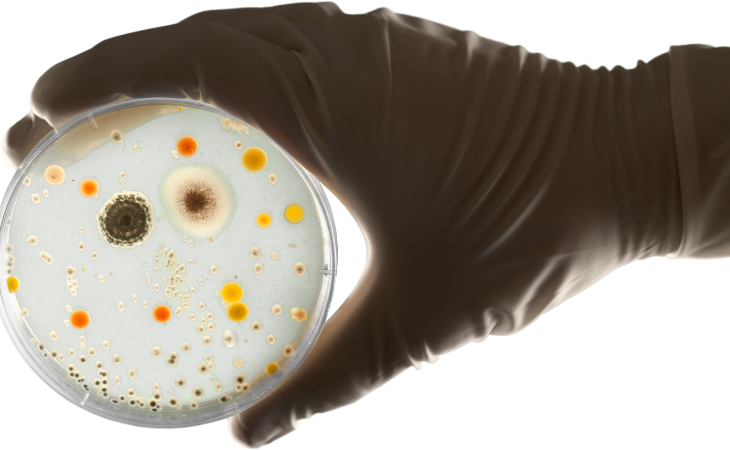
bacteria growing in petri dish
Taking an antibiotic when you don’t really have an infection may cause more harm than good. Antibiotics have a negative effect on the abilities of white blood cells and gut bacteria responsible for healthy digestion and inhibiting the growth of bad bacteria in the body.

Most antibiotic-resistant bacteria can be classified as gram-negative bacteria. It is a class of bacteria that have thicker cell walls and a built-in mechanism called an efflux pump that gives them the ability to export toxins out of the cells. The harder, thicker cell walls make these bacteria more resistant and challenging to penetrate, while the efflux pump makes them exceptionally challenging to tackle, as they become more toxic under attack. This pump may prevent antibiotics from getting inside the cell. 
 
Some varieties of gram-negative bacteria you may know are cholera, E. coli, and Salmonella typhi, which causes typhoid fever. Today these are treated with antibiotics, sometimes more than one. Older antibiotics may be more effective at times. 
 
Fabimycin - a new hope
A new player just hit the field. It is a molecule called fabimycin. This molecule inhibits the bacterial enzyme called FabI, which is vital for the bacteria‘s fatty acid biosynthesis. In other words, this new molecule has the potential to starve drug-resistant bacteria. Trials showed that, in addition to that, fabimycin is also relatively harmless to some types of healthy bacteria found in the gut. 
 
Fabimycin was developed in a lab. The synthetic drug was created by altering and improving existing antibiotics effective against less aggressive infections. Then, they started testing it on drug-resistant bacteria. 
 
The researchers found fabimycin to be effective on more than 300 types of drug-resistant bacteria. It cured mice with pneumonia and urinary tract infections. The medication is yet to undergo human testing and looks promising.


This is only for your information, kindly take the advice of your doctor for medicines, exercises and so on.   

https://gscrochetdesigns.blogspot.com. one can see my crochet creations  
https://gseasyrecipes.blogspot.com. feel free to view for easy, simple and healthy recipes    
https://kneereplacement-stickclub.blogspot.com. for info on knee replacement


Labels: , , , , , , , , , , ,

Sunday, February 09, 2020

Scientists find new target for Parkinson’s disease

Contrary to earlier discovery that a chemical found in a synthetic opioid, MPTP, induced a form of Parkinson’s disease, a new study has found that it is an enzyme in the body that can metabolise compounds formed in the brain from alkaloids causing a neurodegenerative condition in mice.

The study led by Narayan Avadhani and Mrittika Chattopadhyay, suggested that the enzyme, mitochondrial CYP2D6, presents a potentially powerful new target for Parkinson’s treatment. “Over the past two or three decades, researchers have tried inhibiting the process by they believed MPTP was metabolised, with mixed success,” said Avadhani.

“We believe that mitochondrial CYP2D6 is the more direct drug target, which might prove better in treating idiopathic Parkinson’s disease,” added Avadhani. The study published in the ‘Journal of Biological Chemistry’ investigated the mechanism of Parkinson’s disease when a specific cause cannot be pinpointed. Previous studies have shown that MPTP and similar toxic compounds induce Parkinson’s disease in rodents and primates.

The mechanism of action, as scientists understood it, involved the compounds being oxidised to form MPP+, a toxic metabolite. The enzyme that was believed to be responsible is called monoamine oxidase B (MAO-B), present in the nervous system’s glial cells. In that conception of the mechanism, MPP+ was thought to then be transferred to dopamine neurons by dopamine transporter proteins, and, indeed, Parkinson’s is characterised by unusually low dopamine levels in the brain.

Researchers have tried to stem the effects of Parkinson’s by targeting two players in this presumed pathway, both MAO-B and the dopamine transporter protein, with only mixed success. In earlier work, Avadhani and colleagues had shown that the enzyme CYP2D6, localised to the body’s energy factories, the mitochondria, could play a role in metabolising MPTP to MPP+.

In the new investigation, they took a closer look at beta-carbolines and isoquinolines, toxins that resemble MPTP which the body produces from substances found in tobacco smoke, alcohol, and some foods. They found that, instead of MAO-B, it was mitochondrial CYP2D6 that activate the beta-carbolines and isoquinolines inside the dopamine-producing neurons, rather than the glial cells.

This route of activation, in a mouse model, results in neuronal damage and oxidative stress, symptoms akin to Parkinson’s. “CYP2D6 is known to play a role in influencing the activity of a number of drugs,” said Avadhani. In an attempt to target this pathway, the researchers showed that mice lacking CYP2D6 did not exhibit severe symptoms than mice with the protein did. In addition, an inhibitor of CYP2D6 prevented neuronal damage in the mice.

“The CYP2D6 inhibitor ajmalicine is a member of the reserpine family of alkaloids, found in the plant Rauwolfia serpentine and was long used in India for treating mental illness, such as paranoia and schizophrenia,” said Avadhani. “Mitochondrial targeting of such compounds is likely to be effective in treating Parkinson’s patients, and pursuing that is our future strategy,” said Avadhani.


This is only for your information, kindly take the advice of your doctor for medicines, exercises and so on.     
https://gscrochetdesigns.blogspot.com. one can see my crochet creations  
https://gseasyrecipes.blogspot.com. feel free to view for easy, simple and healthy recipes    
https://kneereplacement-stickclub.blogspot.com. for info on knee replacement
 

Labels: , , , , , , , , , , ,

Thursday, February 06, 2020

How Artificial Sweeteners Affect Blood Sugar and Insulin

Sugar is a hot topic in nutrition.

Cutting back can improve your health and help you lose weight.

Replacing sugar with artificial sweeteners is one way to do that.

However, some people claim that artificial sweeteners aren't as "metabolically inert" as previously thought.

For example, it's been claimed that they can raise blood sugar and insulin levels.

This article takes a look at the science behind these claims.
What are Artificial Sweeteners?
Artificial sweeteners are synthetic chemicals that stimulate the sweet taste receptors on the tongue. They are often called low-calorie or non-nutritive sweeteners.

Artificial sweeteners give things a sweet taste, without any added calories.

Therefore, they're often added to foods that are then marketed as "health foods" or diet products.

They're found everywhere, from diet soft drinks and desserts, to microwave meals and cakes. You'll even find them in non-food items, such as chewing gum and toothpaste.

Here's a list of the most common artificial sweeteners:

    Aspartame
    Saccharin
    Acesulfame Potassium
    Neotame
    Sucralose


    Bottom Line:

    Artificial sweeteners are synthetic chemicals that make things taste sweet without any extra calories.

What Causes Blood Sugar and Insulin Levels to Rise?

We have tightly controlled mechanisms to keep our blood sugar levels stable.


Blood sugar levels increase when we eat foods containing carbohydrates.
Potatoes, bread, pasta, cakes and sweets are some foods that are high in carbohydrates.

When digested, carbohydrates are broken down into sugar and absorbed into the bloodstream, leading to an increase in blood sugar levels.

When our blood sugar levels rise, our body releases insulin.

Insulin is a hormone that acts like a key. It allows blood sugar to leave the blood and enter our cells, where it can be used for energy or stored as fat.

But small amounts of insulin are also released before any sugar enters the bloodstream. This response is known as cephalic phase insulin release. It is triggered by the sight, smell, and taste of food, as well as chewing and swallowing.

If blood sugar levels drop too low, our livers release stored sugar to stabilize it. This happens when we fast for prolonged periods, like overnight.


    The sweet taste of artificial sweeteners triggers cephalic phase insulin release, causing a small rise in insulin levels.


    Regular use changes the balance of our gut bacteria. This could make our cells resistant to the insulin we produce, leading to both increased blood sugar and insulin levels.

    Bottom Line:

    Eating carbohydrates causes a rise in blood sugar levels. Insulin is released to bring blood sugar levels back to normal. Some claim that artificial sweeteners may interfere with this process.

Do Artificial Sweeteners Raise Blood Sugar Levels?

Artificial sweeteners won't raise your blood sugar levels in the short-term.

So, a can of diet coke, for example, won't cause a rise in blood sugar.

However, in 2014, Israeli scientists made headlines when they linked artificial sweeteners to changes in gut bacteria.

Mice, when fed artificial sweeteners for 11 weeks, had negative changes in their gut bacteria that caused increased blood sugar levels.


When they implanted the bacteria from these mice into germ-free mice, they also had increases in blood sugar levels.

Interestingly, the scientists were able to reverse the increase in blood sugar levels by changing the gut bacteria back to normal.

However, these results haven't been tested or replicated in humans.

There is only one observational study in humans that has suggested a link between aspartame and changes to gut bacteria .

The long-term effects of artificial sweeteners in humans are therefore unknown.

It is theoretically possible that artificial sweeteners can raise blood sugar levels by negatively affecting gut bacteria, but it hasn't been tested.

    Bottom Line:
    In the short-term, artificial sweeteners won't raise blood sugar levels. However, the long-term effects in humans are unknown.

Do Artificial Sweeteners Raise Insulin Levels?

Studies on artificial sweeteners and insulin levels have shown mixed results.

The effects also vary between different types of artificial sweeteners.


Sucralose

Both animal and human studies have suggested a link between sucralose ingestion and raised insulin levels.

In one study, 17 people were given either sucralose or water and then administered a glucose tolerance test.

Those given sucralose had 20% higher blood insulin levels. They also cleared the insulin from their bodies more slowly.

Scientists believe sucralose causes insulin increase by triggering sweet taste receptors in the mouth — an effect known as cephalic phase insulin release.

For this reason, one study that injected sucralose into the stomach, bypassing the mouth, did not detect any significant rise in insulin levels.


Aspartame

Aspartame is perhaps the most well-known and most controversial artificial sweetener.

However, studies have not linked aspartame with raised insulin levels.
Saccharin

Scientists have investigated whether stimulating the sweet receptors in the mouth with saccharin leads to an increase in insulin levels.

Results are mixed.

One study found that mouth washing with a saccharin solution (without swallowing) caused insulin levels to rise .

Other studies have found no effects.


Acesulfame Potassium

Acesulfame potassium (acesulfame-K) can increase insulin levels in rats.


One study in rats looked at how injecting large amounts of acesulfame-K affected insulin levels. They found a massive increase of 114-210%.

However, the effect of acesulfame-K on insulin levels in humans is unknown.
Summary

The effect of artificial sweeteners on insulin levels seems to be variable, depending on the type of sweetener.

Sucralose appears to increase insulin levels by triggering receptors in the mouth. However, few high-quality human trials exist, and it is currently unclear whether other artificial sweeteners have similar effects.

    Bottom Line:
    Sucralose and saccharin may raise insulin levels in humans, but the results are mixed and some studies find no effects. Acesulfame-K raises insulin in rats, but no human studies are available.

Can You Use Artificial Sweeteners if You have Diabetes?

Diabetics have abnormal blood sugar control due to a lack of insulin and/or insulin resistance.

In the short-term, artificial sweeteners won't raise your blood sugar levels, unlike high intakes of sugar. They are considered safe for diabetics.


However, the health implications of long-term use are still unknown.

    Bottom Line:
    Artificial sweeteners do not raise blood sugar levels, and are considered safe alternatives to sugar for diabetics.

Should You Avoid Artificial Sweeteners?

Artificial sweeteners have been declared safe by regulatory bodies in the US and Europe.

However, they also note that health claims and long-term safety concerns require more research (22/a>).

Although artificial sweeteners may not be "healthy," they are at the very least significantly "less bad" than refined sugar.

If you eat them as part of a balanced diet, then there is no strong evidence that you should stop.

However, if you're concerned, then you can use other natural sweeteners instead or just remove sweeteners altogether.


This is only for your information, kindly take the advice of your doctor for medicines, exercises and so on.     
https://gscrochetdesigns.blogspot.com. one can see my crochet creations  
https://gseasyrecipes.blogspot.com. feel free to view for easy, simple and healthy recipes    
https://kneereplacement-stickclub.blogspot.com. for info on knee replacement
 

Labels: , , , , , , , , , , , ,